We had a very inauspicious start to our stay in Quito, Ecuador’s mountainous capital city. Our very first afternoon there, a light rainfall turned into a torrential hail storm. We huddled in a restaurant and waited for the storm to subside, probably annoying the owners who were trying to clean up after the lunch rush. They were at least polite about it.
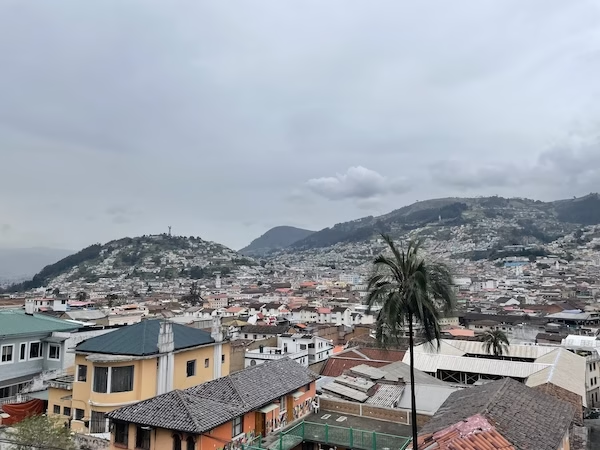
When the storm passed, we stepped outside and the clouds cleared and the city of Quito revealed itself in all its glory. Quito is a city of magnificent, somewhat bizarre, churches, elegant Spanish colonial buildings and fascinating museums. It’s also a living city, where people have their shops and homes amid the ancient architecture.
It’s a city that ticks all the boxes of a popular tourist destination, but doesn’t seem to care all that much whether tourists come or not. That’s not to say people aren’t friendly or welcoming, it’s just that they’re busy going about their lives.
What to Know Before Traveling to Quito
Quito is the capital, cultural and, along with Guayaquil, the economic center of Ecuador. Archeologists have found hunter-gatherer artifacts in the area dating back to 8000 B.C., though nobody seems certain when the city was first settled. A local native group called the “Quitu” ruled the region, though the Inca Empire conquered it in the late 1400s.
The Spanish founded the modern-day city in 1534, and in 1556 they named it the “Very Noble and Loyal City of San Francisco of Quito.” The Spanish ruled for over two hundred years, and in addition to displacing and exploiting the natives, they built the colonial center that stands today.
Quito was also a center of rebellion against Spanish rule. Uprisings flared up, most notably in 1765 and 1809, until Marshall Antonio José de Sucre, a friend of Simón Bolívar, liberated the city once and for all in 1822.
Today, Quito’s colonial center is a UNESCO world heritage site, and one of the largest and best preserved in the Americas.
Weather and What to Pack for Quito
Despite being nearly smack dab on the equator, Quito has a cool, sometimes chilly, climate. This is because Quito is just so damn high. It’s the second highest capital city in the world, after La Paz in Bolivia, and rests at a whopping 2,850 meters (9,350 ft) above sea level.
Because of its altitude and position on the equator, temperatures are relatively consistent throughout the year, usually hovering between 9 to 21 degrees Celsius (roughly 49 to 71 Fahrenheit.) March and April are the rainiest months, though there’s another mini-rainy season around October and November.
What does this mean for you as a traveler? It means you should pack a jacket. While the day time temperatures are pleasant, things can get a bit chilly when the sun goes down. Of course, if you’re traveling to other parts of Ecuador and beyond, you’ll also want clothes appropriate for warm tropical weather. Luckily, if you happen to forget anything, Quito is a modern city filled with plenty of shops and markets.
You’ll also probably want to make sure you have sunscreen and a hat. Quito has some of the highest UV radiation in the world, due to its altitude and position on the equator. It might feel cool, but the sun is fierce and it’s an easy place to get a sunburn.
Is Quito Safe?
You may have heard some alarming news stories about crime in Ecuador. The country has unfortunately been confronted with more than its fair share of violent crime recently. However, most of the crime is concentrated on the coast and is a result of the international drug trade. Gangs and cartels are not targeting tourists.
Crime does happen in Quito, like in any big city. Tourists aren’t targeted by drug cartels, but you may be a target for petty crime. For example, a local warned us about muggings in La Mariscal district. Apparently, muggers like to hide behind trees and jump out to surprise their victims.
We were never mugged, but we were the victims of an attempted pickpocketing. A teenager happened to sneak into my wife’s backpack. He opened the pocket full of used tissues and a troll doll. A group of Venezuelan migrants helped alert us and scared him away. The poor guy probably left feeling very disappointed.
The troll doll was fine, by the way, but we may have lost some of the used tissues.
In my personal experience, in Quito as elsewhere in Latin America, most locals want you to have a fun, safe, time in their country. They’ll warn you about bad neighborhoods or maybe even help scare away potential pickpockets.
While gang violence is a very real issue in Ecuador, it isn’t likely to affect the average visitor. Even petty crime is relatively rare and avoidable. Keep your wits about you and listen to local advice and your used tissues and troll dolls are going to be perfectly safe in Quito.
Altitude Sickness
The real danger in Quito isn’t from scary gang members, but from the towering heights of Quito itself. As I mentioned before, the city is the second highest capital in the world and sits at a whopping 9,350 feet (2,850 m) above sea level. Altitude sickness can be a real problem here.
Altitude sickness most commonly causes symptoms like headaches, fatigues, trouble sleeping or nausea. In extreme cases, though, it can lead to scary things like edema, which means your lungs or brain fill with fluid. Worst case scenario it can kill you.
Thankfully, the cure for altitude sickness is simple. Start slowly and give your body time to adjust. Take a few days to rest if you’re coming to Quito from a lower elevation.
You can also chew or drink tea made from coca leaves. Coca leaves are available in markets around Quito, and have been used since forever by native peoples to help ease the symptoms of altitude sickness. I can tell you based on personal experience they help almost instantly.
Yes, coca leaves are also used to make cocaine. No, chewing the leaves won’t get you high and they aren’t addictive.
Transportation In and Around Quito
Quito is Ecuador’s transportation hub. Buses come and go here from everywhere in the country. Yes, you could also fly or rent a car, but buses in Ecuador are cheap and distances are relatively manageable. Aside from the Galapagos Islands or maybe parts of the Amazon, there’s really no need to fly.
Unfortunately, Quito has three bus terminals. The main one is the Terminal Quitumbe, which is to the south of the city center. Quitumbe serves destinations to the coast and throughout the central highlands. You can find a list of destinations and hours on the Termnal Quitumbe official website.
The other big station is Terminal Carcelén, which also goes through the highlands and coast, but additionally has buses heading into the Amazon region. The Carcelén terminal is in the north of Quito. Visit the official website for more information.
Finally, we have the scrappy little Terminal La Ofelia. La Ofelia is most useful if you’re heading to Mindo. Unfortunately, they don’t have a website.
You can’t buy tickets online in Ecuador, so you’ll have to head to the terminal. Inside you’ll find a number of ticket booths. Just look for the one with your destination printed on it. If you get lost, take the opportunity to practice your Spanish and you’ll find someone who can help.
Transportation To and From the Airport and Within Quito
Quito, of course, is also home to Ecuador’s main airport. The airport is located in the suburbs outside of town. It’s a pretty drive. You can take the bus to and from the airport, but we just opted for a taxi. Many accommodations offer airport pick up and drop off.
Quito has a pretty extensive city bus network, as well as a single metro line. I’m usually a big fan of taking public transportation, but I have to admit we mostly used taxis in Quito. I’m not sure why, maybe we were just feeling lazy. Maybe we were excited by the fact that you can take a taxi for the price of a bus ticket back home.
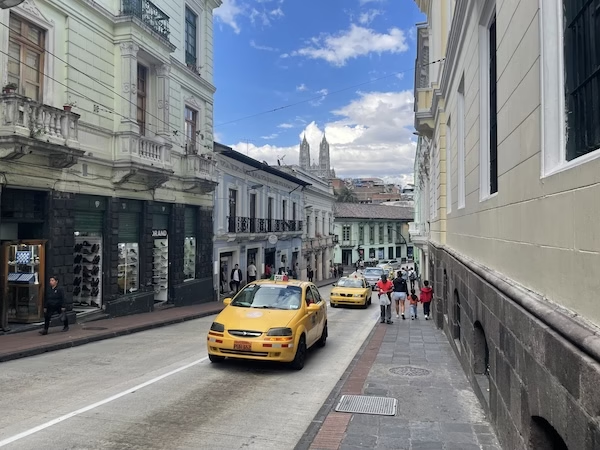
Quito also has ride sharing apps like Uber an Didi. We used Uber at first, but got stuck with multiple drivers who seemed to think Quito’s streets were some sort of Formula One training circuit. After a few scary rides, we stuck with the official yellow taxis with orange plates. At least the taxi drivers drove close to the speed limit.
Where to Stay in Quito
Quito has a variety of different neighborhoods, but if you’re visiting for the first time, you should definitely stay in the historic center. Quito’s colonial center really is beautiful, and is full of all sorts of attractions within walking distance. And, unlike other colonial cities like Cartagena or Panama City, people actually live and work in Quito’s center, which makes it feel much more authentic and interesting.
I would particularly recommend the San Blas neighborhood, which is up the hill and a bit west of central Quito. It’s a quiet, mostly residential area, but with a decent number of coffee shops and restaurants. You’re still walking distance from the excitement, but can avoid much of the noise.
A number of other guides recommend staying in La Mariscal. I personally found this part of town rather disappointing. For one, this was where the guy warned us about muggers jumping out from behind trees. For another thing, the neighborhood is centered on a cluster of trashy bars and sleezy nightclubs. It felt both sketchy and over-touristed at the same time. I say stick to the historic center.
On one of the most fun, but also most stressful, aspects of travel is finding and booking places to stay. These days you have options ranging from dirt cheap hostel dorms to luxurious White Lotus style resorts. Thankfully, the internet is here to make finding accommodation easier.
Hostelworld is the go to app for finding hostels. For everything else, there’s Booking.com. If you book through either of the previous links, I’ll gain a small commission at no extra cost to you.
Quito’s Best Hotels and Hostels
In the San Blas neighborhood, I liked La Rosario Hotel . It was walking distance from almost everywhere we wanted to go, and the staff was friendly and helpful. They also have breakfast included. The building itself is a rather dull, concrete blob, but it’s comfortable, and the price is right. Click here to book your stay at La Rosario.
If you feel like you absolutely must stay in La Mariscal (which I don’t recommend) I thought Hostal Posada del Maple was pretty nice. I had absolutely no problems with the hostel, I just wasn’t super enamored with the neighborhood. Click here to book at Hostal Posada del Maple.
Finally, if you have to catch an early flight (to the Galapagos, perhaps) I absolutely one hundred percent suggest staying at the Quito Eco Lodge B&B. This little bed and breakfast is only fifteen minutes from the airport. The owner is maybe one of the nicest people in all of Ecuador. We spent the afternoon wandering down the streets past some very beautiful flower farms, and in the evening, he gave us a ride to a nearby town so we could have dinner. Again, central Quito is best, but if you need to be close to the airport, don’t hesitate to stay at Quito Eco Lodge B&B.
If you book using any of the above links, I’ll get a small commission at no cost to you. You’ll get a nice place to stay and the satisfaction of supporting an independent travel blog.
The Best Things to do in Quito
Quito, especially the historic center, is absolutely stuffed with things to see and do. You’ll find plenty of gorgeous churches and cathedrals, colonial architecture, fantastic museums and some beautiful parks. Below are my personal favorite Quito activities in no particular order.
If you only have a short time, I would focus on exploring the churches and buildings in the colonial center. I also think the Mitad del Mundo and TeleferiQo are must-visits for very different reasons.
Straddle Hemispheres at the Mitad del Mundo
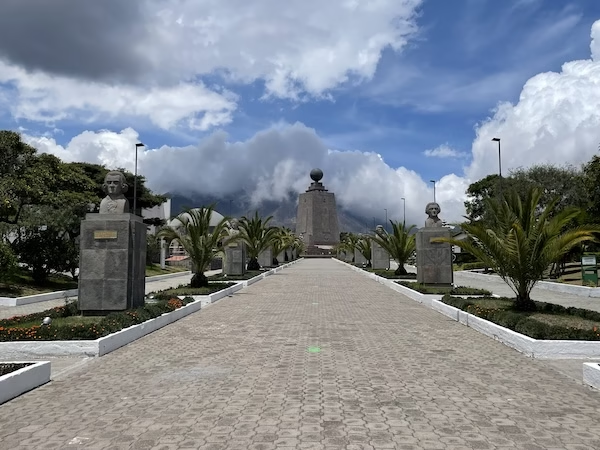
There’s no way you can visit Quito, the closest major city to the equator in the world, and not visit the equator. Yes, it’s cheesy and touristy, but it’s still fun. Afterall, where else can you go from the Northern to Southern Hemisphere in a single step?
Sadly, Quito’s Mitad del Mundo monument isn’t technically on the actual equator. The monument was built based on 19th century calculations, but modern surveying technology has since proven that the actual equator is really about 200 meters away. However, I think that’s close enough that you can still tell everyone back home you visited the equator.
The Mitad del Mundo park is full of tacky tourist shops, souvenir stalls and somewhat overpriced restaurants. However, the monument itself contains a surprisingly fascinating museum dedicated to Ecuador’s various indigenous groups. At the top is an observation deck with some nice views of the surrounding mountains.
You can reach the Mitad del Mundo by bus via La Ofelia bus terminal in Quito. You can also taxi or Uber if you’re feeling lazy. The official website has information about ticket prices and hours.
Admire the Basílica del Voto Nacional
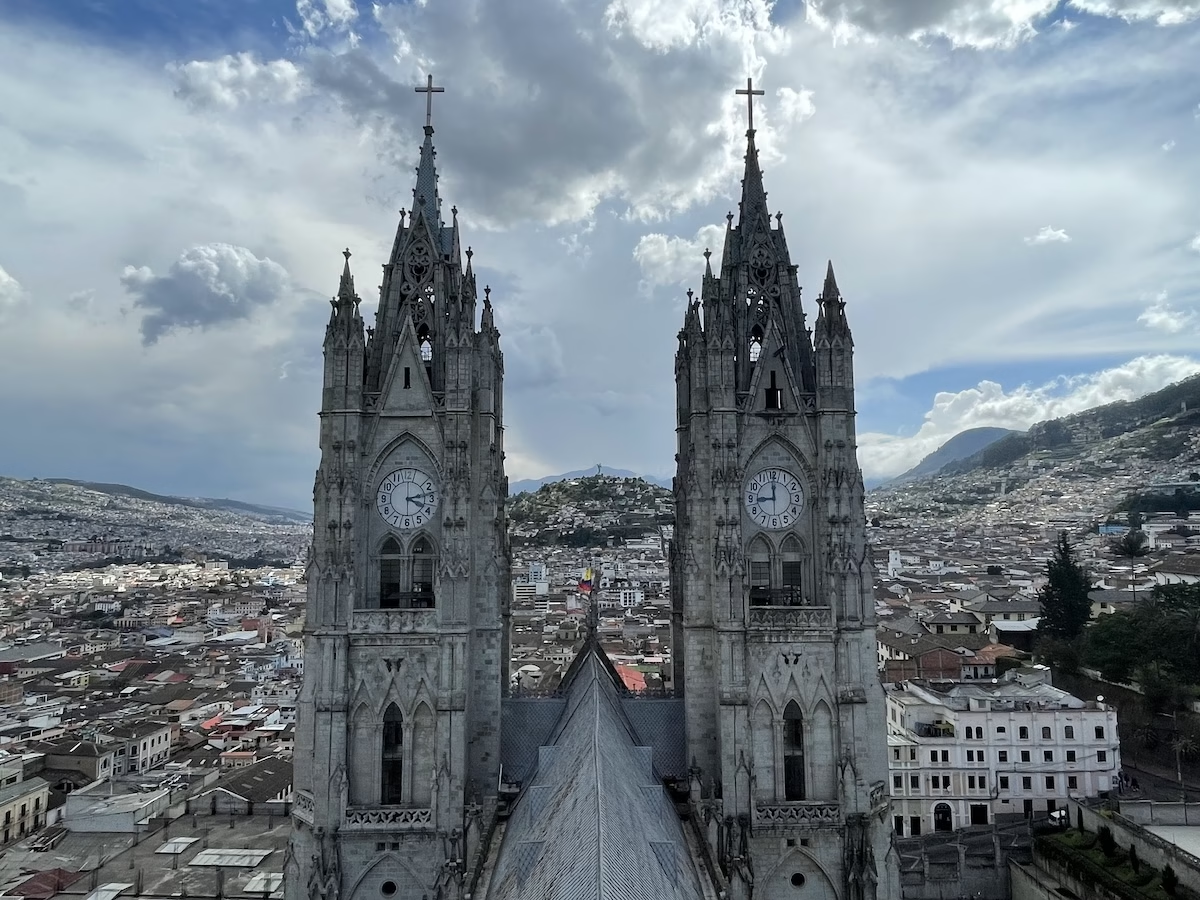
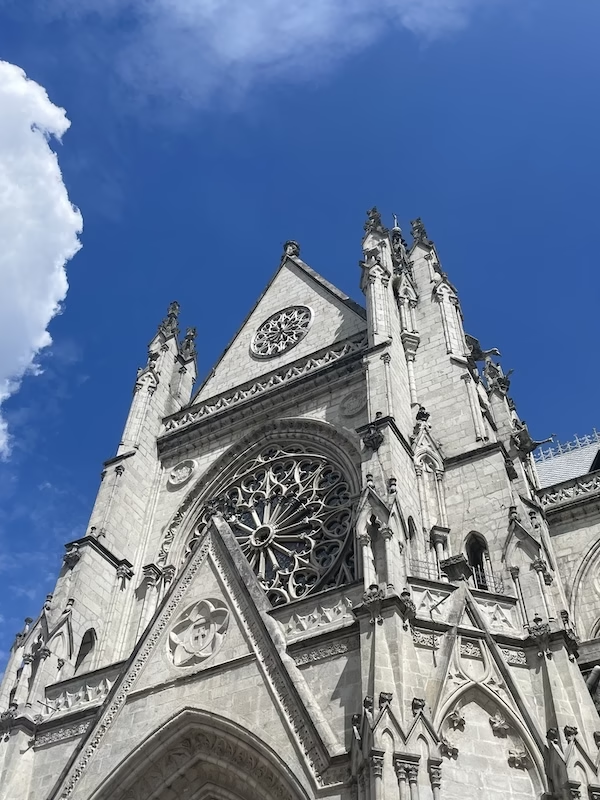
Quito is full of impressive churches, but the most impressive has to be the Basilica del Voto Nacional. This towering neo-gothic cathedral is located just a short walk north of the colonial city center. At first glance, it looks like it could be the setting of a Victorian gothic novel. As you look closer, however, you notice that this church has a distinctly Ecuadorian flavor.
Instead of the traditional European gargoyles, the Basilica del Voto Nacional is topped with native Galapagos animals, such as tortoises, pelicans, and iguanas. It’s pretty cool. Inside, you’ll find some magnificent stained glass. If you aren’t intimidated by heights, you can even climb up the towers for some impressive views of the city.
Visit the basilica’s official website for updated hours and prices.
Go up the TeleferiQo and Hike the Páramo
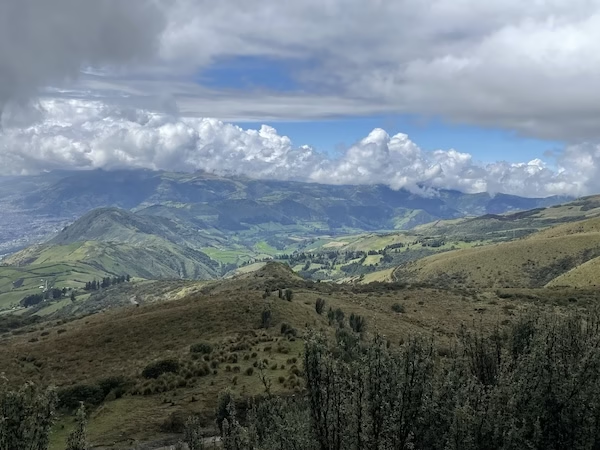
When you get sick of the bricks and concrete of the city, your only real option is to escape up into the mountains. One of Quito’s best things to do, the TeleferiQo, is a cable car that brings you up the side of the Pichincha Volcano. At the top you’ll find a little observation deck with a snack bar and what not.
You’ll also find a network of trails that wind through the páramo. The páramo is a unique high-altitude grassland ecosystem that’s found only in the Andes of Peru, Colombia and Ecuador (and a little bit in Costa Rica.) It’s gorgeous, in my opinion, and well worth the visit.
Obviously, it’s quite high at the top of the mountain. You’ll probably deal with some altitude sickness issues if you haven’t acclimated yet. Chewing a wad of coca leaves will do wonders to alleviate any symptoms you have.
Also, things get cloudy on the high páramo. We went up expecting some gorgeous views of Quito. Instead, we mostly got a wall of grey clouds. The surrounding paramo was so beautiful, even with the clouds, that I can’t be mad about the views.
You can reach the TeleferiQo via any bus that travels on Avenida Mariscal Sucre. Otherwise, taxis are easy and cheap. The official website (in Spanish) has more information about hours and costs.
Visit Some of Quito’s Other Churches
While the Basilica del Voto Nacional is clearly the star of the show, Quito is filled with loads of other magnificent churches. The basilica was built in the 1800s, but many of the city’s other churches, temples and cathedrals date back to the Spanish colonial days. You can pick a random direction in the old town and stumble on something cool, but there are two real standouts.
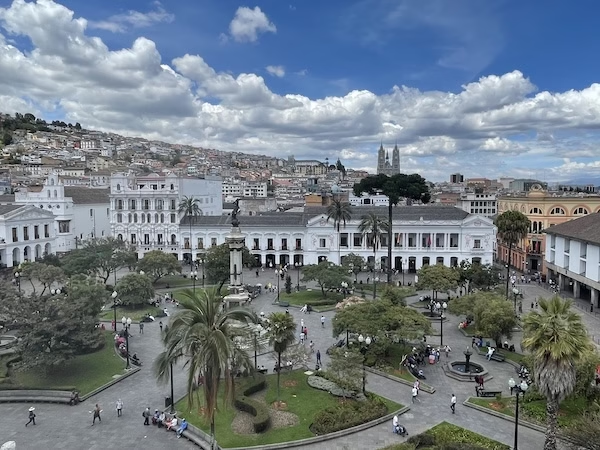
The first is the Catedral Metroplitana, which is the main cathedral of the city and located right on Quito’s central square. The cathedral is pretty enough from the outside, with its white walls and green and yellow domes. Inside you’ll also find local touches like a painting of the Last Supper where Jesus is eating cuy (guinea pig). You’ll also see the tomb of revolutionary hero Antonio José de Sucre and a replica of Simón Bolívar’s sword. You can climb up onto the roof for a tour of the domes and more fantastic views of the city.
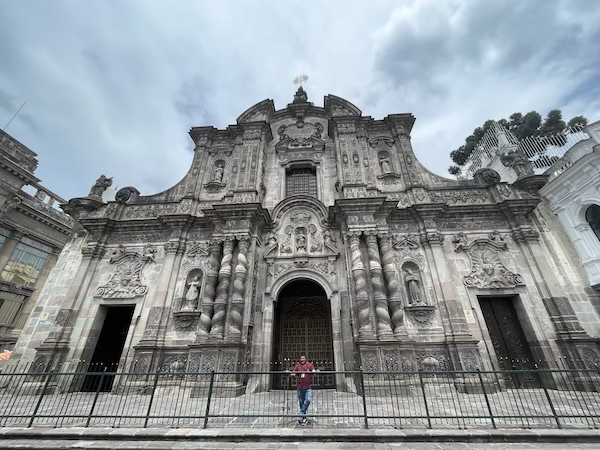
The next must-see church is the Church of the Compañia de Jesus. This church is located about a block south of the main square and cathedral. Many consider it to be one of the best examples of baroque architecture in the Americas. The inside is absolutely slathered in gold and it’s easy to get lost wandering among the ornate statues and carving. Every corner seems to hide some elaborate detail. It’s pretty impressive.
Wander the Historic Center
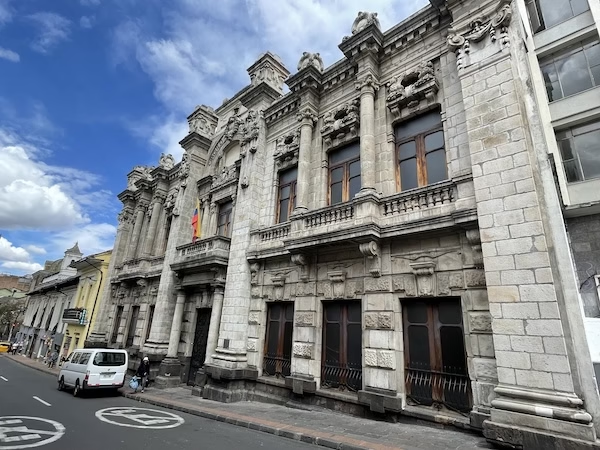
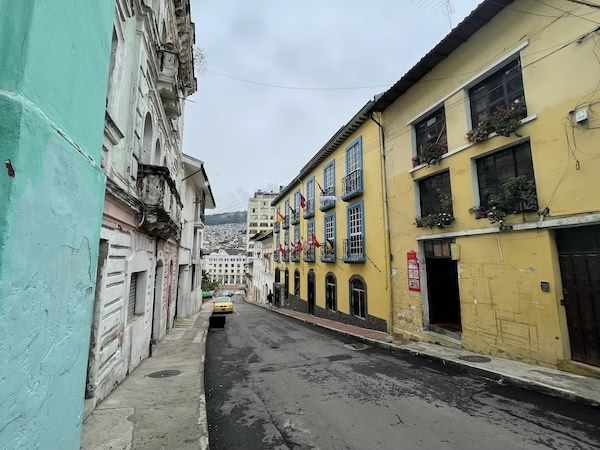
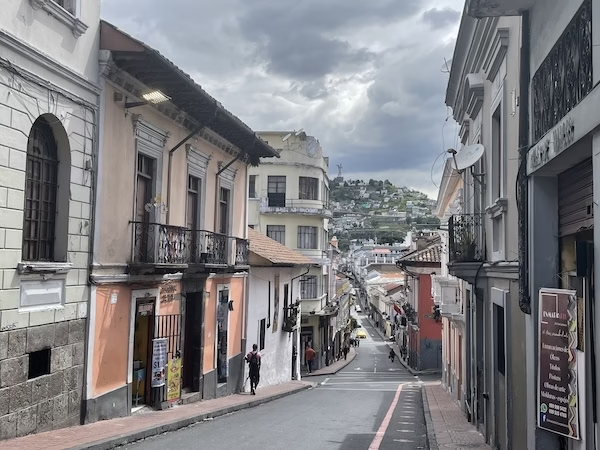
In addition to the wonderful churches, Quito’s historic center has some of the best-preserved colonial architecture in all of Latin America. The area surrounding the central square, Plaza Grande, is full of large, lavish buildings that still serve as government offices. Further away and up the hill and you’ll see more modest colonial houses and shops that are no less beautiful. Just pick a direction and explore.
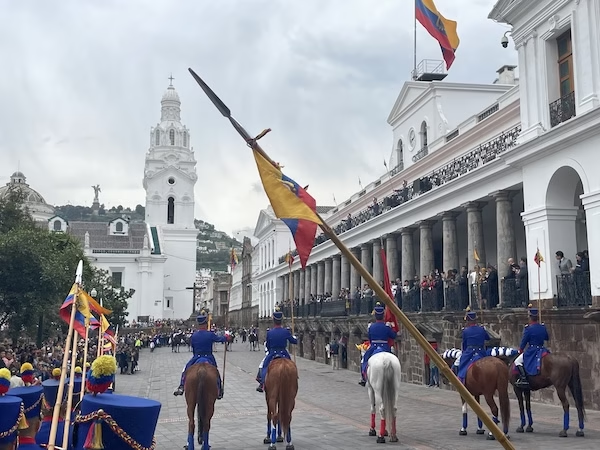
Depending on the time of day, you might run across the changing of the guard in front of the presidential palace off of Plaza Grande. You also might come across locals protesting the government. There’s always plenty to see.
A lot of people suggest Calle de la Ronda as “Quito’s most beautiful street.” This narrow alley five blocks south-west of the central plaza is pretty. It also feels the most sanitized and soulless of all Quito’s streets. Like it’s been gussied up to be a background for people’s Instagram photos rather than a living, breathing street. It’s pretty, but not worth more than a short walk through in my opinion. The rest of Quito is far more interesting.
Take a Free Walking Tour
Of course, if you want some context and history behind some of these beautiful colonial buildings, you should sign up for a free walking tour. These tours aren’t exactly “free”. You pay your guide a tip based on how well you think they did, or how guilty you feel about the income disparity between your two countries.
We went with Community Adventures Ecuador and had a good time. One highlight was an obligatory visit to the local market. If you’ve never been to a Latin American mercado, it’s definitely a treat for the senses. Tours usually leave every day. Visit the website for more information.
See the Museo del Carmen Alto
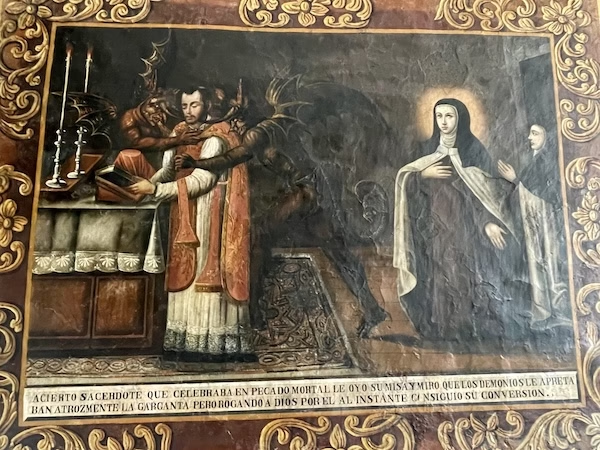
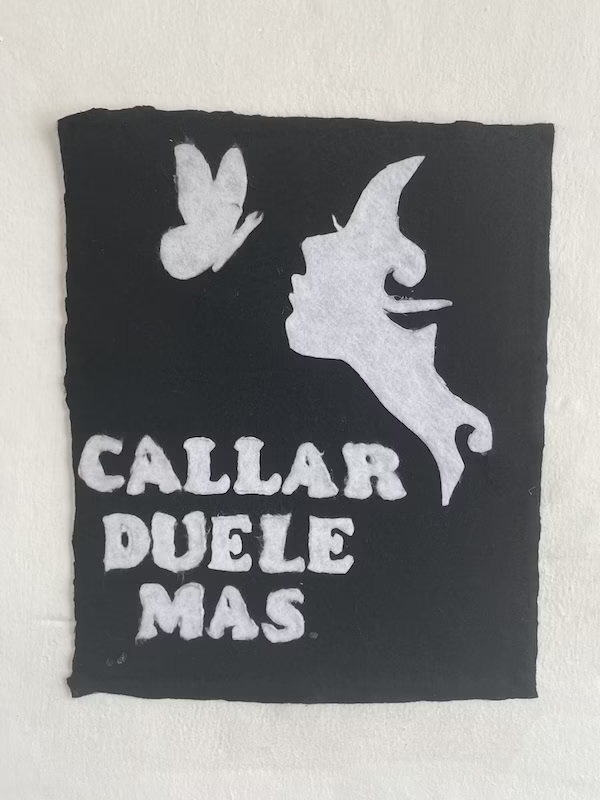
One of Quito’s best museums is the Museo del Carmen Alto. Located in an old convent four blocks off the main square on Calle Garcia Moreno, this museum houses a fantastic collection of colonial religious art inside a gorgeous old building. The former convent is also home to a shelter for victims of domestic violence, and the museum also displays artwork from these women as well.
Unfortunately, the website doesn’t have much information in English or Spanish. The museum should be open from 9:30am to 5:30pm Tuesday, Wednesday and Sunday and from 11am to 7pm on Friday and Saturday. Entry is only two dollars.
Visit the City Museum
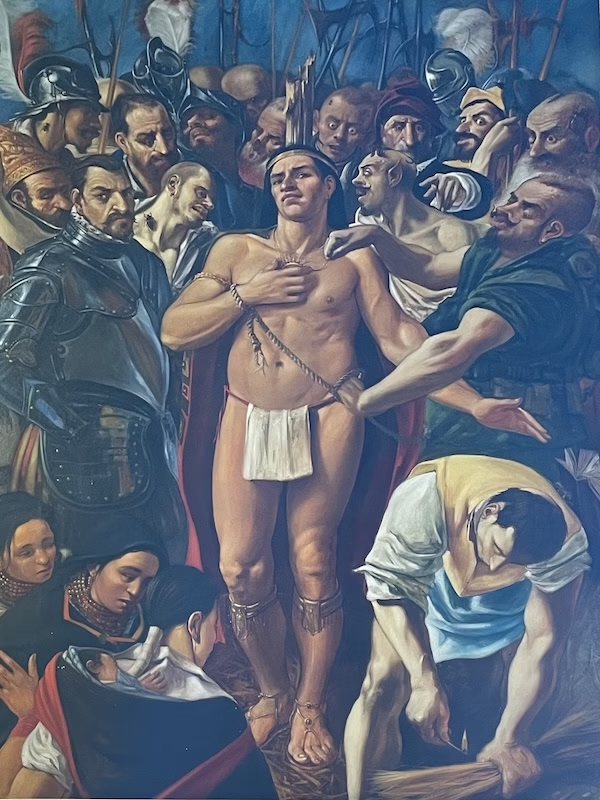
Right across the street from the Museo del Carmen Alto sits Quito’s city museum. The museum traces the history of Quito from colonial times to the present day. You’ll find indigenous textiles, Spanish conquistador armor and even some modern, and affecting, artworks by current native Ecuadorian artists.
The museum also has a pretty decent café. If you go during the right time of year, you can get a free Colada Morada, a special Ecuadorian drink made of corn, fruits and spices.
Again, the website is hard to navigate, but opening hours should be from 8:30am to 4:30pm Wednesday to Friday and 9:30 to 5:30 on Saturday and Sunday. Tickets cost $4 dollars.
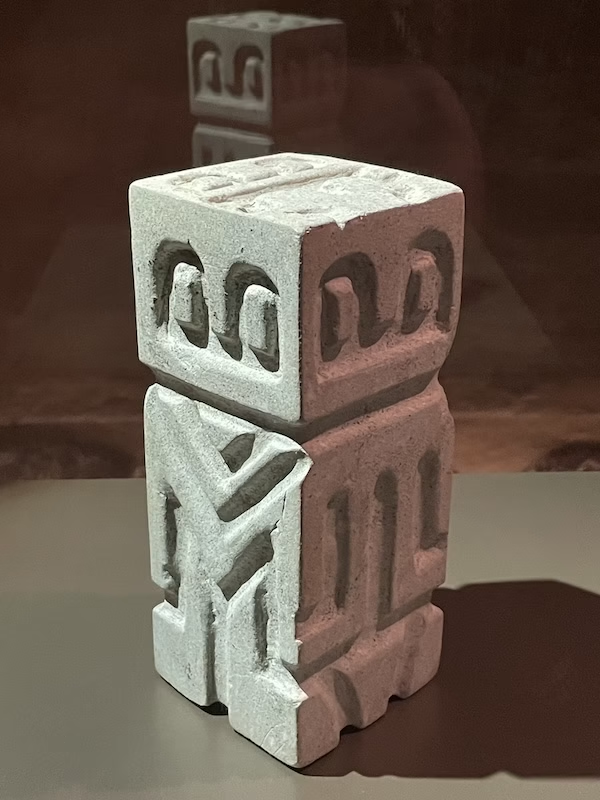
Explore the Museo de Arte Precolombiano Casa del Alabado
If you’re interested in indigenous art and culture, then you have to see Quito’s Museum of pre-Colombian art. The Alabado House Museum of Pre-Colombian art is located near the corner of Calles Rocafuerte and Cuenca, kitty corner from Plaza Santa Clara. It houses a superb collection of ceramics and other artworks by Ecuador’s native groups ranging from the Quitu to the Cañari to the Inca.
You can find more information, such as hours and ticket costs, on the Casa del Alabado museum’s website.
Hike Up to Parque Itchimbia
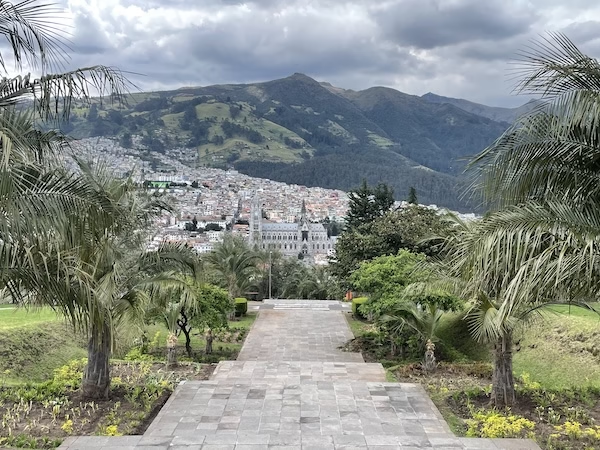
Finally, we come to Parque Itchimbia, which is a little bit of a hidden gem in Quito. Just east of Quito’s center lies this lovely little greenspace. It’s a short but steep walk directly uphill from the San Blas neighborhood. The park is a nice, well maintained city park with plenty of open grass and a few forested trails. You’ll see a lot of locals jogging or walking their dogs here. You can also find some lovely views of the city from the hill.
Itchimbia Park isn’t going to blow anybody’s mind, though. I would definitely prioritize most of the above things to do. However, if you’re in Quito and aching for some grass and trees, it makes a nice escape from the city.
Day Trips from Quito
Quito is centrally located and well connected to the rest of Ecuador. It’s definitely possible to use the city as a base to visit two other must-see destinations. While I didn’t do this personally, a friend of mine did and she said she had fun, so there you go.
Mindo
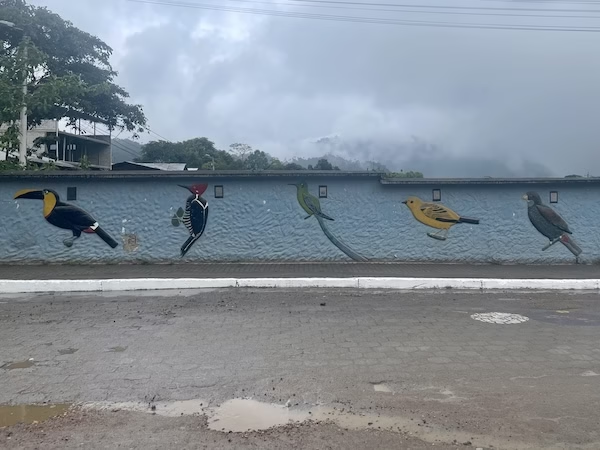
The first daytrip option from Quito is an excursion to Mindo, Ecuador’s lovely bird-watching capital. Mindo is a little town located in lush cloud forest and is famous for its numerous and varied birds. You’re likely to see trogons, parrots, tanagers, toucans and maybe more.
Mindo is only about two hours away from Quito. You can’t get there via the La Ofelia bus station. Buses leave somewhat sporadically, though. You can check the official bus company website here: https://cooperativaflordelvalle.com/quito-mindo/
Volcan Cotopaxi
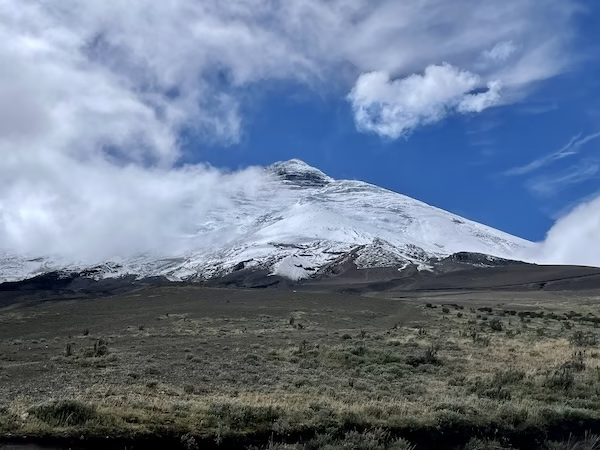
Another good daytrip option is to visit the mighty Cotopaxi Volcano. The Cotopaxi Volcano national park is magnificent, and the volcano itself is impressive with its almost perfect conical shape and snow-capped peak. You can reach Cotopaxi National Park in about an hour and a half from Quito.
Head to the Quitumbe Terminal and catch any of the frequent buses heading towards Latacunga. Tell the driver you want to get out at Cotopaxi. You’ll be let off on the side of the road, where you can try and hitchhike or flag down a taxi the rest of the way into the park.
Of course, if all that seems like a pain in the ass, you could always book a tour. Get Your Guide has plenty of options for tours to Mindo, Cotopaxi and elsewhere leaving from Quito.
As much as I would love you to click one of these links and book a tour using my affiliate program, I also have to say I don’t recommend this option unless it’s absolutely necessary. Both Mindo and Volcan Cotopaxi are really cool destinations. They both deserve at least a few days on their own.
I really only suggest doing a day trip from Quito if you’re only going to be in Ecuador on a very short trip. If you have the time, it’s much better to take that time and really enjoy both Mindo and Cotopaxi rather than blowing through them in one day.
Final Thoughts on Quito
We came from Quito directly from Colombia, and to be perfectly honest, I couldn’t help constantly comparing it to Bogotá. It’s nice, but it ain’t Bogotá.
However, with the benefit of hindsight, I’m impressed at how much Quito has to offer. The city is filled with museums, parks, churches and historic buildings. The center is easily walkable, and you can find plenty of decent economically priced restaurants. Quito also makes a nice potential base for exploring other parts of Ecuador. There are probably dozens of other things to do in Quito that I don’t even know about. It has a lot to offer.
Quito should occupy a central place on any Ecuador itinerary. However, what I’m most impressed with is how indifferent Quito felt to tourists. Especially in contrast to other Spanish colonial cities, life goes on here whether or we visit or not.
That indifference is actually one of the city’s major strengths. Quito’s like the cool kid in the corner that you want to get to know because he seems so damn uninterested. While Quito deserves a spot on the South American tourist trail, it’ll be perfectly fine without it.
Discover more of Ecuador beyond the capital here: Expeditions in Ecuador: A Travel Guide to the Country in the Middle of the World
Useful Websites for Traveling Ecuador
As much as we might long for the days when you could show up to a town with nothing more than a beat-up guidebook and a sense of adventure, today much of traveling involves being glued to our phones making bookings. I’ve compiled some helpful apps and websites below that at least help make those bookings more convenient so you can spend less time staring at your phone and more time exploring at your surroundings. Some of these sites are affiliate links that give me a small commission at no cost to you if you chose to book through them. All of them are sites I’ve used personally and have no problem recommending.
Just be sure to do your due diligence as much as possible. Only hire local guides and try as much as possible to stay in locally owned hotels and hostels so that your hard earned travel dollars actually go to support the local economies of the places you visit.
Booking.com is basically the world’s only hotel booking website. They have hotels, guesthouses and vacation rentals all over Ecuador.
Hostelworld is the go-to site for booking hostels. If dorm rooms and shared bathrooms are your thing, you’ll find hostels all over Ecuador.
Get Your Guide offers tours and activities all around the world. Unlike some other sites and apps that do the same thing, you can actually find some reasonably priced deals here.