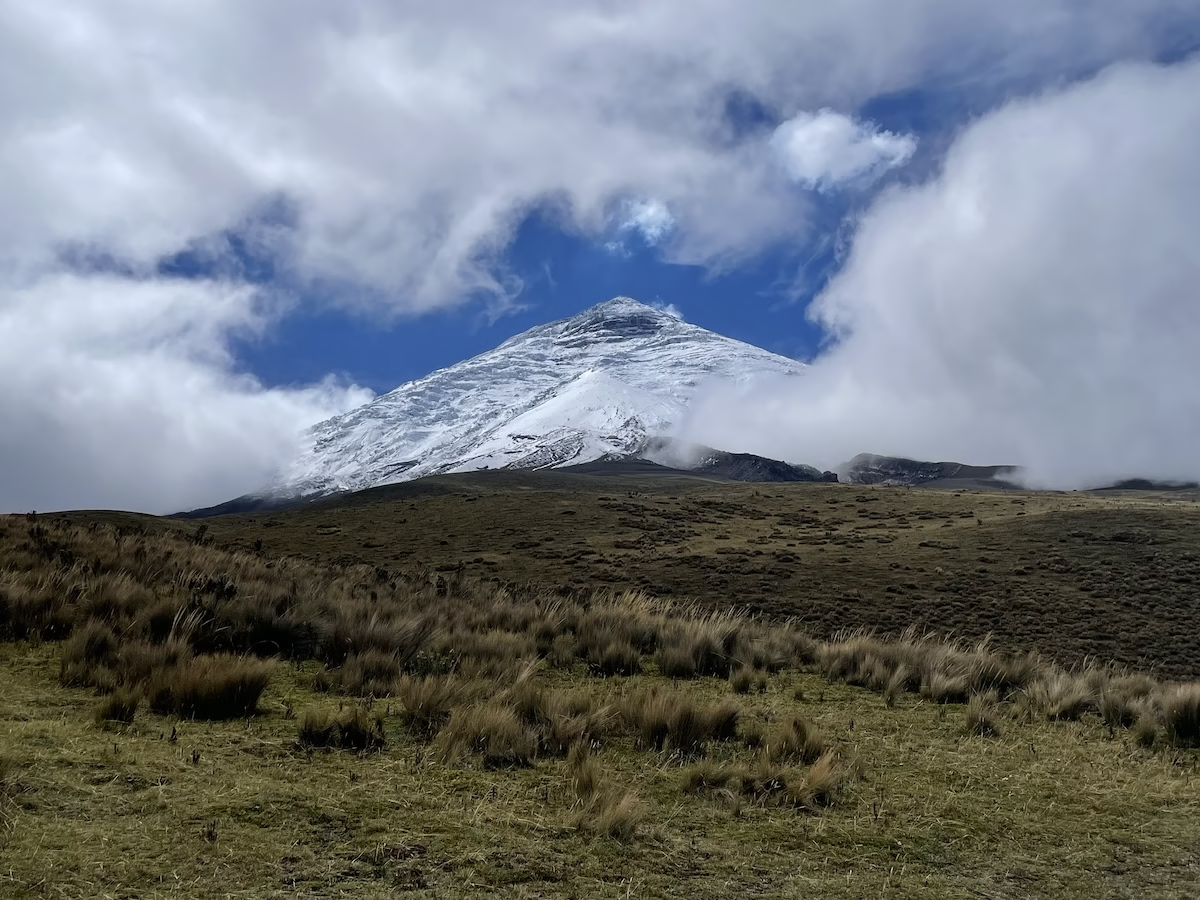
Close your eyes and picture the perfect volcano. You might imagine a geometrically flawless conical mountain rising up from the surrounding landscape. Perhaps you see a summit topped with brilliant white snow and a trail of smoke drifting up from the peak before melting into the nearby clouds. Now open your eyes and read this travel guide to visiting Ecuador’s Cotopaxi Volcano. You’ll learn almost everything you need to know about this nearly perfect volcano, as well as some off-the-beaten-path tips.
What to Know about Cotopaxi Volcano
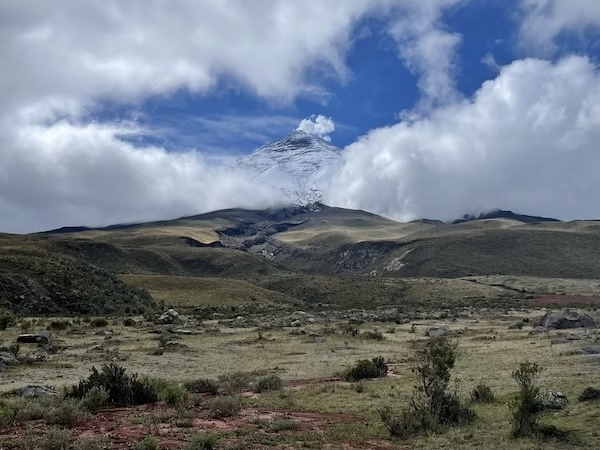
Cotopaxi volcano is the second tallest volcano in Ecuador, reaching a dizzying 5,897 meters (19,347 feet) in altitude. The volcano forms part of the Andes Mountains, and is only about 50 kilometers (31 miles) south of Quito. You can see it from the capital on a clear day. Cotopaxi also has one of the world’s few equatorial glaciers. It’s an impressive volcano. So impressive that they named a backpack brand after it.
Cotopaxi is also one of Ecuador’s most active volcanos. Native peoples worshiped it as a sender of rain, and gods were said to live on the summit. The name Cotopaxi comes from the Quechua words for “neck” and “moon.” Throughout history, the gods of Cotopaxi have shown their wrath, causing earthquakes and landslides. An earthquake even destroyed the nearby Spanish colonial city of Latacunga.
These days, despite still being active, Cotopaxi has become one of Ecuador’s top destinations. Thousands of tourists come to climb the mighty volcano’s slopes, either stopping at the refuge or climbing up to the top. Cotopaxi and the surrounding area are now protected by a national park.
We didn’t feel any earthquakes or eruptions, but I did suffer from some altitude sickness. I’d even spent time acclimatizing in Quito and at our accommodations near the foot of the mountain. Shit happens, I guess.
Thankfully, we had a good supply of coca leaves to help alleviate the symptoms. I strongly suggest picking some up at any of Ecuador’s markets before adventuring into the high mountains. The other big danger you’re likely to face on Cotopaxi is UV radiation. The altitude and position near the equator mean the sun is strong here. Best to cover up and wear a hat. It’s also quite chilly near Cotopaxi. You’ll likely want to be covered up anyway.
How to Get to Cotopaxi Volcano
Again, Cotopaxi isn’t very far from Quito. You can easily reach it by bus in an hour or so. Catch any bus heading to Latacunga from Quito’s Quitumbe bus terminal. Buses leave frequently throughout the day and are dirt cheap.
If you’re heading directly to the park, you’ll need to tell the driver to drop you off at the entrance. He’ll leave you at a turnoff in the road and you’ll then have to walk another hour or so to get to the park entrance. When you want to return, you’ll just have to flag down a bus on the other side of the highway.
You could also visit Cotopaxi as part of a tour from Quito. I have a friend who did this and had a great time.
However, I strongly suggest spending the night near Cotopaxi. The town of Machachi and surrounding villages make a great base for exploring the volcano and the surrounding national park. You’ll also get a glimpse into Ecuadorian rural life. If you’re staying near Cotopaxi, your accommodation will let you know where exactly to get off the bus.

Staying Near Cotopaxi Versus Taking Day Trip from Quito
While it’s definitely possible to visit Cotopaxi on a day trip from Quito, I think that there’s more than enough to see and do in the area to warrant staying a few days at the foot of the volcano.
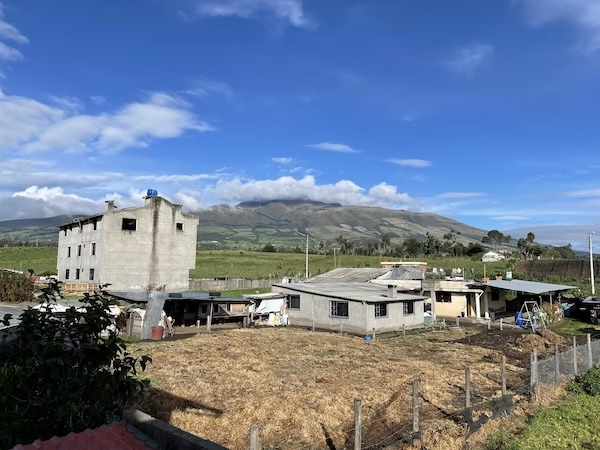
For one, the villages surrounding Cotopaxi National Park are surprisingly authentic and un-touristy. While that can make it more difficult to find dinner or nightlife, it was also a fantastic experience to get a glimpse of rural Ecuadorian village life. It’s something we would have missed completely on a day trip.
Also, Cotopaxi National Park has a lot more trails and hikes than the one going up and down the volcano. We discovered a fantastic trail through some stunning cloud forest and páramo. Best of all, unlike the volcano hike, we had the entire trail to ourselves.
Finally, even if you’re only interested in hiking up Cotopaxi Volcano, you can at least get an earlier start if you stay closer to the park. Yes, it isn’t a long drive from Quito, but it’s even less of a drive from the villages near the park entrance. You’ll also have more flexibility in terms of when you start.
That being said, if you’re only in Ecuador and short on time, a day trip to Cotopaxi isn’t a terrible idea. Click here to see tour options.
Where to Stay Near Cotopaxi
If I’ve convinced you to stay a while at the foot of Volcán Cotopaxi, let me now convince you of the best hotel in the area. Perhaps one of the best in all of Ecuador.
We stayed at a lovely little place called Mateospaxi. I called it a hotel, but it’s more of hostel/guesthouse kind of accommodation. They have a variety of room options. We stayed in one of the cozy stone cabins, which was great. You can easily walk to the main building to use the kitchen, or just hang out, and they have another area where they serve delicious breakfast. The vibe is sociable, but without being a party place.
Most importantly, Mateospaxi is run by one of the nicest people in all of Ecuador. I feel bad that I forgot her name (I’m bad with names) but she was wonderful. She welcomed us with a friendly grin, and was incredibly helpful setting up our tour to Cotopaxi as well as giving us advice for anything else we needed.
Really, if you want to stay near Cotopaxi Volcano, you have no excuse not to stay at Mateospaxi. Click here to book your stay, and you’ll also help support this website at no extra cost to you.
Climbing Volcán Cotopaxi
While we could have easily visited Cotopaxi National Park independently from our accommodation at Mateospaxi, we decided to book a tour through them. I’m glad we did, because the tour ended up being both one of the best and worst experiences I had in Ecuador.
Our guide was a local fellow who had a small farm just down the road from our accommodation. He didn’t speak English, so it fell on me and one English woman to translate for the others in our small group. He was very nice and patient, though.
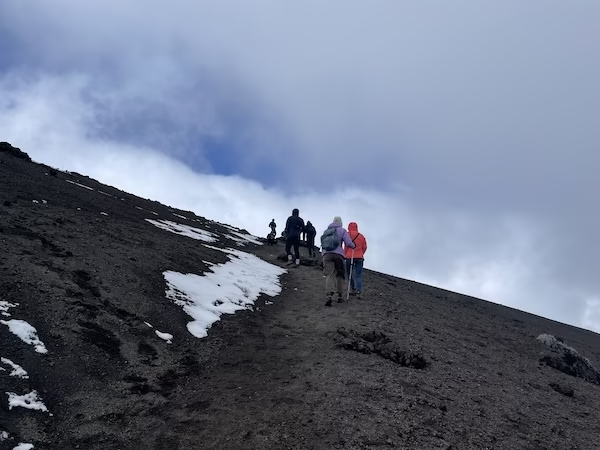
We started at the base of the volcano to hike up to the refuge. Some people opt to climb all the way to the summit, but you need specialized guides and permits for that. Also, when we went the trail to summit was closed due to volcanic activity. For me, the death march to the refuge was more than enough.
The José Rivas Refuge sits at 4,864 (15,953 feet) above sea level. It’s very high. Higher up than the peak of the tallest mountain in the continental United States.
I thought that I’d adjusted to the altitude in Quito. We had done a hike the day before and were totally fine. Even still, hiking up the slope of Cotopaxi Volcano completely kicked my ass. I eventually did reach the refuge, but my head was pounding and my lungs struggling to make due with nowhere near enough oxygen. It sucked.
Maybe it would have been worth it if we’d gotten a nice view. Unfortunately, by the time we reached the refuge, the clouds had come in and all we saw was a thick wall of grey. And, of course, we still had to hike down. My knees still hurt just thinking about it.
Rural Adventures at a More Reasonable Altitude
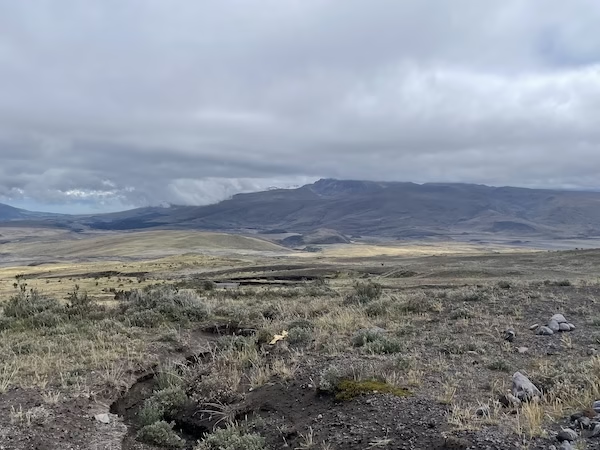
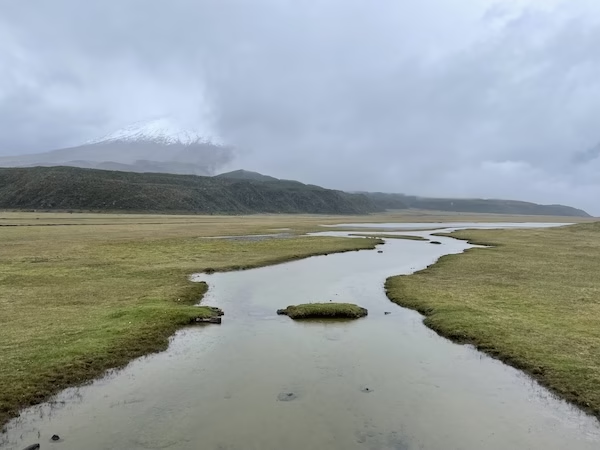
Needless to say, I really didn’t enjoy the hike up the side of the volcano. Thankfully, I began to feel better once we’d made it down. The area around the volcano is covered in gorgeous high altitude paramo. If you don’t know, the paramo is a wet, high-altitude grassland that’s unique to South America. The Brits we were with said it reminded them of the English moors. I personally think it’s a very beautiful landscape.
After we strolled around a beautiful mountain lagoon, with mighty Cotopaxi shrouded in clouds behind us, we went for lunch. Over some delicious local soup, our guide asked if we wouldn’t mind making an extra stop. Of course, we didn’t mind.
Our guide turned out to be a local farmer. He needed to get back to his farm and feed his chickens and cows for the afternoon. So, after our tour of the volcano, we got a brief tour of our guide’s farm. You could tell how proud he was as he introduced us to his animals, including an adorable little calf.
So, while I have mixed feelings about Volcán Cotopaxi, I absolutely loved this little glimpse into the local lifestyle. And for city scum like me, how often do you get to see cows up close? It was one of those detours that outshone the original tour. One of those pleasant little surprises that makes traveling so rewarding.
Hiking El Boliche: A Hidden Gem in Cotopaxi National Park
Speaking of memorable travel experiences, there is so much more to the area surrounding Cotopaxi National Park than just the Cotopaxi Volcano. For example, there’s another, smaller park, called El Boliche that sits nestled at the foot of nearby Volcán Ruminahui just north of Cotopaxi National Park.
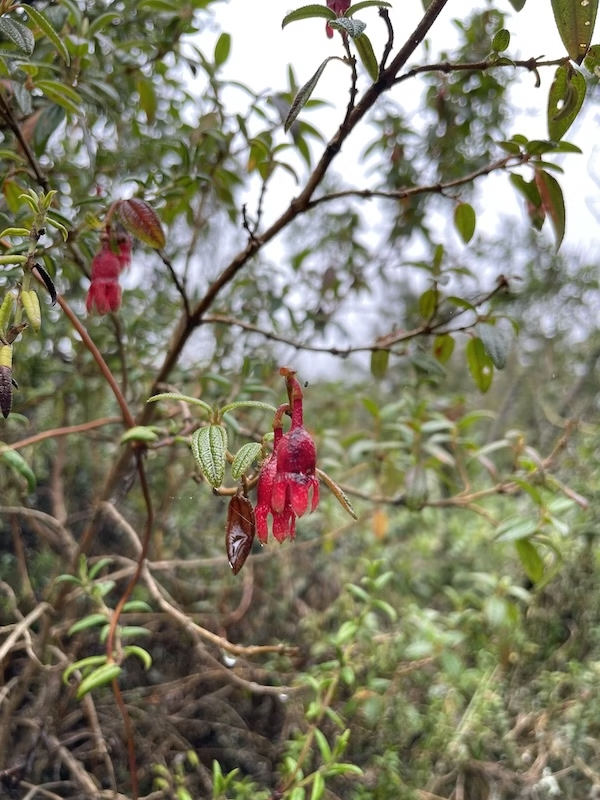
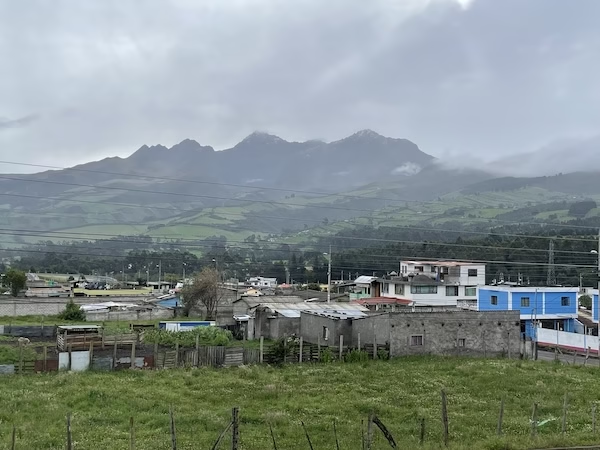
While the standard Cotopaxi Volcano hike can get kind of crowded, we had the trails running through El Boliche Nature Reserve all to ourselves. The park encompasses thick forest, including some Andean cloud forest, as well as a bit of paramo. Supposedly there are also various birds and some foxes and other animals. We heard the birds, but it was too cloudy to really see any wildlife. I still really loved our hike.
El Boliche is located off the main highway just north of Cotopaxi National Park. If you’re staying at Mateospaxi, or anywhere near the town of Machachi, you can take any southbound bus and ask to get off at El Boliche. Ask at your accommodation for more precise directions. It’s pretty easy, though. You’ll have to walk up the road to get to the park, but it’s a quiet, and also very pretty, dirt road.
El Boliche’s trails are great, but not more than an afternoon’s hike. I’d recommend coming here first, before you head up the steep slopes of Cotopaxi.

Final Thoughts on Cotopaxi Volcano
Cotopaxi Volcano is a very beautiful volcano. I love its snow-capped peak and almost perfect conical shape. I did not, however, love the hike up to the refuge. Maybe I’m just out of shape or starting to get too old to be tramping up the sides of volcanos. Sigh.
I did, however, absolutely love meeting all the people we met at the foot of Cotopaxi Volcano. From the friendly hostess at our accommodation to helping our tour guide feed his cows, I felt like I got an invaluable glimpse of rural Ecuador.
Cotopaxi Volcano might be a top tourist attraction, but I think the real reason to visit here is the people who make this place so special. As is the case so often with travel, the real highlights aren’t the sights you see, but the people you meet.
Click here to read about more Ecuadorian highlights: Expeditions in Ecuador: A Travel Guide to the Country in the Middle of the World
Useful Websites for Traveling Ecuador
As much as we might long for the days when you could show up to a town with nothing more than a beat-up guidebook and a sense of adventure, today much of traveling involves being glued to our phones making bookings. I’ve compiled some helpful apps and websites below that at least help make those bookings more convenient so you can spend less time staring at your phone and more time exploring at your surroundings. Some of these sites are affiliate links that give me a small commission at no cost to you if you chose to book through them. All of them are sites I’ve used personally and have no problem recommending.
Just be sure to do your due diligence as much as possible. Only hire local guides and try as much as possible to stay in locally owned hotels and hostels so that your hard earned travel dollars actually go to support the local economies of the places you visit.
Booking.com is basically the world’s only hotel booking website. They have hotels, guesthouses and vacation rentals all over Ecuador.
Hostelworld is the go-to site for booking hostels. If dorm rooms and shared bathrooms are your thing, you’ll find hostels all over Ecuador.
Get Your Guide offers tours and activities all around the world. Unlike some other sites and apps that do the same thing, you can actually find some reasonably priced deals here.