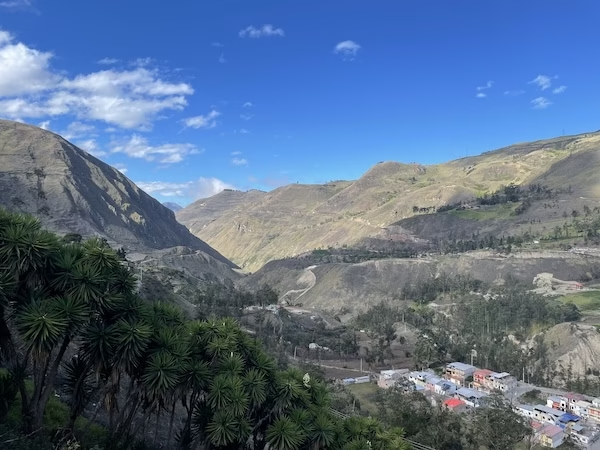
The unassuming mountain town of Alausí is a gorgeous place to stop during a trip to Ecuador. It seems cliché to say a place is lost in time, but Alausí’s charming, walkable brick streets really do make you feel like you’ve stepped back somewhere in the late 19th century. The town is surrounded by looming green mountains and the streets suddenly drop off into a jaw dropping deep gorge.
Despite all that, Alausí remains relatively free of foreign tourists. It’s not quite off the beaten path. Let’s say, it’s beaten path adjacent. If travelers have heard of Alausí at all, they’ve probably heard of the famous Nariz del Diablo (or “devil’s nose”) train ride.
I’m sure it’s a nice ride, when the trains are running, but the real Alausí’s real charm lies in its more impressive, and less well known, hiking trail of the same name.
What to Know before Visiting Alausí
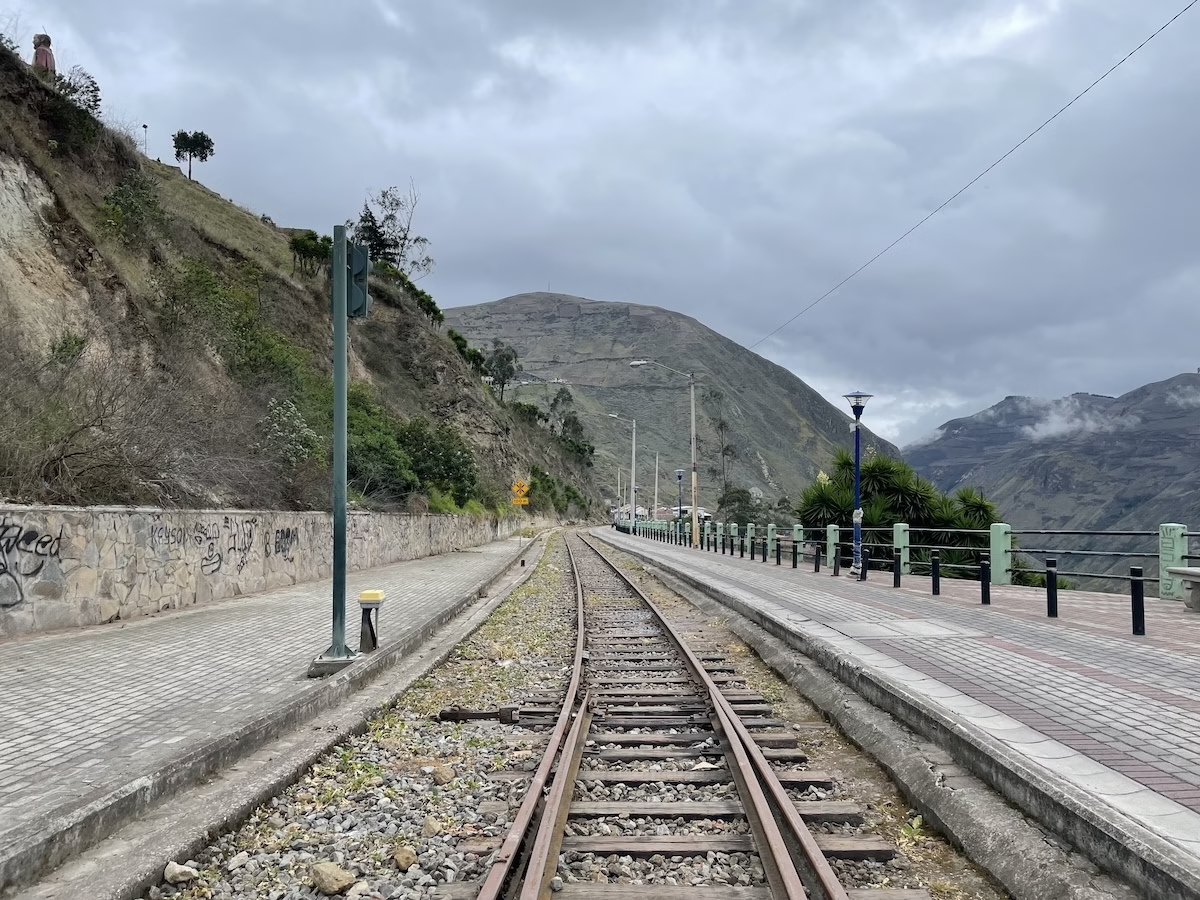
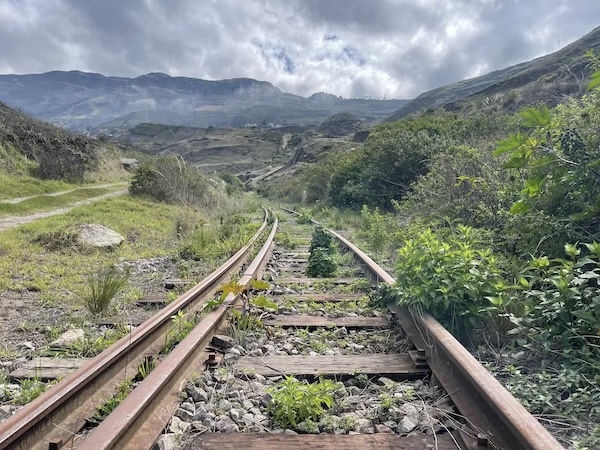
Alausí is famous throughout Ecuador for its railway heritage. It was an important stop on the train line that ran down the Andes mountains from Quito to Cuenca. Unfortunately, despite attempts by former president Rafael Correa to restore service in the early 2010s, Ecuador’s train system has since fallen into disuse. Passenger trains came to a full, screeching stop during the pandemic in 2020 and have yet to be restarted.
In addition to train related problems, the town suffered a major landslide in 2023. Heavy rains caused literal tons of mud to slide down the hill, destroying over one hundred buildings and killing at least 11 people, as well as injuring 23 and leaving 67 missing. Hundreds more people lost their homes. When we visited, you could still see an enormous blank space on the hillside where the landslide happened. It was quite a sobering sight.
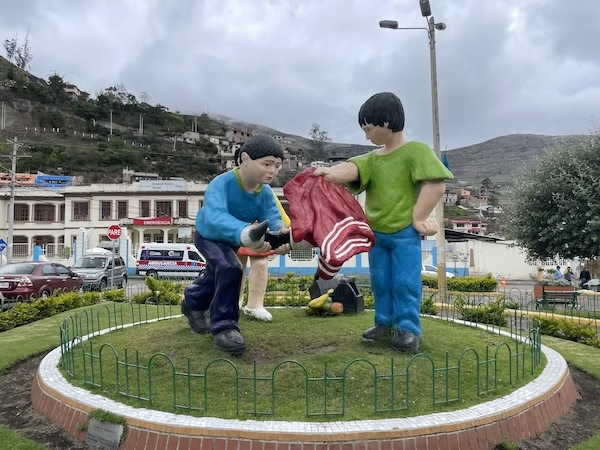
Like many larger Ecuadorian towns, Alausí is also an economic and commercial center for folks living in surrounding native villages. You’ll likely hear people speaking Kichwa in addition to Spanish, and even see women dressed in traditional indigenous outfits. Please remember, they are just going about their lives. Never take photos of people without their permission.
How to Get to Alausí
Alausí is right off the Pan-American highway, so it’s pretty easy to get to by bus. The town is about halfway between Quito and Cuenca. Buses leave from Quito’s Terminal Quitumbe and take about four or five hours. Buses from Cuenca take about three or four hours and leave regularly from the main terminal.
Riobamba is only about two hours away and is a nice stop if you want to break up the journey from Quito.
You can usually just show up at the bus station and buy your tickets the day you want to travel. Just look for “Alausí” on the ticket booth.
We found the public buses in Ecuador to be safe, cheap and reliable. I feel like there’s no good reason to waste money renting a car or taking a tourist shuttle.
Where to Stay in Alausí
Due to the popularity of the Nariz del Diablo train ride, there are a surprising number of accommodations in Alausí. Yet, surprising considering how few other tourists we saw.
Thankfully, the decision of where to stay is easy. You don’t need to look any further than Community Hostel Alausí.
The Community Hostel is a comfortable place that’s located just off the main plaza and near the train station. It’s part of a two-location chain, and the staff was very friendly and helpful. In fact, they were the ones who turned us on to the Nariz del Diablo hike in the first place. Plus, breakfast is included.
You can click here to book your stay at Community Hostel Alausí. As always, if you book using this link, I get a small cut at no extra cost to you.
What to Do in Alausí
Alausí is not a big, bustling sort of place. The average traveler will probably only want to spend a night or two. The surrounding landscape is spectacular, though. I would bet that an intrepid tourist with a lot of time and some decent Spanish and Kichwa language ability could find some amazing off-the-beaten-path hikes or other adventures in the mountains around town or in the nearby villages.
The Nariz del Diablo Train Ride
The main reason travelers come to Alausí is for the famous Nariz del Diablo train ride. The name Nariz del Diablo means “devil’s nose” in English. Apparently, one of the mountains resembled Satan’s snout to whoever was in charge of naming things. The name could also refer to the devilish switchbacks the railway engineers construct through the rough, mountainous terrain. It’s supposed to be one hell of a train ride.
The downside? The train may or may not be running. Probably won’t be. As I mentioned above, Ecuador suspended its passenger service years ago. The poor Ecuadorian people have to journey by bus, like suckers. However, we’d read that tourist trains like the Nariz del Diablo were still running.
We read wrong.
I’m a sucker for a good train journey, and I arrived in Alausí excited for the Nariz del Diablo. However, despite what some other online resources had told me, when we arrived in Alausí, the train was shut down.
The locals said the train is supposed to re-open at some point in the future. That could be by the time you read this, or it could be in 2085. Ecuador is going through a lot right now, so I understand that tourist railway travel might not be a major national priority.
Unfortunately, the official website isn’t very helpful. There’s one, very tiny, notification in Spanish of closure dated February 18 and not too much else. If your heart is absolutely set on taking the Nariz del Diablo train, I’d double check with your accommodation in advance just to save yourself the potential disappointment.
Thankfully, though, our accommodation turned us on to Alausí’s other big draw. Turns out there’s more than one way to climb up the devil’s nose.
The Nariz del Diablo Hike
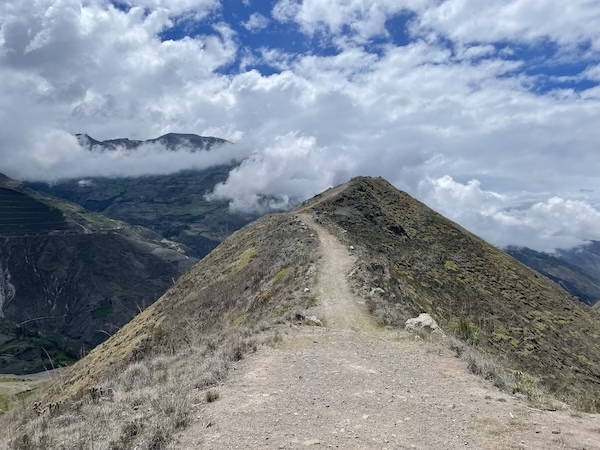
In one of those ironically serendipitous moments that only seem to happen while traveling, it turned out that missing out on the Nariz del Diablo train ride led us to one of my favorite hikes in Ecuador and the best thing to do in Alausí: the Nariz del Diablo hike.
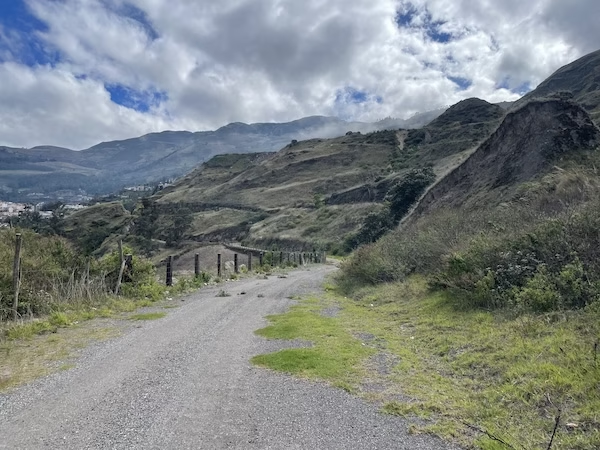
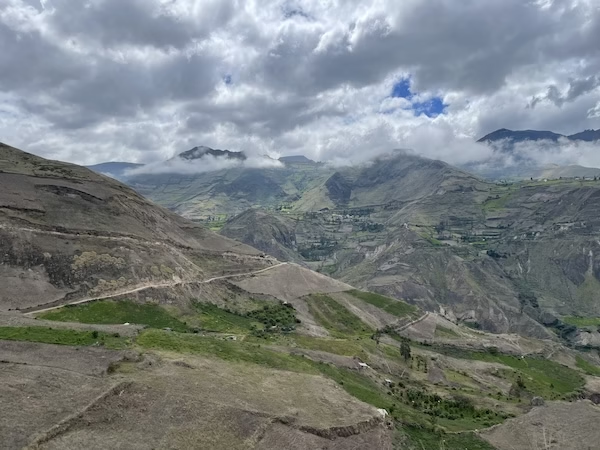
This hike sort of follows the route of the train, but instead of descending into the bottom of the gorge, it stays up on the rim. The Andes Mountains are really remarkable around Alausí, and this hike provides some pretty astounding views. The trail is an old path used by indigenous people to and from the nearby village of Nizag.
In fact, the village of Nizag, is where you finish the hike and can catch the bus back to Alausí. On our trip back, we ended up on a bus full of school kids in uniform who were all speaking Kichwa to one another. It was very cool to see and hear the younger generation still using a traditional language descended from the Inca. I wonder how you say “6-7” in Kichwa?
The entire Nariz del Diablo hike takes anywhere between 2 to 4 hours depending on how fast you go and how often you stop for photos. It’s a relatively easy hike, so no embarrassment if you’re a little out of shape like I am. It was also a nice break if you’ve previously had your butt kicked on other hikes, like climbing up Volcán Cotopaxi.
While the beginning can be a little tricky to find, it’s pretty straightforward once you get out of town. Community Hostel Alausí has a guide to the hike, with up-to-date information (and even photos) which is quite helpful.
Exploring the Streets
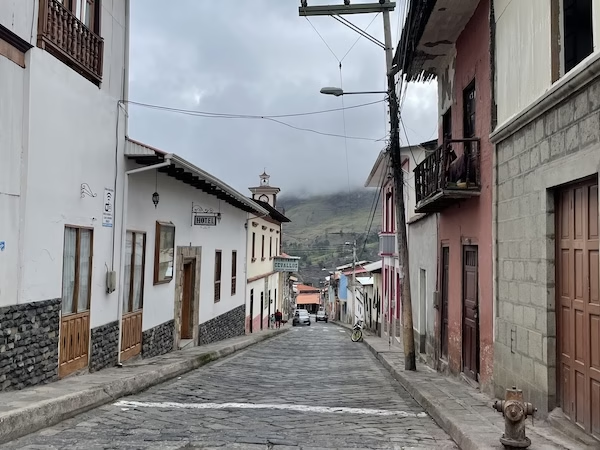
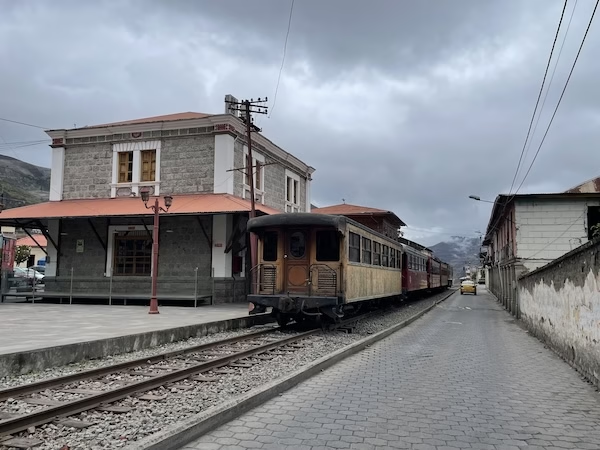
Beyond the trail to the Nariz del Diablo, you can spedn the rest of your time in Alausí exploring the streets. The town has some Spanish colonial architecture, but most of it feels like a throwback to the 19th or early 20th century. The train tracks running down the middle of the road only add to the charm.
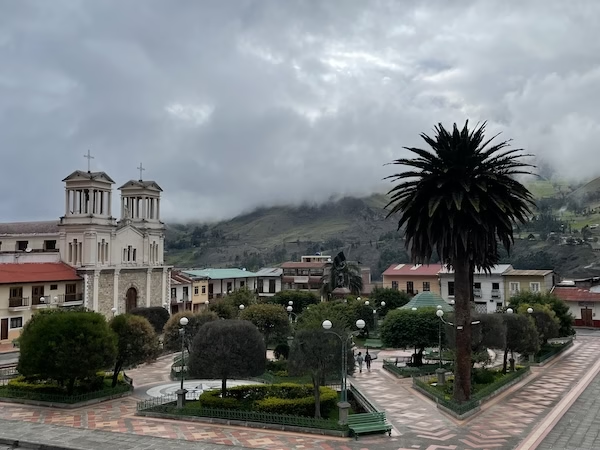
The Parque 13 de Noviembre is the main, central, plaza in town. It’s very nice. The giant statue of Saint Peter is also a must see. Alausí’s streets are kind of a windy, twisty, mess, due to the town’s topography. Part of the fun is wandering around and getting lost. Luckily, it’s not a big town, so you can find your way back without too much trouble.
Final Thoughts on Alausí
All in all, we had a fantastic time during the couple of days we spent in Alausí. The town is designated as a “pueblo magico” by the government of Ecuador. Walking the old streets, feeling transported to the time when railroads were king certainly felt magical. Even if the actual railroads weren’t functioning.
The main highlight of visiting Alausí, however, definitely has to be the Nariz del Diablo hike. The hike might not be as challenging as slogging up Ecuador’s high-altitude volcanoes, or the rim of the Quilotoa lagoon. But, that’s part of the appeal. You have time to slow down, take in the magnificent views and really live in the moment of where you are rather than gathering all your focus and determination just to reach the end destination at a reasonable time.
The Nariz del Diablo hike in Alausí might actually have been the point where we finally reached that elusive feeling of travel zen during our trip through South America. Where we stopped worrying about where we were heading and began to deeply appreciate where we were. It’s the kind of contentment I don’t think you can get on a train.
Ready to miss out on trains in the rest of Ecuador? Click here for our travel guide: Expeditions in Ecuador: A Travel Guide to the Country in the Middle of the World
Useful Websites for Traveling Ecuador
As much as we might long for the days when you could show up to a town with nothing more than a beat-up guidebook and a sense of adventure, today much of traveling involves being glued to our phones making bookings. I’ve compiled some helpful apps and websites below that at least help make those bookings more convenient so you can spend less time staring at your phone and more time exploring at your surroundings. Some of these sites are affiliate links that give me a small commission at no cost to you if you chose to book through them. All of them are sites I’ve used personally and have no problem recommending.
Just be sure to do your due diligence as much as possible. Only hire local guides and try as much as possible to stay in locally owned hotels and hostels so that your hard earned travel dollars actually go to support the local economies of the places you visit.
Booking.com is basically the world’s only hotel booking website. They have hotels, guesthouses and vacation rentals all over Ecuador.
Hostelworld is the go-to site for booking hostels. If dorm rooms and shared bathrooms are your thing, you’ll find hostels all over Ecuador.
Get Your Guide offers tours and activities all around the world. Unlike some other sites and apps that do the same thing, you can actually find some reasonably priced deals here.