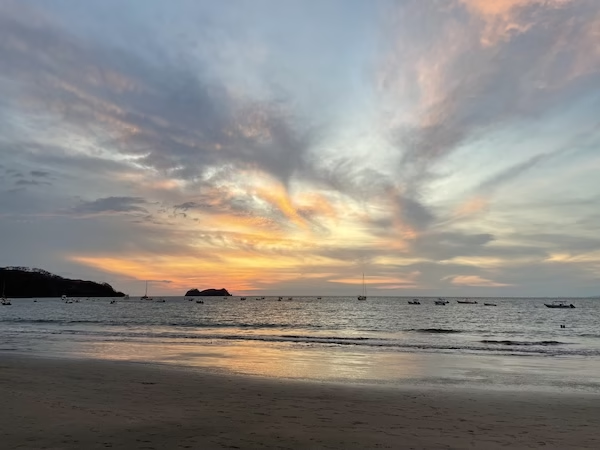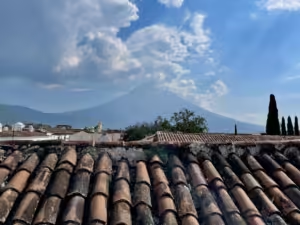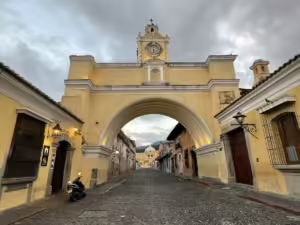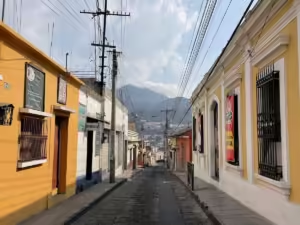
Backpacking Central America is a potentially life changing experience. The region is beautiful, with dramatic volcanoes, gorgeous beaches and dense jungles to explore. The people are usually friendly and happy to share their culture with visitors.
Of course, traveling in Central America is not always easy. The region has long been plagued by social and political issues like endemic crime, corruption, and poverty. It has a long, turbulent history overshadowed by its North American neighbor.
What I found most astounding about Central America, though, is how the people have not only survived, but persevered. Central America is a lesson in resilience and the triumph of the human spirit.
And so, I’m writing this overly-long travel guide to backpacking Central America in the hopes that I can help you experience some of this life-changing magic for yourself.
This guide is mostly based on the recent experiences my wife and I had taking nearly six months traveling from Guatemala down to Panama. It’s a guide for working class travelers who don’t want to spend a fortune, but also want to travel in a slower, more authentic and respectful way.
Quick Central America Highlights
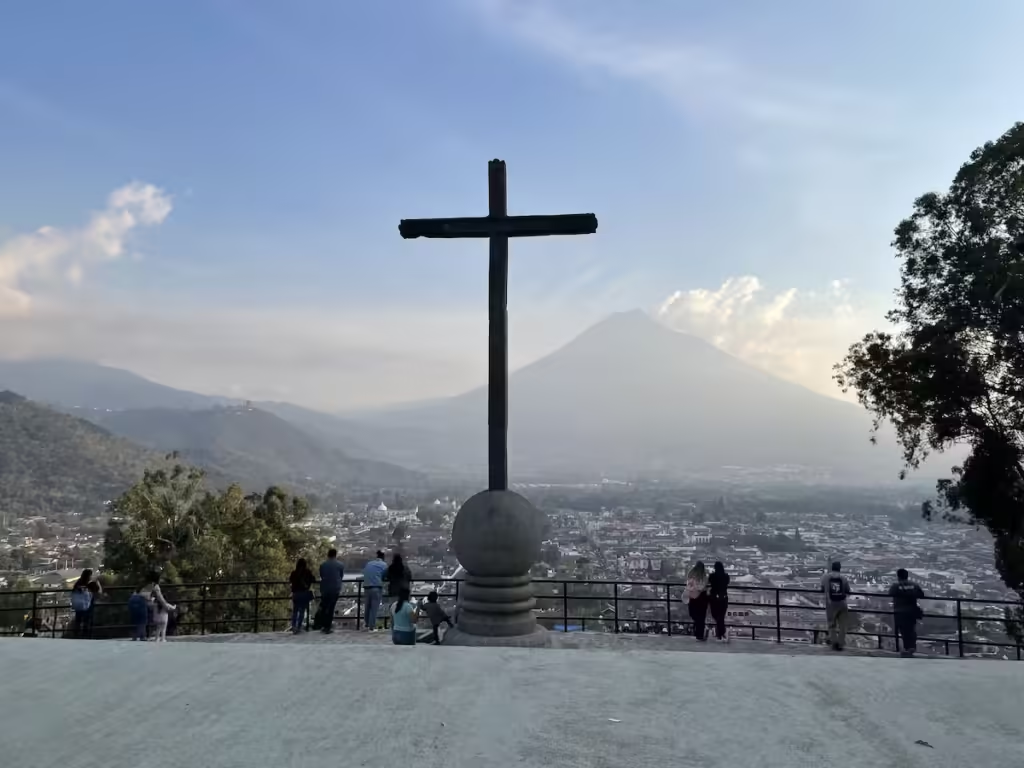
Colonial cities: Antigua (Guatemala), Granada (Nicaragua), Panama City (Panama)
Nature and rainforests: Costa Rica, Isla Ometepe (Nicaragua), Rio Dulce (Guatemala), Boquete (Panama)
Beaches and surf: El Tunco (El Salvador), Santa Catalina (Panama), Bocas del Toro (Panama)
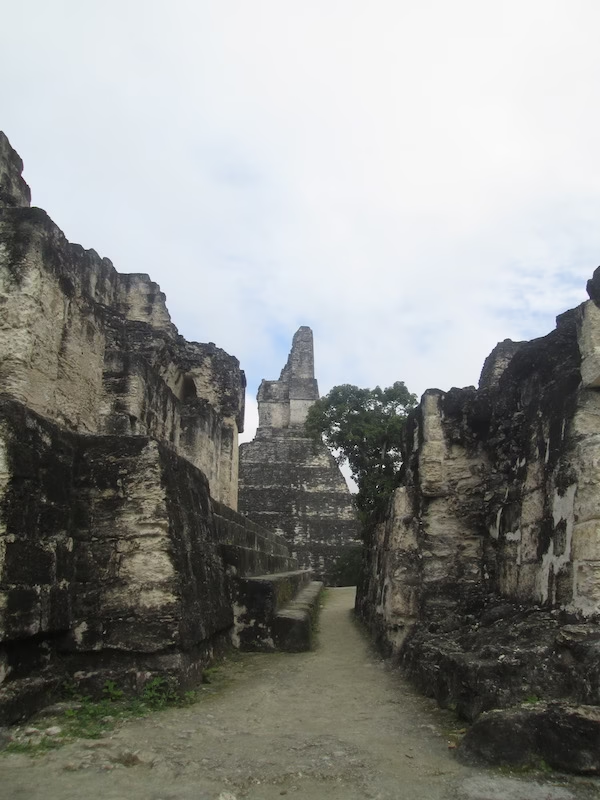
Ancient ruins: Copán (Honduras), Tikal (Guatemala)
Off the beaten path: Livingston (Guatemala), Drake Bay (Costa Rica), Bijagua (Costa Rica)
For budget travelers: Guatemala, Nicaragua, El Salvador
Learning Spanish: Antigua (Guatemala)
Meeting friendly locals: Santa Ana (El Salvador)
Top Tips for Backpacking Central America
- Learn some Spanish. Knowing a few phrases goes a long way in endearing you to the local people. It can also lead to some fascinating conversations and teach you a lot. You can find Spanish classes throughout the region, but some of the best in Guatemala.
- Don’t be afraid. Yes, some parts of some Central American cities are very high crime. But tourists are almost never the target. Most local people want you to have fun in their country. Be aware of your surroundings, but not paranoid.
- Carry hand sanitizer and toilet paper. Public bathrooms are common, but often lacking in key essentials.
- You will get sick. Stomach bugs are just part of the adventure and things will clear up in a few days. Carry some Imodium or other anti-diarrheal medicine just in case.
- Take your time. Central America lends itself to slow travel. There’s so much to see, do and explore, and some of the best experiences come from taking the time to wander.
Before You Go
Climate and best time to visit
Central America is tropical and, generally speaking, the region is humid and hot year-round. Seasons are divided into the dry season, which is usually November to April and the rainy season, which is typically May to November. Higher altitude areas, such as the Guatemalan highlands, are cooler and can feel downright chilly at night.
The standard advice is to visit during the dry season. This can be nice if you’re coming from the Northern Hemisphere and want to escape winter. However, prices tend to be higher and you’ll have to deal with more crowds.
We traveled through Central America mostly in the rainy season, and I loved it. Mornings were usually sunny, with short, heavy rain showers during the afternoons. Eventually, we learned to adapt our day to the weather. We’d spend the morning exploring, head back to our room to relax during the rain and then head out again when it cleared up.
One thing to note: if you’re heading to the Caribbean side, hurricane season runs from July to November. Best to avoid traveling during a hurricane.
Visas and entry requirements
Pretty much anyone from North America or Western Europe will be able to come and go to and from any country in Central America freely without much hassle. These things can change, so double check before you leave, but tourist visas shouldn’t be a problem if you’re from most of the developed world. It’s quite the opposite for Central Americans wanting to visit the U.S., I can assure you.
Most countries offer a 90-day visa free entry. This is complicated by the fact that Guatemala, El Salvador, Honduras and Nicaragua share a 90-day visa. That means you have three months for all four countries combined. You’ll have to make a side trip to Mexico, Belize, or Costa Rica to restart the process. You can also apply for an extension, but make sure you only apply through official channels. We met someone who got scammed, thought she’d extended her visa but had to pay a $200 fine to leave Honduras. Yowch!
The Onward Ticket Dilemma
Most Central American countries also require proof of onward travel. This rule is to prevent digital nomads from living and working without paying taxes on a tourist visa. This proof is most often a plane ticket, but can also be a bus ticket. An onward plane ticket back to your home country from another country should work fine. For example, you could get a flight into Guatemala and show a flight out of Panama as proof of onward travel.
Enforcement is very strict at airports. At land border crossings, it depends on the mood of the border agent that particular day. Absolute worst-case scenario, you’ll just have to buy a plane or bus ticket out of the country on your phone right then and there.
You could also try using onwardticket.com to buy a fake onward plane ticket. This option is popular, but slightly on the sketchy side of things and definitely not a 100% guarantee.
Budget expectations
Central America is well known as an inexpensive place to travel. To be honest, it’s not as cheap as you think. Costs can add up quickly if you aren’t careful. Also, always remember that things aren’t cheap for the locals. And the reason they are cheap for you is because the local people get paid very low wages.
Finally, I don’t believe that cost should be the sole reason you visit a place. You should come to Central America because it is a beautiful, interesting place, not just because you want a cheap vacation.
So, with all that in mind, I recently went through my old bank statements and found that I pretty consistently spent about $60 a day on our trip backpacking through Central America. This seems like a pretty good mid-range budget to shoot for, and a good budget for couples.
My wife and I generally split most things evenly, but I have to admit that my machismo kicked in at times, and I paid more than my fair share. Damn the patriarchy!
We used the app Travel Spend to keep track of our spending. Accommodation was by far the biggest expense, followed by food and transportation. El Salvador and Nicaragua were the two most budget friendly Central American countries. Costa Rica and Panama were by far the most expensive. Guatemala sits somewhere in the middle.
Obviously, prices change all the time (though they seem to be mostly going up these days.) Take any information you find online, including on this blog, with a grain of salt.
It’s better to over budget and have money left over, or extra for a big splurge, rather than finding yourself suddenly having to pinch pennies and miss out on some cool activity because you ran out of cash.
What to pack for Central America
A quick google search will send you to about a million detailed packing lists. I’m assuming you’re an adult and can calculate how many t-shirts you need. In general, though, it’s less than you think. If you can’t fit everything into a carry-on bag (35 to 40 liters), you’re bringing too much.
My number one bit of packing advice for backpacking Central America is to pack moisture wicking underwear. Not only will they dry quickly when you inevitably have to wash them in the hotel sink, but they wick away sweat and keep you comfortable throughout the day. I like Exofficio, but get whatever brand you want.
Lightweight, quick-drying clothing is a good idea in general. You’ll be tempted to only pack shorts and t-shirts, but don’t forget some lightweight long pants and a hoodie or light jacket for cool highland evenings. Long sleeves also make for great mosquito protection.
Packing cubes are a major help. They compress your stuff just enough, and also help keep everything organized. I can’t express how much of a difference this makes when you’re looking for something specific and don’t have to unpack your entire bag just to find it.
Ear plugs are a must for when the fireworks start up at three in the morning. I wish I would have brought some kind of sleeping mask, too.
A money belt that can be worn under clothing is helpful for hiding cash, cards and passports. Especially on long bus rides. A fanny pack (or bum bag for those of you in the U.K.) is great for keeping your phone and wallet secure.
You can find essentials like sunscreen and anti-diarrheal medicine in most towns in Central America. Decent insect repellent, however, is essential and you’ll have to bring some from home.
The Central America Backpacking Route Guide, Country by Country
This section will guide you through our Central American backpacking journey. Our route isn’t necessarily the best one. You should adjust depending on your own individual interests and travel style. Of course, Central America’s geography really lends itself to a more linear journey, so there isn’t too much variation possible. There’s a reason the Gringo Trail follows the path it does.
Guatemala – Land of the Maya and the Start of the Central American Backpacking Adventure
Guatemala stops: Guatemala City, Antigua, Quetzaltenango, Lake Atitlán, Cobán, Lanquín, Semuc Champey, Rio Dulce, Tikal, Livingston (then back to Antigua)
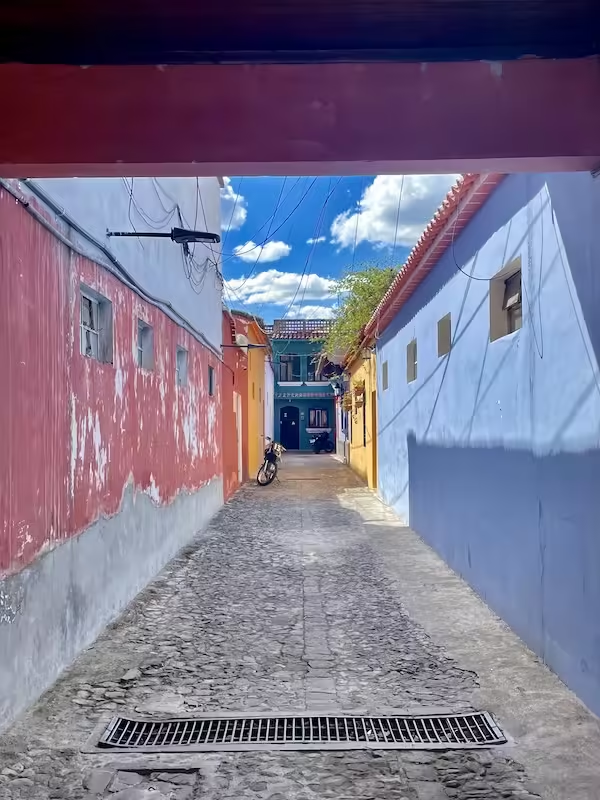
One of Central America’s most popular backpacking destinations is popular for a good reason. Guatemala has a varied landscape ranging from rugged volcanic highlands to dense lowland rainforests. You can find gorgeous Spanish colonial towns, and villages where Mayan culture still reigns supreme.
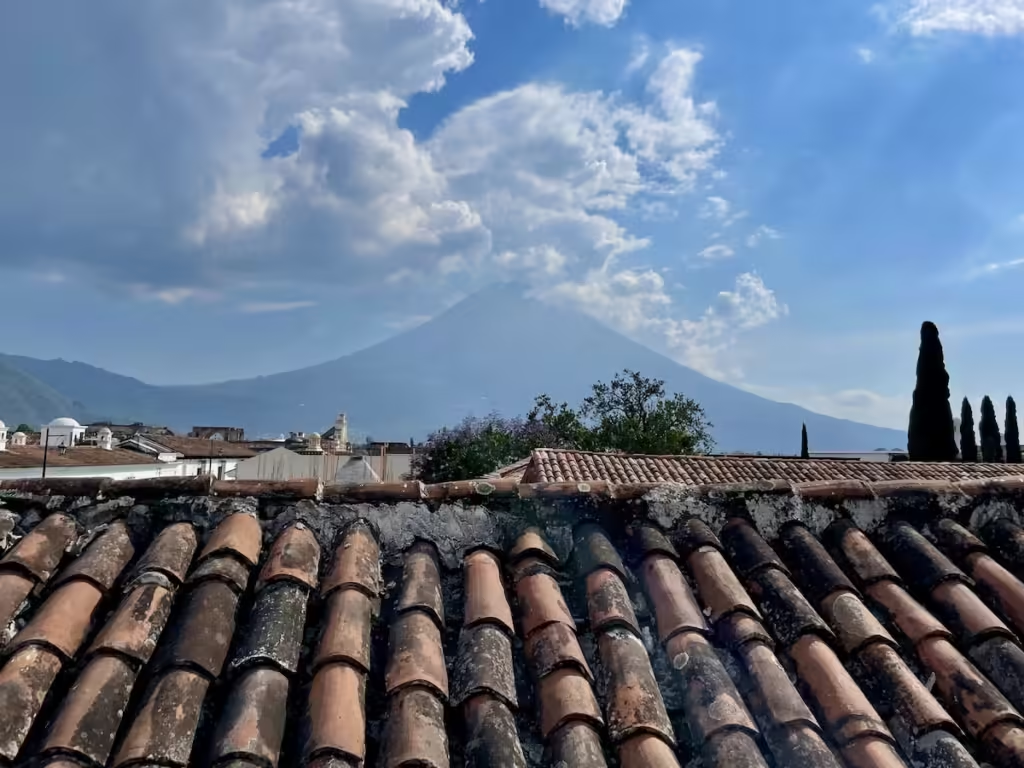
Highlights include Antigua, which is a beautifully preserved colonial city. It’s a great place to base yourself for a while as you ease in to Central America. It’s also an excellent spot to take Spanish lessons, which will serve you well on the rest of your journey.
Nearby Lago Atitlán is a gorgeous lake surrounded by indigenous Mayan villages and steep, dramatic cliffs. And then there’s the bustling city of Quetzaltenango.
Hidden gems in Guatemala include Rio Dulce, where you can kayak among mangroves, Cobán where you can seek out the elusive resplendent quetzal, and Livingston where afro-Guatemalan culture gives the town a distinct Caribbean vibe.
We spent a solid two months exploring Guatemala, and I could honestly go back and still discover more.
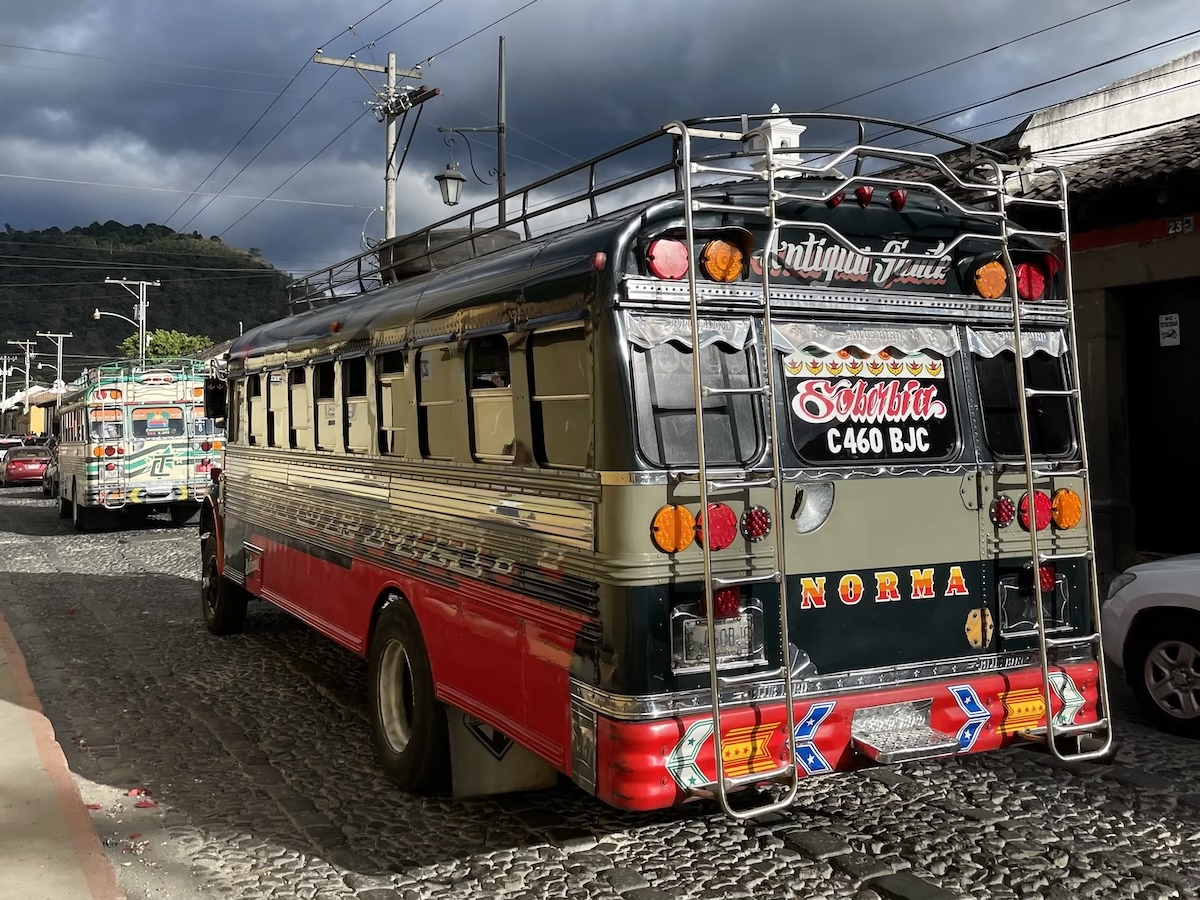
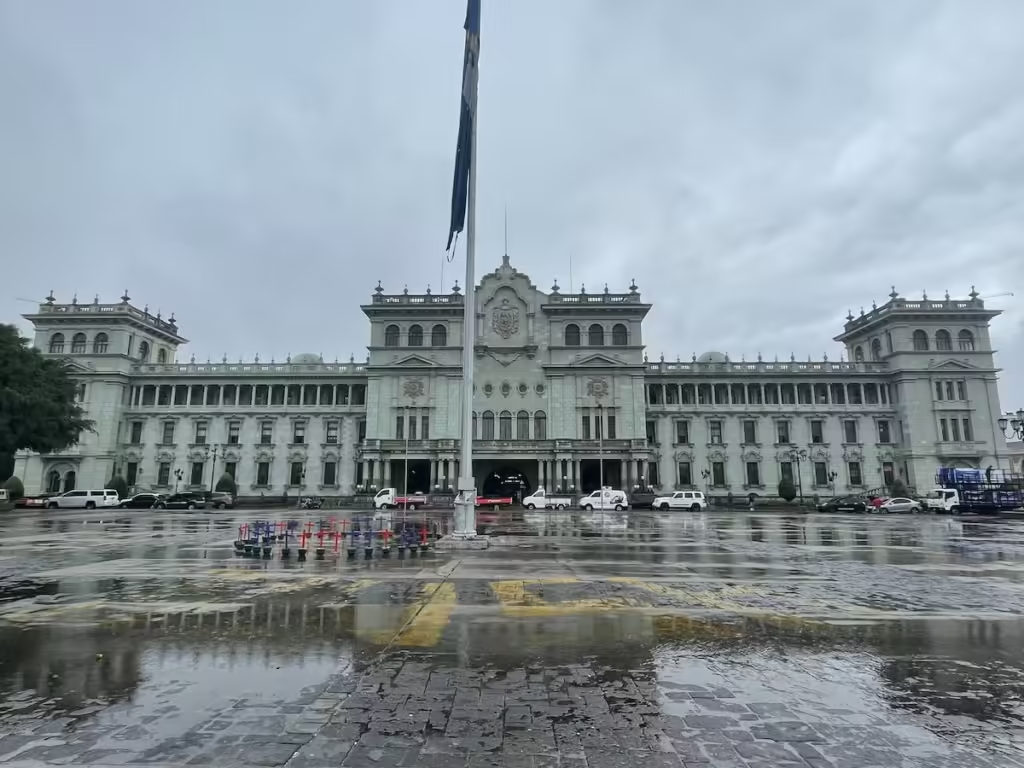
While the local chicken buses (old school buses repurposed as public transportation) are mostly great, we were warned by locals not to take them near Guatemala City, including to and from Antigua. Budget a little more for shuttles just to be safe. Otherwise, Guatemala is generally a safe and fun destination. It’s also an excellent place to start your Central American backpacking adventure.
Read more about Guatemala in our full travel guide here: Go to Guatemala: A Travel Guide Without the Tourist Traps
Honduras – A Quick Stopover for Some Amazing Ruins
Honduras stop: Copán Ruinas
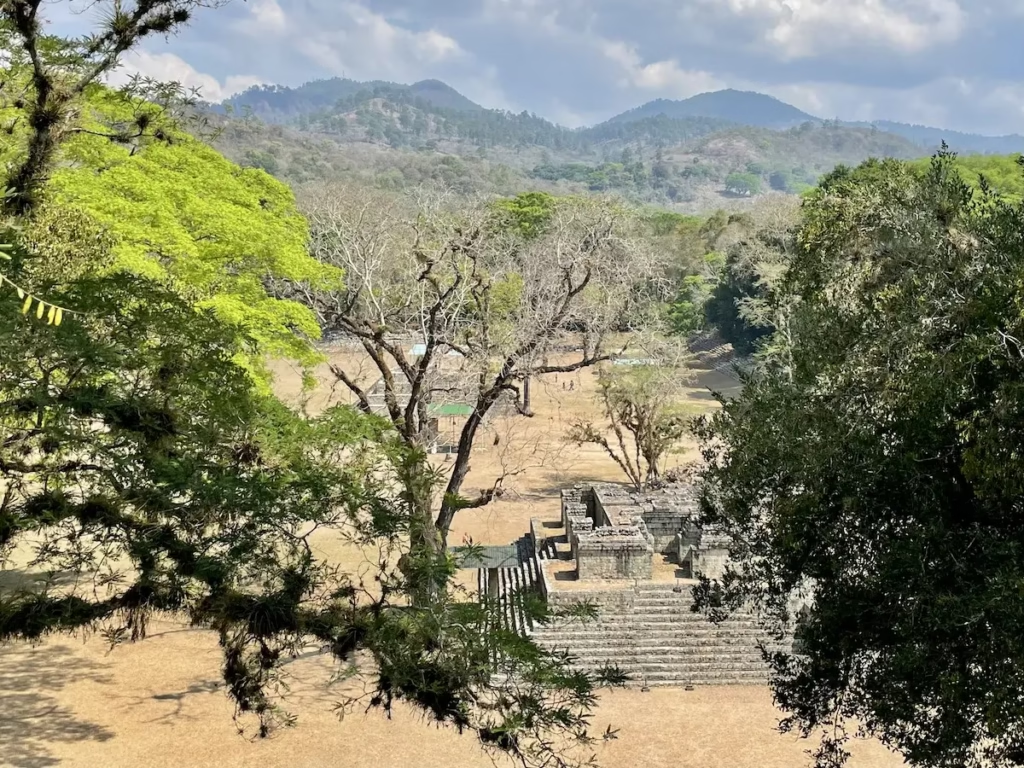
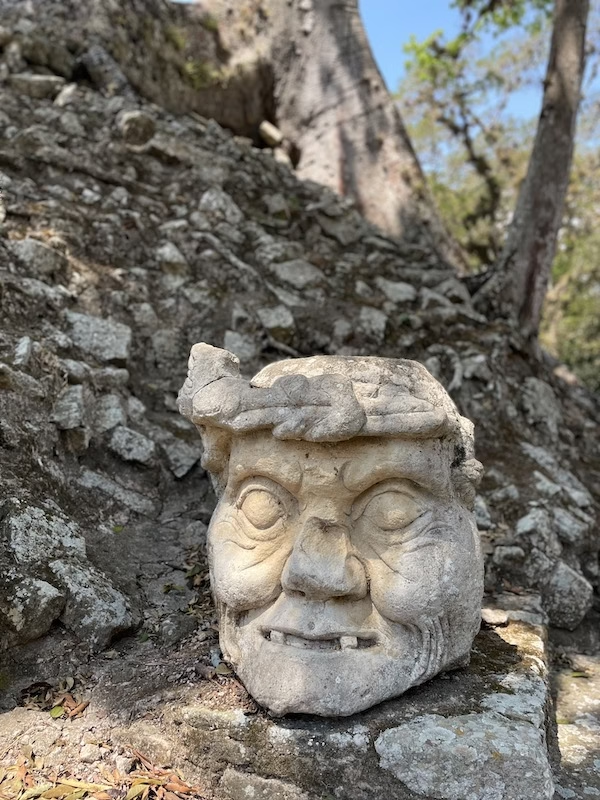
We only spent about four days in Honduras, and I absolutely loved it. Copán Ruinas is one of the world’s most amazing Mayan ruins. It easily holds its own with more popular sites in Guatemala and Mexico. The town itself is a beautiful little mountain town where locals wear cowboy hats and rural women’s weaving collectives keep Mayan textile traditions alive.
Our brief time in Copán Ruinas hooked me on Honduras. I would have stayed longer during our long Central American backpacking trip, but we had plans to meet friends in Costa Rica and wanted to make sure we had enough time to visit El Salvador and Nicaragua. I can’t wait to go back, and definitely plan to. And, of course, I’ll update this section when I do.
Also, since you were probably wondering, we felt perfectly safe. Most crime in Honduras is concentrated in the big cities, but the little mountain town of Copán Ruinas is secure and tranquil.
Read more about our short stopover in Honduras here: Copán Ruinas: Visiting Mayan Ruins and More in Honduras
El Salvador – Central America’s Friendliest Surprise
El Salvador stops: El Tunco, San Salvador, La Ruta de las Flores, Santa Ana
I wasn’t sure what to expect when we visited El Salvador. This small country was once the world’s murder capital, and is now struggling to rebuild its image and develop its tourist industry. Unfortunately, El Salvador’s turnaround involved mass imprisonment, rights violations and worst of all: an alliance with Donald Trump.
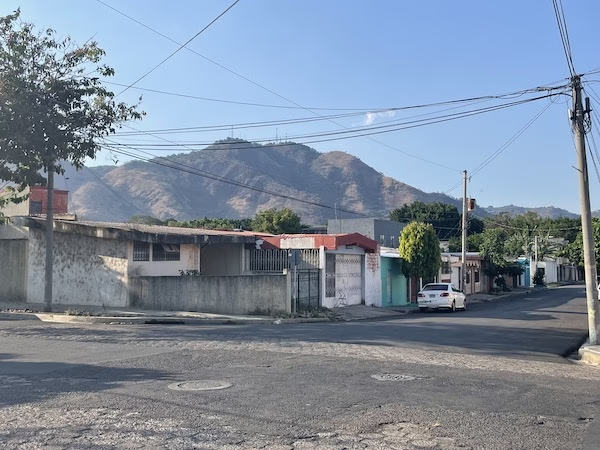
However, the people were what made El Salvador such a highlight. I think Salvadorans might be the friendliest people in Latin America, a region known for its friendly people. We felt incredibly welcomed, and people were genuinely enthusiastic to share their country with us.
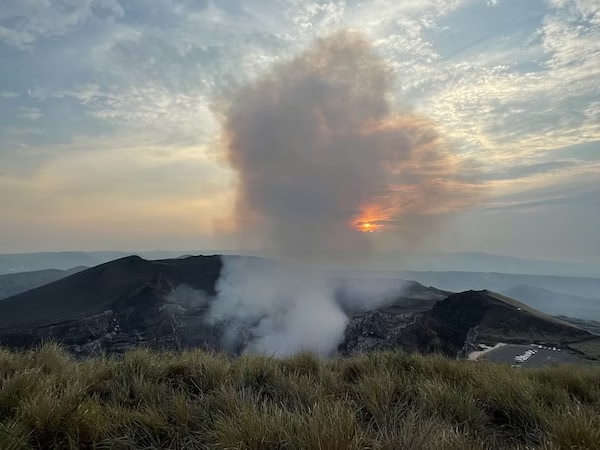
In addition to the friendly locals, El Salvador was surprisingly easy to travel around. Local buses are reliable, and the country’s size means it’s easy to explore. Santa Ana makes a great base to visit nearby volcanos and Mayan ruins. La Ruta de las Flores is a series of picturesque villages set among green mountains and coffee plantations. El Tunco is probably the most popular destination in El Salvador for its surfing.
I do have to mention the border crossing. When we entered El Salvador from Honduras, the border agent spent about two seconds looking at our passports before waving us on. I think she was really just checking that we had passports. I’ve never had an easier border crossing, though I’m a little bummed we didn’t get a passport stamp.
We spent two weeks in El Salvador, and only really saw the western third. It’s another country I would definitely go back to.
Read more about El Salvador in our full travel guide here:Exploring El Salvador: Central America’s Hidden Travel Gem is Ready to Shine
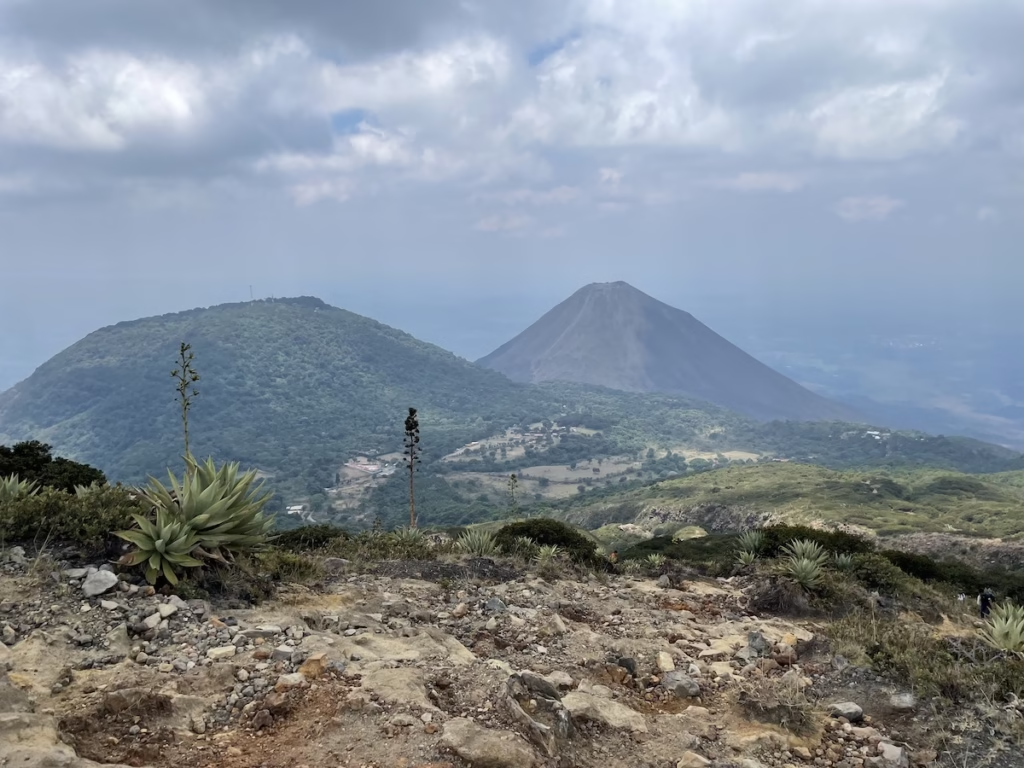
Nicaragua – The Difficult, but Rewarding, Land of Lakes and Volcanoes
Nicaragua stops: León, Granada, Isla Ometepe, Rio San Juan
While Nicaragua is a popular travel destination, it’s also Central America’s most difficult country. Sure, you could charge to the beaches of San Juan del Sur and not pay attention to anything around you and probably have a grand old time. But Nicaragua is the kind of place that demands thoughtfulness and a little introspection.
While much of Central America is underdeveloped, in Nicaragua you see and feel the poverty much more acutely. It’s a country where refrigerators are luxury items. You might find yourself thinking about the privilege you have as a tourist from the developed world. Maybe you’ll find yourself considering the political and economic systems that cause some to have so much while others have so little.
Also, parts of Nicaragua don’t feel very welcoming, to be honest. I get the impression that some Nicaraguans are feeling a little resentful of all the rich gringos who come to their country while they’re struggling day to day. We mostly faced some scamers, but also had some outright hostility.
I hope none of that puts you off visiting Nicaragua, because you should definitely visit. It’s an amazing and beautiful country. Yes, travel can be difficult in Nicaragua, but sometimes the most difficult things to do are also the most worthwhile.
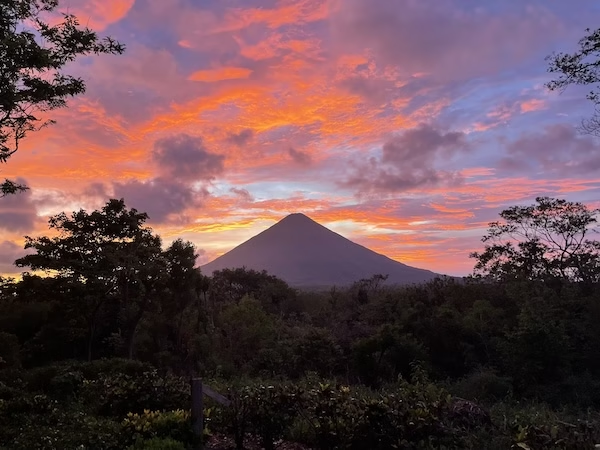
Isla Ometepe is easily Nicaragua’s biggest highlight. It’s an island of two volcanoes in the middle of a lake and it’s absolutely stunning. The sunsets alone are worth the trip. If you want to go further off the beaten path, head to the steamy Rio San Juan along the border with Costa Rica.
Nicaragua’s twin colonial cities are León and Granada. Both are popular with travelers. Backpackers love León, but I’m on team Granada. You’ll have to read the individual articles about each one to find out why.
Click here to read our full Nicaragua travel guide:Navigating Nicaragua: A Travel Guide to the Land of Lakes and Volcanoes and Revolution
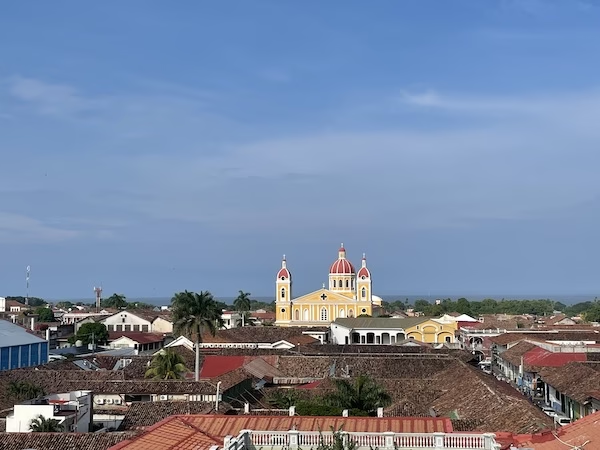
Costa Rica – Central America’s Most Expensive Country: Is it Worth the Cost?
Costa Rica stops: Bijagua, Tortuguero, Monteverde, La Fortuna, San José, Drake Bay, Manuel Antonio
You can’t say Costa Rica without thinking of eco-tourism. It’s easily Central America’s most popular country, and probably the one place your fretful aunt isn’t going to worry about you visiting. Costa Rica is also far more expensive than its neighbors. You might be wondering if Costa Rica is even worth it.
I can definitively tell you, yes, Costa Rica is worth it. Especially if you’re a nature lover.
I honestly can’t think of anywhere else where so many wild, natural areas are so easily accessible. And for Costa Ricans, environmental protection isn’t just a scheme for eco-tourism dollars. People are proud of their country’s natural heritage. It almost feels like being an environmentalist is patriotic.
Costa Rica is full of popular highlights that are popular for a reason. La Fortuna and Monteverde are touristy, but completely worth it. You can get further into the jungle by taking the long bus ride to remote places like Tortuguero or Drake Bay.
For those that really want an off beaten path Costa Rican experience, you can visit the small mountain town of Bijagua. And don’t forget about the bustling, but underrated capital of San José. No matter where you go, Costa Rica’s developed tourist infrastructure makes traveling here a breeze.
And there are ways to keep costs down. Take local transportation and cook most of your meals yourself. Save those hard earned Colónes for national park entry.
You can read more about Costa Rica in our travel guide:Come to Costa Rica: A Travel Guide to the Tourist Hotspot I Still Love
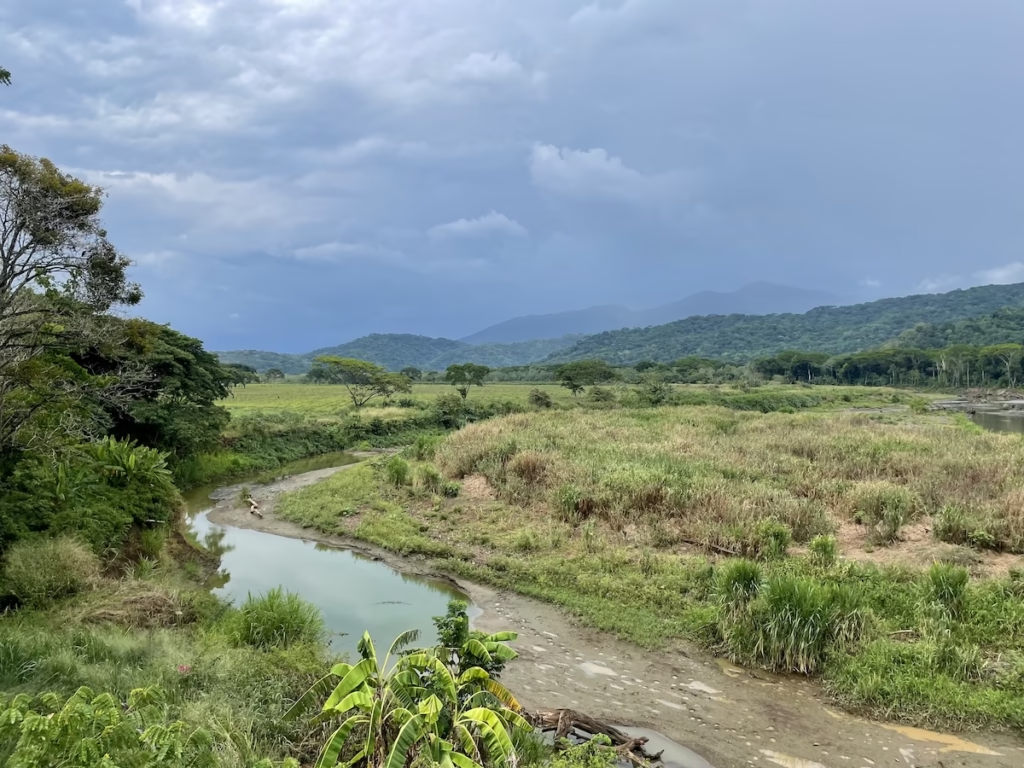
Panama – The Country at the End
Panama stops: Bocas del Toro, Boquete, Santa Catalina, Panama City
The slender country of Panama is often heralded as the next Costa Rica. Tourists love it, and if I’m not mistaken, Justin Bieber has vacation home there. But, after visiting there twice, Panama might be my least favorite Central American country.
Maybe my problem with Panama had to do with Panama’s two most popular travel destinations. Bocas del Toro is a backpacker favorite, but I found it to be a party town overrun with drunken teenagers. Not my thing at all. Panama City is a big, glossy, modern city that feels like every other big, glossy, modern city. Even the old colonial part of town feels more like a collection of Airbnbs and restaurants than a real city.
That’s not to say that Panama was all bad. I absolutely loved hiking through the cloud forest around retiree hotspot Boquete. And I was very pleasantly surprised by the low key, charming beach town vibes of Santa Catalina.
Even still, I’d say that if you have to skip one country while backpacking in Central America, I’d skip Panama. In fact, the main reason to go to Panama City at all is as a transit point to the mind-blowingly awesome country of Colombia.
If you are on your way to Colombia, or want to ignore my advice and visit Panama anyway, you can read our full Panama travel guide here: Panama Travel Guide: Passing Through the Country that Connects the Americas
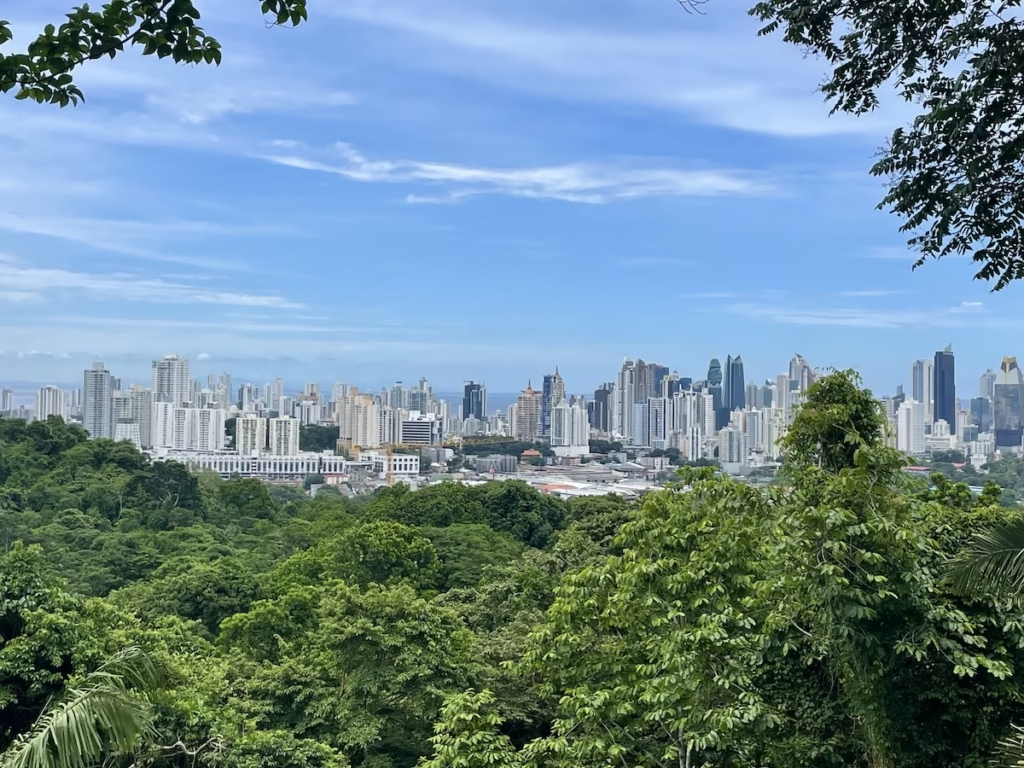
What About Mexico and Belize?
I’ve covered Guatemala, El Salvador, Nicaragua, Costa Rica, Panama and even a little bit of Honduras. You might be looking at a map of Central America right now, scratching your head and asking yourself, what about Mexico and Belize?
The only reason I’ve left out these two countries from this travel guide is because we didn’t visit them on our recent six-month backpacking trip through Central America. After Central America, we headed to Colombia and beyond, but then looped through to Mexico on our way home from South America back to the U.S. We’d visited Belize years ago, so we decided to skip it this time.
I do plan on adding a section on Mexico, and will update this guide when I do. As for Belize, well, I visited Belize over a decade ago. I loved it, but I don’t feel comfortable writing an updated Central America travel guide based on my ten-year old experience.
So, by all means, please do visit Belize and Mexico. They’re both worthwhile destinations either on their own or as part of a larger Central American backpacking trip. I’m just not in a place to write travel guides about them right now. Sorry.
Logistics and Practicalities of Backpacking Central America
Getting Around
In my humble opinion, the only way to truly backpack Central America is by bus. You can sprinkle in a few tourist shuttles, too, but we’ll get to that later. For now, let’s discuss the two worst ways to travel around Central America: airplane and rental car.
Flying, for one, is way too expensive. A direct flight from Guatemala City to San José, for example, costs between $300 and $500. That’s at least three times as much as a bus. Depending on where you’re flying from, it might be what you pay to get to Central America in the first place.
Flying is also terrible for the environment. It’s also a hassle. You have to get to the airport two hours early, go through security, get a taxi from the airport and so on. Sometimes it’s inevitable, like if you want to go to some remote islands, for example. In general, though, I think flying is a necessary evil and should be avoided if possible.
Car rental sounds nice in theory, but comes with its own hassles. It’s also expensive. The cheap price per day you see online doesn’t include gas, insurance or other fees. That’s on top of the charges you’ll pay for the inevitable dents or scrapes.
Roads, parking, and traffic in Central America are nowhere near the standards of the developed world. They all will cause you headaches, at the very least. We rented a car for a week in Costa Rica when our friends were visiting, and I felt stressed and irritable the entire time. On the bus, you just sit back and watch the scenery.
We met people who were riding motorcycles through Central America. That sounds awesome, though it comes with its own issues. It’s also well beyond the scope of this blog.
Shuttles versus Buses
So, we are left with local buses and tourist shuttles.
In theory, tourist shuttles are convenient. They supposedly pick you up and drop you off right at your accommodation. I’ve found that in practice, you still often get dropped off at the side of the highway and have to lug your bags down some busy, dusty road.
The shuttles are a nice way to meet other travelers. Depending on who else is riding the shuttle with you. They’re also convenient for crossing borders, since the drivers and guides basically hold your hand through the whole process.
We were also warned away from the local buses around Guatemala City and Antigua. The chicken buses carry a lot of cash and are targets for robberies.
Shuttles are also expensive, ranging from $40 to $100 depending on how far you’re going. They pretend to be more comfortable than the local buses, but I did not find that to be the case at all. I often found myself wedged between a seat and the door, halfway on some German guy’s lap with no room to move.
So, there are advantages and disadvantages to tourist shuttles. I didn’t hate them in certain circumstances. But I much preferred the local buses, which were cheaper and I found to be more comfortable.
If you do decide to brave ten hours crammed in a minivan with twelve other backpackers, I thought Gekko Trails Explorer was totally fine.
Another option, which is sort of between a shuttle and a local bus, is the famous Tica Bus. The Tica Bus generally travels between Central America’s capitals and larger cities. Think something like the Greyhound or Megabus in North America. They’re especially nice for border crossings or traveling longer distances.
The Chicken Bus Advantage
Even if you are some sort of a tourist shuttle aficionado, you owe it to yourself to take one of Central America’s chicken buses at least once, just for the experience. You haven’t really been backpacking in Central America if you haven’t ridden on a chicken bus.
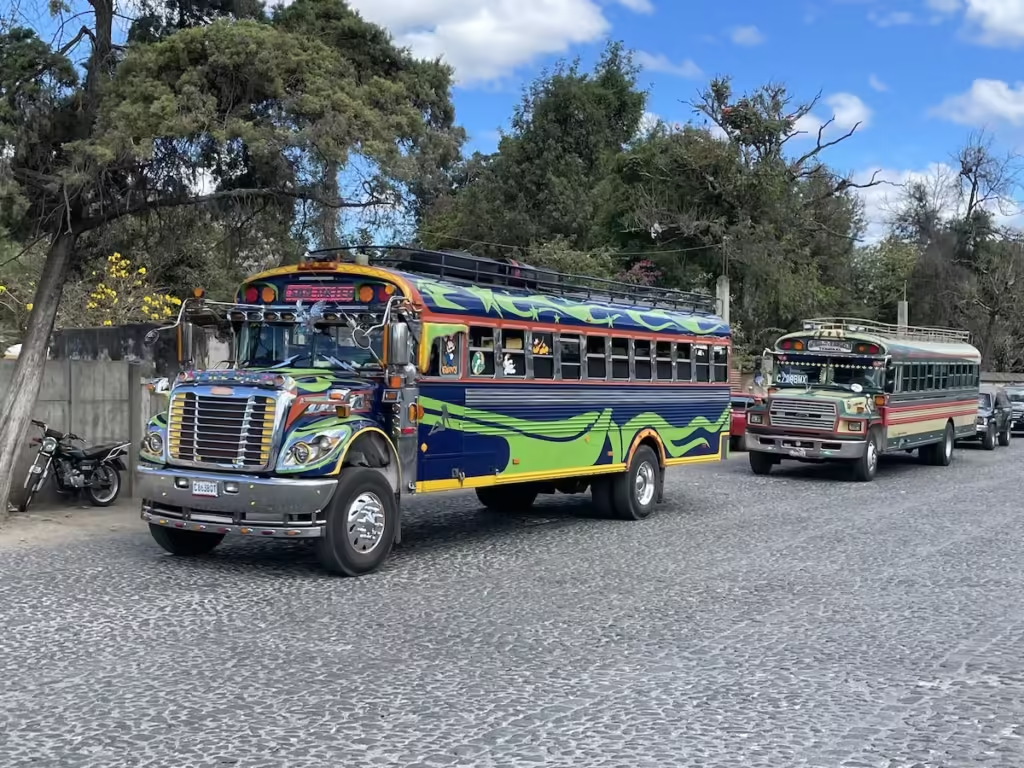
The chicken buses are old U.S. school buses that have been converted into adult passenger vehicles. You’ll see them decked out in chrome, flashing lights, Homer Simpson decals and blasting cumbia at full volume.
Backpackers call them “chicken buses” because you might find yourself riding next to someone transporting their chickens. You’ll also ride alongside farmers, grandmothers, school kids and former guerillas. People bring luggage, agricultural products and occasionally appliances on these buses. They’re the locals’ primary mode of transportation, and for many rural people, the only way they have to get around.
Yes, the chicken buses are always the cheapest option. But the cultural experience they provide is priceless.
Keep in mind that local buses always stop for everyone. Every village, every isolated farm house, every random dude standing at the side of the road. That means they are quite slow. Not a good option if you’re on a time crunch, although you really should try and avoid time crunches in Central America.
The more developed Central American countries of Panama and Costa Rica have traded their chicken buses for fleets of more modern vehicles. El Salvador seems to be using modified city buses. Guatemala, Nicaragua and even Belize, however, still rock the old school buses.
I love them. And every time I ride one, I’m astonished at what an efficient (though slow) method of mass transportation these rickety old school buses are.
Navigating Local Buses as a Foreigner
A lot of travelers seem intimidated by the local buses in Central America. I think that’s why our friends insisted on renting a car in Costa Rica. While trying something new can be intimidating at first, after a while you get the hang of it. Within a few weeks, you’ll be hopping on and off chicken buses like a pro.
The website, Centro Coasting, https://centrocoasting.com/ is an excellent resource for bus information in Central America, though it doesn’t cover everywhere. Keep in mind that schedules change regularly. Your accommodation should be able to help you figure out when to show up at the station.
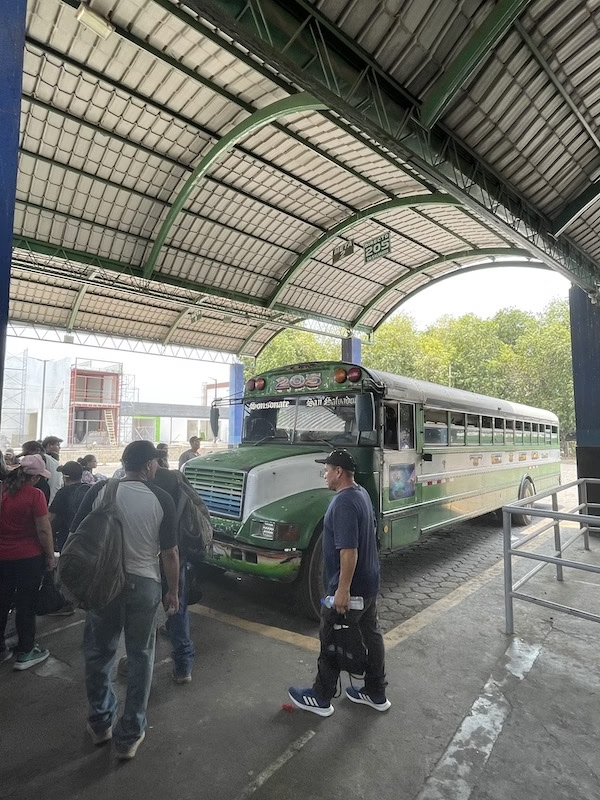
Aside from Tica Bus, most local buses in Central America do not sell tickets in advance. You have to go directly to the bus station. Sometimes these stations are chill, sometimes they’re loud and chaotic. Sometimes, in smaller towns, they’re just a street along the central park or a stretch of highway outside of town. If there are no ticket booths, make your way to the loading area where the buses line up.
Most of the time, you’ll see destinations written on the bus. Other times, you’ll find a guy shouting out the name of the destination. He’s often shouting as faster than the top speed of an old school bus. “Granadagranadagranada!” You should also double check with the driver before you get on that the bus is going where you want it to go.
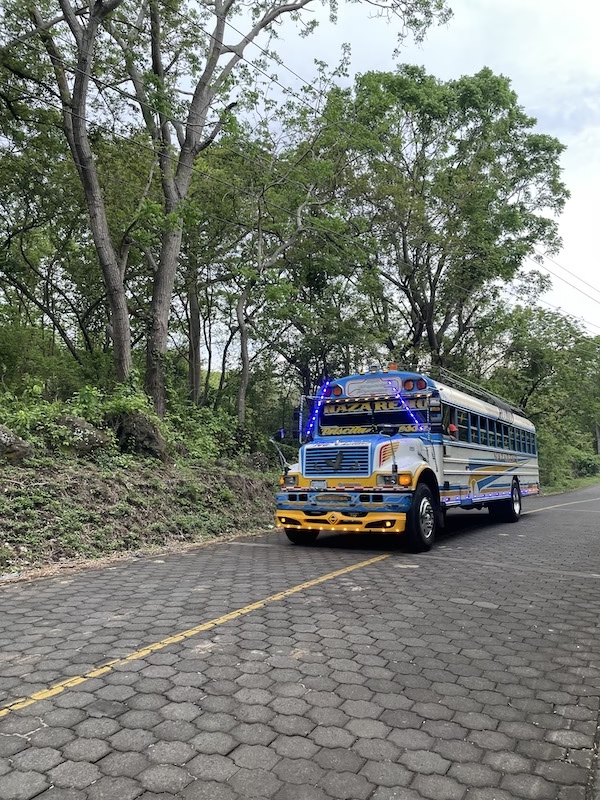
Bus Attendants are your New Best Friends
Sometimes you pay the driver. Other times, you pay the attendant. Often, the attendant is the same guy who was shouting the destination. Bus attendants are Central America’s unsung heroes. They work their asses off to ensure everyone gets where they’re going.
The attendants will walk up and down the aisles collecting fares as the bus starts driving. Tell them where you’re going and they’ll tell you how much. They might take a while to give change, especially if you paid with a big bill. Sometimes they’ll take your big bill and walk away. They always eventually come back. I’ve ridden countless buses and never once had an attendant try and rip me off.
Be sure to carry small bills, though. Buses never take cards, and it can be tough for them to break larger denominations.
It’s also a good idea to tell the attendant where you’re getting off. Especially if you’re stopping between larger cities. I have no idea how they remember where everyone’s going and how much they owe and who needs change, but somehow, they do. Just in case, you can keep an eye on your GPS.
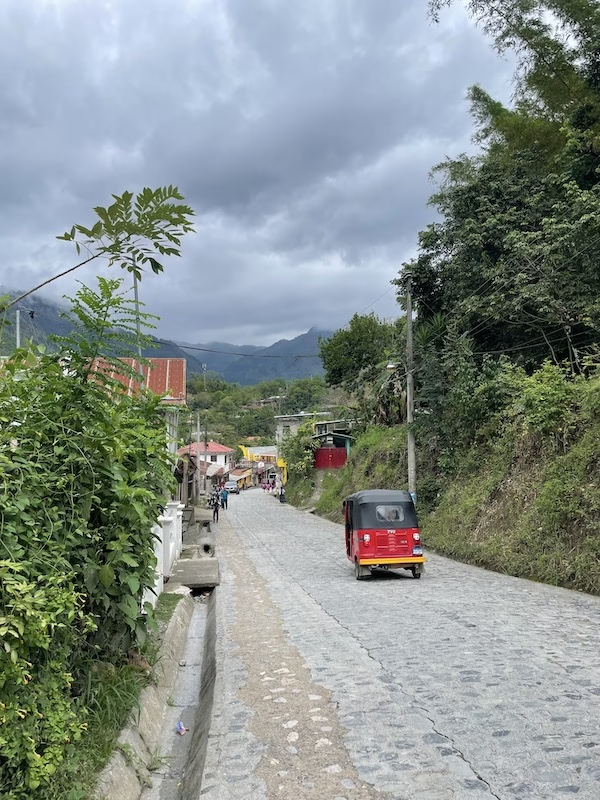
Surviving Border Crossings
Border crossings are never anyone’s favorite part of traveling, but they’re a necessary part of backpacking through Central America. You leave one country, then exit into the no-man’s land that exists between borders, searching for someone to stamp your passport.
In Central America, crossings range from irritatingly easy to annoyingly stressful. Entering El Salvador, by far the easiest crossing, the border agent looked at our passports for about ten seconds before waving us on. Going into Nicaragua, on the other hand, involved multiple security check points and luggage scans.
Taking a tourist shuttle or the Tica Bus will help alleviate some stress. On a shuttle, the attendants or driver will basically hold your hand and guide you through the process. On the Tica Bus, you can just follow one of the fifty other bus passengers to the right place.
Of course, border crossings are also totally doable independently. I won’t be able to get into every detail of every crossing, but you’ll be able to figure it out. In case you’re curious, here’s a quick list of all the border crossings on our Central America route.
Guatemala to Honduras: El Florido crossing.
Honduras to El Salvador: back to Guatemala through El Florido, then Guatemala to El Salvador through Las Chinamas/La Hachadura.
El Salvador to Nicaragua: back up to Honduras through El Poy/El Amatillo, then on to Nicaragua through Guasaule/El Espino
Nicaragua to Costa Rica: Peñas Blancas is the most popular. I’ve also done the San Carlos/Los Chiles crossing near the Rio San Juan.
Costa Rica to Panama: Sixaola/Guabito on the Caribbean side. Towards the Pacific the Paso Canoas crossing is also popular.
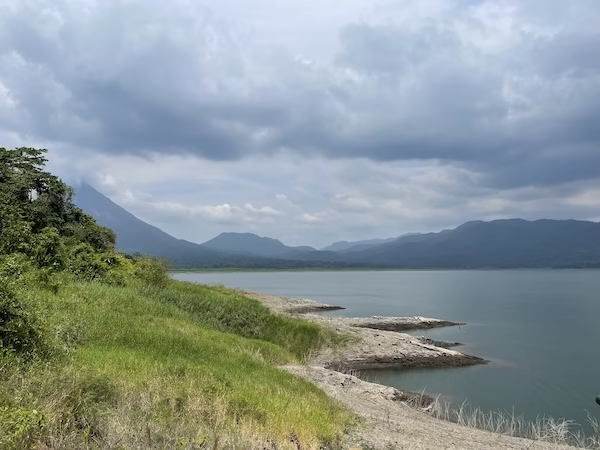
Border Practicalities and Tips
Guatemala, El Salvador, Honduras and Nicaragua all share a tourist visa zone, called the CA-4 zone. You still have to go through the border crossings and get your passport stamped traveling between these countries, but you only have 90 days for all four. Costa Rica and Panama each have their own tourist visas, usually 90 days as well.
Entry and exit fees vary by country. Guatemala, El Salvador and Panama are officially free. Honduras has a $3 entry/exit fee. Nicaragua has a $10 entrance and $3 exit fee. Costa Rica has a $10 exit fee. Obviously, these fees can change, so don’t be surprised if you are asked for a different amount. Fees are usually payable in cash in the local currency or U.S. dollars. Be sure to only pay official border agents at the official windows.
You’ll often find money changers hanging outside of border zones. These guys are fine if you only have a few Córdobas left over, but I’d avoid them for larger transactions. They are notorious for sleight of hand tricks and many a seasoned traveler (including myself) have been ripped off by border money changers. Not all of them are shady, of course, but some are.
Try and spend any extra cash you have before leaving whatever country you’re in. This is where having a small extra stash of U.S. dollars can come in handy.
Finally, I really recommend having a snack, if not a full meal, before crossing the border. You’ll probably be tired and irritable after the bus ride to the border. You don’t want to get hangry on top of everything else.
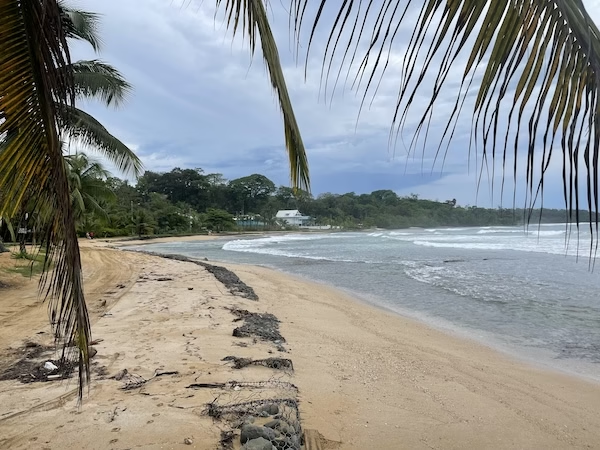
Money
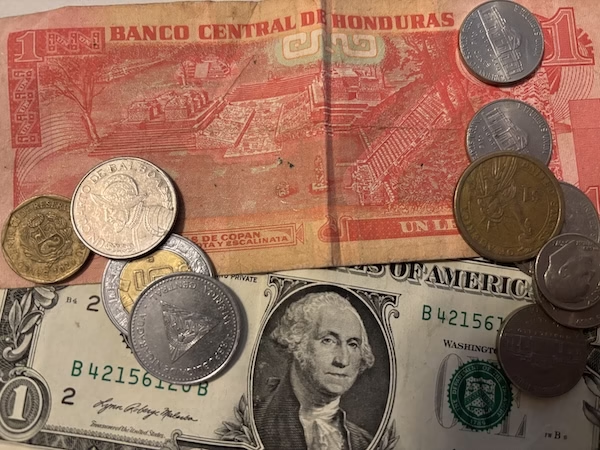
Central America is a Cash Rules Everyone Around Me kind of place. Only tourist-oriented businesses, or really fancy restaurants, take cards. A lot of people will accept U.S. dollars, but in general you’ll get a better deal if you pay in the local currency.
Costa Rica has the Colón, Guatemala the Quetzal, Honduras the Lempira and Nicaragua the Córdoba. Both El Salvador and Panama use U.S. dollars. El Salvador also officially accepts Bitcoin as legal currency, but in reality, we saw exactly one shop which took Bitcoin during our two weeks in the country. XE is a good currency converter for calculating how many Lempiras to the Quetzal or whatever.
These days, ATMs are plentiful and easy to find. Use the machines inside bank lobbies whenever possible, or in high traffic, well-lit areas. We would generally just withdraw enough cash for a week at a time. We’d keep most of it locked in our room (or hostel safe) and just carry enough for the day when we were out and about.
Try to avoid ripping bills if possible. Some people won’t accept ripped or overly wrinkled money. Again, it’s a good idea to keep a stash of U.S. dollars for emergencies. If you do pay for something in dollars, you’ll likely get change in the local currency.
Oh, and for the record, Costa Rican Colónes are objectively the prettiest currency.
Crime and Safety while Backpacking Central America
The big question on most people’s mind when considering a backpacking trip through Central America is likely to be: is it safe?
This question haunted us during the first part of our trip. Friends and relatives tried to talk us out of going before we left. They thought we were going to get kidnapped or murdered by the cartels.
Logically, this is ridiculous, but when you hear something so many times, it’s hard not to internalize it. It took a while before we could relax and not feel paranoid.
In reality, we had nothing to be paranoid about. We spent nearly six months in Central America and never had a problem beyond some minor scams or rip-offs. No one stole our phones or our passports, and we definitely weren’t kidnapped or murdered. Not even once.
As a former Guatemalan gang member once explained to me, tourists aren’t even on the radar of the cartels and gangs. They’re concerned about territory and whatever else. While crime is a very real issue in Central America, it is very localized. 50% of all crime occurs on only 2.5% of the street space.
The most important thing to remember is that the vast majority of Central Americans are not members of gangs or cartels. They are honest, hardworking people. With few exceptions, I’ve found that most people are excited to share their country and want tourists to have a safe, fun time.
Avoiding Crime in Central America
Of course, shit happens. The chances of being kidnapped or murdered are negligible in most places. However, other crimes like robbery, theft, scams or even assault can and do happen. Keep your big city wits about you.
The number one thing you can do to stay safe in Central America is to not do drugs. Buying cocaine, or even weed, can put you on the radar of the gangs and cartels. It can also leave you open to either legitimate legal trouble, or shakedowns from corrupt cops. Neither seem like a fun travel experience.
That goes triple for sex tourism. Central America has a big sex tourism problem, which leads to a lot of horrible exploitation and abuse. In fact, if you’re the type of person who would travel to another country for sex tourism, please do me a favor and never read my blog again.
For female travelers, the biggest issue is sexual assault. It’s not common, but it happens. Keep an eye on your drinks, and never accept drinks from strangers. Avoid going out alone at night, and be wary of people who are a little too friendly. You can find more tips for female travelers here.
Women will also probably face street harassment. The guys making cat calls and comments probably won’t actually do anything, but it will definitely make you feel unsafe. The best advice is to ignore them as much as you can. Interestingly, cat calling is actually illegal in Costa Rica and Nicaragua. But, are you really going to take the time out of your trip to file a police report? I get the impression things are changing for the better in Latin America, but they still have a way to go. (As all societies do in their own way.)
Preventing Robberies and Theft
Muggings and robberies of tourists are also not unheard of. Not common, but not unheard of. The most important thing to remember, is if you are mugged, just give the perpetrator what they want. Nothing is worth as much as your life.
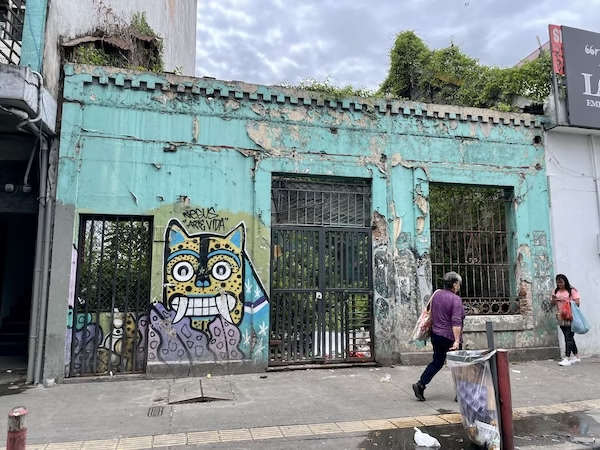
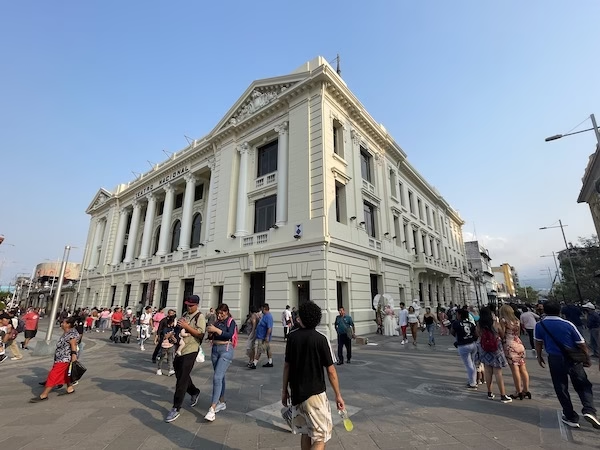
Avoid walking alone at night in big cities. Most places are fine during the day, even San Salvador and Guatemala City. I’ve had locals warn me away from certain streets, though. This is another place where knowing some Spanish really helps. Your accommodation can also give you advice on where is safe and where isn’t. This also goes for some remote hiking trails.
Generally speaking, if you see a lot of people around, you’re probably fine. If you see a lot of kids and old people, you’re perfectly safe. If you see a lot of guys with face tattoos, you might be in trouble.
The most common issue you’ll likely face is petty theft. Avoid flashing valuables or large amounts of cash in public. Keep an eye on your belongings, especially at the beach or on buses. Money belts are great for stashing cash, cards and passports. A zippered fanny pack is helpful for carrying your phone and wallet, and for foiling pick pockets. Otherwise, keep things in your front pockets.
The best advice I’ve ever heard, though, is to not bring anything traveling that you don’t mind losing.
Of course, travel insurance can help alleviate the cost of a new phone or camera should yours get stolen or lost.
Again, there’s no need to be paranoid. Just keep your wits about you and you’ll be fine.
Travel Scams
One thing you can’t avoid, however, are scams. I’ve been scammed a bunch in Central America. You will be, too. It’s an unavoidable part of backpacking in Central America. Most people are honest, but a few are more than happy to take advantage of naïve gringo tourists.
We ran into the most scams in Nicaragua and Costa Rica. Especially in the more touristy areas, such as Manuel Antonio National Park, or in León and Rivas on the way to Isla Ometepe. Chances are, the “scam” is really just overcharging. Taxi drivers trying to get a few bucks more than what the fare should be. Tour guides trying to get us to sign up for some overpriced ATV tour. Bars charging separately for alcohol and mixers. Stuff like that.
Another common scam is the old baby formula routine. Someone will come up to you, start chatting, and then ask you to follow him (or her) to a specific shop to help them buy baby formula. It always seems to be baby formula. I don’t recommend following them, but I often will give these people a dollar or something just for the effort they put in to their elaborate stories.
Really, though, you’re going to just get overcharged in some way. It’s part of the deal when traveling from a rich country to the developing world. While it definitely sucks to get scammed or overcharged, and it kind of hurts your feelings, I recommend not getting too angry about it.
Afterall, is it worth letting the equivalent of a few dollars ruin your trip?
Central America’s Real Safety Hazards
While crime and gangs get the headlines, statistically more U.S. citizens die overseas in traffic accidents than any other cause. Unfortunately, there isn’t much you can do to prevent this one. It isn’t uncommon to find vehicles with no seat belts and drivers can sometimes take major liberties with speed limits and traffic regulations.
Another big issue is water safety. Rough waves and riptides make drowning a very real hazard in Central America. Don’t swim alone, and avoid swimming while intoxicated. Familiarize yourself with how to recognize and survive rip currents. Have fun, but treat the ocean with the respect it deserves!
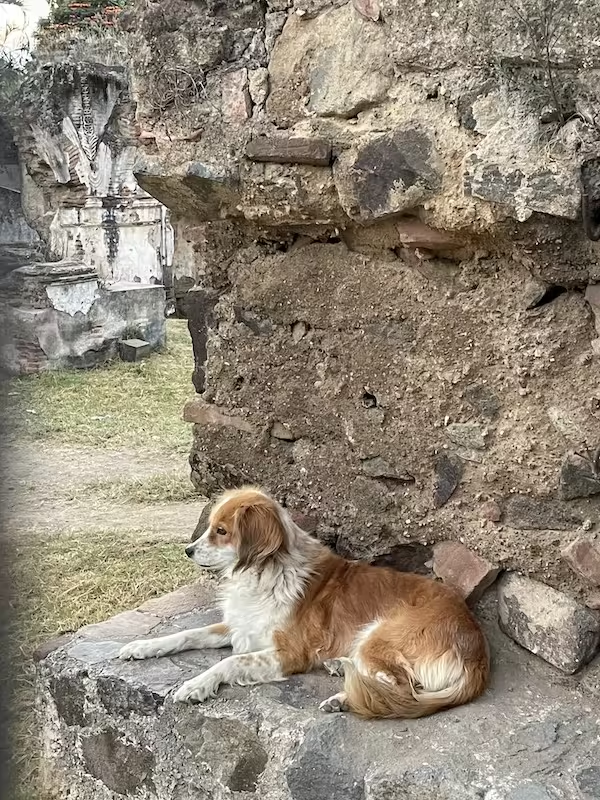
On the beach or in town, you might also come across some very angry street dogs. While you may feel sympathetic towards these miserable creatures, they can and do bite. Never approach a strange dog, and definitely don’t make eye contact. We met numerous backpackers who’d been bit by dogs in Central America, and we had a few close calls of our own.
You can find some advice on dealing with stray dogs here. The website is U.S. centered, so ignore the bit about calling animal control.
Finally, you should be aware about some of the tropical diseases in Central America. Malaria, Zika and Dengue Fever are all present. All of them are mosquito borne illnesses. Most are mainly problems in more remote, rural, areas. Do what you can to avoid mosquito bites, though. Wear long sleeves at dusk and dawn, and bring some quality bug spray.
Accommodation in Central America
The Central America backpacker trail has a wide variety of accommodations. You’ll find a range, from cheap, ragged hostels that feel like the setting of a horror movie to expensive, posh resorts straight out of the latest season of White Lotus.
My wife and I are definitely not fancy people, but we’re also a bit too old for the grungy hostel dorm scene. We chose to stay somewhere in the middle, and had very little trouble finding private rooms in hostels or guesthouses for between $20 to 40 a night. Sometimes we had to pay a little more. Other times we’d have to sacrifice a private bathroom, but it usually all worked out.
With the advent of smartphones and online booking apps, the days of just rolling into town and looking for accommodation on the fly are probably long gone. However, you don’t need to have every single hotel planned out in advance.
We would usually only book a few days ahead of time, once we were sure where we were headed next. I never recall having trouble finding a place, even sometimes searching the day before. The only time you might want to book further in advance is for really popular destinations, or during holidays like Semana Santa (the week before Easter.)
I exclusively used Booking.com and Hostelworld. For whatever reason, some destinations seemed to have more options on one versus the other, so I’d recommend using both. Almost all of my destination guides have recommendations, and if you book through links on this site, you’ll be helping me out with a small commission at no extra cost to you.
Food and Drink
Central America is not really known for its cuisine. That’s not to say there aren’t some wonderful dishes, but it’s not a foodie destination. Guatemala is the exception, with a variety of delicious dishes that have deep Mayan roots.
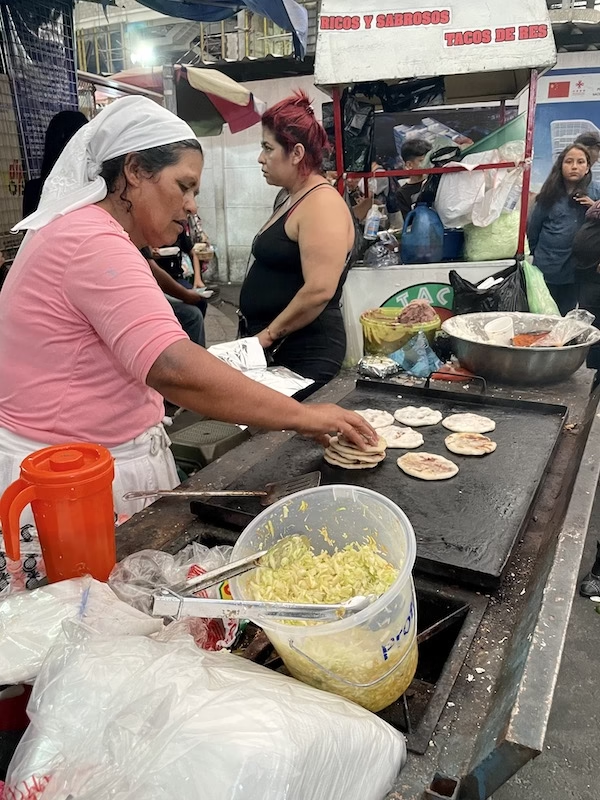
Guatemala’s national dish is Pepián, a hearty stew. In Nicaragua and Costa Rica, the national food is Gallo Pinto, flavored rice and beans. In El Salvador, you’ll live off of pupusas, which are corn tortillas filled with cheese and other toppings. Honduras has baleadas, which are wheat tortillas filled with cream and cheese. I’m not sure what the national food of Panama is, but they have some very good ceviche.
You can save some money eating by looking for set lunch menus, often called the “menu del dia.” These are most often available in small, locally run comedors. You get a main course, a side, a drink and sometimes even a dessert for a very reasonable price.
Of course, Central America does have some issues with food borne illnesses. There are some things you can do to minimize your risk. Look for popular places, whether restaurants or street food stands, with long lines. Don’t drink the water and avoid fruit that you didn’t peel yourself.
At some point, though, you just have to accept that you’re going to get diarrhea when backpacking Central America. You can sometimes get antibiotics at local pharmacies, but you might often just have to make do with some Pepto Bismol and Imodium. The best option, if you can, is to just hole up near a toilet and wait it out. Most diarrhea only lasts a few days at most.
Ethical Travel when Backpacking in Central America
I believe that every human being on this planet is worthy of dignity and respect. That’s why I’m writing this short section about the ethical considerations of backpacking in Central America. I apologize in advance if some of it comes off a little preachy, but I at least have to try my best to try and make the world a slightly better place.
Unfortunately, I’ve seen far too many tourists treating the world as their own personal playground. And far too many tourists treat the local people like servants. If you only take away one thing from this blog post it’s this: when we travel, we’re guests in someone else’s home. We need to do our best to treat our hosts with respect.
If you wouldn’t do it when visiting a friend or relative’s house at home, then don’t do it when backpacking in Central America.
Taking this attitude doesn’t just help the local people. Locals will be much friendlier and willing to help you out if you treat them respectfully. Nobody’s perfect, of course, and cultural mistakes are common. But just putting in a little effort can really go a long way.
Practical Tips for Ethical Travel
The biggest thing we can do as travelers is to try our best to ensure our money goes to help out the local economy. Avoid big international chains. Instead, stay at local guest houses and eat at local restaurants. And if you decide to take a guided tour, make sure you use a local guide. Not only will these things help economically support the local people, but you’ll have a much more authentic, interesting experience.
Also, try and buy local, handmade souvenirs. I will admit to purchasing some mass-produced beer t-shirts on my travels, but the handmade stuff is far more interesting and will directly benefit the local economy.
Unlike in Asia, haggling isn’t really a thing in Central America. It’s best to pay the asking price.
Always ask permission before taking a photo of someone. Especially indigenous people wearing traditional clothing. That clothing isn’t a costume, it’s just how they dress.
If you’re traveling long term and considering volunteering, please read up on some of the downsides of “voluntourism.” Especially when working with children. Some “volunteer” organizations are actually for-profit businesses who do more harm than good. You have to be really vigilant, so you don’t accidentally end up making life worse for the people you’re trying to help.
Finally, and I can’t believe I’m saying this as a former punk, but obey the rules. Stay on the trails when hiking. Don’t feed the animals. Don’t smoke in non-smoking areas. Keep your swimsuit on at the beach. These are all simple rules that I’ve seen travelers violate. Following local rules and customs is easy to do, and it’ll go a long way towards being respectful of the locals.
Sample Itineraries for Backpacking Central America
Central America’s geography means that there’s not much variation as far as which route you take. You’ll start in Guatemala, then head down to Panama. You could also do this in reverse.
However, you do have a lot of options in terms of how long you spend in each place. It really depends on what you’re interested in and how you travel. As you may have picked up by now, I’m a big fan of slow travel and taking my time. It took my wife and I nearly six whole months to backpack through Central America, and we even skipped a few things.
If you want to recreate our route, you probably don’t need to take six months exactly, but you’ll definitely want at least three.
The 3+ month long, slow route:
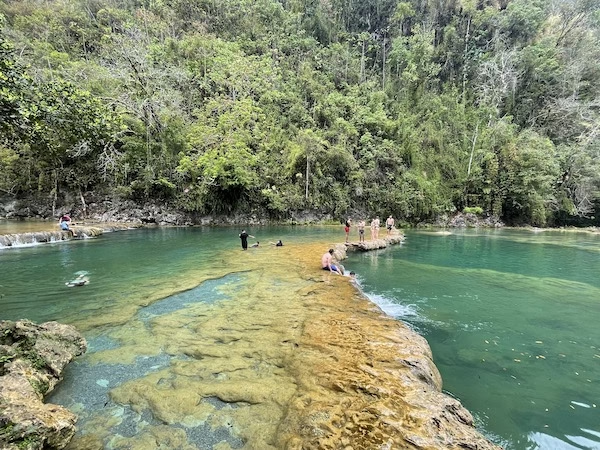
Fly in to Guatemala City, then head to Antigua for some Spanish classes. Then, move on to Quetzaltenango and Lake Atitlan. From there, bus up to Cobán and onward to Semuc Champey, Lanquin and Rio Dulce. You can then side track up to Tikal or make your way onward to Livingston. You’ll have to take a long bus or shuttle back to Antigua.
From Antigua, hop over to Copán Ruinas in Honduras, and then on to Santa Ana, El Salvador. Santa Ana is a good base for visiting nearby attractions. You can then travel up to La Ruta de las Flores for some mountain and coffee time, and then down to El Tunco for surfing or just to hang out on the beach. San Salvador is interesting, but probably only worth a day or two.
From El Salvador, get on a long shuttle (or longer bus) onward to León in Nicaragua. People love León, but I had mixed feelings. You can decide for yourself. From there, plan on a lot of time in Granada, which is a beautiful city and a great base for exploring. Don’t miss Isla Ometepe, which is full of beauty and adventure. You can venture to Rio San Juan, or else head onward to Costa Rica.
Costa Rica and Panama Itinerary
Costa Rica probably involves the most back-tracking of any Central American country. You’ll start in Liberia, which isn’t very exciting, but it’s fine for a night to break up a longer bus journey. From there, you could visit the overpriced, gentrified beaches of the Nicoya peninsula, or else go north to the unknown mountain escape of Bijagua. Either way, you’ll probably have to backtrack to Liberia to move onward.
La Fortuna and Monteverde lie between Liberia and San José. Both are very touristy, but are popular for good reason. From San José, take the long journey to Tortuguero which is amazing. You can go to Cahuita and the Caribbean coast from Tortuguero, or you can backtrack to San José again. After another night in the capital, we left down the Pacific Coast to the mysterious jungles of Drake Bay. Don’t forget to leave a little time for San José, which is very underrated.
Then, it’s on to Panama. You can cross via the Caribbean side or the Pacific side. I would skip backpacker favorite, Bocas del Toro. If we had to do it over again, I’d just beeline right to Boquete. Boquete is full of retirees, but also great hiking and a fun vibe. From there, it’s a long bus and some transfers to Santa Catalina, which is the laid-back beach town every other Central American beach town wishes it still was.
After that, you’re on to Panama City. Don’t feel bad if you don’t have much time left for Central America’s largest, most modern metropolis. It’s probably a nice place to live, but not that interesting to visit. After Panama City, you’ll either fly back home or be arranging a boat or flight onward to Colombia!
Six weeks sounds like a lot, especially if you’re from the United States like I am. However, after spending six months backpacking in Central America and over a year and a half traveling total, six weeks now feels like not nearly enough time.
The 6-week, standard backpacker route:
You could theoretically see the highlights of Central America in six weeks, though. Check out Antigua and Lake Atitlán in Guatemala. Bop in to Santa Ana, El Salvador for a few days, and maybe dip your toes in the ocean in El Tunco. Hit up León and Granada in Nicaragua, but save most of your Nicaragua time for Isla Ometepe. In Costa Rica, concentrate on La Fortuna and Monteverde. Then on to Boquete and Panama City.
Another, and in my opinion better, option would be to just accept that you can’t see everything. Focus on only a few countries and really dig in deep to explore. You could have a great time in Guatemala and El Salvador in six weeks. Alternatively, Nicaragua and Costa Rica make a nice pair.
This is basically what I did for my first ever solo backpacking trip way back in the sepia toned good old days of 2013. I took two weeks of Spanish classes in Nicaragua, then explored through Nicaragua, a bit of Costa Rica and then on to Panama. If I had to do it again, I would have spent more time in Costa Rica, but it was still a fantastic trip.
The two-week, North American winter vacation route:
I know most of us don’t have the luxury of taking six months, or even six weeks, off of work to travel. My wife and I were lucky. We had saved up a lot of money after a stint teaching English in China. Our friends told us to use the money to make a down payment on a house. Instead, we used it to travel through Central and South America for as long as we could. I have no regrets.
Not everyone is in that position, though. If you only have two weeks off, Central America is still a very worthwhile place to visit. However, I’d strongly suggest just focusing on one, maybe two countries.
Guatemala, Costa Rica or Nicaragua could easily take up two weeks of your time. While we did spend about two weeks in El Salvador, I don’t know if there’s quite enough to fill an active short vacation. However, you could also theoretically pair up the highlights of Guatemala and El Salvador.
Costa Rica with Nicaragua could also theoretically be combined. Fly in to Liberia, Costa Rica and head up to explore Isla Ometepe and Granada in Nicaragua, then back for some Costa Rican highlights.
Panama is a little tougher, just because the really worthwhile destinations are at least an 8-hour bus ride from Panama City, and also quite far from the border. It’s doable, but you’re going to waste at least 2 days of your precious vacation days just sitting on the bus.
No matter how much time you have backpacking in Central America, you really can’t go wrong. Every itinerary offers opportunities for natural beauty, grand adventures and meeting interesting new people.
Final Thoughts on Backpacking Central America
If I’ve learned one thing from the nearly six months I spent backpacking in Central America, it’s that this is a region of the world that rewards going slow. Perhaps it’s the heat that lends itself to a more unhurried pace of travel. Or maybe it just happened to be the place where I realized how rewarding slow travel can be.
Sometimes we treat travel like long to-do lists. We scour guidebooks and travel blogs for lists of sights and destinations, and imagine that our job as travelers is to just check off every box on the list. Or maybe we’re collecting pictures and experiences, and we somehow win at travel when we’ve collected more of these experiences than anyone else.
While plenty of people travel this way, Central America was where I learned this sort of thing wasn’t for me. Central America is a beautiful, complex region of the world that’s rich in culture and natural beauty. It’s the kind of place where you really want to take your time.
And one of the best ways to travel slow is to take the local buses. If you ditch the rental car and avoid the tourist shuttles, you’ll find a much more authentic and interesting experience. You may even make some local friends who can share travel experiences that are much more valuable than anything you’ll find in some dumb online guide to backpacking Central America.