I might be going out on a limb saying this, but Cuenca is Ecuador’s best city. The city itself is a beautiful collection of Baroque and Spanish Colonial buildings with elegant churches and tiled rooftops. There are excellent museums around every corner and plenty of restaurants and coffee shops. You can also find some astounding hiking and explore ancient Inca ruins all within an easy day trip of the city center. So why does Cuenca still feel so underrated as a destination? Maybe it’s just because not enough tourists have read this Cuenca, Ecuador travel guide.
What to Know Before Traveling to Cuenca, Ecuador
When I say Cuenca is “underrated” I don’t mean that it’s off the beaten path. In fact, Cuenca is very much on the radar, especially for North American retirees seeking to make their pensions stretch out in the Andes Mountains. Cuenca is also a stop on the South American backpacker trail.
But, for whatever reason, it seems like very few people travel specifically to Cuenca. Even as part of a longer trip to Ecuador. It feels like travelers treat Cuenca as a stopover between Ecuador and Peru. A nice stopover, but not a destination in its own right.
In the end, this is probably to Cuenca’s benefit. The city has a lot of things to do and is fairly easy to manage, but it doesn’t feel at all touristy. You can still spend an entire day in Cuenca without seeing another gringo.
It’s a good place to practice your Spanish, too. While there are probably more English speakers here than elsewhere due to the expat population, knowing at least a few phrases in Español will make your life easier and endear you to the locals.
Speaking of locals, I would say that the Ecuadorians in Cuenca were some of the friendliest we found throughout the country. I chalk it up to the pleasant climate.
The History of Cuenca (in 300 words or less)
Cuenca is a UNESCO world heritage site, thanks to its Spanish architecture. However, the history of Cuenca goes back way, way before the Spanish arrived.
Archeologists have found evidence of human settlement in Cuenca dating all the way back to 8060 BC. In around 500 AD, an indigenous group called the Cañari founded a settlement in the area around what is now Cuenca. Some linguists even believe the Cañari language lives on today in the unique Cuenca accent.
The Cañari eventually fell, not to the Spanish but to the Inca. Inca Emperor, Tupac Inca Yupanqui conquered the Cañari in the late 1400s. His son, Huanya Capac, built a city called Tumebamba over the Cañari city in what is now Cuenca. He envisioned Tumebamba to be a magnificent northern capital of the Inca empire to rival the imperial city of Cusco. He even had stones from Cusco transported nearly 1,000 miles over the rugged Andean terrain to construct the royal palace in Tumebamba.
Huayna Capac died of disease in 1525 (probably smallpox introduced by Europeans) which led to a civil war between his two sons. The civil war destroyed the city of Tumebamba, and Spanish conquistador, Francisco Pizzaro, was able to exploit the chaos and conquer the Inca empire for Spain.
The modern city of Cuenca was founded in 1577 on the ruins of Tumebamba. The Spanish constructed an elegant colonial city, as they often do, but you can still see some of the old Inca ruins south of town.
After independence, Cuenca became a center for hat making. Ecuadorian laborers left to work on the Panama Canal, and they brought their hats with them. The traditional Cuenca style of hat became known worldwide as the “Panama hat” and life was never the same.
Weather and What to Pack
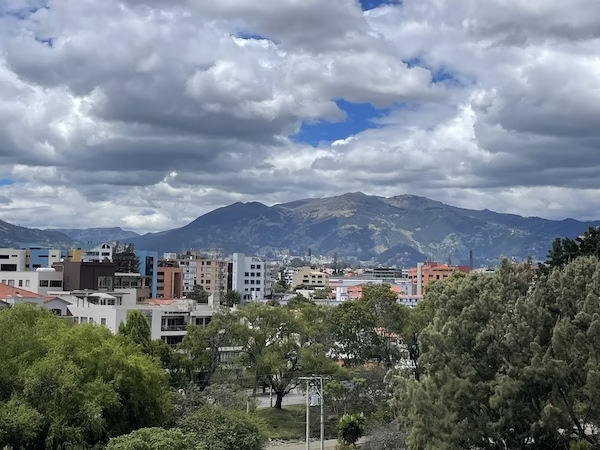
Cuenca is blessed with an almost perfect climate. Due to the enviable combination of altitude and proximity to the equator, the temperatures remain spring like year-round. You’ll rarely find lows below 50 degrees Fahrenheit (10 Celsius) or above 75 degrees (about 24 Celsius). The rainy season runs from October through May, although normally it only rains in the afternoon. We visited Cuenca in December and still had plenty of lovely mornings.
Obviously, if you’re planning on traveling to Cuenca (or anywhere in Ecuador) during the rainy season you’ll want to make sure to pack a raincoat. Also remember that the sun here is much stronger, due to the altitude and closeness to the equator. Pack a hat and plenty of sunscreen.
If you’re planning on heading higher into the mountains, you’ll also want some warmer clothes. We had days when we bundled up in jackets, hats and gloves. Especially when visiting nearby El Cajas National Park. You can find wool alpaca clothing for sale all around Cuenca. I bought a pair of gloves here that have handled not only the chill of the high Andes, but also the frigid depths of Minnesota winter.
Is Cuenca Safe?
The big question that’s always on everyone’s mind: is Cuenca, Ecuador safe? The short answer is yes. It’s very safe.
You may have read about the recent crime wave in Ecuador. Drug dealers and international mafiosos turned what was once South America’s safest country into a haven of criminality. The U.S. and Ecuadorian military have now teamed up to bomb rural dairy farms to combat this crime wave.
Thankfully, Cuenca has largely managed to avoid this chaos. In fact, Cuenca was recently listed as the safest large city in all of South America. Honestly, though, most of Ecuador’s Andean highlands are pretty safe. Quito has its share of big city issues, but the rest of the highlands are probably safer than your city back home. Most of Ecuador’s crime is concentrated on the coast.
Also keep in mind that international criminal gangs rarely, if ever, target tourists. The biggest danger you’re likely to face is pick pocketing or some other petty theft. Keep your wits about you and you’ll be fine.
That being said, shit can happen anywhere. Gangs did set off bombs in a few police stations in 2024. Since then, however, Cuenca has been relatively chill. You’re far more likely to have issues with sunburn or altitude sickness than anything else.
I have more long, rambling thoughts about crime in Latin America, in case you’re interested: Rethinking Travel Safety and Crime in Latin America
Transportation to and Around Cuenca
Perhaps one of the reasons Cuenca is underrated as a travel destination is its lack of international airport. If you’re flying in to Ecuador, you’ll have to fly in to either Quito or Guayaquil. You can then take an onward domestic flight from either of those cities to Cuenca.
Otherwise, Cuenca sits on the Pan-American Highway and is relatively easy to reach via bus. Easy, but not fast. Buses from Quito take about 9 to 10 hours and leave from the Quitumbe terminal. Thankfully, Ecuador has plenty of stops along the way to break up the journey. Otherwise, a bus from Guayaquil is only 3.5 to 4.5 hours.
If you’re traveling onward, you can easily reach Loja and Podocarpus National Park from Cuenca, or even find onward overnight buses to Peru.
I found buses in Ecuador to be comfortable, safe and affordable. You can’t book in advance, but for a major destination like Cuenca, it’s easy to just show up at the station and look for the ticket window that says “Cuenca” on it. All buses arrive at Cuenca’s Terminal Terrestre.
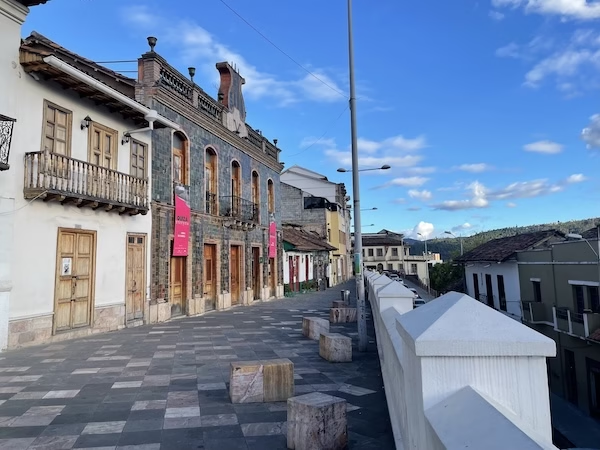
Cuenca’s city center is relatively compact and manageable on foot, but you’ll also find a network of city buses and even a light rail line. Taxis are also quite cheap and convenient. So cheap and convenient that you might not even want to bother with public transportation.
However, if you do want to try the bus or rail, you can find an incredibly detailed description of Cuenca’s transportation options here: https://intentionaltravelers.com/cuenca-ecuador-transportation-public-transit/
Where to Stay in Cuenca
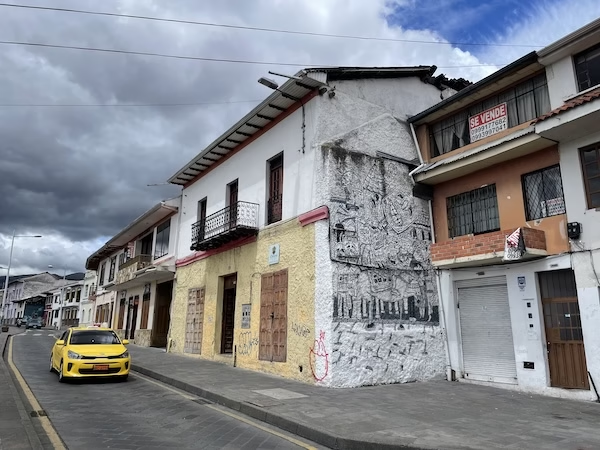
Cuenca definitely has a lot of options when it comes to accommodation. You’ll find all sorts of places to stay, ranging from grungy hostels to fancy pants rich people hotels.
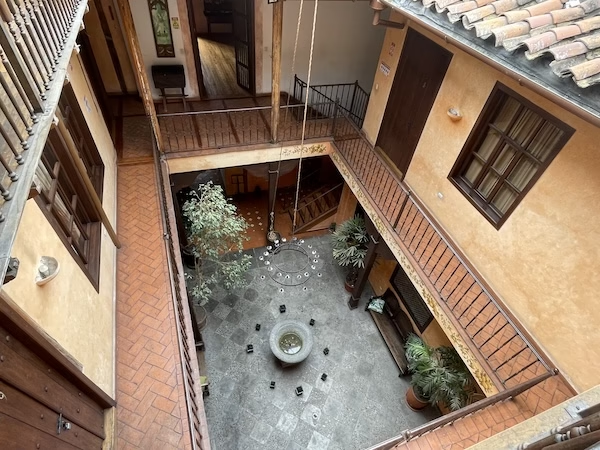
We stayed in a few different spots, the first being somewhere between those two extremes. The awkwardly named Hotel NASS Casa del Aguila was a nice place in an old colonial building, which is always fun. They served breakfast and the location was easy walking distance to the city center. They also had a very confusing and terrifying painting hanging in the hallway of a baby being carried away by an eagle. Click here to book your stay at Hotel NASS Casa del Aguila.
We also stayed in a place called Posada Todos Santos. Posada Todos Santos is definitely more of a hostel, with a kitchen and laundry for guests. The guy working there was quite friendly, too. While not as fancy as the Casa del Aguila, it was nice to hostel it up in the common room and chat with some other travelers. Click here to book a stay at Posada Todos Santos.
Whichever option you choose, the important thing is that you book using the links on this website. That way I’ll get a small commission at no extra cost to you and you’ll get the satisfaction of supporting an independent travel blog.
The Best Things to Do in Cuenca
Now we get on to the fun stuff. We spent about two weeks total in Cuenca, but didn’t get the chance to do anything close to everything. Of course, by the time we reached Ecuador, we’d learned to slow down and not try to cram too much into one day. A very important skill for long term travel.
But, in addition to the activities listed below, a quick perusal on Google maps will show you more museums and some interesting looking parks up in the surrounding hillsides. I’m sure there are some great bars and restaurants, too, if that’s your thing. I’d be happy spending even longer than a couple of weeks in Cuenca.
Most of the best things to do in Cuenca are easy to do independently. However, if you want to do some things with a group of other people, you can search for Cuenca activities on Get Your Guide.
Wander the Town and Admire the Colonial Architecture
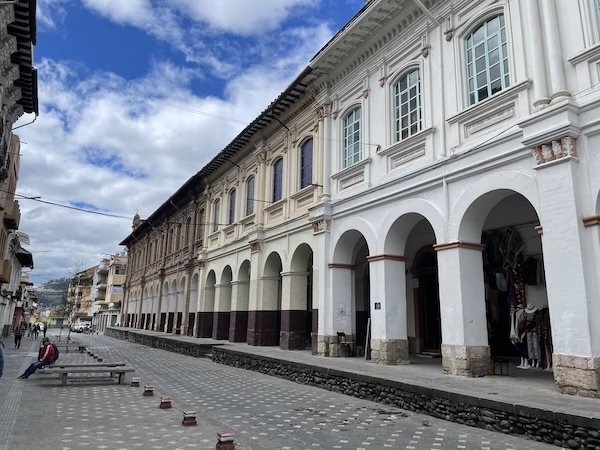
Cuenca really is a beautiful city, and you could spend hours just roaming the streets and admiring the architecture. We definitely did. Parque Calderón is the city’s main central plaza, and the walk between there and Parque San Blas is quite nice.
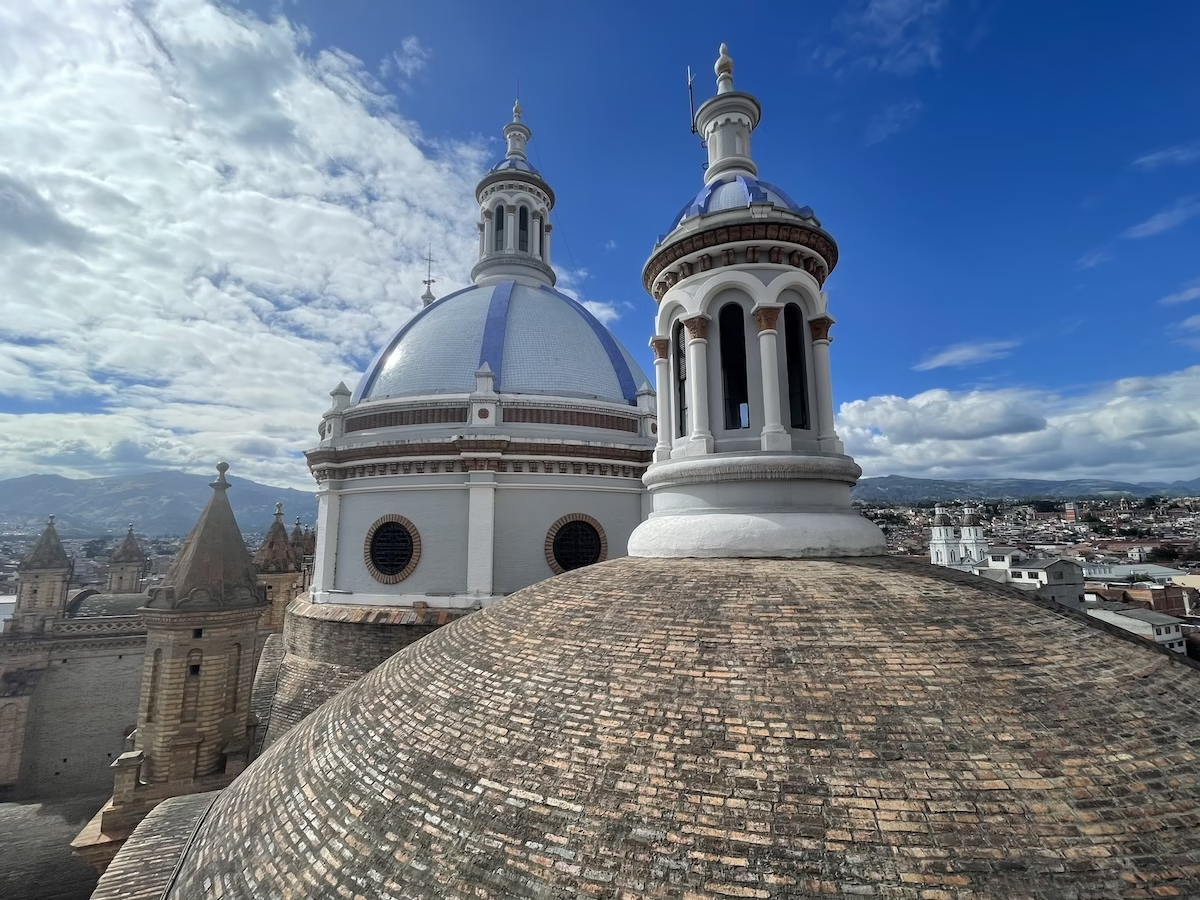
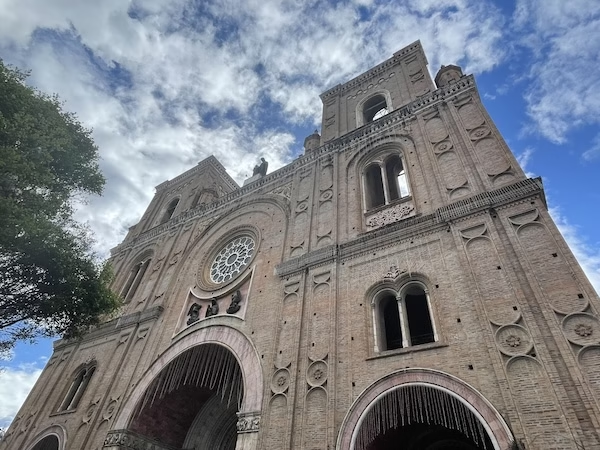
Be sure to stop in Cuenca’s gorgeous new cathedral, La Catedral de la Inmaculada Concepción. The blue and white domes are stunning and you can even climb up onto the rooftop for some fantastic views of the city. Across the plaza sits Cuenca’s old cathedral, La Iglesia del Sagrario. The Spanish started building this church in 1567 using stones from the Inca city of Tumebamba. Today it’s an art museum. Beyond the main square, you should also make sure to check out the local flower market. It could be a fun way to spruce up the hostel dorm.
Calle Larga, which runs along the river on the southern edge of the city center, is also worth a wander. The street has plenty of old buildings, too, as well as some fantastic views out over the newer parts of the city and bars and restaurants. You can also wander down along the river, although we did get verbally accosted by some weird drunk guy from Alabama down there, so go at your own risk.
Take a Free Walking Tour
If you want some context for the buildings you’re looking at, you should consider a free walking tour. I was initially skeptical about the free walking tours, mainly because every single other travel blog in the world recommends them. However, I have to say they’re actually very worth it.
Of course, the tours aren’t exactly free. Guides work on tips. In theory you tip based on how much you enjoyed the tour. You should consider your relative wealth compared to that of the local people. Generally, though, the tours are well worth it.
I found the walking tour we did in Cuenca to be especially interesting. Not only did our guide give us some background and history of the city, but we also got to discuss Ecuadorian politics. Spoiler alert: the politicians in Ecuador are quite corrupt and people are pretty upset with the whole system. Although, these days I suppose that’s a pretty familiar political landscape.
We went with the aptly named “Free Walking Tours Cuenca.” I would definitely recommend them.
Learn about Ecuador’s Indigenous People at the Pumapungo Museum
Ecuador has a rich, diverse population and a rich and diverse pre-colonial history. All of that comes together nicely at the Pumapungo Museum. The museum has displays and information not only about Ecuador’s indigenous population, but also coastal Afro-Ecuadorians and other groups as well. And if you want something more macabre, you’ll even find a few shrunken heads. It’s a well laid out and informative museum and a must-see when visiting Cuenca.
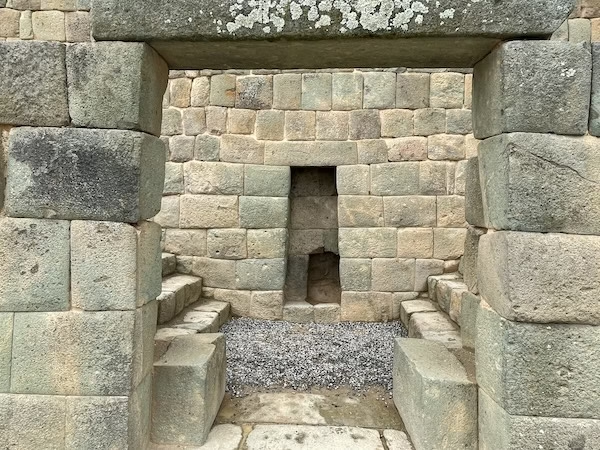
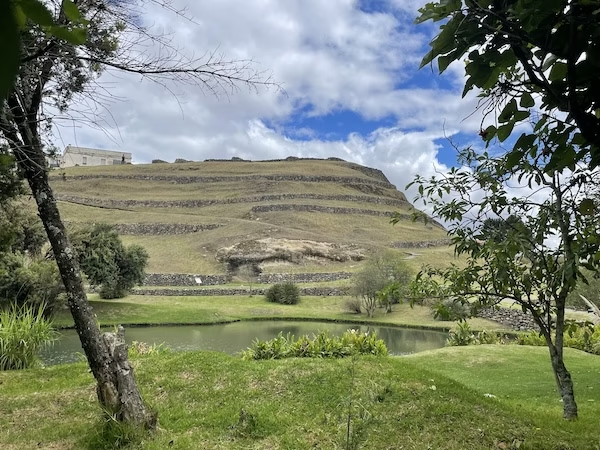
Most importantly, though, is the archeological site on the museum grounds. Here stand the last remaining stones of the mighty Incan city of Tumebamba. The city was destroyed in the Inca civil war, and the Spanish used the rest of the stones to build their cathedrals, but the mighty foundations of the city still stand. It ain’t Cusco, but it’s still pretty cool to walk along the paths once walked by Emperor Huayna Capac himself.
The official Pumapungo Museum website is quite flashy, but a little light on information. The museum is closed Mondays, but open every other day, and if I’m remembering correctly it’s free to enter. It’s located on the east side of town where Calle Larga and Avenida Huayna Capac intersect. Just look for the Inca ruins.
Learn about Pottery at the Museum of Aboriginal Cultures
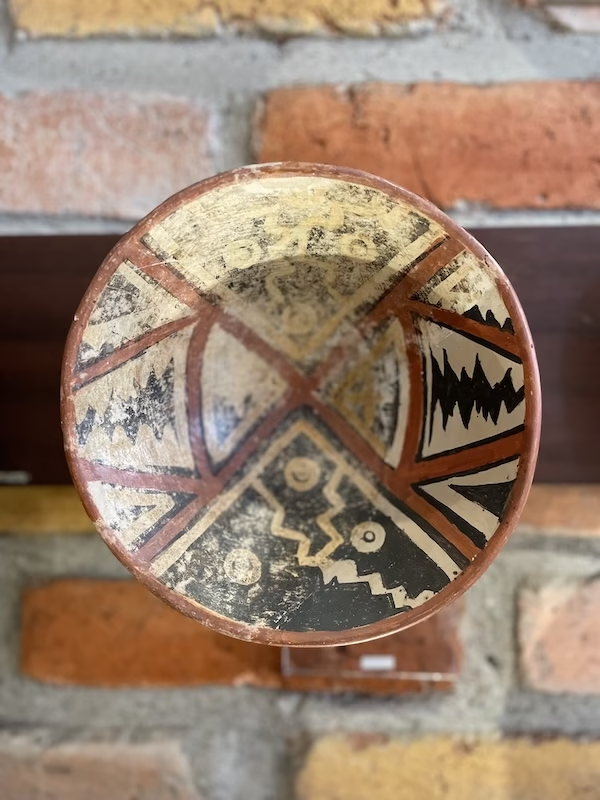
For a more intimate museum experience, you can check out the Museum of Aboriginal Cultures. This little museum houses a robust collection of indigenous pottery and other artifacts, with items from the Inca, Cañari and other groups.
I was never really one for pottery or ceramics until I went to this museum. Some of the pieces on display truly are masterful. The museum is small, but well organized and filled with both beautiful ceramics and interesting information.
The Museum of Aboriginal Cultures is also located on Calle Larga, near the intersection with Mariano Cueva. It’s closed Sundays and costs under $5 (though prices may change.)
Eat Hornado at the 10th of August Market
Hornado is a delicious Ecuadorian dish. How can you go wrong with a whole roasted pig? You can find it at numerous restaurants around Cuenca, but I’m told the absolute best place to eat it is at the Mercado 10 de Agosto just south of downtown. I can personally confirm the hornado sold at the market here is absolutely delicious. It might be the best pork I’ve ever had, and I’ve eaten a lot of pork.
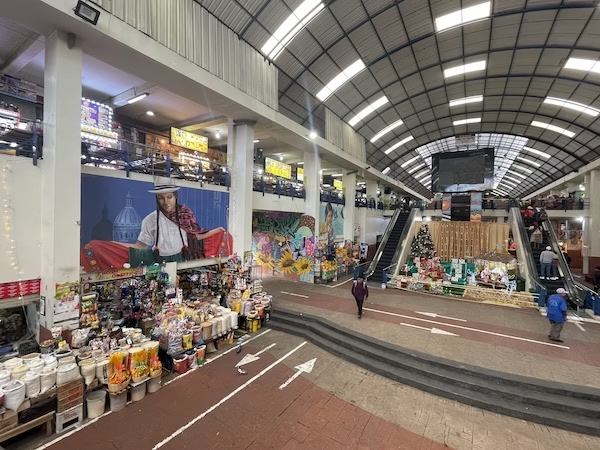
The market itself is also interesting, especially if you’ve never visited a Latin American market. Things are a bit more organized here, but you’ll still find stalls selling pretty much anything you could imagine. You’ll also see traditional curanderos performing ritualistic spiritual cleansings.
Even if you don’t eat pork, Mercado 10 de Agosto has numerous other stalls selling cheap meals and tropical juices. You’ll find the market south of the city center, near the intersection of General Torres and Calle Larga.
Stop and Smell the Flowers at the Botanical Garden
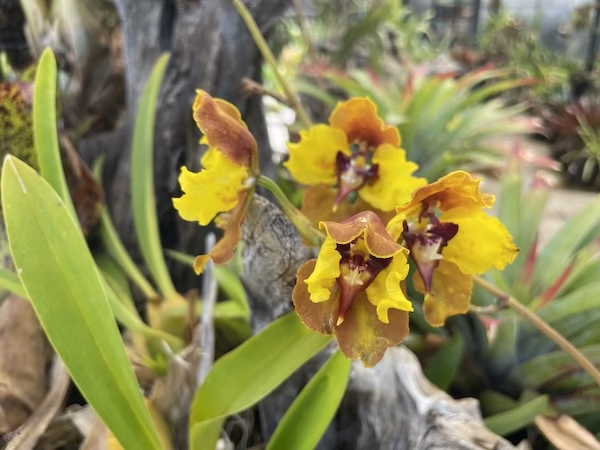
For whatever strange reason, South America turned me into a big fan of botanical gardens. I’m not even particularly knowledgeable or into plants, but there’s something refreshing about wandering around and looking at various trees, bushes and flowers.
Cuenca has a very nice botanical garden, although it’s not going to blow any minds. However, it’s free and a fun thing to do if you like plants and have a few free hours in the afternoon. It’s small and easy to wander around, and there’s even an orchid garden. Did I mention it’s free?
A taxi from downtown is easy and cheap. Or, you could do what we did and walk down Avenida Fray Vicente Solano and turn left on Río Yanuncay. The walk takes about an hour. Avenida Fray Vicente Solano isn’t particularly photogenic, but it’s kind of interesting to see the newer, non-Spanish colonial, side of the city.
Look Down on Cuenca at Mirador Turi (Or Don’t)
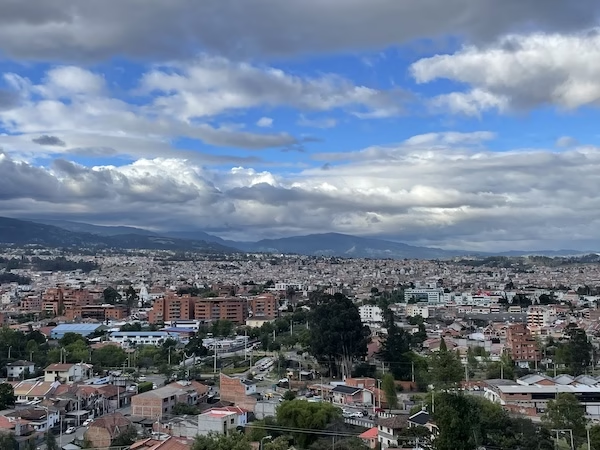
Mirador Turi rests on a hillside looking out over the city of Cuenca. “Mirador” in Spanish means something like lookout or viewpoint. Turi also has a cute little church, some expensive restaurants and stands selling tourist trinkets. It’s very touristy.
I read a lot of things suggesting Mirador Turi as one of the best things to do in Cuenca, but to be completely honest, I found it a little underwhelming. Sure, the view is very nice, but I thought the view from the top of the cathedral was a little better. I guess if you find yourself in Cuenca with nothing better to do, it’s a decent way to kill an afternoon, but don’t be sad if you miss it.
Mirador Turi is located south of town, up on top of a big hill. We walked there, but I would suggest taking a taxi. Not only did we have to climb up the hill, but we also had to make our way over some precarious street crossings.
Day Trips from Cuenca
While the city itself has plenty to keep you busy, Cuenca is located within easy striking distance of some of Ecuador’s best sights. You can easily use Cuenca as a base to explore the surrounding area, and bus service is cheap and reliable.
El Cajas National Park
El Cajas National Park is by far the best day trip from Cuenca. In fact, I would consider it a must do activity in Ecuador. Hiking around the trails in the park felt otherworldly, almost spiritual. Maybe that’s because it was so misty.
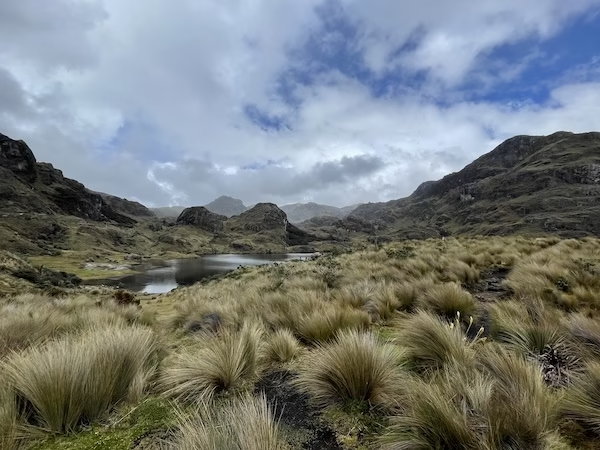
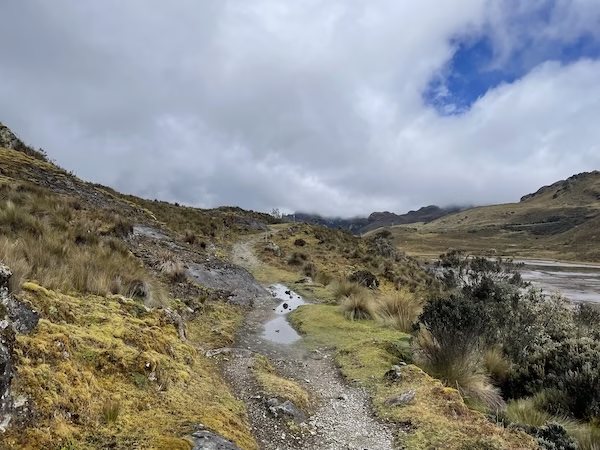
El Cajas National Park is located about 4,000 meters (over 13,100 ft) above sea level. The park protects numerous lakes and lagoons, as well as harsh Andean cliffs and the captivating paramo ecosystem. The paramo is a unique biome of moist grasslands that’s unique to South America (and parts of Costa Rica). Brits tell me its reminiscent of the English moors.
I think the landscape of the paramo, and El Cajas in particular, fantastically beautiful. I loved El Cajas.
The park has a number of trails of varying difficulty. We just walked around route one, nearest the visitor center. That trail is listed as “easy” but to be honest, the altitude and rough terrain make it a little tougher. Some people have also said they had trouble following the trails and got lost in the mist. That wasn’t my experience, but who knows.
You can reach El Cajas easily by bus from Cuenca. Buses leave from the Terminal Terrestre regularly between 8am and 4pm. Tell the driver you want to get off at El Cajas. Buses stop near the park entrance. The only hitch is coming back. We had to wait like 45 minutes for a return bus. You could also try and negotiate a taxi to and from town.
The park has a visitor center where you can rest up and use the bathroom. It gets cold in the mountains, so be sure to bring warm clothes. And sun protection in case the mist ever clears. I’d also suggest plenty of water and snacks or a packed lunch. Most importantly, don’t forget your sense of wonder and ability to be awed by the awesomeness of nature.
Ingapirca Ruins
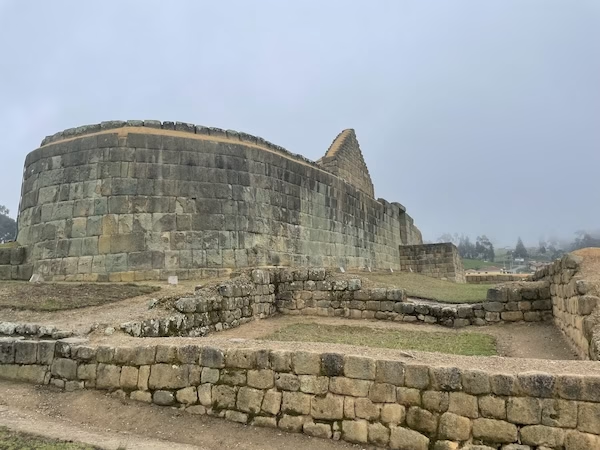
The ruins of Ingapirca are the largest and best-preserved Inca ruins in all of Ecuador. Ingapirca is also special in that the remains are a combination of both Inca and Cañari architecture. They won’t compare to what you can see in Peru, but are still very interesting and definitely a must do activity from Cuenca. Especially if you nerd out over ancient indigenous culture and architecture, like I do.
The site itself isn’t very large. It takes about an hour or so to walk around the entire thing. The main highlight is the Temple of the Sun, which you can see perched on a hill as you approach the site.
You aren’t allowed to wander around independently, however. Mandatory guided tours are offered in English and Spanish and leave when there’s enough of a crowd. Honestly, I appreciated the tour. Since most of the structures aside from the Temple of the Sun are basically demolished, it was nice to have someone explain what that pile of rocks used to be and give the whole thing context.
After the tour, you can also hike the Cara de Inca trail. This is a short-ish hike that leads down to a cliff that sort of looks like a guy’s face. If you squint and use your imagination. The rock face wasn’t that impressive, but I’d still recommend the hike since the trail brings you past some beautiful scenery and a few outlying Incan structures.
Ingapirca costs $2 to enter. Transportes Cañar offers direct buses from Cuenca’s Terminal Terrestre, and the bus ride takes about two hours. Check locally for bus times. I’d suggest going in the morning. There are restaurants and souvenir stands near the bus stop.
Soak in the Thermal Baths at Balneario el Riñón in Baños de Cuenca
Nothing relaxes those aching legs after a long day hiking the paramo or exploring ruins like a soak in some hot springs. You’ll find numerous options for a thermal bath in Cuenca’s far western suburbs, namely a little village called Baños de Cuenca.
Baños de Cuenca is only about a half an hour from Cuenca’s city center. You can reach it by bus line #100 or #12. You can also pay about $5 for a taxi. The town has numerous hot springs, ranging from luxurious spas to public baths frequented by locals. This site has descriptions of some of the fancier thermal pools, in case you’re interested: https://www.packing-up-the-pieces.com/hot-springs-banos-cuenca/
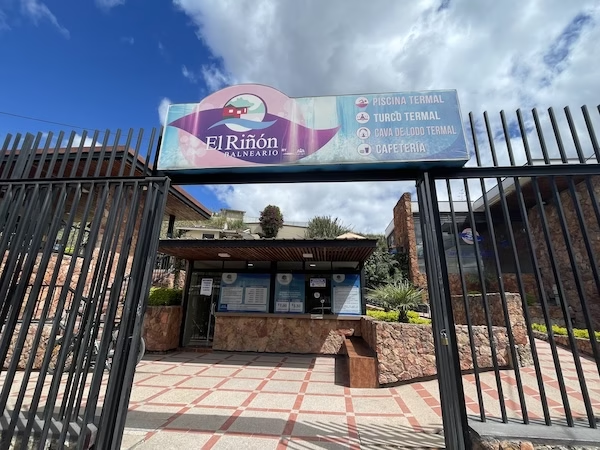
We opted for the public baths frequented by locals. Balneario el Riñón is the place where local families come to relax and soak in volcanic mineral water. It is not touristy at all, which is its major appeal. Everyone was super friendly and welcoming, and we had a great time.
Balneario el Riñón costs only $6 to enter, though they might make you buy a swim cap if you don’t have one already. They have large pools for soaking as well as some mud in case you want to smear a bunch of mud on your face. Definitely a nice place to soothe those aching joints after a long day of exploring Cuenca.
New Year’s Eve in Ecuador
We found ourselves in Cuenca over New Year’s Eve, and ended up stumbling on by far the absolute best New Year’s I’ve ever had in my entire life.
Typically, I am not a New Year’s Eve person. When I used to go out and party, I felt pressured because it was New Year’s Eve and if you don’t have fun on New Year’s Eve, then basically you’re screwed for the rest of the year. Now that I’m older and I don’t go out and party, I feel like it’s next to impossible for me to stay up until midnight. So, when we were sitting in the hostel in Cuenca on New Year’s Eve, I very nearly went to bed at 10pm and missed the whole thing.
I’m glad I didn’t, because Cuenca, and Ecuador as a whole, has some pretty amazing New Year’s traditions.
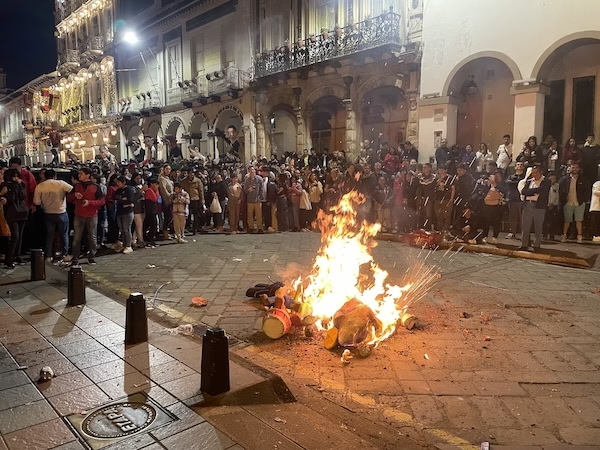
During the afternoon and early evening, you’ll find crowds of young men dressed up in drag along the streets. These men, in dresses, makeup and high heels, spend the day begging strangers for beer money. They will often run ropes across the street and block traffic until the drivers give them a handful of change. It sounds weird, but it’s all in good fun.
Then, as midnight approaches, people head out into the streets. There’s music and drinking and dancing and fireworks and what you’d expect for a New Year’s Eve party. But with a twist.
We wandered the streets and saw numerous life-sized papier mâché figures. We saw politicians, criminals and even Michael Jackson from the thriller video. Some of the figures were simple, others were part of more elaborate displays. At midnight, people drag the papier mâché effigies into the streets and set them on fire.
Men in drag, drinking, fireworks and burning effigies of politicians in the streets. What more could you want ?
Spending New Year’s Eve in Cuenca made our pathetic ball drop and auld lang syne sing alongs seem especially lame.
Final Thoughts on Cuenca, Ecuador
I absolutely loved Cuenca. In fact, I think Cuenca might be my favorite place I visited in all of Ecuador. And Ecuador has a lot of really amazing places to visit. El Cajas National Park was absolutely beautiful, and I found the Pumapungo and Ingapirca ruins fascinating.
However, despite being a major tourist attraction, nothing about Cuenca felt touristy. The city is friendly and welcoming, but it isn’t about to sell its soul to attract a few more tourist dollars. In a world where travel is can sometimes feel like a cheap commodity, cities like Cuenca feel like a breath of fresh air.
Ready to explore more of Ecuador? Check out our travel guide here: Expeditions in Ecuador: A Travel Guide to the Country in the Middle of the World
Useful Websites for Traveling Ecuador
As much as we might long for the days when you could show up to a town with nothing more than a beat-up guidebook and a sense of adventure, today much of traveling involves being glued to our phones making bookings. I’ve compiled some helpful apps and websites below that at least help make those bookings more convenient so you can spend less time staring at your phone and more time exploring at your surroundings. Some of these sites are affiliate links that give me a small commission at no cost to you if you chose to book through them. All of them are sites I’ve used personally and have no problem recommending.
Just be sure to do your due diligence as much as possible. Only hire local guides and try as much as possible to stay in locally owned hotels and hostels so that your hard earned travel dollars actually go to support the local economies of the places you visit.
Booking.com is basically the world’s only hotel booking website. They have hotels, guesthouses and vacation rentals all over Ecuador.
Hostelworld is the go-to site for booking hostels. If dorm rooms and shared bathrooms are your thing, you’ll find hostels all over Ecuador.
Get Your Guide offers tours and activities all around the world. Unlike some other sites and apps that do the same thing, you can actually find some reasonably priced deals here.