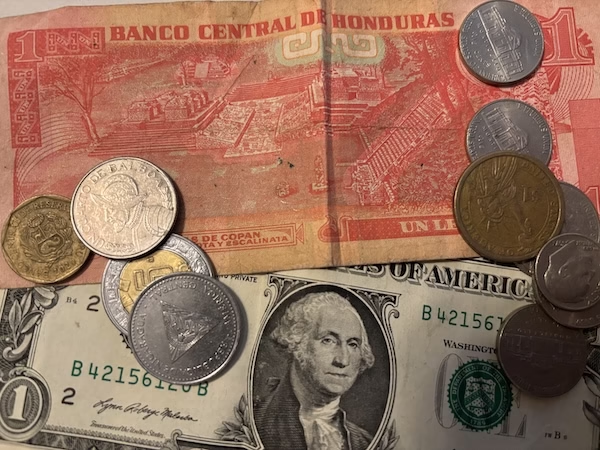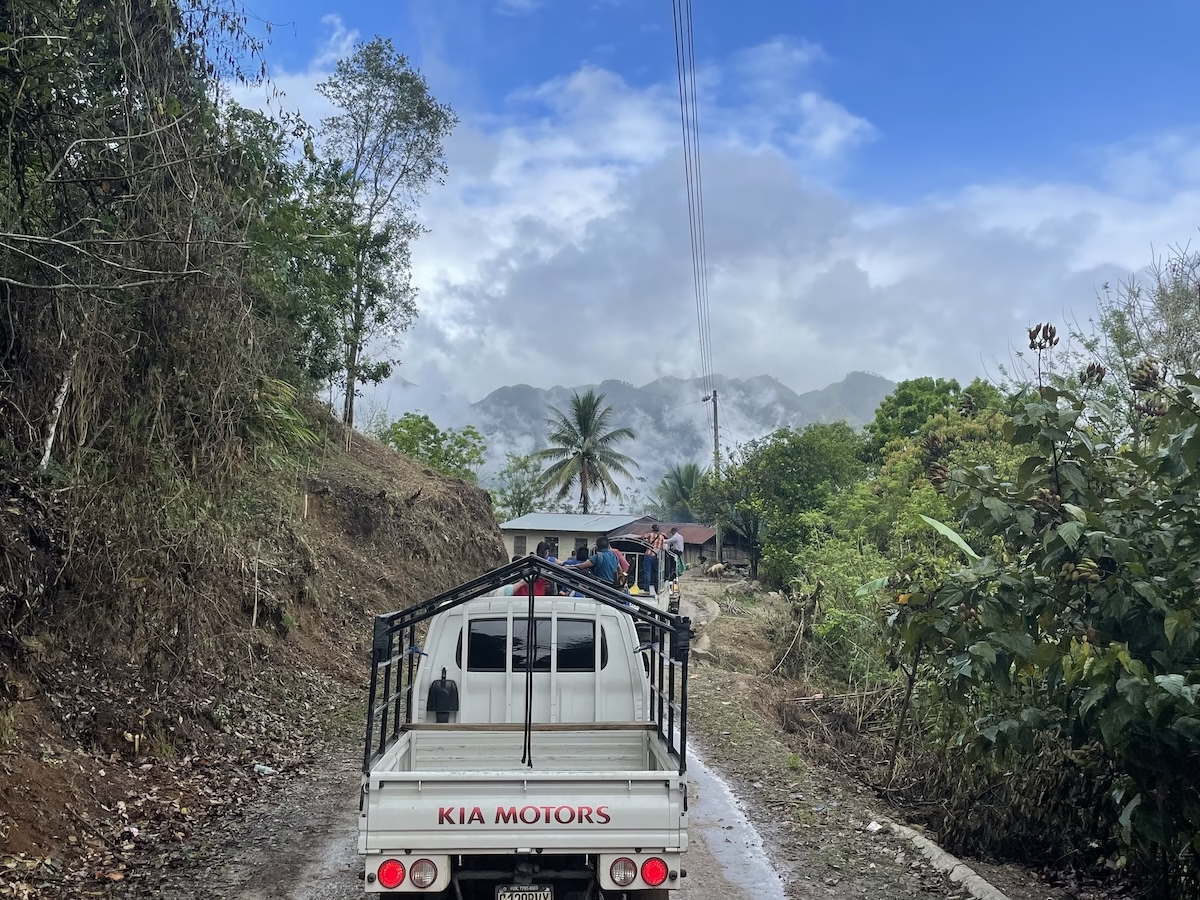
Coming up with a Central America travel budget doesn’t require piles of spreadsheets and a certified accountant, but the subject does deserve a little consideration. Most travel blogs will just tell you backpacking Central America is dirt cheap. After traveling for six months in the region, I’ve found the reality to be much more complicated.
To be sure, few travel destinations offer as much bang for your buck as Central America. The countries of Guatemala, Honduras, El Salvador, Nicaragua, Costa Rica and Panama have a wealth of natural beauty, rich culture and historical significance you can explore without having to be a millionaire. There’s a reason Central America is a long-time backpacker favorite.
Of course, travel is very personal. I’ve found that what I value and what I want to spend money on are quite different from what some random travel blogger wants to spend money on. You’ll probably find the same thing.
I’m sharing my Central America travel budget, as well as some tips for saving money, in the hopes you’ll use it as a jumping off point rather than some sort of financial gospel.
If you want travel inspiration without all the number crunching, check out our Central America guide: Backpacking Central America — The Complete Guatemala to Panama Route Guide from the Back of a Bus
Reconsidering Cheap Travel in Central America
But before we get into the numbers and details of how much Central America costs, I’d like to push back a little bit on the whole issue of “budget travel” in general.
First of all, there are the ethical considerations. I’ve seen some other unethical travel blogs give advice on how to, for example, sneak into national parks in Central America without paying entrance fees. While those entrance fees eat into your budget, they also pay to keep parks running and keep them in good shape for future travelers.
I’ve also witnessed backpackers trying to aggressively haggle with local vendors or argue with bus drivers over what amounted to maybe ten cents. These sorts of things make tourists look bad, at the very least. It’s also important to consider that most of us are coming from wealthy countries to a poor, underdeveloped region. A few dollars to us won’t make or break our trip, but can mean a great deal to the local people.
Remember that the only reason Central America is cheap is because people are paid low wages.
Secondly, being overly concerned with money can ruin your trip. There’s a weird, competitive, trend I’ve noticed amongst some backpackers to spend as little as possible then brag about it. Unfortunately, some of the most worthwhile things cost money. If you aren’t willing to spend the money, you miss out.
You also won’t enjoy yourself if you’re pinching every penny all the time. We met a German guy who was constantly harping about costs and nickel and diming the locals at every interaction. He was also miserable. He couldn’t truly experience what was around him because he was too focused on his wallet.
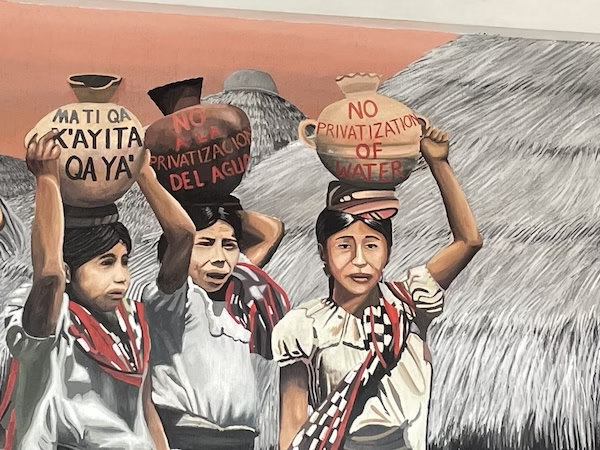
How to Save Money While Traveling in Central America
Now that we’ve discussed why you shouldn’t pinch every penny while traveling in Central America, let me give you some practical advice on how to pinch pennies in Central America.
Track Your Spending: These days, it’s very easy to keep track of your travel budget on your phone. I used the app TravelSpend, although I’m sure there are alternatives out there. Something about noting expenses down kept me mindful of how much I was spending, rather than just flashing my credit card around willy-nilly. We could also look back and realize we’d spent more than planned the last few days, so we needed tighten the budget as needed. Or vice versa, if we found we’d been traveling cheap for a while, we could splurge a bit.
Use Cash: Central America is a very cash-based society. When you come across one of the few establishments that take cards, it might be better to pay in cash anyway. Card payments almost always come with fees, and those fees add up. And you’ll almost always get a better price if you pay in the local currency rather than U.S. dollars.
Luckily, ATMs are plentiful. They also charge fees, which can put a dent in your Central America travel budget. On our trip, we would visit the bank once a week or so and withdraw the maximum amount, since fees are a flat rate per transaction.
Decide What’s Worth the Money for You: Most importantly, you need to figure out what’s valuable to you. Don’t waste money on something that you aren’t interested in just because some travel blog said it was cool. Conversely, don’t be afraid to spend money if it makes you happy. If you enjoy eating nice meals at fancy restaurants, set aside some money to do that. If you value elegant, comfortable hotels then go for it. You’ll have to make some sacrifices elsewhere, but if it’s worth it to you, it’s worth spending money on.
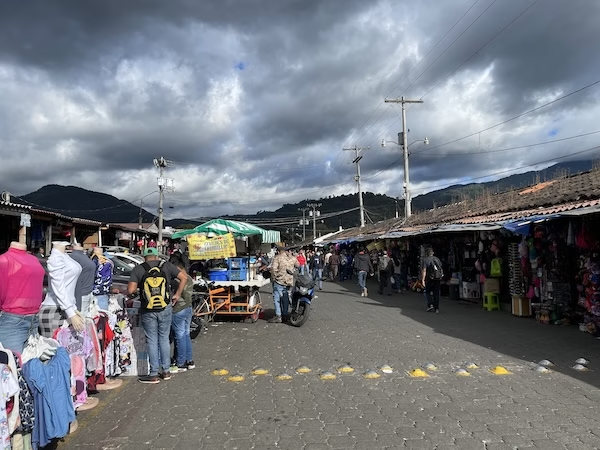
Accommodation, Food and Transportation Tips for Your Central America Travel Budget
Accommodation Costs: The costs of hotels, hostels and guesthouses add up. This will likely end up being your biggest expense. It took up nearly a third of our Central America travel budget.
You can get some good deals on accommodation in Central America, however. Take some time to compare using apps like Booking.com or Hostelworld. You are almost always going to find better deals staying at smaller, locally owned places than in big chains. You’ll also be helping to benefit the local economy.
We decided early on that we preferred to spend a little more on lodging in order to be comfortable. Nothing fancy, but I’m far too old for the bargain basement hostel dorms. And I like a private bathroom, for personal reasons I won’t get into here.
We found that splitting the cost of a private room usually ended up being about the same as what we would have paid for dorms individually. If you’re traveling as a couple (or with a really good friend) I think there’s no reason not to opt for private rooms.
Food: Food was our second largest expense, taking up about 14% of our budget. You can save money by eating street food or looking for set menus. Look for a “menu del dia” in local, hole-in-the-wall type restaurants where you can get a full belly for little money. In more expensive Costa Rica, save money by getting a place with a kitchen and cooking for yourself for at least one or two meals a day.
Transportation: Local buses are always going to be cheaper than car rental or tourist shuttles. It’s also a much more interesting, authentic way to travel. Tourist shuttles might be necessary or more convenient at times, though, so keep that in mind and plan ahead. Car rental is overpriced and not at all worth it, in my opinion.
While you’ll also find times where you need to take a taxi, you’d also be surprised at how far you can get on your own two feet.
Travel Insurance: On the one hand, you’re paying a lot of money for something that may or may not happen. On the other hand, if something were to happen, having insurance might end up saving you from a pile of expensive bills.
Younger me barely bothered to pay for health insurance at home, and never would have considered it while traveling. Older me would rather have some peace of mind. You never know what can happen, and travel insurance can turn a potential disaster into a mere inconvenience.
We used World Nomads for travel insurance during our Central America trip. I found them easy to use and set up. We’ve also used SafetyWing and also had a good experience. If you do decide to get travel insurance, I suggest comparing both options and seeing what works for you.
We receive a fee when you get a quote from World Nomads using this link. We do not represent World Nomads. This is not a recommendation to buy travel insurance. The same applies to SafetyWing.
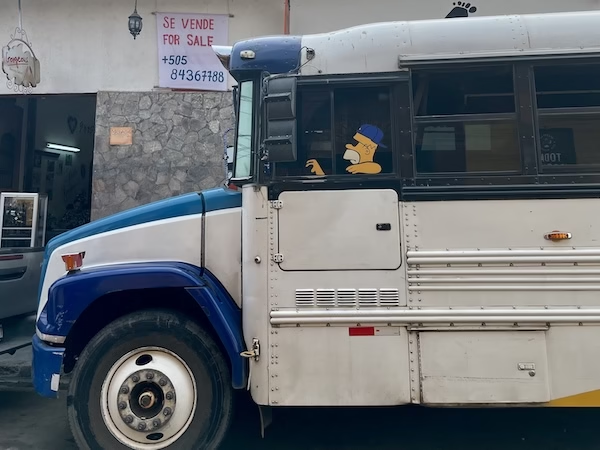
A Central America Travel Budget by Country
The countries that make up Central America vary not only in culture and cuisine, but also in how much they cost. In general, El Salvador, Honduras and Nicaragua are the cheapest countries in Central America. Costa Rica and Panama are by far the most expensive, with Guatemala floating somewhere in between.
For the moment, I’m leaving out Belize and Mexico just because we didn’t visit them as part of our recent six-month Central American backpacking trip, and thus didn’t include them in our budget. But I can tell you, Belize and Mexico are generally more costly.
** Please remember to take all prices you see online, including those on this page, with a grain of salt. Prices and costs fluctuate all the time. I’m including some example numbers here to give you a general idea, but they will probably be different by the time you reach Central America.**
| Country | Approximate Daily Budget | Best Value For | Worth Splurging On |
| Honduras | $35 / day | Horseback rides, authentic, unhurried travel | Copán Ruins entrance |
| Guatemala | $37 / day | Culture, Spanish classes, Mayan heritage | Tikal Ruins, Volcano hikes |
| Nicaragua | $39 / day | Colonial cities, volcanoes, local buses | Isla Ometepe |
| El Salvador | $43 / day | Friendly locals, coffee tours, lounging in mountain villages | Surfing lessons in El Tunco |
| Costa Rica | $55 / day | Nature, wildlife, eco-tourism | Corcovado National Park on the Osa Peninsula |
| Panama | $58 | Cloud forest hiking, laid-back beaches | Coiba National Park in Santa Catalina |
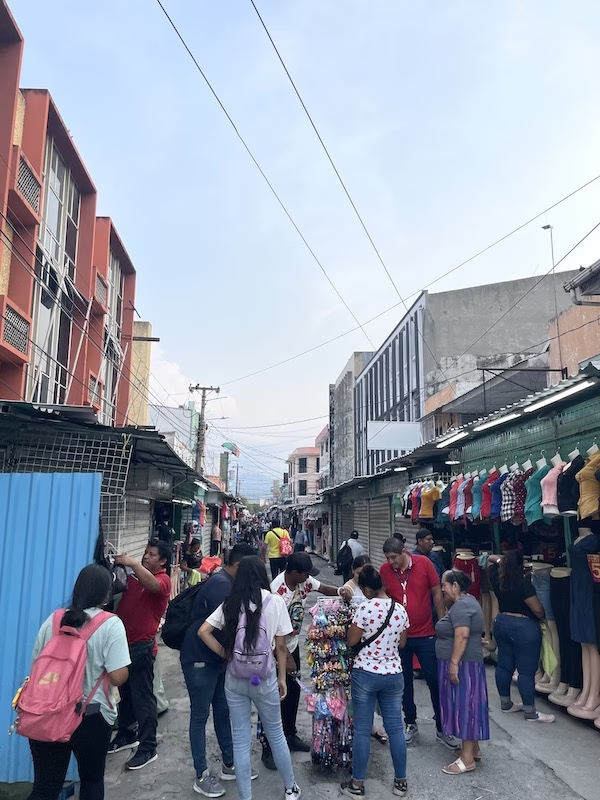
Guatemala Travel Budget and Sample Costs
Guatemala is at the higher end of Central America’s cheaper countries. Our budget is a bit skewed, since we spent a month in Antigua taking Spanish lessons. Our school included a homestay with two meals, and on class days we really didn’t go on many excursions. Once we left Antigua, the country seemed a little pricier than the travel blogs I’d read led me to believe it would be. However, I think Guatemala was worth every penny.
Average daily budget in Guatemala: $37a day
Accommodation costs: Hostel dorm — $15 Private room in guesthouse — $40
Food costs: Street food — $4 Meal in a restaurant — $15
Transportation costs: Local bus (where safe) — $3 Tourist shuttle — $35 +
Sightseeing costs: Museum entrance — $10 Volcano Hiking Tour — $35
While local buses are cheap, we were warned about taking them near Guatemala City and Antigua, due to security concerns. Thus, we ended up spending a bit more on tourist shuttles. Guatemala has some decent street food, including the best tacos outside of Mexico.
Read more about traveling in Guatemala here: Go to Guatemala: A Travel Guide Without the Tourist Traps
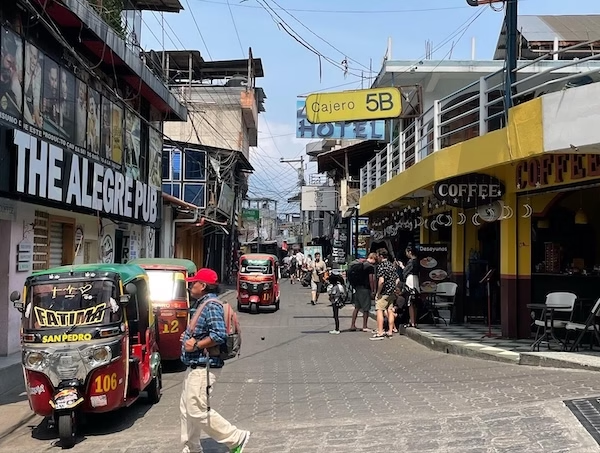
Honduras Travel Budget and Sample Costs
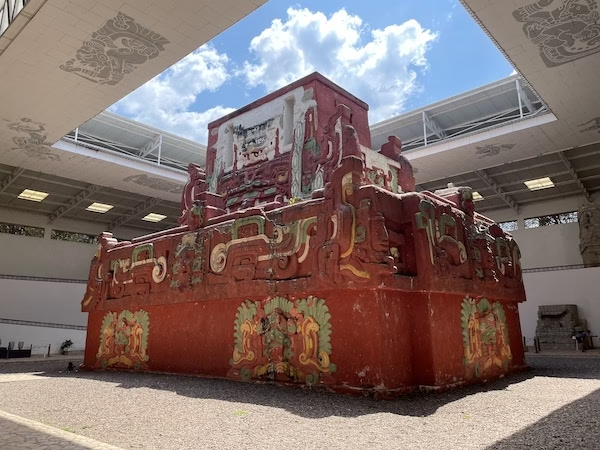
Okay, so I have to admit that we only went to one destination in Honduras, the magnificent Copán ruins. However, we not only visited the wonderful Mayan pyramids, but also spent a few days in the lovely mountain town nearby. I definitely want to go back and explore more of this intriguing country. I’ll update this section when I do. Amazingly, even a popular tourist spot like Copán was very affordable.
Average daily budget in Honduras: $35a day
Accommodation costs: Private room in guesthouse — $20
Food costs: Street food — $4 Meal in a restaurant — $16
Transportation costs: Tourist shuttle — $45
Sightseeing costs: Copán Ruins entrance — $20 Horseback Riding Tour — $20
I’ve heard from others that you can expect to pay a lot more on the popular Bay Islands. Islands are more expensive than the mainland pretty much everywhere in the world. Our brief time in Honduras was a fantastic value, though.
Read more about traveling in Honduras here: Copán Ruinas: Visiting Mayan Ruins and More in Honduras
El Salvador Travel Budget and Sample Costs
El Salvador has only recently emerged on the tourist scene, and it’s really an incredible place. The country is also a very good value, and it’s somewhere you can stretch your budget quite far. El Salvador uses the U.S. dollar, so if you’re from the United States, you don’t have to bother with currency conversion, either. They also supposedly have Bitcoin as an official currency, but in practice I only saw one place that actually accepted it. Just use dollars. Don’t let the tech bros win.
Average daily budget in El Salvador: $43a day
Accommodation costs: Hostel dorm — $10 Private room in guesthouse — $15
Food costs: Street food — $3 Meal in a restaurant — $10
Transportation costs: Local bus — $2.50 Tourist shuttle — $48
Sightseeing costs: Volcano Hike — $11 Coffee Tour — $10
You really won’t have to try hard to save money in El Salvador. Inland towns like Santa Ana are cheaper than beach areas like El Tunco, but even El Tunco wasn’t expensive. You can save a lot by eating Pupusas, the country’s national dish. These are stuffed tortillas, and they’re not only affordable, but also delicious. Local transportation in El Salvador is also cheap and reasonably reliable.
Read more about traveling in El Salvador here: Exploring El Salvador: Central America’s Hidden Travel Gem is Ready to Shine
Nicaragua Travel Budget and Sample Costs
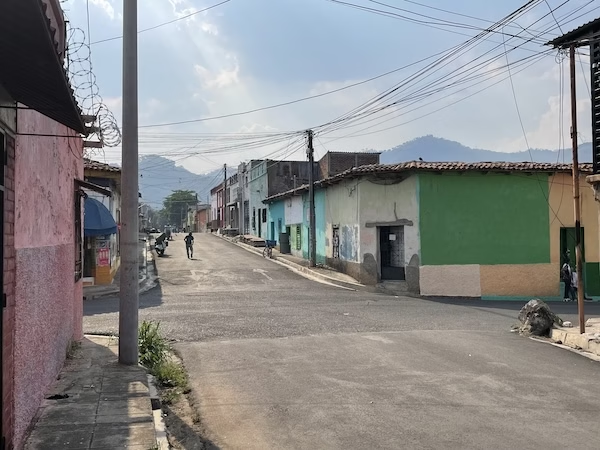
Nicaragua might be Central America’s most affordable country. It’s also the poorest, and there were definitely times when we felt a little uncomfortable with our relative wealth. Keep in mind that it’s not a cheap place for the locals. However, it’s also a fantastic travel destination and you do get a lot of bang for your buck. Our daily budget in Nicaragua ended up being a little high, but I think that’s just because we did a lot more.
Average daily budget in Nicaragua: $39a day
Accommodation costs: Hostel dorm — $12 Private room in guesthouse — $25
Food costs: Street food — ? Meal in a restaurant — $15
Transportation costs: Local bus — $2.75 Tourist shuttle — $42
Sightseeing costs: Museum entrance — $6 Volcano Tour — $27
We actually didn’t see a lot of street food in Nicaragua. That’s okay, because restaurants were generally pretty affordable. One thing to look out for, though, are scams and overcharging. These things are inevitable when you have a lot of wealthy tourists coming to a poor country, but they can get costly. The vast majority of Nicaraguans are honest people, but the tiny minority who aren’t tend to target tourists.
Speaking Spanish will help you out here. We almost always got a better price from cab drivers, for example, who didn’t speak English. As usual, the local buses are also always a better deal, and the hardworking bus attendants are unsung heroes.
Read more about traveling in Nicaragua here: Navigating Nicaragua: A Travel Guide to the Land of Lakes and Volcanoes and Revolution
Costa Rica Travel Budget and Sample Costs
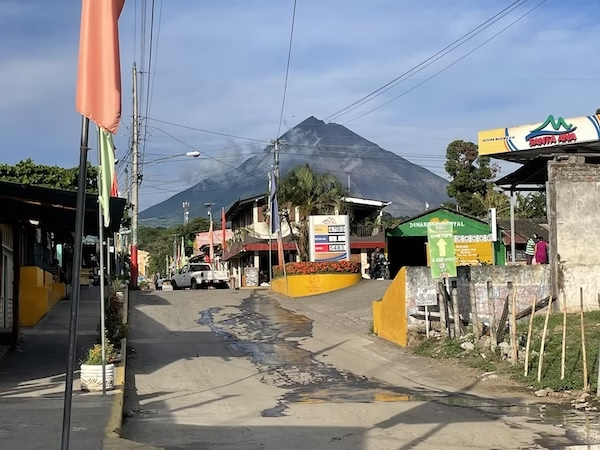
Costa Rica was once the most expensive country in Central America, but I think Panama may have overtaken it. Either way, the prices can definitely be a shock, especially if you’re coming from Nicaragua. I think Costa Rica is totally worth the cost, though. If you’re a nature lover, there really isn’t anywhere else like it.
Average daily budget in Costa Rica: $55a day
Accommodation costs: Hostel dorm — $12 Private room in guesthouse — $40
Food costs: Street food — ? Meal in a restaurant — $20
Transportation costs: Local bus — $15 Tourist shuttle — $60
Sightseeing costs: National Park entrance — $30 Tour to Corcovado National Park — $130
You can save a lot of money in Costa Rica by simply taking the local buses instead of renting a car or relying on tourist shuttles. The buses in Costa Rica are reasonably comfortable and easy to use once you get the hang of things.
You’ll also save a lot by getting accommodation with a kitchen and preparing food yourself for at least a couple of meals a day. Even food in the supermarket can get expensive, though, so try your best to eat like a Tico. Lots of rice and beans. If you want to go out to eat, you won’t find any street food. Instead, look for “casados” which are set menus in local restaurants. Avoid the pizzerias and fancy gentrified tourist restaurants that have invaded the country.
In general, the more you can travel like a local, the more money you can save. You’ll also have a way more interesting trip.
Read more about traveling in Costa Rica here: Come to Costa Rica: A Travel Guide to the Tourist Hotspot I Still Love
Panama Travel Budget and Sample Costs
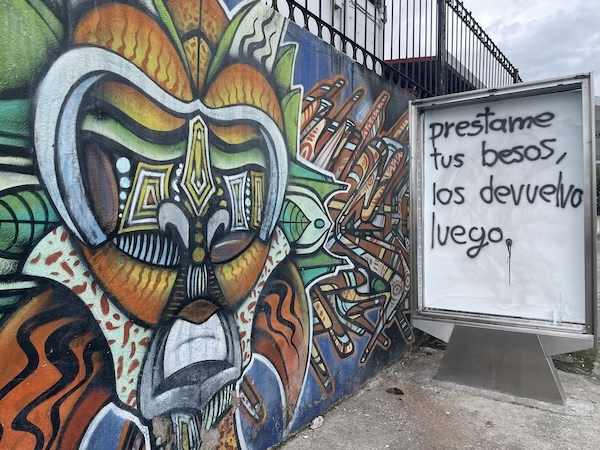
Panama may have overtaken Costa Rica as Central America’s most expensive country. This makes sense, considering how rapidly Panama’s developed. It’s now also a hub for international finance and tax evasion. As far as tourism goes, Panama seems to be trying to position itself as a luxury destination. Which means, higher costs all around.
Average daily budget in Panama: $58a day
Accommodation costs: Hostel dorm — $12 Private room in guesthouse — $36
Food costs: Street food — ? Meal in a restaurant — $25
Transportation costs: Local bus (where safe) — $18 Tourist shuttle — $45
Sightseeing costs: Waterfall hike — $20 Snorkeling tour — $40
You can save some money in Panama by avoiding the major tourist centers. In Panama City, stay outside of the restored old district of Casco Viejo. In other places, we found things got cheaper the further you were from the center of town.
You won’t find much street food in Panama, so prepare to self-cater. Similar to Costa Rica, you’ll do better eating like a local. I don’t recall any street food in Panama. Keep an eye out for those set menus. However, save at least a little room in the budget to splurge on a nice seafood dinner at least once.
Read more about traveling in Panama here: Panama Travel Guide: Passing Through the Country that Connects the Americas
So, How Much Money Do I Need for Central America?
Again, prices change regularly, but I spent about $35 to $60 a day throughout the six months my wife and I spent in Central America. I know that the math above might not add up, exactly. These are all estimates based on my entries in the TravelSpend app, and I’m also bad at math. The numbers are just to give you a general idea.
In total, we spent a little over $9,000. That includes Spanish classes in Guatemala and Nicaragua as well as all our day-to-day expenses. It doesn’t include our flights into and out of Central America. It also doesn’t include travel insurance or the Netflix subscription I forgot to cancel. However, I think about $9,000 to $10,000 is a good savings goal when thinking about how much money you need for six months in Central America.
Overall, I’m completely satisfied with our Central America travel budget. I don’t feel like I missed out on anything because I didn’t have enough money. I also don’t regret any of my expenses. Obviously, travel is very personal. You could easily spend much more or less than this. But, hopefully, sharing some of my costs can help you budget for your own Central America trip.
By the way, my wife and I saved up for our trip to Central America by teaching English in China. Way back in the roaring2020s, English teaching was a rewarding and lucrative, albeit challenging, decision.
If you don’t want to spend three years teaching English to save for your Central America trip, you’ll have to do some scrimping and saving back home. Maybe get a second job? Maybe max out a bunch of credit cards? Perhaps a daring daylight robbery of Fort Knox on elephant back? I don’t know. I’m a blogger, not a financial advisor.
Conclusion: Finding the Central America Travel Budget that Suits How You Travel.
One thing I can do as a travel blogger is repeat myself. I know I’ve said this a lot, but one of the main lessons I learned during our six-month Central America trip is that travel is very personal. What I want to spend money on isn’t necessarily what you want to spend money on. Travel expenses, and by extension, any Central America travel budget, are very subjective.
I would also like to once again express my distaste for trying to travel as cheaply as possible no matter what. I know that the only people who say that money doesn’t matter have too much of it. The concept of budget travel has also opened up global travel as an option for working class people who might otherwise have felt they could never afford travel at all.
But I think you can be too cheap. By constantly pinching pennies and Scrooge McDucking your way through Central America, you risk letting your wallet control you and missing out on some really amazing stuff.
Keep track of your expenses and follow your budget, but also allow yourself the occasional splurge. After all, in ten years’ time, what are you going to remember? That you stayed under your arbitrary daily budget, or that you had an amazing potentially life-changing experience? In my opinion, amazing potentially life-changing experiences are always worth the price.