It’s difficult to be an ethical person. So difficult, they made an entire TV show about the very subject. Even just trying to travel ethically can feel like navigating a minefield of class, history, geopolitics, and culture. That’s why I’m writing this guide to responsible travel in Central America.
I won’t pretend that my guide is perfect. I won’t even pretend that this guide will somehow get you into heaven or whatever other virtuous afterlife you believe in. None of us can be perfect, but it’s still important to try our best.
Unfortunately, I’ve seen far too many other tourists who don’t even try. They blunder around the countries they’re visiting, acting like colonial overlords. They treat locals like servants and expect their every whim to be catered to. There’s a reason the ugly tourist stereotype exists. And a reason why many of us try to avoid over-touristed destinations.
I’m assuming the very fact that you’re reading a blog post about ethical travel means you don’t want to be one of those ugly tourists. Good. All of the advice in this guide is based on observations and conversations from numerous trips to Central America. Much is based on a recent six-month backpacking trip from Guatemala to Panama.
So, while none of these tips will get you into “the good place”, they’ll at least help you not to be a jerk.
Learn about Central America’s History
The first suggestion is about education. Central America is a tumultuous part of the world, to say the least. The region has a long history of civil war, revolution, dictatorship, poverty, and crime. Central America’s history is almost begging you to travel responsibly.
It’s important to recognize that all the problems Central America faces are not due to some inherent chaoticness or lack of moral character. They stem from years of colonialism and exploitation.
Learning about this history will not only help you be a more ethical traveler; it’ll help enrich your trip. Especially if you, like me, come from the United States.
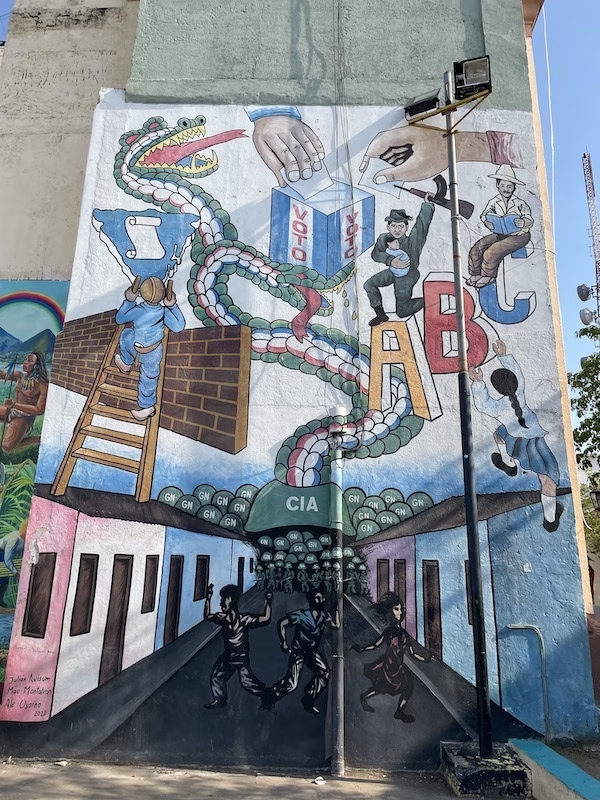
The U.S., more than any other nation, has been the direct or indirect cause of most of the region’s troubles. In fact, the U.S. has intervened in Latin America, either directly by sending troops or through covert means, at least 41 times between 1898 and 1994. Almost all of these interventions were about overthrowing governments.
I don’t bring this up to make you feel guilty. Guilt isn’t going to change anything. And besides, the numerous U.S. military and C.I.A. attacks were to secure land and resources for big businesses. Militarism and imperialism actually do very little to help us regular, working joes and janes.
But, if we regular joes and janes want to travel in Central America, we should at least try and understand the destabilizing role our government has historically played in the region.
Other much smarter, more talented people have written a lot about this subject. There are about a million Central American history rabbit holes you could dive down. But you don’t have to take my word for it…
Recommended Reading to Learn about Central American History
Bitter Fruit: The Story of the American Coup in Guatemala by Stephan Schlesinger
This book covers the horrific story of the United States’ overthrow of democratically elected Guatemalan President Jacobo Arbenz. This coup, on behalf of a banana company, not only kick-started the C.I.A., but launched Guatemala into a bloody civil war that the country is still recovering from. The story of the coup covers corporate greed, Cold War spies, and more.
Bonus fact: Che Guevara was in Guatemala City at the time of the coup. It was a big part of what inspired him to take up arms and join the guerrilla struggle in Cuba. https://www.goodreads.com/en/book/show/102729.Bitter_Fruit
I, Rigoberta Menchú: An Indian Woman in Guatemala by Rigoberta Menchú and Elizabeth Burgos
Rigoberta Menchú is a Nobel Prize-winning indigenous activist from Guatemala. In her autobiography, she reflects on the injustices suffered by herself and her people. The book discusses the hardships she’s faced at the hands of the Guatemalan government, as well as the day-to-day experiences of indigenous people in Central America. https://www.goodreads.com/book/show/233292
Don’t Be Afraid, Gringo by Elvia Alvarado
This book is another oral history from a female Central American activist. This time, it’s Elvia Alvarado, a campesina organizer from Honduras. It’s also a tale of suffering and hardship, as well as an insightful look into the lives of the region’s rural poor. https://www.goodreads.com/book/show/303837.Don_t_Be_Afraid_Gringo
The Jaguar Smile by Salman Rushdie
Salman Rushdie, the same author who was recently stabbed in the eye, traveled to Nicaragua during the height of the Sandinista revolution in 1986. The resulting book is an excellent journalistic overview of the revolution and the people involved in it. This one is actually one of my top books, and the book that introduced me to Rushdie’s writing. He’s now one of my favorite authors. https://www.goodreads.com/en/book/show/4837.The_Jaguar_Smile
One Day of Life by Manilo Argueta
I remember reading this book years ago, and it blew my young mind. It’s a novel, so a fictional. However, the account of the civil war in El Salvador is based very much in reality. The novel takes place during the span of a single day. It’s a disturbing but captivating read. https://www.goodreads.com/en/book/show/76670.One_Day_of_Life
Men of Maize by Miguel Ángel Asturias
Another novel, this time by the godfather of magical realism, Guatemalan author Miguel Ángel Asturias. The book is not necessarily an easy read, especially if you’re used to having your hand held through a traditional plot. You have to let go and allow yourself to be carried along by the dream-like narrative. Once you do, you’ll be impressed. The story is told through a series of vignettes that all revolve around the struggle of indigenous people, the military, and poor farmers. I’m sure you’re sensing a theme with these book selections by now. https://www.penguinrandomhouse.com/books/750899/men-of-maize-by-miguel-angel-asturias-translated-with-an-introduction-and-notes-by-gerald-martin-foreword-by-hector-tobar/
Bonus: Walker
Walker is not a book, nor is it a T.V. show starring Chuck Norris. It’s a film about the time a Tennessean named William Walker invaded and conquered Nicaragua to secure a route between the Atlantic and Pacific oceans for U.S. shipping interests. Also, to turn Nicaragua into a slave state. Most surprisingly, it’s based on a 100% true story. The movie was directed by Alex Cox, auteur of classics like Repo Man and Sid and Nancy. Walker keeps the same punk rock sensibility and features a soundtrack by Joe Strummer of the Clash. https://www.imdb.com/title/tt0096409/
Remember that History Affects People’s Present-Day Lives
Learning about Central America’s history is important to understand why the region is the way it is today. Of course, history doesn’t just live in the past. It very much affects the present-day lives of real, living, human beings. Just another reason why learning a little bit of Central America’s history is important for responsible travel.
In other words: you’re probably going to meet people who’ve lived through some very serious shit.
We met a woman who was forced from her home during El Salvador’s civil war. We met another man in Nicaragua who fought in the Sandinista revolution as a teenager. And so on. These people have seen and lived through stuff I cannot even imagine.
So, as you travel in Central America, keep in mind that some of the people you interact with are likely dealing with some pretty serious trauma. I am not a psychiatrist or expert on dealing with trauma. Generally speaking, though, I think it’s a good idea to cut people some extra slack if you know they’ve suffered through something horrendous.
Also, be careful about talking about these wars and revolutions. You might find people who are excited to talk about their country’s history. You might find other people who feel that talking about it is way too painful. It’s okay to be curious and ask questions. However, it might be best not to bring something up unless the other person brings it up first.
And when the conversation turns political, you may find that you’re talking to someone on the opposite end of the spectrum from you. Take the opportunity to sit back and listen. You may not agree with what the person is saying, but you’ll probably learn something.
Treat the Locals with Respect
Regardless of who you’re interacting with, the key rule to ethical travel in Central America is actually pretty simple: treat the local people with respect.
It doesn’t matter if that person is the owner of the hostel or the person scrubbing the toilets. Everybody deserves to be treated decently. Just because you’re paying them for a product or service doesn’t mean you have the right to act like some kind of feudal overlord. This is true back home, but goes double when traveling.
The way I like to think of it is that we tourists are guests in the countries we’re visiting. The local people have been kind enough to let us into their homes, and in return the least we can do is be respectful and courteous in return. If you wouldn’t act a certain way when visiting a friend or relative, don’t act that way in Central America.
Don’t Take Photos Without Permission
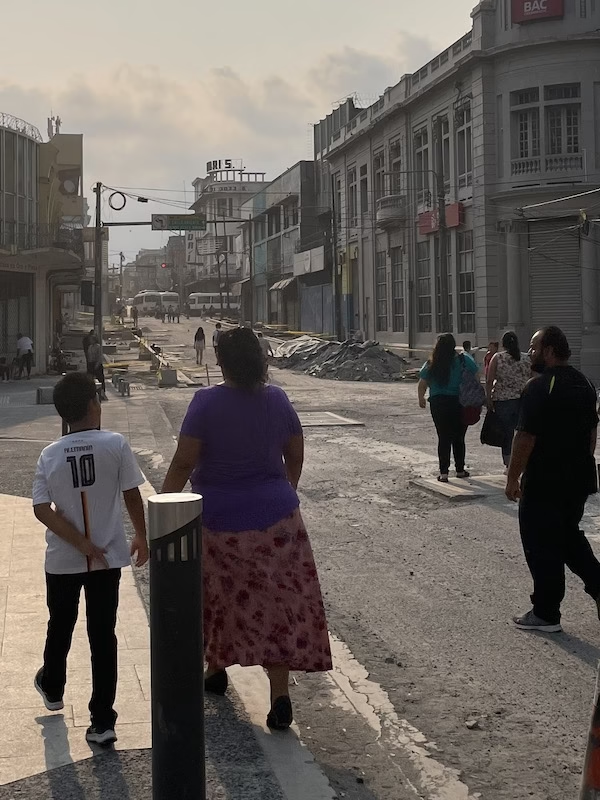
Part of that respect means respecting people’s right to privacy. Which means: don’t take photos of people without their permission.
You’re going to see some local Mayan women walking down the street dressed in amazing, colorful clothing. Before you pull out your phone, remember that they aren’t dressing in their traditional clothing to be props for your Instagram feed. That’s just how they dress, and they’re just trying to go about their day.
The no photo rule goes triple if you happen to stumble across a local religious ceremony or celebration.
A lot of tourists get all up in arms about this for some reason. They feel they should have the right to photograph whoever they want. I don’t see it as a big deal. It’s a very small thing that can go a long way in showing respect. It’s also an essential part of responsible tourism in Central America.
Some people like to make a big deal about supposed Indian legends about cameras stealing their souls. I personally think it’s probably just annoying to have someone shoving a camera in your face while you’re just going about your day. Everyone hates the paparazzi for a reason, right?
The thing is, if you want to be a responsible traveler, you can still take photos of people. All you have to do is ask. The worst that’ll happen is the person says “no.” Then you just go and ask someone else.
I’ll even give you the phrase in Spanish: “Podría tomar una foto?”
Make an Effort to Learn Some Spanish
Speaking of learning phrases in Spanish, I really can’t express how much difference learning a bit of Spanish makes when traveling in Central America. We spent the first month of our six-month trip taking Spanish classes in Guatemala. I already knew the basics before, but becoming conversational completely changed things. Suddenly, it was like a room full of secret doors opened up.
However, you don’t need to be fluent or even conversational. Even just knowing a little bit of Spanish will endear you to the local population and help you travel responsibly in Central America.
I found this especially true in tourist hotspots like Costa Rica, where everyone expects all the tourists to only speak English. You could see people’s eyes light up and their bodies relax when we greeted them with “buenos días.” A little Español really goes a long way in showing respect.
If you absolutely positively can’t bring yourself to learn a single word in Spanish, at least be considerate in your ignorance of the language. Those old stereotypes of tourists shouting louder and louder at a local who doesn’t understand them are sadly very true. I’ve seen it far too many times.
You don’t need to be that guy. The person you’re talking to isn’t hard of hearing. He or she just doesn’t understand you. It can be frustrating when you can’t communicate, but repeating the same thing louder and angrier isn’t going to help anyone. It just makes you look like an asshole.
When in Doubt, Use the Formal Form of Address
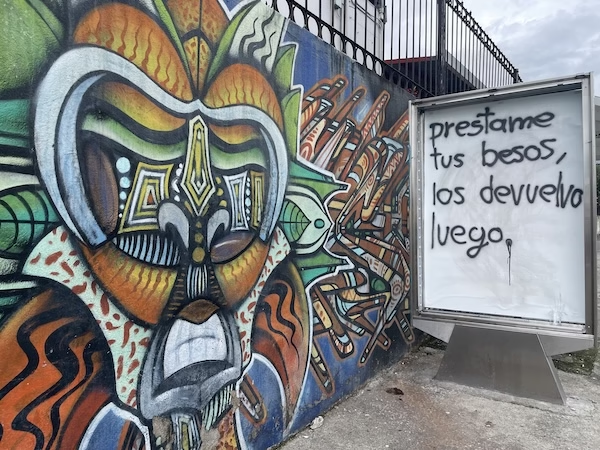
If you do know some Spanish, you know that the language has both a formal and informal form of address. In English, we just call everyone “you”. In Spanish, you use “tu” or “usted” depending on who you’re talking to. The distinction of when to use the formal “usted” or the informal “tu” can feel overwhelming, sometimes. It doesn’t help that the distinctions change depending on what country you’re in. Or sometimes they even seem to vary by town.
And don’t get me started on “vos.”
We heard from some Nicaraguans who were absolutely livid at Costa Ricans addressing them with “tu”. “They talk to us like we’re dogs!” they said. On the other hand, the Costa Ricans seem to think the Nicaraguans are way too uptight and formal. Costa Rica has that laid-back, pura vida lifestyle after all.
Still, as a foreigner and a guest in Central America, it’s best to use “usted” as the default.
Of course, people will give you a pass if you mess up or forget. They might just tell you to straight up use “tu.” Leave that decision up to them. But, by defaulting to “usted,” you’ll show that you’re a polite, respectful, and responsible traveler.
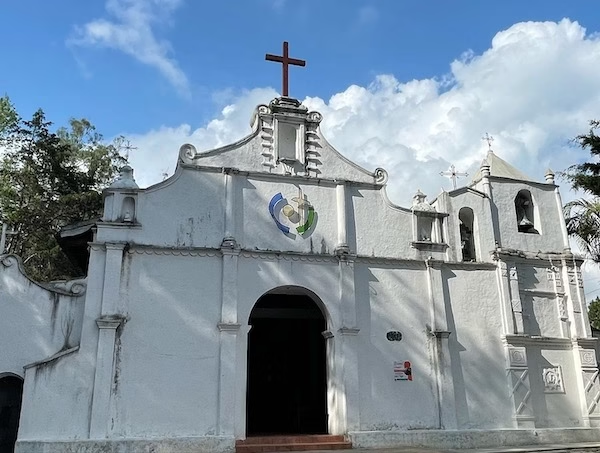
Don’t Barter
Travelers who’ve backpacked through Southeast Asia might have memories of night markets and intensive haggling sessions with merchants. Bargaining and negotiating are almost a national sport in much of Asia.
It is definitely not a thing in Central America.
Now, I’ve definitely seen tourists successfully haggle in Central American markets. But just because you can do something doesn’t mean you should. In the vast majority of cases, the price someone quotes you is the actual cost, and it’s what you should pay.
Intensive bargaining doesn’t just make you look bad; it’s also unethical. Remember all that talk about the intense poverty and exploitation in Central America? The amount you can negotiate is likely only going to be a dollar or two. It might even be a few cents. That’s money you probably wouldn’t even notice if it fell out of your pocket, but it can mean a whole lot for a local Central American.
There are really only two exceptions to this rule. The first is if you’re in an especially touristy souvenir market. You can sometimes do the whole “walk away” trick and get a lower price. The second might be if you’re negotiating a taxi to take you an especially long way or wait for you while you hike or something. You have some wiggle room, but in either case, don’t bargain too hard.
In general, though, the ethical thing is just to accept the price you’re quoted.
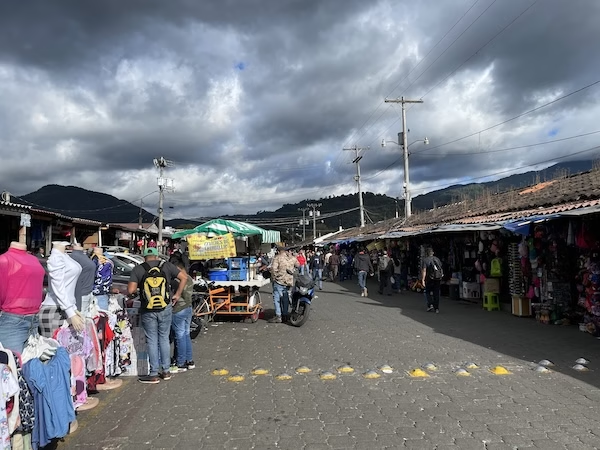
Take Overcharging and Scams in Stride
Whether you haggle or not, you are going to get scammed and/or overcharged in Central America. It’s an inevitable side effect of any region where relatively wealthy tourists come to relatively poor countries. While the vast majority of Central Americans are honest, a small handful are not.
You won’t be able to stop someone ripping you off. You will be able to control how you react to it.
Obviously, it’s no fun getting scammed. It feels bad whenever it happens, like the scammer has betrayed your trust. And, in a way, they have. It’s a really bad feeling.
However, my advice is to let it go. Don’t get angry, don’t try to argue or fight. Don’t hold on to those bad feelings and carry them into your next interaction. Consider it a tourist tax, or the inevitable side effect of an unequal world.
After all, aside from ethical issues, you also potentially could let a scammer ruin your trip. What would you rather focus on: the amazing things you saw and did in Central America? Or the douche bag who gave you the wrong exchange rate at the border?
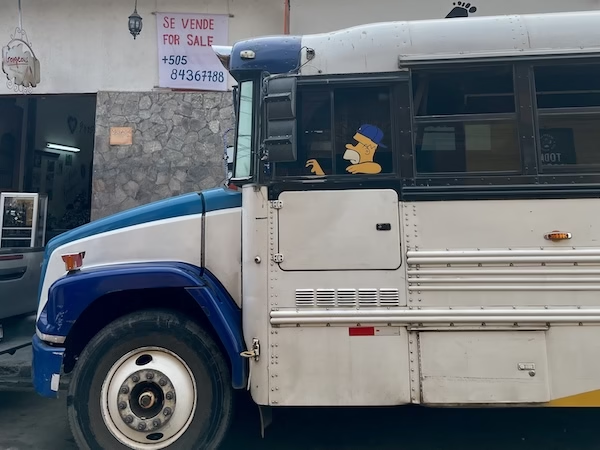
Obey the Rules and Cultural Norms
Look, I know that breaking rules is cool. We all want to be the badass in the leather jacket smoking cigarettes and skateboarding in the back row of math class. Rebels are sexy, but leave your rebellion back home.
When we travel to another country, it’s up to us to follow the local rules and laws as best we can. And if we want to be ethical travelers, we should also try our best to stick to local customs. It seems like common sense, but I’ve seen a lot of tourists come to Central America acting like they’re above the law.
That means no smoking in non-smoking areas. Especially after someone tells you to stop. That also means not trying to sneak into National Parks or archeological sites without paying. Finally, it means keeping your bikini top on when you go to the beach. I love looking at naked boobs as much as the next guy, but in Central America it’s best to stay covered up.
Obviously, you can’t memorize every law or custom in advance. Nobody expects that. But you should at least make an effort. Follow the lead of the locals, obey the signs, and if someone asks you not to do something, please, for the love of God, don’t do it.
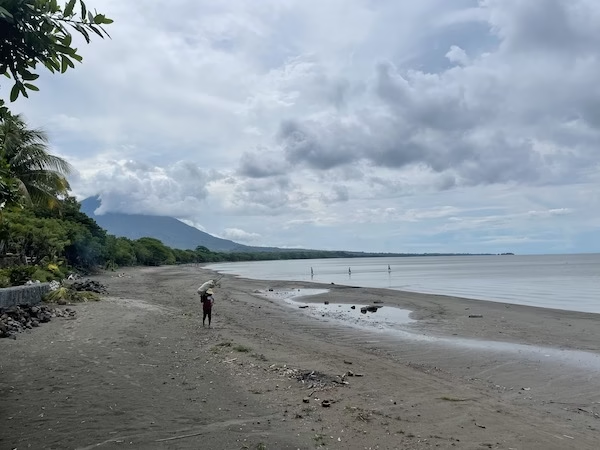
Don’t Do Drugs
You might want to smoke a little weed on your vacation. You may also be tempted to do a line or two at a party. I’m not going to judge your lifestyle choices, but if you want to travel ethically in Central America, you should really just stick to alcohol.
Recreational marijuana is illegal in all of Central America. So is cocaine. Most importantly, though, buying drugs means you’re giving your money directly to local gangs or cartels. These gangs and cartels are not nice people. They represent probably the absolute worst aspects of capitalism. Very few organizations, aside from maybe the United Fruit Company, have caused so much death and destruction throughout the region for the sake of profit.
Not only are you supporting malicious criminal organizations if you buy drugs, but you also put yourself at risk. You may end up in jail, with no help from your home embassy. You may find yourself getting shaken down by crooked cops. Or, you might end up getting beaten up and robbed. Or worse. Central America is generally very safe for tourists, but you’ll definitely find trouble if you go looking for it.
I also shouldn’t have to say it, but this all goes double for prostitution. Sex tourism is incredibly evil and immoral, and anyone involved in it is not welcome on my blog.
Try to Support Local Businesses
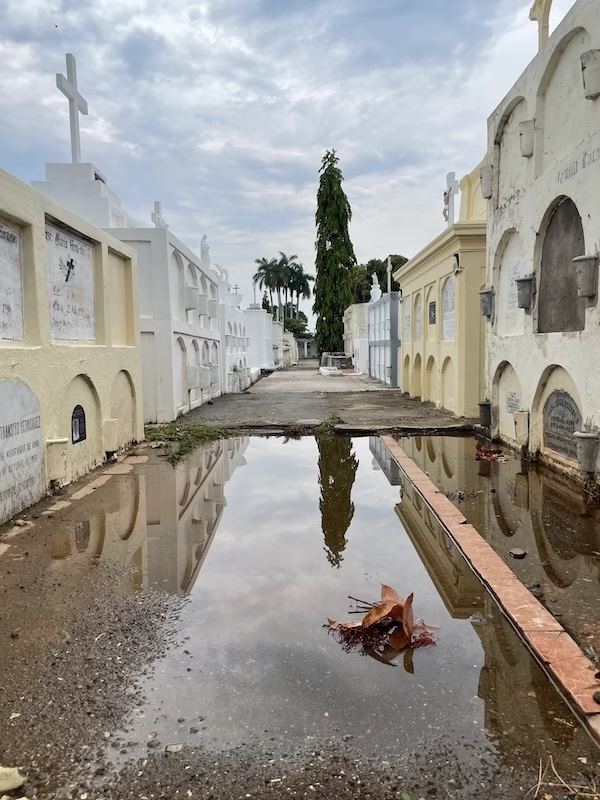
Where you should be spending your money, instead of on drugs, is with local mom and pop businesses. Now, generally speaking, I’m not a fan of the “vote with your dollar” mindset. Aside from the fact that we all know there’s no such thing as ethical consumption under capitalism, you inevitably run into the problem that the people with more dollars get more votes. However, when trying to travel responsibly in Central America, where you choose to spend your dollars actually can make a difference.
Always try to stay in local guesthouses or locally owned hostels. Eat in local restaurants. Avoid the ubiquitous international chains. Try to buy souvenirs from local artisans rather than cheap sweatshop-produced stuff. And always, always, use local guides.
This seems simple, but can sometimes become over-complicated. Central America is full of hotels and hostels owned by expats. What traveler hasn’t dreamed of starting up a hostel and living overseas? And sometimes, you just can’t tell who owns what. Or, the expat-owned hostel might be the only option in your price range.
Still, whenever you can, it’s best to try to give your money to locally owned businesses. Not only will you be helping grow a developing economy, but you’ll most likely get a better deal.
I want to make an extra appeal for the licensed local guides. Working as a tour guide in a national park or ruin can be a fantastic way for locals in countries without a lot of employment opportunities. Yet, I can’t believe the number of expats I’ve seen who move to Central or South America to work as tour guides. People from rich countries who come to work as guides are stealing jobs directly from people who need them.
Aside from the ethical issues, I know I would much rather be guided by someone who is actually from the area I’m visiting. Aren’t they going to know way more about the place than someone from somewhere else?
Be Skeptical of Voluntourism
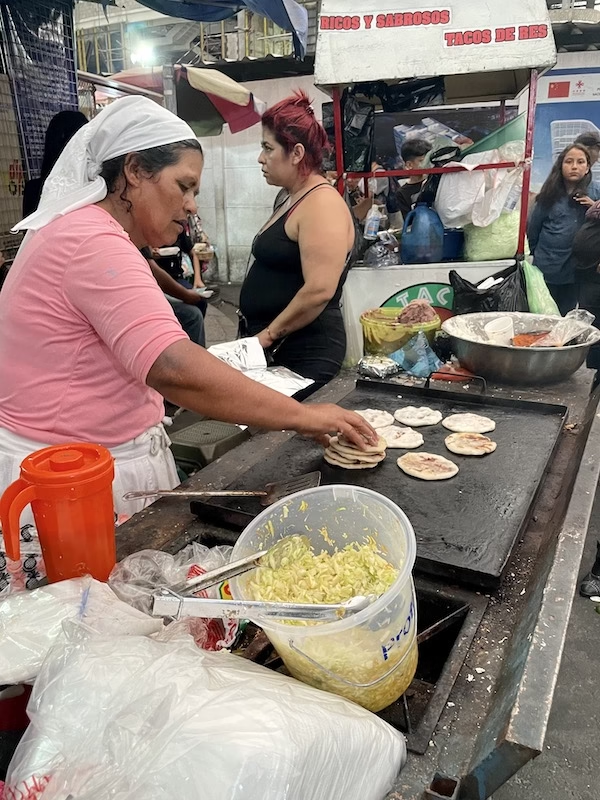
Another big ethical travel minefield is the issue of voluntourism. A lot of us want to go to poor regions like Central America with big dreams of helping out and using our travels to give back. This is a very admirable goal, but it can have a lot of unintended consequences.
There are a lot of sketchy ‘volunteer’ organizations out there who are all too happy to prey on well-meaning first-world travelers. They simply profit by having volunteers work for them for free. Or charging volunteers for the privilege of providing free labor. Yet, many times, the work is a job that a local person can, and should, be doing.
There’s no reason why a local can’t build a school or dig a ditch. In fact, a local with training and experience is going to do a much better job than a 22-year-old with a global studies degree. But these voluntourism organizations let the tourists do the work, and things end up worse for everyone.
And things get worse with orphanages and schools. Children suffer psychologically from forming and breaking bonds with volunteers who are only there for a few weeks at most. Private voluntourism companies also often don’t do background checks, exposing kids to some potentially horrible things. And on top of that, in some cases the kids in orphanages actually have parents who were tricked into sending their children away. It’s disturbing to say the least.
That’s not to mention the whole “white savior” issues tied up in the whole business.
You can read more here: https://www.humanrightsresearch.org/post/doing-good-or-doing-harm-a-critical-examination-of-voluntourism-in-a-globalized-world
and here: https://www.worldvision.ca/en/stories/voluntourism-the-good-and-the-bad
We decided to avoid the whole minefield and not volunteer during our trip through Central America. Despite being trained English teachers. I’m not saying you should avoid volunteering as we did. I am saying that you should make sure to do some pretty extensive research before you do. You don’t want to accidentally make things worse for the people you’re trying to help.
Responsible Travel Begins at Home: Support Politics that Support Central America
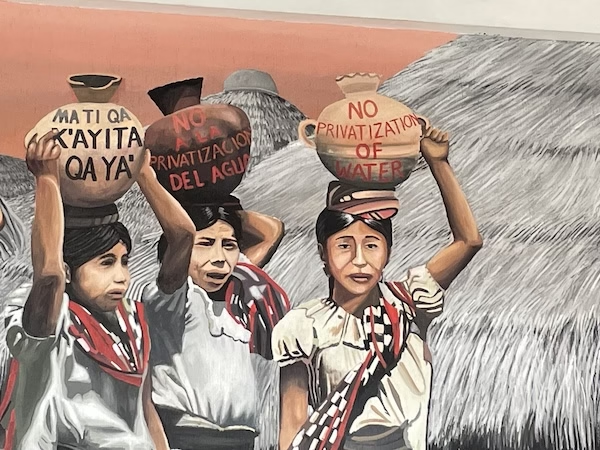
As I said near the beginning of this post, Central America has a lot of problems. Most of Central America’s issues are not the result of a lack of plucky young volunteers from the Global North, but instead are deep systemic issues resulting from a long history of colonialism and exploitation.
The best thing we can do to improve things in Central America is to change things at home.
I’m speaking mainly as a U.S. citizen, of course. And as you’ve already learned, the U.S. government has a long, terrible history of interventions in Latin America. This history spans both Republican and Democratic administrations, and it still continues. You may have heard of Donald Trump’s recent kidnapping and “arrest” of the Venezuelan president. But did you know about the 2009 coup and subsequent human rights abuses in Honduras supported by the Obama administration?
Let’s stop doing that. There’s no reason we need to be the empire anymore. We can stop funding dictatorships and death squads and start supporting human rights and justice. We just need to elect politicians with the political will to do so.
Let’s also start treating people from Central America (and elsewhere) decently when they come to our country. The racist, anti-immigrant bullshit has to stop. Immigrants aren’t the reason we can’t afford groceries. Besides, Central Americans are so welcoming towards travelers to their countries. The least we can do is return the favor and treat them decently when they come to our country.
Finally, we need to think about debt relief. Poor countries, like those of Central America, spend billions paying off debts to rich countries through institutions like the IMF and World Bank. Many times, those debts were accrued by corrupt dictators who siphoned the money into private Swiss bank accounts, leaving their country to foot the bill. It would be very easy to simply abolish this debt.
Politics can seem like an overwhelming mess, especially in the U.S. right now. It feels way easier to focus on buying local and not taking photos without permission. Yet, U.S. politics is probably a much bigger factor in improving the lives of the people of Central America than almost anything else in this post.
Should you Travel to Dictatorships?
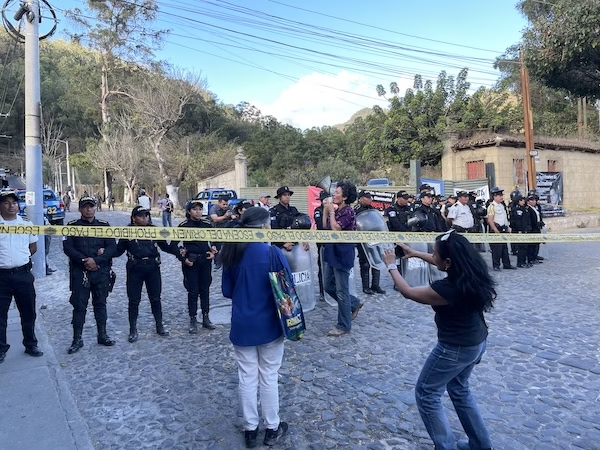
Finally, I want to bring up an issue that I don’t entirely feel sure about. Is it ethical to travel to countries run by dictators?
My initial thought is: yes. It is ethical to travel to a country run by a dictator. Or any other regime you don’t believe in. Here’s why.
First of all, the people of a country are separate from the country’s leadership. Especially in an authoritarian regime, the people often have no say in how the leadership runs things. Why should those people be punished for the actions of a regime they have no control over? By boycotting these countries, you also boycott the people living there.
Secondly, international travel can shed some light on the situation. A brutal regime is less likely to brutally engage in punishing its people if it thinks a bunch of international tourists is watching. Especially if those tourists are going to immediately upload video online.
Of course, I recognize I may be biased. I lived in China under the rule of the Communist Party for three and a half years. I currently live in the U.S., under the benevolent rule of Our Dear Leader Donald J. Trump. Maybe I’m just trying to justify my decision to live my life under those regimes?
I can definitely see the other side of the argument. Mainly, by traveling to these dictatorships, you’re normalizing their regime. You’re also directly supporting them by giving tax dollars, paying for visa fees, and so on.
It’s a tough question, and I don’t think it has an easy answer. Feel free to leave your thoughts in the comments. I’d be genuinely curious to hear people’s thoughts on this.
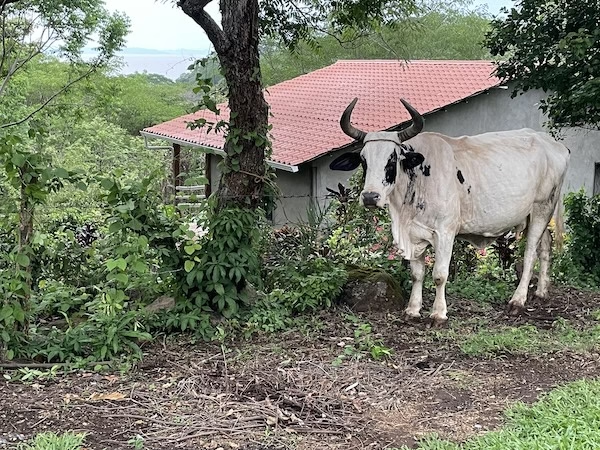
The Key to Ethical Travel in Central America: Treat the Local People Like People
If there’s one common thread running through this post, it’s the importance of recognizing the humanity of the people of Central America. And of treating others how you want to be treated. It’s the Golden Rule that applies to most situations in life, but also the key to responsible travel.
And yet, I’ve seen far too many travelers forget this. They come to Central America (or wherever) and act like they’re kings and queens. As if the local population should be bowing down to them because they’ve chosen to bless their country with their presence and dollars.
But the truth is, we are no better than anyone else just because we happened to be born in a country with a higher level of economic development. And the people of Central America are no worse because they happened to be born in a country with a lower level of development. Once we recognize the common humanity we share, though, ethical travel just kind of starts to fall into place.
We’re all the victims of history that we have no control over. Some of us have come out of that history better than others. We can’t do anything to change that history. We also can’t be perfect. What we can do, however, is to try our best to treat each other with the kindness and respect we all deserve. And try to make the present and future better for everyone.
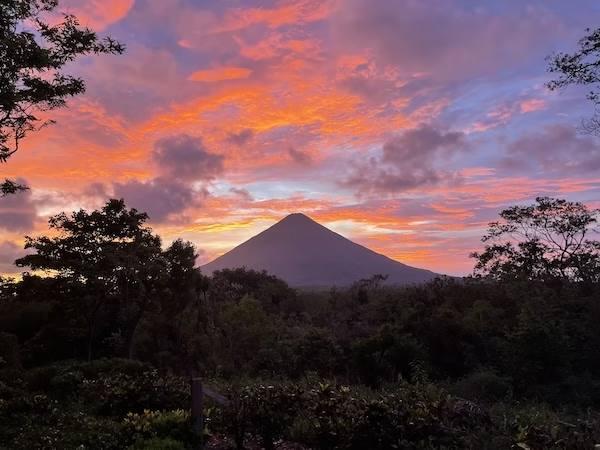
Planning a longer trip? Check out our complete guide to backpacking Central America from Guatemala to Panama.