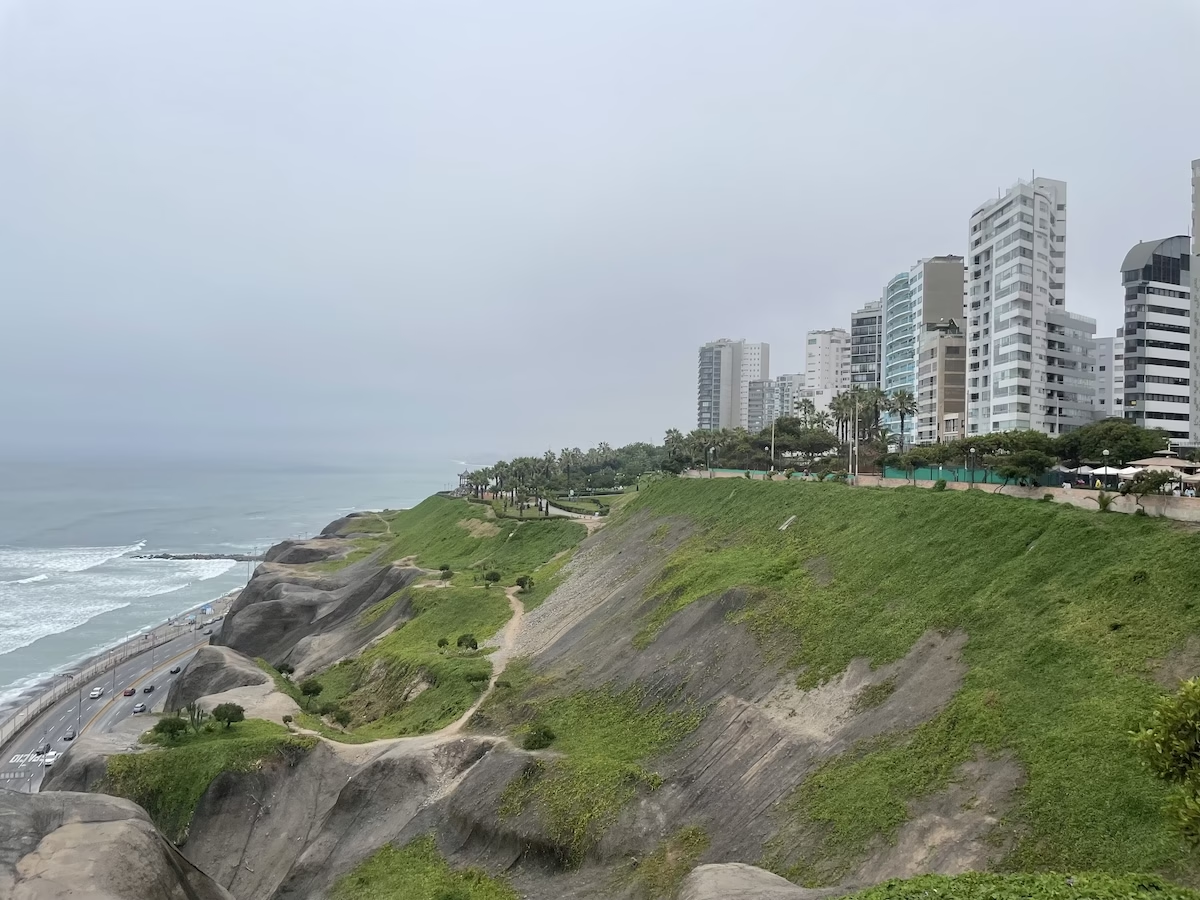
Lima is a surprisingly fascinating city where ancient adobe pyramids, stately colonial palaces, and towering modern high-rises all somehow come together to form Peru’s capital and cultural heart. It’s a city where all of the country’s contradictions crash together like Pacific waves against the rocky coast. It’s also a must-visit part of any trip to Peru. This travel guide will help you plan your time in Lima, and hopefully convince you to venture beyond the airport to discover this captivating city.
What to Know Before Traveling to Lima
Lima is the capital, largest city, and the nerve center of Peru. It’s located on the central Pacific coast, in a unique desert climate. The city has a population of around 11 million, and is the second largest in South America. The metropolitan area stretches over 1,000 square miles. That is to say, Lima is a huge, sprawling, mega-metropolis. It’s also a lot of fun, and a surprisingly easy place to travel.
Planning a longer trip to Peru? Check out our Peru travel guide here: Peru Travel Guide: Beyond Machu Picchu
Weather and the Best Time to Visit Lima
Lima’s climate is surprisingly mild considering it’s in a tropical desert. Summers are from December through April when skies are generally sunny, temperatures are warm, and things can get rather humid. In winter, June through October, the temperatures become cool, and thick, heavy mist covers the entire city. It almost never rains.
In general, temperatures range from 57°F to 86°F (14°C to 30°C) throughout the year. The Humboldt current that flows through the Pacific Ocean just offshore keeps things fairly mild, while the Andes Mountains block trade winds and rain. These two factors give Lima its unique climate. In fact, the area around Lima is considered to be one of the few tropical deserts in the world.
What does that mean for you? Probably that the best time to visit is during the summer months if you want sunshine. Although the heavy coastal mist does sound kind of cool.
Make sure to pack plenty of sunscreen, sunglasses, and a wide-brimmed hat for sun protection. Shorts and lightweight summer clothes are a good choice, plus a hoodie or light jacket for cooler evenings. In winter, dress a little warmer and choose quick-drying materials.
Is Lima Safe?
Tell your fretful aunt not to worry; Lima is safe for travelers. Yes, it’s a huge city with over ten million people, so there are definitely some sketchy parts of town. None of those sketchy parts of town are near places the average tourist would want to go. Supposedly the airport suburb of Callao is one of the most dangerous parts of Peru, but who wants to hang around the airport, anyway?
The popular neighborhoods of Miraflores and Barranco are safe enough to wander around at night. The city’s historic center supposedly gets a little iffy after dark, but during the day it is completely walkable and entirely safe.
I’ve heard that some travelers have had issues with purse or phone snatchers or pickpockets. However, travelers have had those issues in major U.S. or European cities as well. Keep your wits about you, keep your valuables secure, and I doubt you’ll have any issues. Again, Lima is a safe city for travelers.
Getting to and Around Lima
No matter where you’re flying from, Lima is likely going to be your first stop in Peru since the airport’s there. Well, by “there” I mean like 8 to 13 miles away in Callao. After arrival, you can either take a taxi or ride-share into town, or save some money and take the airport bus. The official Lima Airport Express only costs about $4. It won’t drop you off right at your hotel, but it’ll probably get you within walking distance.
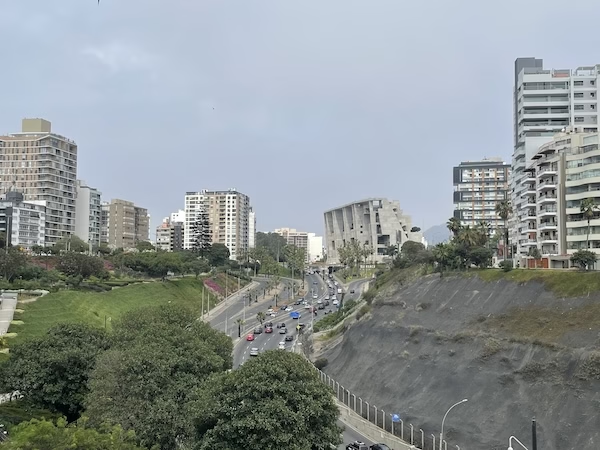
Lima’s neighborhoods are generally walkable, but you’ll find the distances and congested highways between neighborhoods mean you’ll need some form of transport to get around. Taxis are cheap, plentiful, and safe. They typically don’t have meters, so you’ll need to agree on a price with the driver.
Alternatively, you can use a ridesharing app. My app of choice is Cabify. It works just like Uber or Lyft, but you get connected to a licensed taxi driver rather than some random stranger. The pricing is upfront, and it’s pretty cheap and convenient. You could also always have your accommodation call a taxi for you, if you want.
Lima also has numerous public buses and two subway lines. Two subway lines for a city of 10 million people. And I thought U.S. public transportation was bad! (The city is supposedly planning more.) Unfortunately, the subway lines aren’t particularly useful for the average tourist.
The local buses, to be honest, are a bit chaotic and can be difficult to figure out for the average tourist. We didn’t take them. The one exception is the Metropolitano, which is Lima’s bus rapid transit system. You can take Line C to get from Miraflores to the Historic Center in about an hour. You’ll need a transportation card, which you can purchase at the stations or in some convenience stores.
Where to Stay in Lima
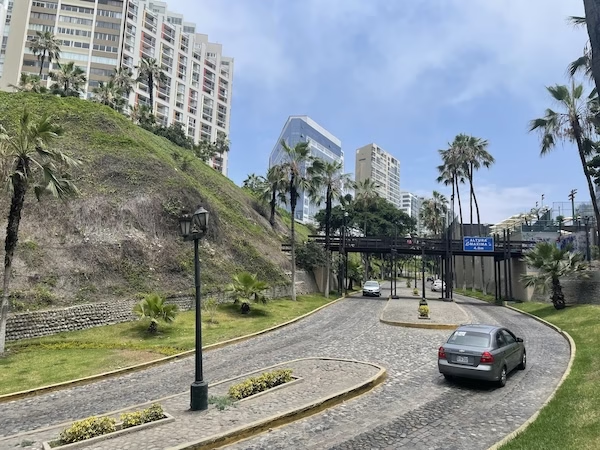
Lima has all sorts of hotels and hostels, ranging in prices from scummy backpacker dorm to elegant luxury monstrosities. You can also choose from a range of neighborhoods, although most travelers opt to stay in either Miraflores or Barranco.
We chose to stay at Uli’s House, which is a lovely, family run hostel just outside of Miraflores. It really felt like we were guests in someone’s house, and the morning breakfasts were not only delicious, but a great way to meet other travelers. You can click here to book your stay at Uli’s House.
We would have extended our stay there, but unfortunately, they were booked up. They did, however, set us up at their sister hostel, the Harmony Inn Miraflores. While I preferred Uli’s House, Harmony Inn was still very nice and had some amenities, like a gym, that you might be into. It was also located a little more centrally in Miraflores. You can click here to book a stay at Harmony Inn Miraflores.
As always, if you book using one of the above links, I get a small commission at no extra cost to you.
The Best Things to Do in Lima
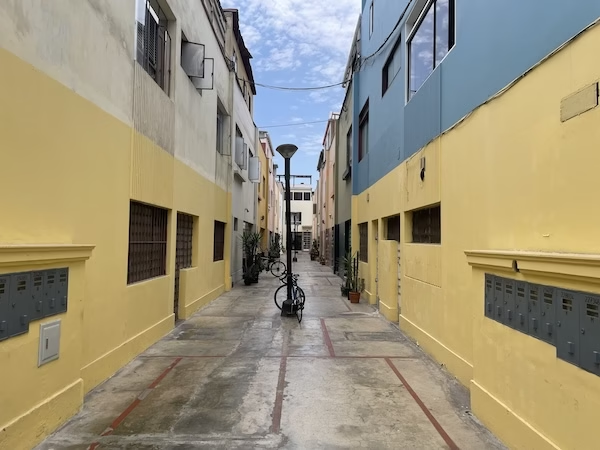
You’d have to really try hard to get bored in a city like Lima. It’s a bustling, thriving metropolis, filled with museums, parks, restaurants, and probably nightlife. I wouldn’t know, since I prefer to wake up early, but I bet a hip, young cat like yourself could find some excellent bars and clubs. Instead, I’ll share with you some of the things we actually did do in Lima.
Visit the Colonial Center
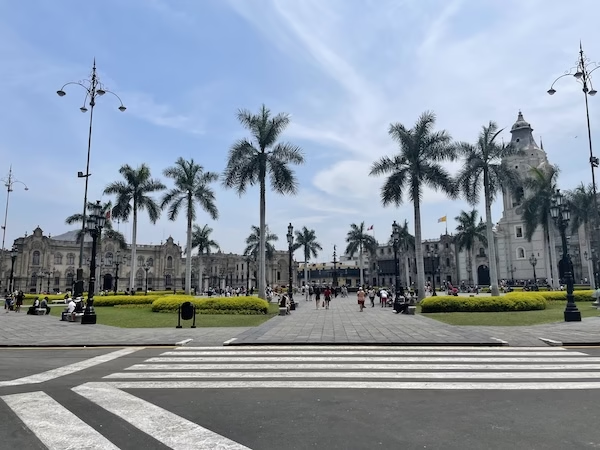
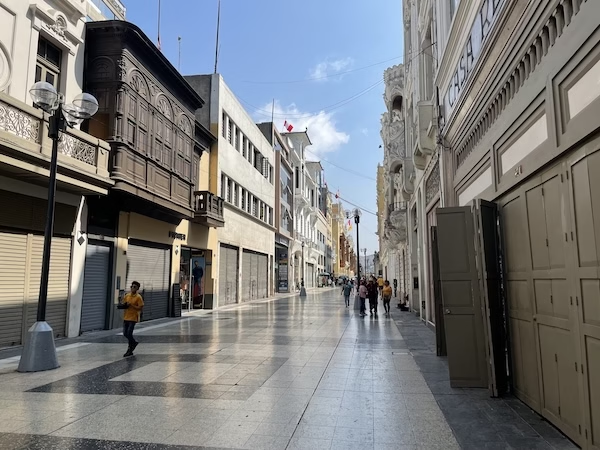
Lima was once the crown jewel of the mighty Spanish Empire. It was originally named “the City of Kings.” You can still see some of that majesty in the city center. The main square is called the “Plaza de Armas” and that’s where you should head to appreciate the colonial architecture. I know the Spanish were bastards, but damn did they design some beautiful buildings.
While you’re there, be sure to watch the changing of the guard. It happens every day at 12 noon outside the Government Palace (the big grey building on the northeast side of the Plaza de Armas). You’d think ceremonial guards would be all stiff and stuffy, but these guys turn the ceremony into some kind of modern dance routine. It’s actually pretty cool.
East of the main plaza, you can visit the San Francisco Basilica and Convent. The church itself is cool, but underground you’ll find the catacombs. These catacombs date back to the Spanish colonial days, and are both interesting and creepy. A great place to bring your goth girlfriend on a date.
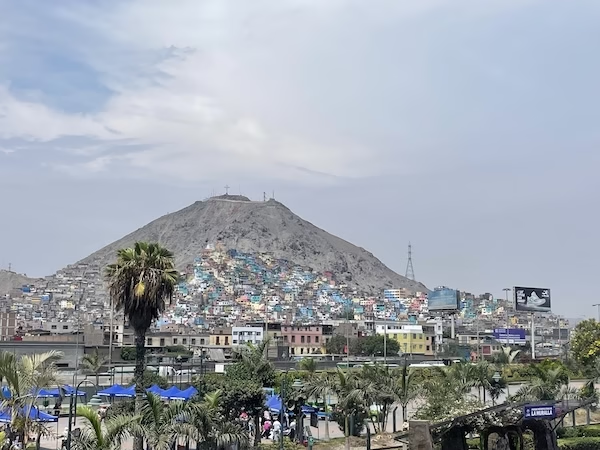
North of the basilica, it’s worth stopping by Parque la Muralla to see the remnants of Lima’s once mighty city walls. There’s a small museum and café onsite as well. From this park, you’ll also get a view of the city’s colorful slums as they climb up the hillside. A reminder of the stark inequality that exists in Peru.
Lima’s historic center has numerous other museums, cafés, and souvenir shops, too. It’s worth taking a full morning, if not an entire day, to explore. The area is safe during the day, but I’ve been told it can get sketchy around the edges after dark.
Watch the Cats in Parque Kennedy, Miraflores
Miraflores is probably Lima’s most popular neighborhood for tourists. Possibly because every single other Lima travel guide talks it up as though it’s the most amazing neighborhood ever built by human hands. To be completely honest, I was thoroughly underwhelmed. Miraflores really just feels like the kind of upper-class collection of tall buildings and fancier restaurants you can see pretty much anywhere.
It wasn’t as gentrified as the El Poblado neighborhood in Medellin, though. I have to give Miraflores and Lima credit for keeping a Peruvian feel to their collection of upper-class tall buildings and fancier restaurants.
The best part of Miraflores, however, is Parque Kennedy.
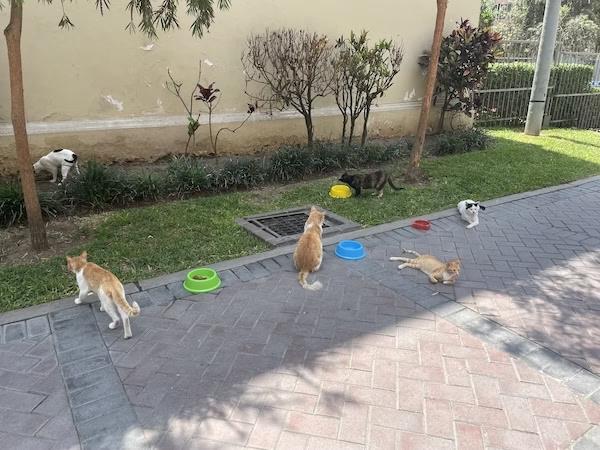
The park itself would also be underwhelming if not for its population of cats. Dozens of cats. Cats lounging on benches, cats napping under statues, cats licking themselves at the base of a fountain. In the evening, the cats get snuggly and might even crawl onto your lap.
If you’re a cat lover, you can’t miss Parque Kennedy in Lima.
Walk the Costa Verde Malecón
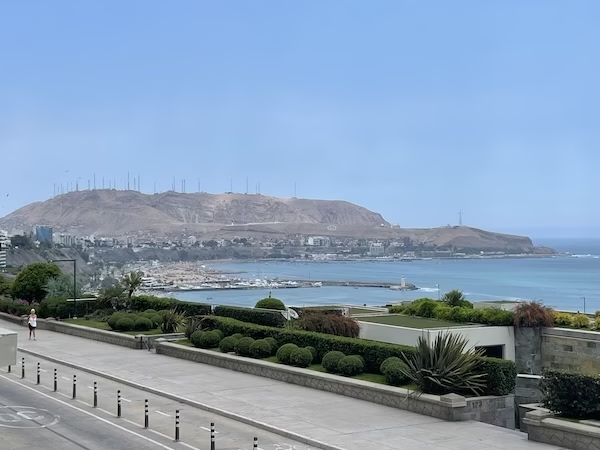
While it doesn’t have cats, the walkway and series of parks that stretch along Lima’s coastline are objectively the best parks we found in the city. The malecón, also known as the Costa Verde, overlooks Lima’s impressive green cliffs that tower over the Pacific Ocean. You can walk or rent a bike. Some people even paraglide.
Numerous parks filled and plenty of public art are scattered along the malecón. As well as a shopping mall, ugh. The most famous statue is possibly the two giant lovers making out in the aptly named Parque del Amor. Also be sure to keep an eye out for sculptures of South American liberation hero and feminist icon, Manuela Sáenz, and Paddington Bear.
Lima also has a number of beaches. From what we saw, the beaches were mostly quite rocky and the waves were far too scary for swimming. However, we saw plenty of people surfing, and you can even go paragliding if that’s your cup of tea.
Visit a Museum
Lima can’t quite compete with Paris or Mexico City in terms of museums per capita. It does, however, have enough to satisfy the urges of art and history buffs. There are plenty of more museums beyond what I’ve listed here. I’m just sharing the ones we actually went to.
All of the official museum websites are in Spanish, so you’ll either have to learn Spanish or use your favorite computer translator.
Museo de Arte de Lima (MALI)
The Museo de Arte de Lima, a.k.a. the MALI, is probably Lima’s premier art museum. It was my personal favorite. You can find a whole range of works here, ranging from pre-Columbian pottery to Spanish colonial religious art to more modern Peruvian social realism. It really encapsulates almost the entire artistic history of the country.
The museum is located at the north edge of the Parque de la Exposición just south of the historic center. Hours are from 10 am to 6 pm Tuesday through Sunday, and the cost is 40 soles per person. You can reach the museum and the park from the Metropolitano bus stop at Estación Central. See the museum’s official website for more info: https://mali.pe/es/
Museo Larco
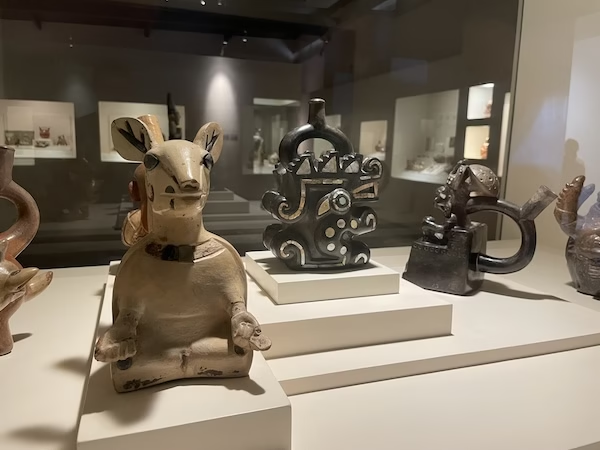
The Larco Museum is a private collection of pre-Columbian pottery. Actually, it’s probably the most extensive collection of pre-Columbian pottery I’ve ever seen. I was never all that interested in pottery before traveling to South America, but admiring some of the intricate pieces in this museum really made me appreciate the craftsmanship and artistry involved in shaping clay. There are textiles and some other things here as well. It’s definitely worth a visit.
Museo Larco is a bit out of the way in the Pueblo Libre neighborhood. I would suggest taking a taxi. Hours are Monday to Sunday from 9 am to 7 pm. Tickets cost 50 soles. Here is the official website: https://www.museolarco.org/
Museo de Arte Contemporáneo (MAC-Lima)
Finally, we come to the last, and my least favorite, museum we visited in Lima. The Museo de Arte Contemporáneo, or MAC, is Lima’s contemporary art museum. I have a love-hate relationship with most contemporary art. Sometimes it’s fantastic and thought-provoking; other times, it’s pretentious and self-indulgent. The exhibits on display when we visited the MAC tended towards the pretentious and self-indulgent side.
But who knows? Exhibits change regularly, and maybe they’ll be fantastic and thought-provoking when you visit. You can find the Museo de Arte Contemporáneo at the edge of the Barranco neighborhood. The museum is open from 10 am to 7 pm Tuesday to Sunday, and tickets are only 20 soles. Check the official site for more info: https://maclima.pe/
Explore the Ruins of Huaca Pucllana
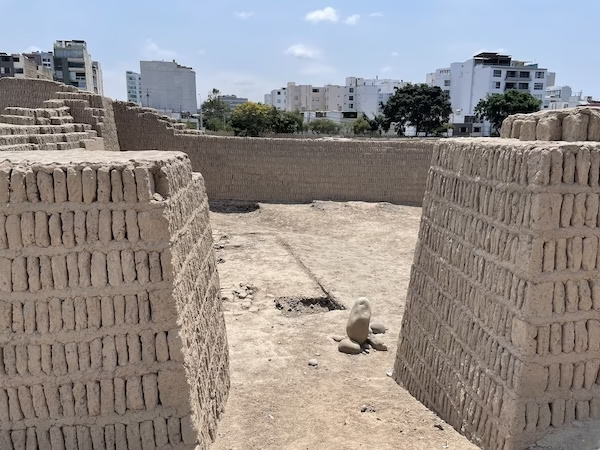
Peru’s indigenous, pre-Columbian culture runs deep. Sometimes literally. The adobe and clay pyramid of Huaca Pucllana was buried completely underground until 1967. People just thought it was a hill. Construction crews discovered the pyramid, and unfortunately kept building over parts of it for the next twenty years. It wasn’t until the 1980s that conservation efforts finally led the government to declare the site a national monument.
Today, you can still see a large section of the pyramid, which contrasts nicely with the surrounding modern buildings. You’ll also see the remnants of human sacrifices. The pyramids were built by the Lima culture, later conquered by the Wari, who were then incorporated into the Inca empire. I learned that from the guide, which was mandatory. There’s also a small museum, and I believe a restaurant on site.
Huaca Pucllana is located at the edge of Miraflores. You could walk there in about 40 minutes, or just take a taxi. Hours are from 9 to 5, Wednesday to Monday. Entrance is 15 soles, plus a tip for the guide.
Admire the Graffiti in Barranco
We all love our hip, artsy enclaves. And while Lima can’t compare with the effortless cool of, say, Bogota, it has its share of hipster vibes. The average traveler to Lima will find those hipster vibes in the neighborhood of Barranco.
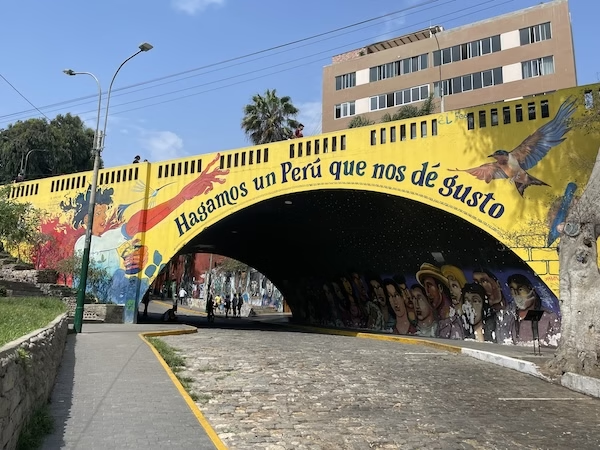
I’m fully aware that Barranco is probably “over” at this point. After all, if a neighborhood is listed in Lima travel guides and swarmed by tourists, how hip can it really be? Still, Barranco is a fun place to wander around for an afternoon. It’s home to the contemporary art museum, the buildings are covered in plenty of Instagram-worthy graffiti, and you can also find some bars and coffee shops.
Don’t be fooled by the ”Bridge of Sighs” (or Puente de los Suspiros), however. It’s just an old bridge.
Barranco is just down the coast from Miraflores, and you can easily walk there or take the Metropolitano to Estación Bulevar.
See the Olive Trees at Bosque El Olivar
One of Peru’s big culinary surprises (see below) was how many olives they eat. I’ve always associated olives with the Mediterranean. Despite the Spanish influence, for whatever reason, olives don’t really feature as heavily in other Latin American dishes. But they’re all over Peru.
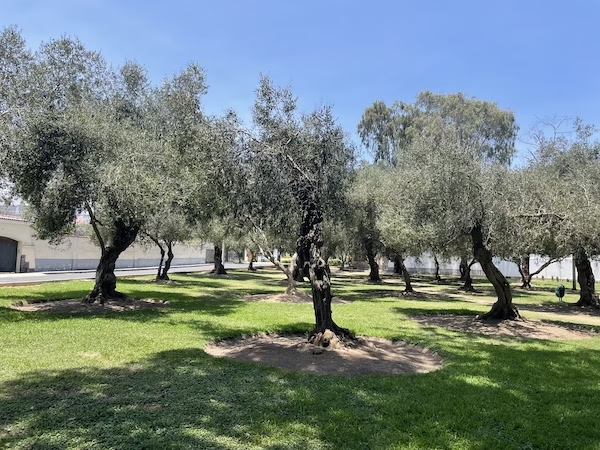
If you happen to be an olive fan, you should take the time to visit the park at Bosque el Olivar. This grove of twisting olive trees is supposedly made up of the descendants of the very first olive trees in the Western Hemisphere. Parque Olivar is also a very nice park in its own right, and a pleasant place for a stroll. I also saw some weird squirrels here. I suggest taking a taxi.
Sample Some Delicious Peruvian Food
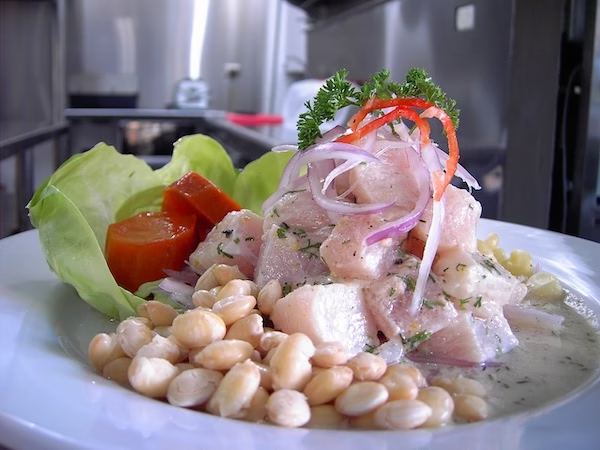
Speaking of olives, Peru is known for its food. So much so that there’s a very long, very detailed, Wikipedia article dedicated to the subject. Peruvian cuisine is not only a blend of Spanish and Native American flavors, but also has influences from China, Japan, the Middle-East and beyond. It’s a fusion cuisine in the truest sense of the word.
One word of warning: while Peruvian food is delicious, Peruvian health and water quality standards leave something to be desired. Do some proper due diligence before choosing where to eat. And please, whatever you do, DO NOT try the cheapest sushi you can find. The money you save on a salmon roll is not worth what you lose in time on the toilet.
On a more positive note, definitely be sure to try cremoladas when you’re in Lima. Cremoladas are a dessert, made from frozen fruit that’s something between a sorbet and a slushie. While you can find a variety of classic Peruvian dishes throughout the country, I’ve only ever seen a cremolada in Lima.
See the Magic Water Circuit Fountain Show (But Only if You Don’t Have Anything Better to Do)
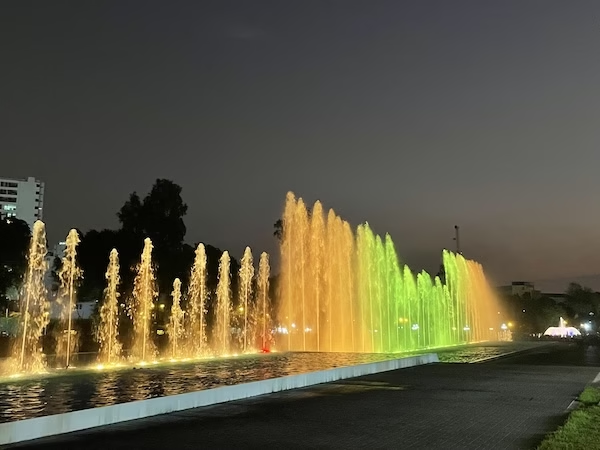
The last item on this list of things to do in Lima gets a resounding shrug from me. It’s one of those things that everyone tells you to do, but to be completely honest felt a little underwhelming. I’m talking about the Magic Water Circuit held at Parque de la Reserva.
I don’t want to say that the Magic Water Circuit is bad. The lights and colors and projections on the water are actually pretty cool. But, is it a can’t-miss attraction? Not necessarily. Lima has a lot more to offer that I find far more interesting. Also, it kind of seems weird to be using that much water in a fountain show when your city is located in a desert. There’s no need to try and emulate Las Vegas.
Still, if you don’t have anything better to do, why not? You can find the Magic Water Circuit in Parque la Reserva, just south of the national stadium. The Metropolitano stop Estación Estadio Nacional will drop you off right there. I believe admission is 5 soles and the show starts at around 7pm. Arrive earlier to hang out in the park, which is a very nice park.
Final Thoughts on Visiting Lima
Thinking back on it, I feel like Lima is a little bit underrated. Not just as a travel destination, although it definitely is in that regard. So many tourists to Peru sadly never get beyond Lima’s international airport. They miss out on the city that really is the soul of modern Peru.
I also think Lima is a little underrated as a city. You hear people talk about Bogotá or Mexico City, but you never hear all that much about Lima. Strange, considering it’s a huge metropolis with a population of over ten million and the second largest city in South America.
Who knows? Maybe that’s for the best. Maybe Lima becoming more well-known would ruin it. For now, keep this travel guide to yourself, and the wonders of Lima can be our little secret. On the other hand, never mind. I need the web traffic, and Peru needs tourist dollars, so share this travel guide with everyone you can.
Useful Websites for Traveling Peru
As much as we might long for the days when you could show up to a town with nothing more than a beat-up guidebook and a sense of adventure, today much of traveling involves being glued to our phones making bookings. I’ve compiled some helpful apps and websites below that at least help make those bookings more convenient so you can spend less time staring at your phone and more time exploring at your surroundings. Some of these sites are affiliate links that give me a small commission at no cost to you if you chose to book through them. All of them are sites I’ve used personally and have no problem recommending.
Just be sure to do your due diligence as much as possible. Only hire local guides and try as much as possible to stay in locally owned hotels and hostels so that your hard earned travel dollars actually go to support the local economies of the places you visit.
Booking.com is basically the world’s only hotel booking website. They have hotels, guesthouses and vacation rentals all over Peru.
Hostelworld is the go-to site for booking hostels. If dorm rooms and shared bathrooms are your thing, you’ll find hostels throughout Peru.
Get Your Guide offers tours and activities all around the world. Unlike some other sites and apps that do the same thing, you can actually find some reasonably priced deals here.
Cabify is the best way to book a taxi in Peru’s major cities. It works like Uber, but you get connected to a licensed, authorized, taxi instead of just some random weirdo.
RedBus is the place to book long-distance buses in Peru. You can get your tickets and browse schedules ahead of time, and alleviate the stress of not knowing whether the bus you want will be sold out before you get to the station.
Travel insurance can turn a potential trip-ruining disaster into a mere inconvenience. We used SafetyWing for travel insurance during our South America trip and had a great experience. We’ve also used used World Nomads and found them easy to use and set up. If you do decide to get travel insurance, I suggest comparing both options and seeing what works for you.
We receive a fee when you get a quote from World Nomads using this link. We do not represent World Nomads. This is not a recommendation to buy travel insurance. The same applies to SafetyWing.