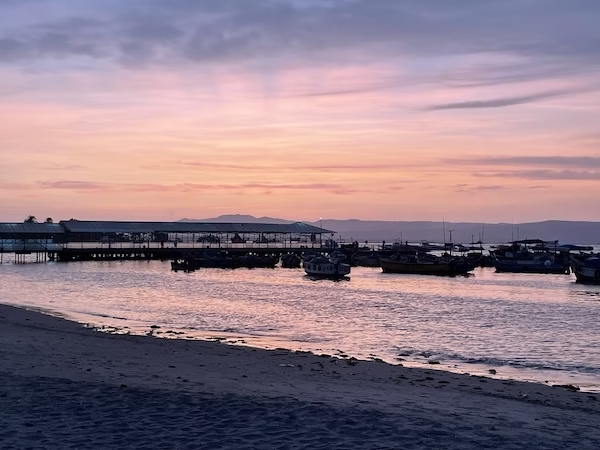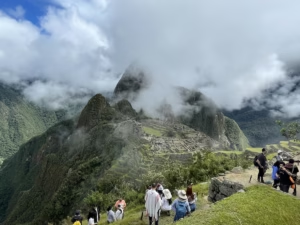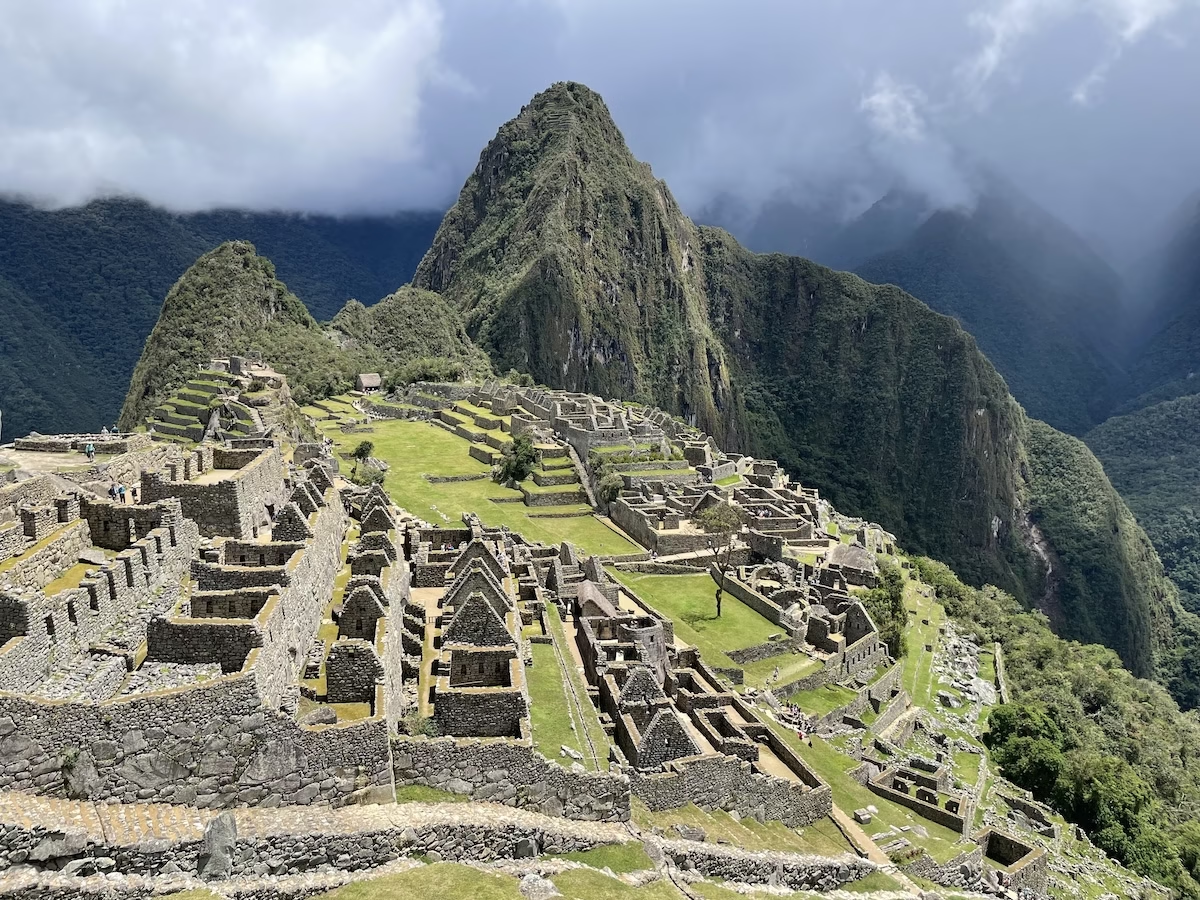
Peru is best known as the country that has Machu Picchu. Machu Picchu is, after all, one of the new seven wonders of the world. And don’t get me wrong. It’s totally worth visiting. However, it’d be a shame to travel to Peru and not venture beyond its famous Inca ruins. This Peru travel guide will help you plan your trip and maybe, just maybe, inspire you to explore beyond the tourist trail and discover more of what this intriguing Andean country has to offer.
Peru is where South America starts to feel truly different from anywhere else. Especially when you get out of the bigger cities. You start to feel like you’ve left the familiar and begun to travel somewhere truly special. Much of that feeling is due to the strong indigenous culture that still perseveres. The tourist sites and views are great, but the real highlight of traveling in Peru is learning about the various peoples and cultures that have populated the country since long before any European set foot in the hemisphere.
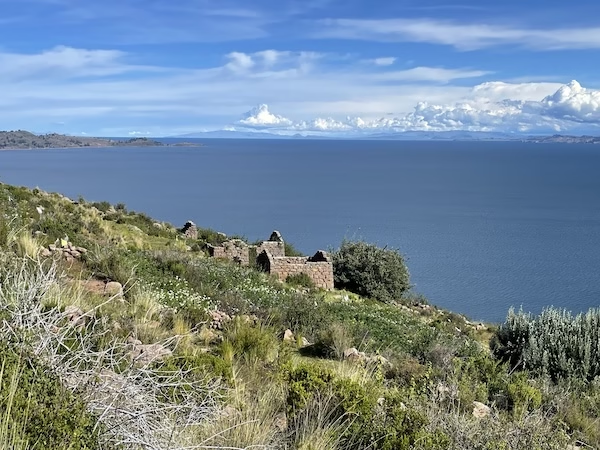
What to Know Before Traveling to Peru
Peru is located in the Andean region of South America, stretching along the western edge of the continent and sandwiched between the Pacific Ocean and the Amazon. It’s also a megadiverse country. The landscape ranges from coastal desert to high-altitude mountains to dense jungle and more.
Peru is one of the cradles of civilization. We’ve all heard of the Inca, but people were living and building monuments in Peru for thousands of years before the Inca came on the scene. One of the joys of traveling in Peru is learning about some of these fascinating different indigenous cultures.
Because of Machu Picchu, Peru is no stranger to international travelers. The country has a pretty well-established tourist infrastructure, which means you won’t have any trouble finding tours, hotels, or transportation. However, outside of Cusco, Machu Picchu, and a few other spots on the Gringo trail, Peru doesn’t feel overly touristy.
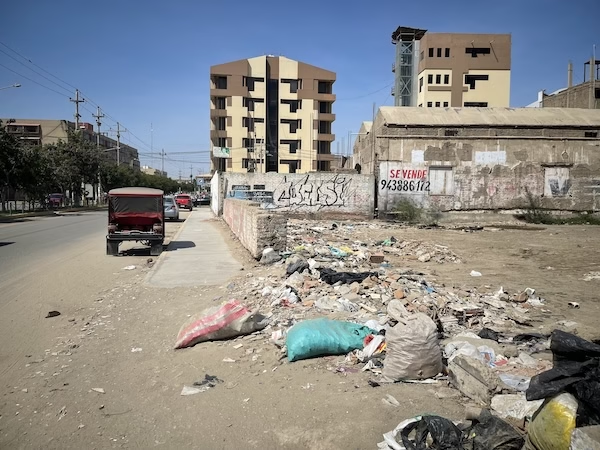
Despite its popularity as a travel destination, Peru remains quite poor. That is to say, a lot of Peruvian people are quite poor, as most of the country’s wealth is concentrated in the hands of the elite ruling class. You’ll see plenty of people living in ramshackle houses alongside garbage piled up on the sides of the roads. It can be a bit of a shock if you’re coming from the wealthy global North, or even neighboring Ecuador or Chile.
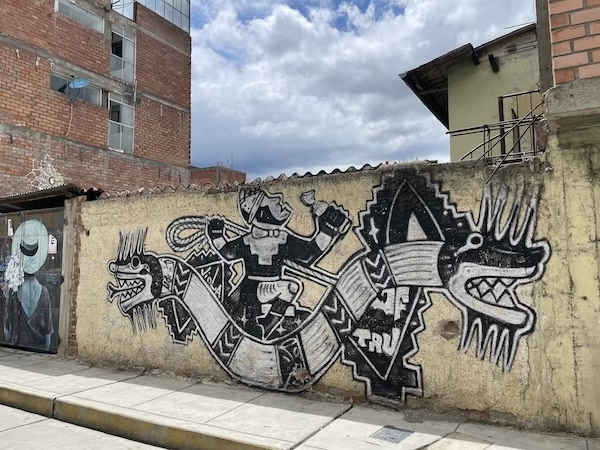
Is Peru Safe for Travel?
As with much of Latin America, most travelers want to know about safety above anything else. If only to ease the minds of fretful relatives. You can reassure those relatives. Travel in Peru is, in general, as safe as anywhere else.
Of course, I have to add the standard disclaimer that things can happen anywhere. And while Peru doesn’t have quite the reputation as neighboring Colombia, the country still has plenty of crime. It’s one of the world’s biggest producers of cocaine, after all. And let’s not forget the notorious Shining Path guerrillas that still operate in some remote areas.
However, the average traveler isn’t likely to run into drug dealers or guerrillas. You could find trouble if you go looking for it, but why bother looking? Most of Peru is perfectly safe. You can find some bad neighborhoods in Lima or other big cities, but they are far from any attractions or sites. And, as always, use your big city common sense to avoid pickpockets or petty theft. But really, you’re going to be just fine.
I should also briefly mention the political situation. It’s chaotic. Peru is plagued by government corruption and economic inequality. Anger at the situation erupted into massive protests that shut down the country in 2018. Protests could erupt again. If that does happen, it’s best to try and avoid any political demonstrations. You likely won’t be hurt by protests, but they may throw a wrench in your travel plans.
Other Safety Issues in Peru
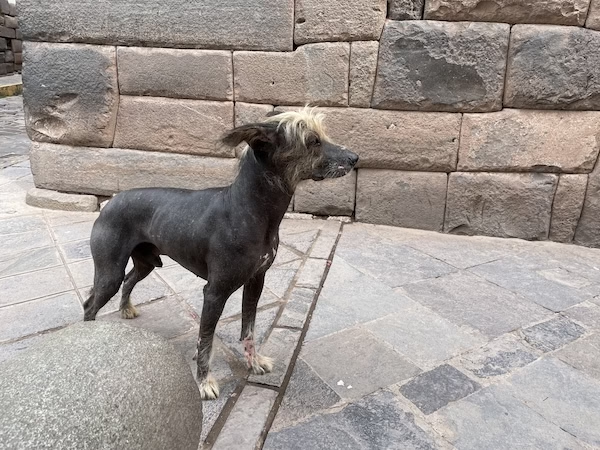
While we tend to focus on crime when we talk about travel safety, it’s probably one of the least likely dangers you’ll come across. You are much more likely to run into an unfriendly stray dog. Stray dogs are a problem in a lot of Latin America, unfortunately. Some are friendly trail dogs. Others are quite vicious.
Familiarize yourself with what to do if you come across an aggressive dog. It also might not be a bad idea to get a rabies shot before your trip, just in case.
Mosquitoes can also be aggressive and spread diseases like malaria and dengue fever. While Malaria is only present in the Amazon, dengue can happen throughout the country. Bring good insect repellent and long-sleeved clothing to avoid getting bit.
The biggest issue you’re likely to face is altitude sickness. The towering Andes mountains are beautiful, but the thin air can cause your body to suffer from a severe lack of oxygen. You’ll most likely just feel a little tired, dizzy, or just out of it. Severe altitude sickness, though, can lead to brain swelling, which can kill you. In that case, your only option is to head closer to sea level.
Generally, you should plan a few days to rest and acclimatize before doing any strenuous hiking or other physical activity. Avoid heavy, greasy meals and alcohol. You should also try to ascend slowly if possible.
You can get pills to help with altitude sickness before you leave home if a slow ascent isn’t possible. Or, you could do as the locals do and try the magic of coca leaves. Yes, these are the same leaves used to make cocaine, but they also work as a traditional medicine to help with altitude sickness. Drink them as a tea or just lightly chew and let your saliva react with a wad of leaves in your cheek. Coca leaves helped me feel better at high altitude almost instantly.
The Peruvian People and Culture
Peruvians, like most Latin Americans, are very friendly and open to travelers. You’ll find a lot of warm hospitality, especially along the coastal regions. The indigenous people of the highlands tend to be a bit more standoffish, but that’s probably only in comparison to their coastal neighbors.
Indigenous culture is strong in Peru. You’ll hear languages like Quechua and Aymara on public buses and see men and women dressed in traditional outfits. Remember that they aren’t dressed that way for your amusement, those are just their clothes. Please don’t take photos of people without their permission.
You probably won’t pick up any Quechua or Aymara, but speaking a little bit of Spanish will vastly improve your Peru travel experience. Some people speak English in more touristy areas, but you’ll be stuck with gestures and miming once you get off the beaten path. Luckily, Peruvian Spanish tends to be clear and relatively easy to understand.
Peruvian Food and Drinks
Peru has a rich culinary tradition that dates back to the days of the Inca. Maybe even further. You’ll find interesting food and drinks here that you won’t see anywhere else. There’s a reason why Lima is now considered a global culinary capital.
While you should definitely experiment with Peruvian cuisine, you’ll find that sanitation and health standards aren’t what they are elsewhere. Don’t drink the water, and try to eat at busy restaurants that serve food hot. And whatever you do, don’t make the same mistake we did and eat at the cheapest sushi restaurant you can find.
Unfortunately, you may not avoid getting sick no matter how careful you are. Be sure to pack some anti-diarrheal medicine. If you do get sick, you may be able to get antibiotics (“antibioticos”) at a local pharmacy. And try not to let that deter you from trying the food, which really is delicious.
Finally, I should mention that parts of Peru have a very unique (to me) way of serving coffee. You’ll get a little carafe filled with super-concentrated coffee, and a kettle of hot water. You’re supposed to serve yourself some of the super-concentrated coffee and then water it down to taste with the hot water. We didn’t realize this until after a few cups of absolutely terrible coffee.
Some of Peru’s Culinary Highlights
Ceviche: Ceviche is popular throughout Latin America, but Peru claims to be where it was invented. The dish is essentially raw fish ‘cooked’ in lime juice and served with crackers and sometimes corn and sweet potatoes. I’m a big fan of ceviche, and weirdly, I never once got sick from it.
Causa Limeña: Imagine a savory cake made of potatoes, avocado, and fish, and you’re getting close to causa limeña. Sometimes there are olives, too. It’s a specialty of Lima, and a unique dish we’d never heard of before going to Peru. Very delicious and refreshing on a balmy day.
Aji de Gallina: Aji de Gallina was one of my favorites and became a go-to dish for when I couldn’t think of what else to order. It’s chunks of chicken served with a creamy sauce and sometimes topped with olives and a boiled egg. I know that description doesn’t quite sell it, but trust me, it’s very good.
Lomo Saltado: Peru is a melting pot of different cultures, not just Spanish and Native American. And sometimes that melting pot ends up being a wok. Lomo saltado is the result of a fusion of South American and East Asian cuisine. Beef or alpaca meat is stir-fried with peppers in a rich sauce and often served with French fries. It’s another standard dish found throughout the country.
Cuy: This one may be offensive to those of you who have a guinea pig as an adorable pet. However, it’s a traditional dish that’s important to indigenous Andean culture and really worth trying just for the experience. Yes, that’s right, people in Peru (and Ecuador) eat guinea pigs. To be honest, it wasn’t my favorite thing I ate in Peru, but I don’t regret trying it.
Chicha Morada: You’ll find chicha throughout South America. It’s a fermented corn beverage that dates back to pre-Columbian times. In Peru, chicha is made from purple corn, hence the name “morada.” The fermented corn is mixed with fruits and spices. It’s pretty good.
Pisco Sour: If you want something a little stronger than Chicha, you can reach for a pisco sour. The Pisco Sour is Peru’s national drink, made from brandy, lime juice, and an egg white. It sounds gross, but they’re actually pretty delicious. Chile also has a claim on the pisco sour, so you’ll have to visit both countries and decide for yourself who makes it better. I won’t dare wade into such a controversial debate.
Cremolada: Finally, we come to Peru’s best dessert: the cremolada. Cremoladas are something between a smoothie and shaved ice. They’re made from fresh fruit and are very refreshing on a hot day. We were only able to find them in Lima. They might be part of the reason why we spent so much time in Lima.
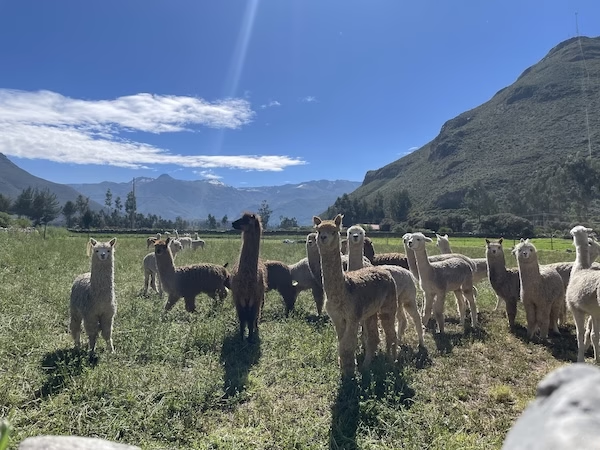
Weather and the Best Time to Visit Peru
Peru, being in the Southern Hemisphere, has its summer in December, January, and February and its winter in June, July, and August. Of course, Peru is also in the tropics, so there really isn’t a summer and winter as us Northerners would think of it. Instead, they have a rainy and dry season.
The exact dates of the rainy and dry seasons vary depending on where you are. Generally speaking, though, you’ll find the dry season from May to October and the rainy season from November to April. In the Andean highlands, rainy season usually means afternoon downpours. In the Amazon, it pretty much rains all the time. We traveled to Peru in February and March and didn’t have any problems.
Peru’s variable climates can make it a real pain to pack for. You’ll probably want shorts and T-shirts on the coast, but in the mountains you’ll need at least a hoodie if not a jacket. You’ll want lightweight clothing for the Amazon, but also long sleeves to protect against mosquitoes. Oh, and you’ll want a raincoat, too.
But before you pack your giant wheeled suitcase that’s only slightly smaller than a pick-up truck, consider the advantages of packing light. You’ll have an easier time tossing your luggage onto a bus or small airplane, and have far less to drag through Cusco’s uneven streets. Packing light while preparing for different weather scenarios might seem impossible, but it’s doable. Difficult, but doable.
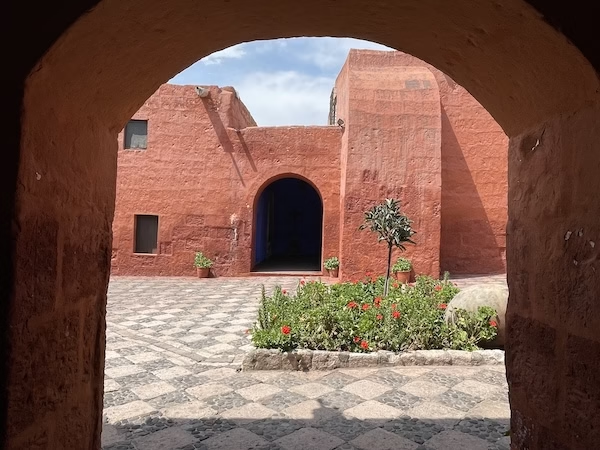
How to Get to Peru Internationally
Most of the Global North can travel in Peru visa-free for up to 90 days. You’ll need to make sure your passport is valid for at least 6 months after you arrive. Officially, you may also be asked for proof of onward travel or proof of funds. They didn’t ask me, but maybe the border officer thinks you look shady?
Now, you may be traveling as part of a longer trip, and you probably don’t have all your onward tickets booked in advance. If that happens, you can always just buy a cheap bus ticket out of the country for a random date. Otherwise, you can try your luck with onwardticket.com. https://onwardticket.com/en The concept is technically kind of shady, and I can’t promise it’ll 100% work for you. I can say it worked for me in Central America. Don’t tell the border officers.
Flying to Peru
If you’re flying into Peru, you’re probably going to be flying into the Aeroporto Internacional Jorge Chávez, located a little bit outside of Lima. https://www.lima-airport.com/en The airport is new and modern, and totally fine as far as airports go. Numerous airlines fly into the country, and you can even get direct flights from Miami or Atlanta if you’re coming from the U.S.
Since the airport is located a bit outside of the city, you’ll need to arrange transportation into Lima. Taxis or ridesharing apps are always an option. If you want to save money, though, I’d suggest the airport express bus. It’s also handy going to the airport. Tickets are only about $6.
Busing to Peru
If you’re visiting Peru as part of a larger trip through Latin America, you’ll probably arrive on the bus. Peru shares borders with Ecuador, Colombia, Bolivia, and Chile. The easiest, safest crossings are probably with Ecuador, Bolivia, and Chile.
Coming from Ecuador, the most common crossing is at Aguas Verdes / Huaquillas on the coast. That’s how we got into Peru. We just bought an international ticket in Cuenca, Ecuador heading to Máncora, Peru. The bus driver made sure we got through the crossing quickly and with all the stamps and whatnot that we needed. Peru sent troops to the border due to increased crime in Ecuador the day after we crossed, so your experience may vary.
You can also get from Ecuador into Peru’s northern mountains via La Tina / Macará and La Balsa. I don’t have direct experience with any of those crossings, but I’m sure they’re fine. Just make sure you only travel through official crossings, and make sure you get everything stamped that needs to be stamped.
If you’re heading to or coming from Bolivia, you can cross near Lake Titicaca. Desaguadero is the main crossing, but I’ve heard Yunguyo / Kasani is more chill. To and from Chile, you should head to the Tacna / Arica border. This is a major crossing and should be fairly smooth.
Again, I suggest just getting an international bus ticket and letting the driver hold your hand through the entire process.
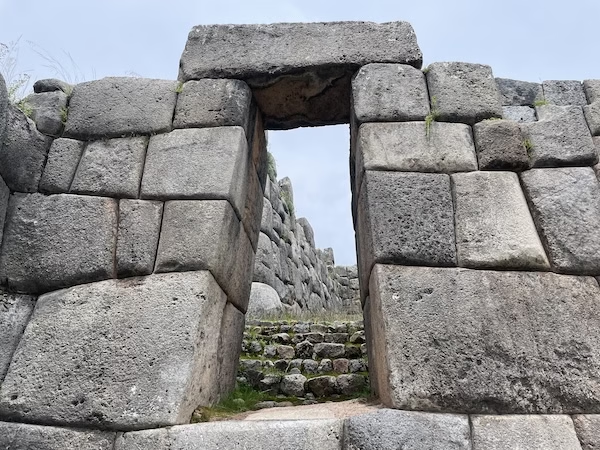
Transportation within Peru
Despite being a fairly large country, Peru is actually fairly easy to get around. Long-distance buses are plentiful, inexpensive, and surprisingly comfortable. You can reach almost every corner of the country by bus, and they’re quite affordable.
The most luxurious Peruvian bus company is Cruz del Sur. They are probably going to be your best option for extra-long or overnight bus rides. However, smaller, cheaper companies will do the job just as well if you’re on a budget. Be warned that buses tend to blast the air conditioning, so keep your jacket or hoodie accessible. I’d also suggest earplugs and an eye mask if you want to take a nap.
I’ve read other Peru travel guides and blogs warning that the buses are unsafe. They will then try to sell you on a more expensive tourist shuttle service. Those other blogs and travel guides are just trying to scare fretful readers into clicking on their affiliate links. Don’t listen to them. My wife and I took numerous local buses during our time in Peru and never once felt unsafe.
The only problem with the bus is the 20-plus hours it takes to get from Lima to Cusco (or vice versa). If you’re short on time, your only option is to fly. Numerous airlines fly this route, such as JetSmart, Sky, or LATAM. The flight takes about an hour and a half and costs around $100 plus taxes and baggage fees. It’s not a bad option.
Once you arrive at your destination, your best transportation option is a combination of your own two feet and Peru’s numerous taxis. Taxis are generally safe and reliable, though you will have to negotiate the fare up front. In bigger cities you can use ridesharing apps. I recommend Cabify, since it connects you to actual licensed cab drivers and not some rando. You can also ask your accommodation to arrange a taxi for you.
Ethical Travel in Peru
Since you’re a loyal reader of this blog, I know that you’re a good person who wants to travel ethically. Obviously, we all need to take responsibility to treat the people in the places we visit with respect. After all, we are guests in their country. The least we can do is not behave like ugly, entitled tourists.
Most importantly, don’t do drugs. Peru produces a lot of cocaine, and drug trafficking is a huge problem that causes a lot of human misery. Buying and consuming raw coca leaves is totally fine. Buying anything stronger is not only supporting immoral criminal organizations, but also potentially puts you in danger.
Recently, people have been getting into ayahuasca ceremonies. Also, not a good idea, in my opinion. There have been cases of fake shamans robbing or assaulting tourists while the tourists are whacked out on ayahuasca. Aside from safety issues, there are numerous ethical issues tied up with colonialism and exploitation of native people.
Indigenous Ecuadorian Nina Gualinga said it much more eloquently than I ever could in an opinion piece for The Guardian that is very much worth reading: “The global popularity of “ayahuasca” has given rise to a new form of spiritual tourism that romanticises and distorts Indigenous cultures.”
Speaking of being respectful towards indigenous people, please do not take photos of people without their permission. You’ll see plenty of men and women dressed in traditional outfits, but they aren’t dressing like that to be props for your Instagram feed. It’s simple enough to ask “¿podría tomar una foto?” or just mime taking a picture. The person might ask for a little money. Or they might just say “no.” That’s their right.
Peru Budget and Sample Travel Costs
You’ll be happy to know that Peru can be quite affordable, despite being a major tourist destination. I say “can” because you also have the option to travel quite luxuriously if your bank account somehow hasn’t been affected by the affordability crisis. The rest of us working-class schlubs will be happy to know we can keep things cheap.
You can save money by eating in local restaurants and looking for the “menu del día,” which is a set lunch menu that’s usually quite affordable. You’ll also save a lot by booking local buses instead of tourist shuttles or flights. And look for small, locally run guesthouses rather than big hotel chains.
Machu Picchu is going to cost you money no matter what. Plan on $200 to $300 a person in total if you want to visit this wonder of the world. I believe it’s worth saving up for.
In case you’re interested, I spent exactly $3,250 in Peru. That works out to about $54 a day, but that includes Machu Picchu as well as a flight from Cusco to Lima.
Here are a few sample costs to guide you when budgeting for your trip to Peru. Keep in mind that costs change and inflation is crazy, so things might be different by the time your flight lands in Lima.
- Accommodation: $14-$30
- Restaurants: $5 – $20
- Long-distance buses: $20-$60
- Taxis: $2-$15
- Museum entrance: $5-$20
Where to Travel in Peru
Finally, we reach the part of this Peru travel guide where I actually give advice on where you should go. Peru is an incredibly diverse country. You can find all kinds of destinations ranging from rugged coastal deserts to towering snow-capped mountains. In the two months we spent traveling in Peru, we focused on a lot of ancient cultural sites as well as some hiking and big city adventures. And in two months, we still didn’t see everything we wanted to.
Sample Peru Itineraries
For those with limited vacation time, I would suggest focusing on Peru’s highlights. Start in Lima, before heading up to Lake Titicaca via Arequipa and maybe the Colca Canyon, and then on to Cusco. From there, explore Machu Picchu and the Sacred Valley before circling back to Lima to head home.
If you have more time and want to follow the route we took, here’s what you do: Crossing from Ecuador, start in Máncora on the Northern Coast. Then make your way down the coastline to Chiclayo and Trujillo for some pre-Inca ruins. Detour inland to Huaraz to do some high-altitude hiking, then head back to the coast and the big, bad city of Lima.
From Lima, take a pit stop in Paracas before heading on to the colonial jewel of Arequipa. Stop by the magnificent Colca Canyon before heading onwards to the mystical, clear waters of Lake Titicaca. From there, make your way towards Cusco to explore the Sacred Valley and Machu Picchu. Afterwards, take a long bus or short flight back to Lima to arrange onward transportation to Chile.
No matter what itinerary you choose, you’ll have to really try hard to have a bad time in Peru.
Lima
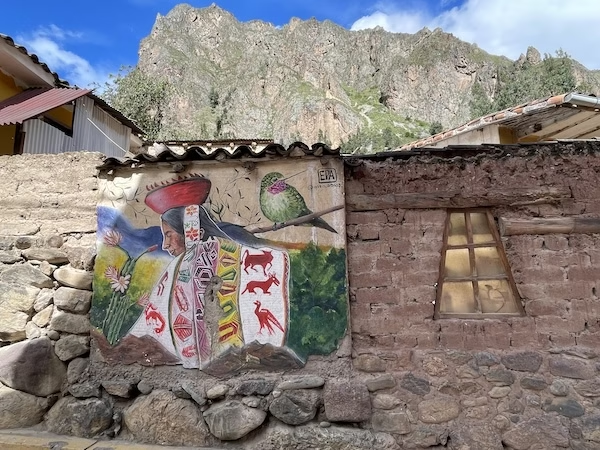
Lima is Peru’s sprawling capital. This megacity of 10 million people serves as the industrial, cultural, and political center of the country. It also has the main international airport and, unless you’re on a larger South American journey, will probably be the place you fly into and out of.
Some travelers make the mistake of skipping Lima. Don’t be like those other travelers. Lima has delicious restaurants, fascinating museums, vibrant street life, a colonial center, and even its own set of ancient ruins to discover. There’s probably some nightlife thrown in the mix for those who can stay up past 10 pm. Like any big city, Lima has crime, but the bad neighborhoods are easy to avoid. The rest of the city is a lot of fun.
In fact, Lima ended up being one of my favorite big cities in all of Latin America. Be sure to look for the Paddington statue.
You can find out more about Lima by reading our Lima travel guide here: Lima Travel Guide: Exploring Peru’s Underrated Capital City
Cusco
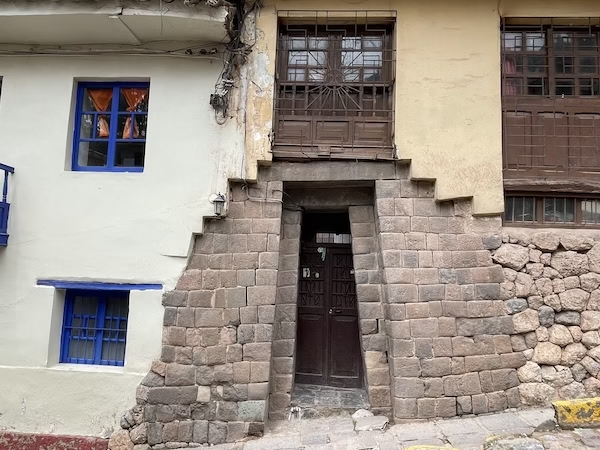
Cusco was once the capital of the sprawling Inca Empire. Today, it’s one of Peru’s biggest tourist destinations. And yes, it’s easily Peru’s most touristy city. However, Cusco is popular for a reason. The Spanish colonial city center is built with the same stones the Inca used to build their capital. Nearby, you can find the remains of Inca ruins built with stones the Spanish were too lazy to move.
Outside of Cusco’s ancient center, there’s a bustling, modern city that’s interesting in its own right. It’s also one of the only places where you’ll find public statues of indigenous leaders rather than just dead white guys. The city is also the starting point for trips to Machu Picchu.
Discover everything you know about visiting Peru’s number one tourist city here: Cusco Travel Guide: Untangling the Knot of Peru’s Tourism Capital
Machu Picchu
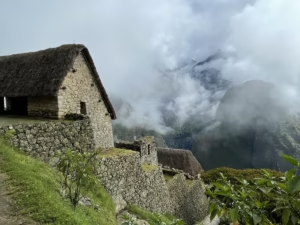
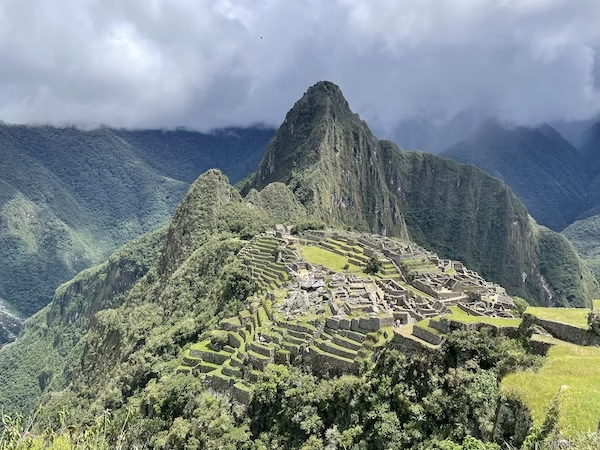
Machu Picchu is one of the wonders of the world. It’s probably the thing that comes to mind first when you think of traveling to Peru. It’s incredibly popular, filled with crowds of tourists from all over the world who pay the hefty entrance fee to wander the ruins of this Incan citadel.
Machu Picchu is also 100% a percent a must-visit. Click here to find out why.
I’m typically skeptical of overcrowded, so-called “must-visit” tourist attractions, but Machu Picchu blew my mind. Pictures and descriptions don’t do the place justice. It’s absolutely stunning and has to be seen in person.
Even though the whole gist of this blog post was a guide to getting beyond Machu Picchu, you’d be a fool to travel to Peru and skip this amazing world wonder.
Be sure to check out our Machu Picchu travel guide: The Complete Machu Picchu Guide for Independent Travelers Who Don’t Want to Hike
Ollantaytambo and the Sacred Valley
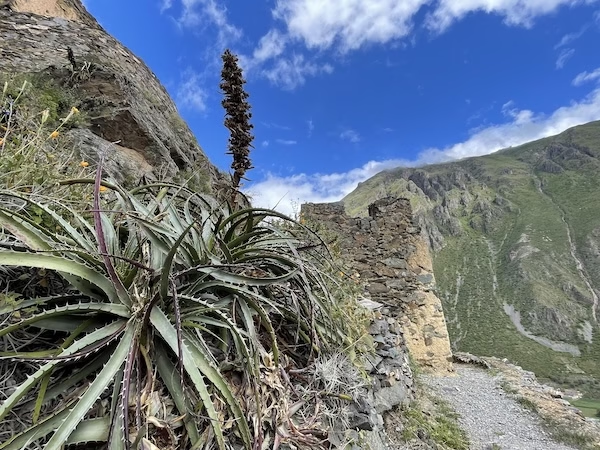
Machu Picchu is far from the only Incan ruin in Peru. The Inca were master builders, and they left their astounding stone architecture scattered throughout the country’s Andean highlands. At least, the bits that the Spanish didn’t destroy.
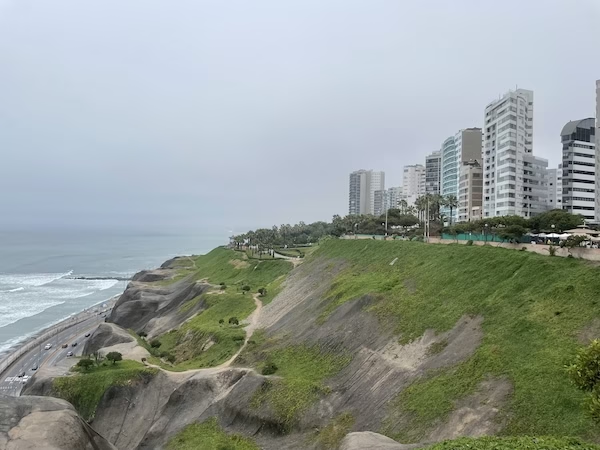
While Machu Picchu is undoubtedly the king of Inca ruins, you can also explore some pretty impressive sites in the town of Ollantaytambo and other parts of the Sacred Valley. The region is not only full of ancient stone structures, but also some remarkable mountain landscapes, all within a short bus ride from Cusco.
Lake Titicaca
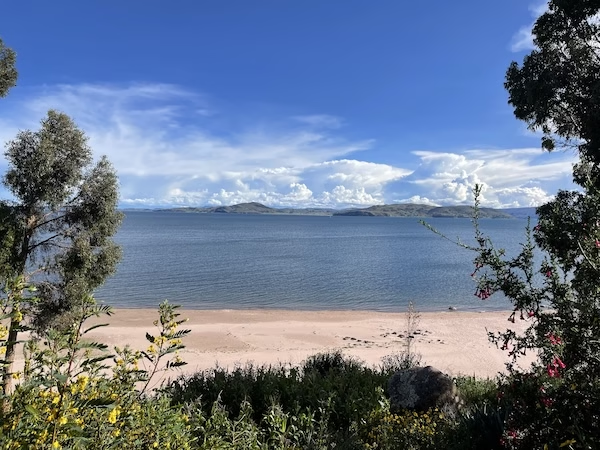
Lake Titicaca is the world’s highest navigable lake, the legendary birthplace of the Inca creator god, Viracocha, and the source of immature laughter from English-speaking 13-year-olds. The name actually means “grey panther” in Quechua. Lake Titicaca straddles the border of Peru and Bolivia and is a must-visit for travelers to either country.
You can spend your time in the touristy but pleasant city of Puno, where you’ll be able to arrange trips to floating reed villages and isolated islands. If you take the time to visit some of the lake’s more remote towns, though, you can easily get away from the other tourists and immerse yourself in the beautiful scenery and vibrant indigenous culture that surrounds the lake.
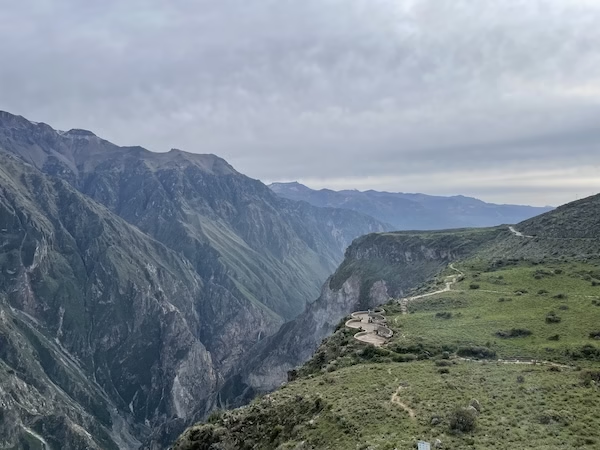
The Colca Canyon
The Colca Canyon is South America’s answer to the Grand Canyon, and it’s every bit as spectacular as its northern rival. The views are stunning, of course, but the canyon is also one of the best places to catch a glimpse of the elusive Andean Condor.
Villages of varying sizes and accommodations line the rim of the canyon. Some are quite touristy, while others feel like remote gems you have all to yourself. You can hike between villages as well as down into the canyon, explore more ruins, or just hang out in the hot springs.
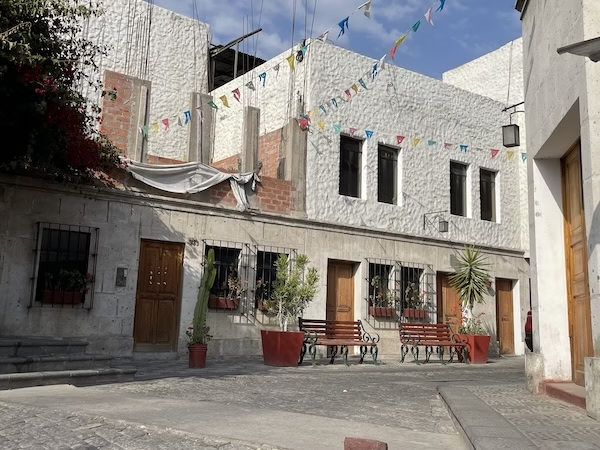
Arequipa
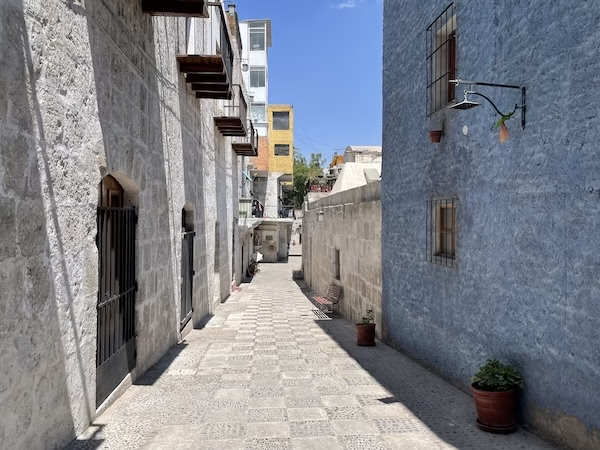
Arequipa lays claim to what is probably Peru’s absolute best Spanish colonial architecture. The city is filled with stunning brick churches, colorful monasteries, and narrow cobblestone alleys. It’s very photogenic and a great place to make all your Instagram followers jealous. When you get sick of taking photos of the buildings, you’ll find bars, restaurants, and coffee shops. Arequipa is a friendly, relaxed, city and a great place to spend a few days or more.
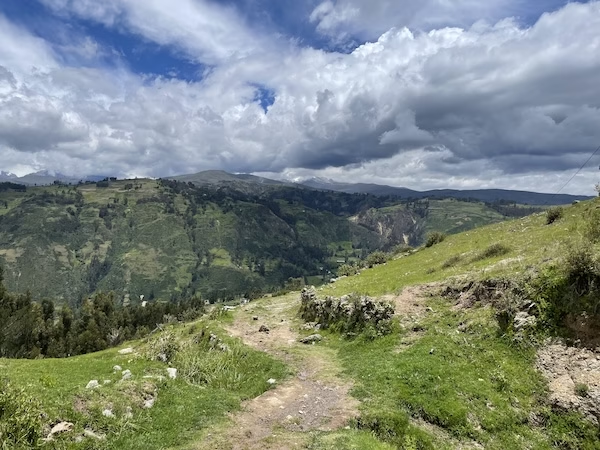
Huaraz
Huaraz is Peru’s hiking capital. The city is home to numerous high-altitude hiking trails all within a short walk or bike ride from the center. You can admire the towering peaks of the Andes mountains while punishing your calves and hamstrings. Be sure to give yourself a day or two to acclimatize to the altitude before embarking on any of Huaraz’s many hikes.
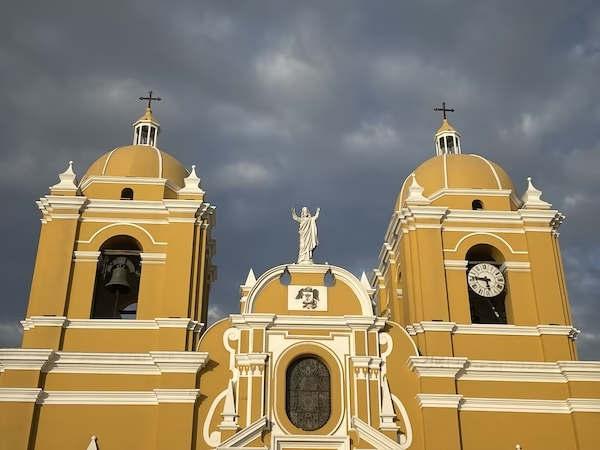
Trujillo
Trujillo, Peru’s third largest city, lies along the coast about 9 to 11 hours by bus north of Lima. The city is friendly and welcoming, and has a lovely colonial center. You should be sure to check out the toy museum.
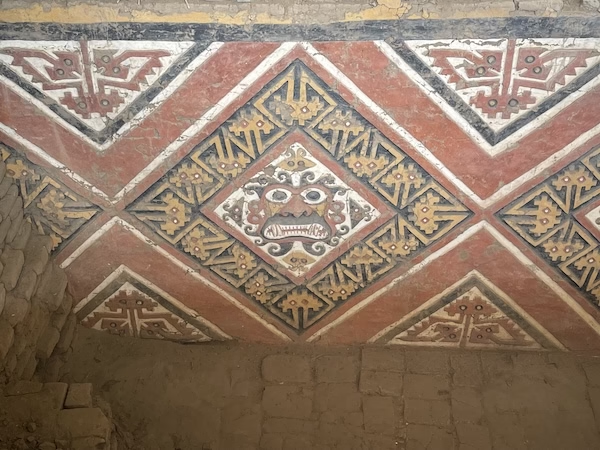
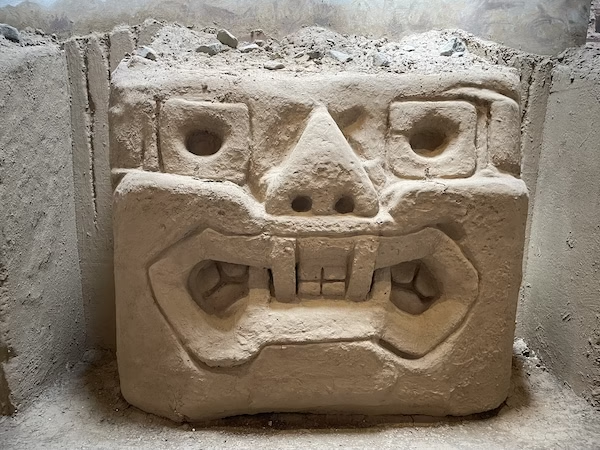
Trujillo’s main draws, however, are the fantastic pre-Columbian archeological sites nearby. The massive Moche pyramids at Huacas del Moche are astounding. You can still see the paint preserved on the temple walls. Further out of town you’ll find Chan Chan, the former capital of the Chimor Empire and a maze of carved adobe brick and mud structures.
Chiclayo
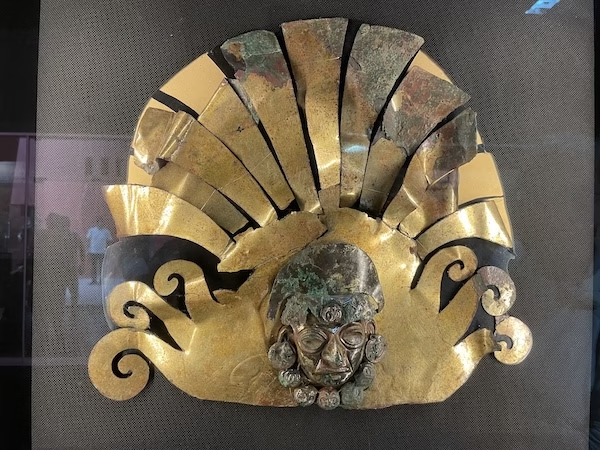
The main reason to visit Chiclayo is to learn about the ancient Moche and Sican peoples that once thrived in the area. The nearby museum in Lambayeque displays numerous examples of their intricate gold carvings. These people were clearly masters at making gold jewelry. It’s a shame the Spanish stole and melted most of it. Chiclayo also has some ancient adobe pyramids, though they were closed to visitors when we were there. You may have better luck.
Máncora
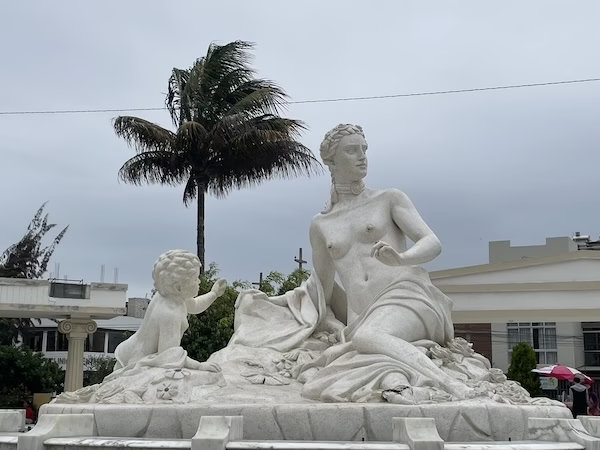
The little beach town of Máncora is often the first stop for backpackers on the bus from Ecuador. It definitely was for us. It’s not a bad place, though you’ll probably see nicer beaches elsewhere. Unfortunately, erosion had washed away much of the coastline during our visit. On the other hand, Máncora is also home to the best ceviche I’ve ever had, so it might have been worth the visit just for that.
Paracas
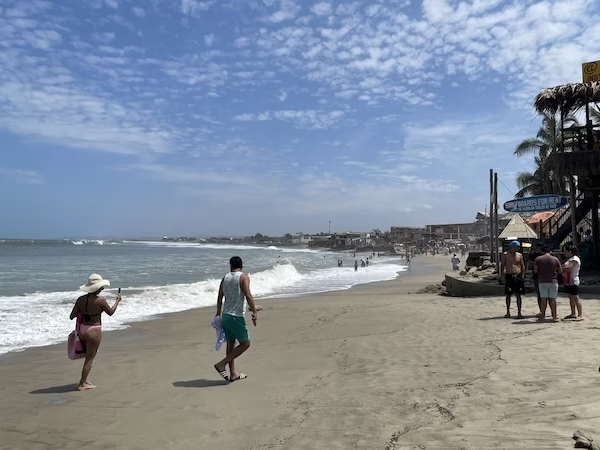
Paracas is a popular ocean-front tourist town a few hours south of Lima. The dramatic cliffs and rocky beaches are marketed as a “poor man’s Galapagos” due to the abundance of bird and ocean life. I’ve been to the actual Galapagos, and I have to say Paracas can’t compare. Still, it’s very pretty, and a good spot to look at sea lions, penguins, and boobies.
Other Places to Visit in Peru (that I didn’t get to)
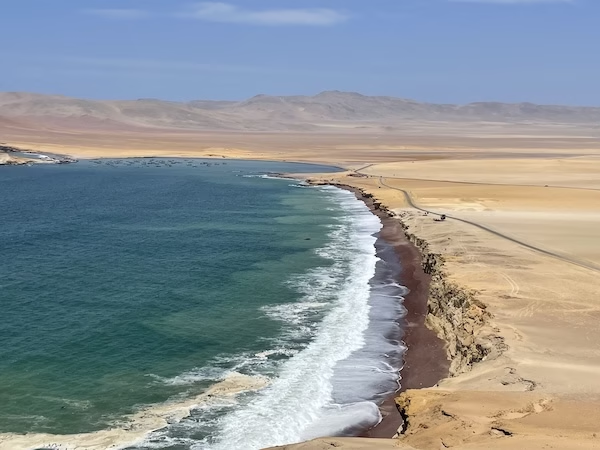
Peru has a lot going on. So much so that we weren’t able to come close to visiting everything despite spending over two months in the country. Maybe we should have done three months instead.
Just in case you have the time, I’m adding a couple of other places that we didn’t make it to but heard good things about. It’ll go on the list for when we inevitably return to Peru. I’m also listing one popular place we didn’t visit for what I think are some very good reasons.
The Peruvian Amazon
I absolutely loved my time in the Amazon in Colombia. We may have even crossed the border into Peru inadvertently on a boat ride, but I don’t think that counts. Peru has a large section of the Amazon jungle, and from what I hear, some pretty fantastic places to explore the world’s largest rainforest and see wildlife.
We met people who especially raved about Puerto Maldonado at the Southern end of the country. Specifically, they recommended Chuncho Lodge. I’m going to link to them here. https://chuncholodge.com/ Hopefully I’ll have the chance to check them out in person before too long. Or maybe they’ll see this link and offer me a free night’s stay, hint hint.
Northern Peru
When we were crossing into Peru from Ecuador, we had a long debate about whether we wanted to go down the coast, or continue into the Northern Peruvian cloud forest. In the end, we opted for the coastal route, but a part of me can’t help thinking “what if…”
Specifically, the mountain town of Chachapoyas looks like heaven to me. Located in the cloud forest, with plenty of hiking and nearby pre-Columbian ruins. Would my life have been completely different had we gone there instead of Máncora? Probably. And I have to live with that regret every day.
The Nazca Lines
We technically did see the Nazca lines. From the window of a bus, which doesn’t really count. If you don’t know, the Nazca lines are gigantic shapes and figures drawn in the arid desert landscape by ancient indigenous people. They don’t look like much from a bus window, but are supposed to be pretty impressive if you view them from above.
Which is why we didn’t stop to see them. There’s an observation tower, which I’ve heard is okay, but supposedly you need to take a flight to truly appreciate the full glory of the Nazca lines. Flights are expensive, and we wanted to save our money for other things. I have no regrets about this one.
A Brief Overview of Peru’s History
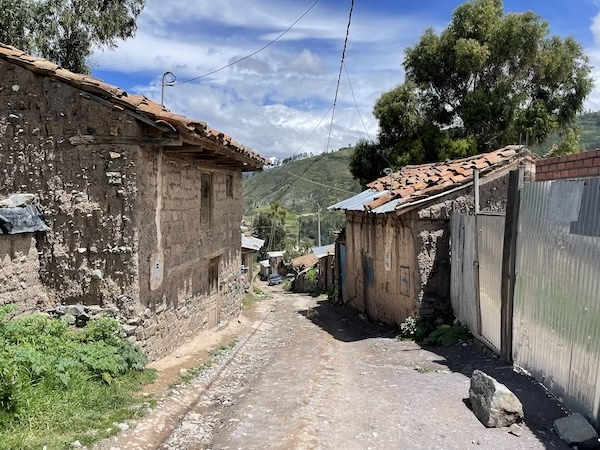
We’ve all heard of the Inca Empire, but you might be surprised to know that Peru’s history actually dates back over 15,000 years. The country is one of the world’s cradles of civilization. One of the most rewarding things about traveling in Peru, for me, was discovering the rich tapestry of cultures that have existed here over the years.
Unfortunately, we don’t have as much archeological and historical evidence of ancient Peruvian cultures as we do for other ancient civilizations. We can thank the Spanish for that. Conquistador Francisco Pizarro began the conquest of Peru in 1532. It’s a dramatic story to rival any HBO miniseries. Until HBO greenlights that project, I recommend the excellent book, The Last Days of the Incas by Kim MacQuarrie.
Peru’s position near rich gold and silver deposits turned it into a literal goldmine for Spain. Spanish domination lasted until 1824, when South American revolutionary heroes Simón Bolívar and José de San Martín defeated the Spanish once and for all. Newly independent Peru was off to a rocky start. Internal conflict and wars between neighboring countries defined much of the 19th and 20th centuries.
Modern Peru
The 1970s saw the emergence of radical guerrilla movements, such as the infamous Shining Path. Instability reigned throughout the 80s as well, which led to the election of Alberto Fujimori in 1990. Fujimori ruled as a dictator with an iron fist, committing numerous human rights violations. His reign lasted until 2000.
2016 began another period of political crisis and more instability. Power began to become concentrated in Peru’s congress, which many view as impossibly corrupt. For example, in 2024 the murder of a lawyer led to the discovery of a massive prostitution ring and sex for votes scandal within Peru’s legislative body. And I thought the U.S. Congress was bad.
You also may have heard about the protests of 2022, which stranded a number of tourists. These protests were sparked by the impeachment of the president, but soon exploded into general unrest. People in Peru are frustrated about the state of affairs in their country.
In 2026, Keiko Fujimori, daughter of former dictator Alberto Fujimori, won the presidential election after a chaotic round of ballot counting. I don’t feel optimistic about her, to say the least.
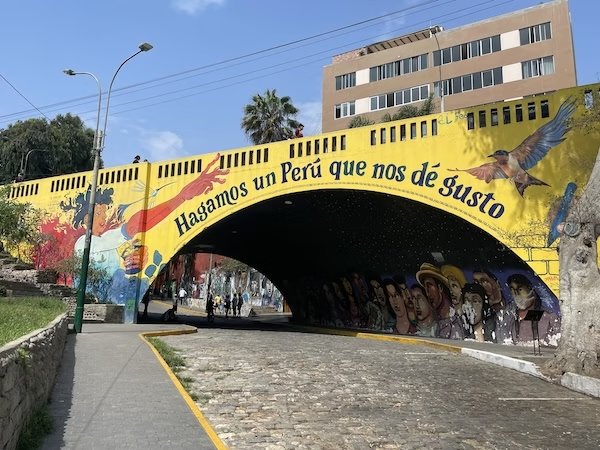
I feel like it’s also important to again mention that the descendants of the Inca and other indigenous groups still live on in Peru today. In fact, native people make up just over 25% of the population. However, they face ongoing discrimination in work, education, and healthcare. Indigenous people are especially affected by illegal mining and the drug trade, as well as legal corporate incursions into their territories.
Final Thoughts on Peru
Peru is a beautiful country, with a lot of impressive and interesting places to travel. So many, in fact, that we didn’t even get to see everything we wanted to in two whole months in the country. And there are probably even more places we’ve never even heard of. I definitely plan on returning to Peru, and I’ll be sure to update this travel guide when I do.
What makes Peru truly exceptional, though, is the strong indigenous culture that exists throughout the country. Yes, there are the great Inca ruins of Machu Picchu, which everyone’s heard about and everyone should visit at least once in their life. And the Inca were just the latest in a long line of Native American cultures that formed and thrived in the rugged landscape of Peru.
What’s most exceptional is that a lot of that indigenous culture still survives. You can hear it in the Quechua spoken in the highlands, see it in the hats and clothing worn by the people, and even taste it in the cuisine. In a continent ravaged by centuries of exploitation and genocide, and a world overrun by globalization and cultural corporatization, it’s truly inspiring to see people who’ve managed to hold on to their unique identity.
So, yes, Machu Picchu is very cool. It’s even cooler to rub elbows with the descendants of the people who built it.
Useful Websites for Traveling Peru
As much as we might long for the days when you could show up to a town with nothing more than a beat-up guidebook and a sense of adventure, today much of traveling involves being glued to our phones making bookings. I’ve compiled some helpful apps and websites below that at least help make those bookings more convenient so you can spend less time staring at your phone and more time exploring at your surroundings. Some of these sites are affiliate links that give me a small commission at no cost to you if you chose to book through them. All of them are sites I’ve used personally and have no problem recommending.
Just be sure to do your due diligence as much as possible. Only hire local guides and try as much as possible to stay in locally owned hotels and hostels so that your hard earned travel dollars actually go to support the local economies of the places you visit.
Booking.com is basically the world’s only hotel booking website. They have hotels, guesthouses and vacation rentals all over Peru.
Hostelworld is the go-to site for booking hostels. If dorm rooms and shared bathrooms are your thing, you’ll find hostels throughout Peru.
Get Your Guide offers tours and activities all around the world. Unlike some other sites and apps that do the same thing, you can actually find some reasonably priced deals here.
Cabify is the best way to book a taxi in Peru’s major cities. It works like Uber, but you get connected to a licensed, authorized, taxi instead of just some random weirdo.
RedBus is the place to book long-distance buses in Peru. You can get your tickets and browse schedules ahead of time, and alleviate the stress of not knowing whether the bus you want will be sold out before you get to the station.
Travel insurance can turn a potential trip-ruining disaster into a mere inconvenience. We used SafetyWing for travel insurance during our South America trip and had a great experience. We’ve also used used World Nomads and found them easy to use and set up. If you do decide to get travel insurance, I suggest comparing both options and seeing what works for you.
We receive a fee when you get a quote from World Nomads using this link. We do not represent World Nomads. This is not a recommendation to buy travel insurance. The same applies to SafetyWing.