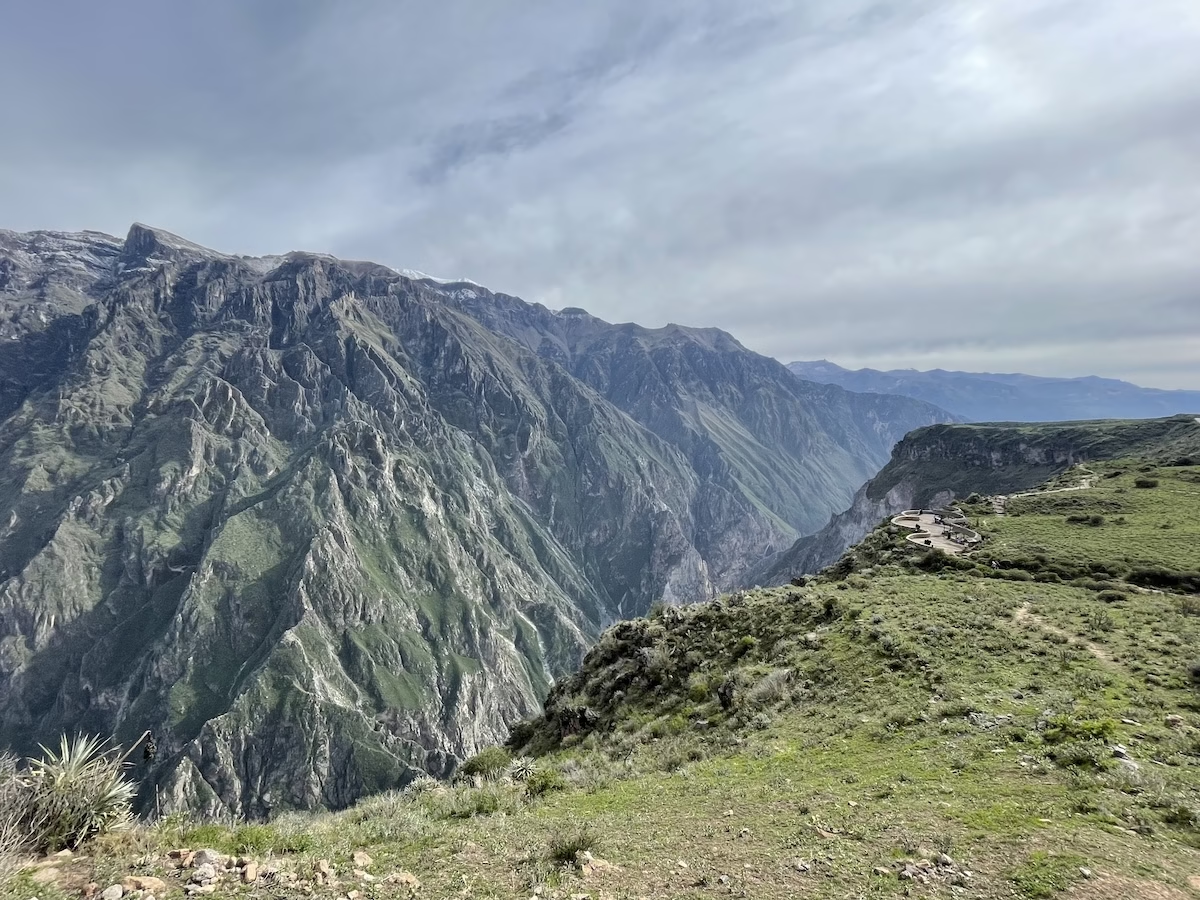
The Colca Canyon is far from an unknown travel destination. It is, in fact, one of Peru’s most popular places. However, most tourists only see the canyon on a day trip from Arequipa. Take some time to explore its smaller villages and wander its hidden paths and the Colca Canyon suddenly feels like you’ve fallen off the beaten path. This is a guide to the Colca Canyon and Yanque for those who want to spend some extra time and explore beyond what you’d see on a tour.
* This post contains affiliate links. If you book something using one of these links, I’ll get a small commission at no cost to you. It’s a great way to support your favorite independent travel blogs!*
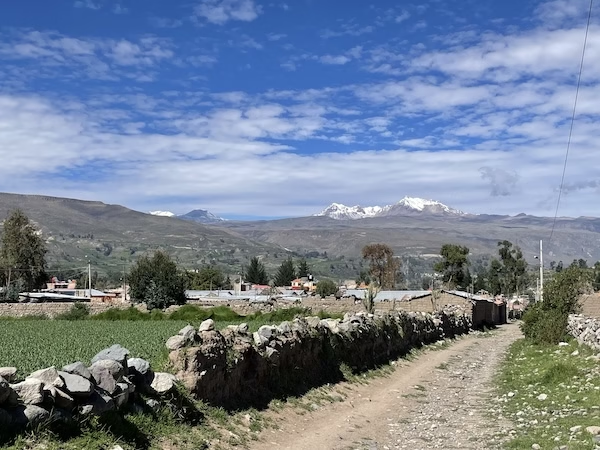
What is the Colca Canyon and why is it worth visiting?
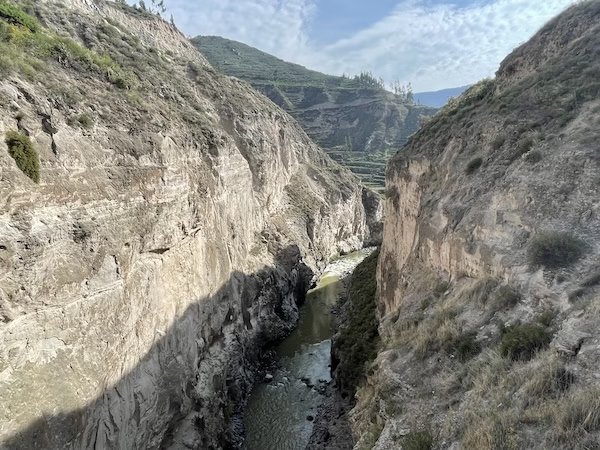
The Colca Canyon is a deep canyon located in the Andean mountains of Peru. It is one of the world’s deepest canyons and home to some incredible landscapes and vistas. The surrounding villages are charming and offer up plenty of opportunities for hiking, exploring ruins, and interacting with the local people.
Some Quick Colca Canyon Facts
- The Colca Canyon is located about 160 kilometers (99 mi) northwest of the city of Arequipa.
- The canyon has a depth of 3,270 meters (10,730 ft).
- The Inca arrived in the region around 1320 AD. The Spanish conquered the canyon and its surroundings in 1540. Artifacts have been found near the canyon that date back over 7,000 years.
- The Spanish forced the native inhabitants to leave their original homes and move to “reductions” which formed the basis for the town’s around the canyon today.
- The Colca Canyon is home of the amazing Andean condor, one of the largest flying birds in the world.
Should you do a Colca Canyon tour or visit independently?
You could easily arrange a day trip to the Colca Canyon from Arequipa. Get Your Guide has plenty of reasonably priced options.
However, as much as I’d love for you to click on the above affiliate link so I get money, I’m going to argue against the day tour option. The only reason you should do the Colca Canyon as a day trip is if you are only in Peru for a super short amount of time.
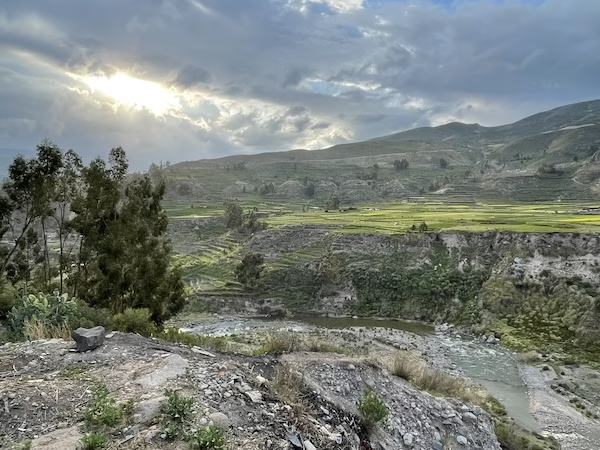
Like much of Peru, the Colca Canyon is the sort of place that rewards slow travel. The longer you stay, the more amazing things you discover. Not only is the canyon itself gorgeous, the surrounding mountains are stunningly beautiful. You could spend hours just looking at things.
The villages around the canyon’s rim are wonderful slices of rural Peruvian life, where you can chat with the locals and interact with people who haven’t yet become jaded by over-tourism. You’ll also find plenty of things to do, like hiking, visiting ruins or hot springs that aren’t covered by a day tour.
Not only that, but the Colca Canyon is also an easy place to visit independently. We felt perfectly safe wandering the back roads around Yanque and having the freedom to explore on our own. Unique travel experiences are always that much more rewarding when you discover them on your own.
So, while a tour is totally possible, the Colca Canyon really shines as a destination when you take the time to visit on your own.
Altitude sickness and the Colca Canyon
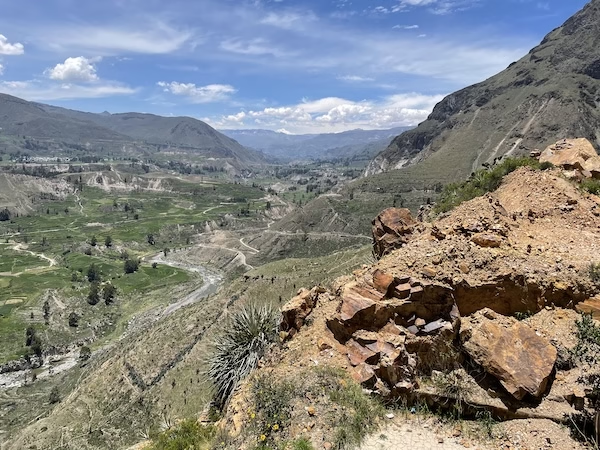
The rim of the Colca Canyon sits at an altitude of anywhere between 3,000 to 4,000 (9,840 to 13,120 feet) meters above sea level. The town of Chivay is at 3,635 meters (11,925 feet), while Yanque is at 3,417 meters (11,210 feet) and the Cruz del Condor viewpoint at 3,280 meters (10,760 feet).
All those numbers mean that travelers risk altitude sickness when visiting the Colca Canyon. Altitude sickness is a result of your body struggling to get enough oxygen due to the thinner air. It happens when you go up in altitude too quickly.
The best defense is to take your time ascending. Experts recommend climbing only 500 meters (1640 feet) per day if at all possible. Spending time in Arequipa first is a good option to help your body get used to the high altitudes. You should also factor in a day or so to take it easy and adjust when you first reach the Colca Canyon (or any other high-altitude destination.) Avoid alcohol or heavy meals.
You can do as the locals do and chew on some coca leaves. While coca is the basic ingredient for cocaine, in its unprocessed form it is actually a medicinal herb that can help alleviate symptoms of altitude sickness. Coca leaves are available throughout Peru.
It’s worth it to familiarize yourself with the symptoms of altitude sickness before you leave home.
And remember, if symptoms get severe you need to descend to a lower elevation. A potential cerebral edema is nothing to mess around with!
Why is Yanque the best base for visiting the Colca Canyon?
You have a lot of options for places to stay in the Colca Canyon, but the three most popular are probably Chivay, Cabanaconde, and Yanque.
Chivay is the most popular and the most touristy of the three. You’ll have more options for restaurants and hotels, but have to settle with being stuck on the beaten path. Chivay’s town center is cute, but it’s definitely feels like it was built for tourists and not for locals.
We actually didn’t go to Cabanaconde, so I can’t speak from first hand experience. However, it seemed like all the hip young backpacker blogs suggest Cabanaconde. That alone made me want to avoid it. On the other hand, if you’re doing the Colca Canyon Trek, then Cabanaconde is probably your best option.
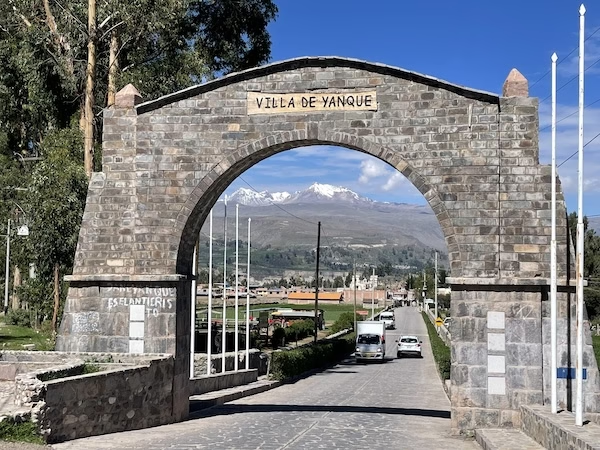
Yanque, however, was amazing. This little agricultural town didn’t feel touristy at all. There are a few mid-range accommodations scattered about, and a few resorty places outside of town, but nothing overwhelming. There were literally only three restaurants when we were there. And one of them was closed most days. While it was at times frustrating to not have options of where to eat, I think that says something about how un-touristy Yanque is.
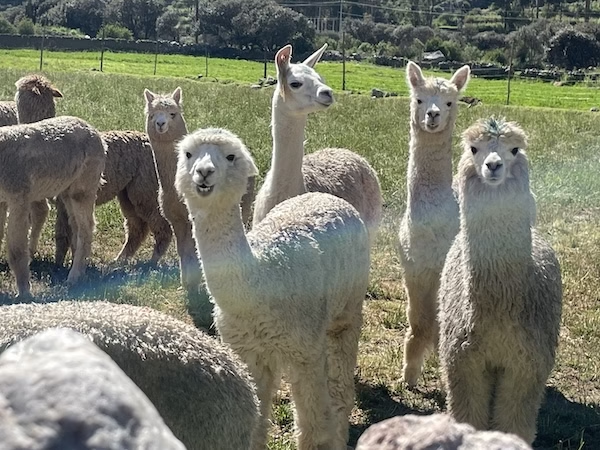
I also found Yanque to be quite friendly. The local people were happy to have us there, and willing to share a little of their lives with us. Whether it was our hotel owner offering us chicha (a traditional Andean fermented corn drink) or the grizzled old alpaca farmer explaining why his herd was running around the paddock in circles (they were playing).
That’s not to mention the hiking trails, ruins and hot springs all within walking distance. If you want tourist amenities, head to Chivay. If you want to trek, head to Cabanaconde.
But if you want a relaxed, beautiful, authentic Andean town with friendly locals, Yanque will more than deliver.
How to get to Yanque and the Colca Canyon
Your journey to the Colca Canyon will begin in the city of Arequipa. Peru’s “White City” is located about 150 to 170 kilometers (93 to 105 miles) from the canyon and serves as its transportation hub. You can reach Arequipa by flying or busing or whatever.
From Arequipa, the best option to reach Yanque is by direct bus. Buses leave from Arequipa’s Terminal Terrestre. They cost about 35 soles ($10) and take around three hours. It’s a beautiful bus ride. Buses leave three times a day, but I’d suggest the afternoon bus. Unless you really want to catch the bus at midnight or 3am. You can book tickets in advance on Redbus.
Otherwise, you’ll have more options if you first take the bus to Chivay. From Chivay, you can catch a colectivo or taxi onward to Yanque.
It’s also possible to travel directly between Chivay and Puno via the Nativa Express tourist shuttle. This shuttle costs $40 a person and stops at some viewpoints along the way. Find more information here: https://www.nativa-express.com/tour/chivay-puno/
Where to stay in Yanque
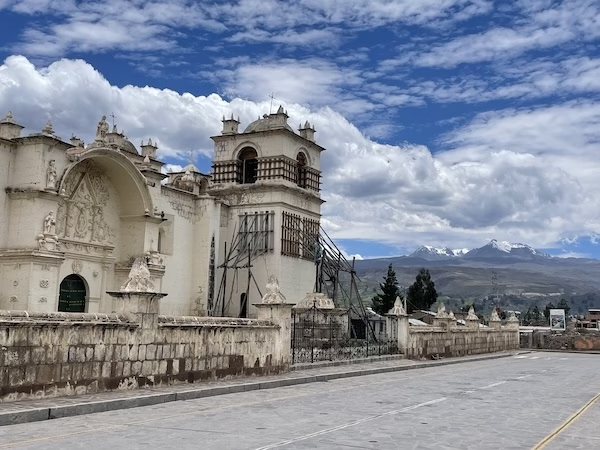
As far as I’m concerned, there is only one place to stay in the entire Colca Canyon: Le Foyer Colca in Yanque.
Le Foyer Colca is a locally owned, mid-range hotel, run by one of the nicest, friendliest, hotel owners out there. Not only did he help us arrange a tour to the Cruz del Condor, he also shared Chicha with us and gave us some insight into what life is like living at the rim of one of the world’s deepest canyons.
Plus, the views from the rooms are incredible.
Don’t even bother searching for accommodations in the Colca Canyon. Just click here and book your stay at Le Foyer Colca.
The best things to do in Yanque and the Colca Canyon
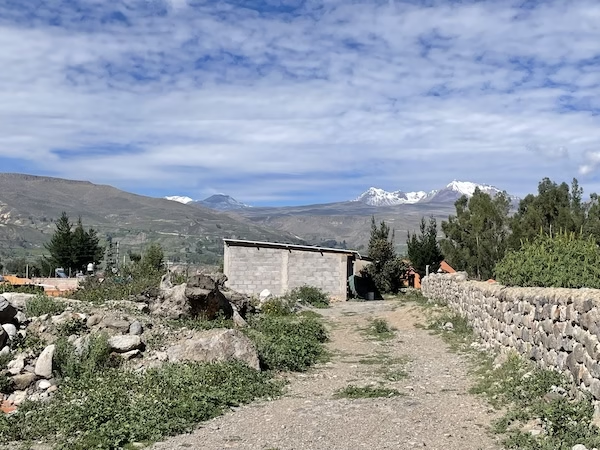
For being such a small town, Yanque has more than enough to keep you from being bored. Unless your main idea of fun is going out to eat. However, you will find plenty of opportunities for hiking, exploring, and more.
Look for Andean condors at the Cruz del Condor
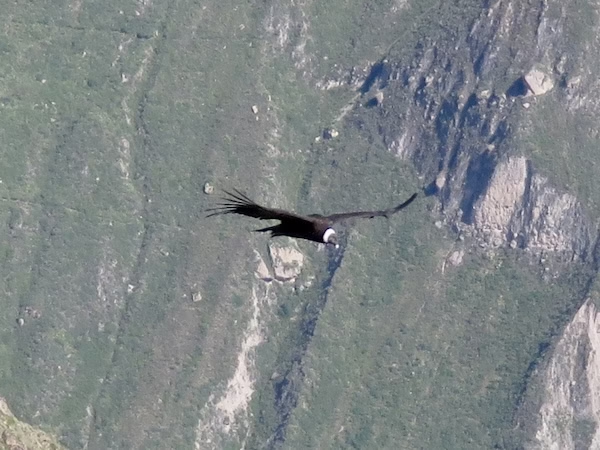
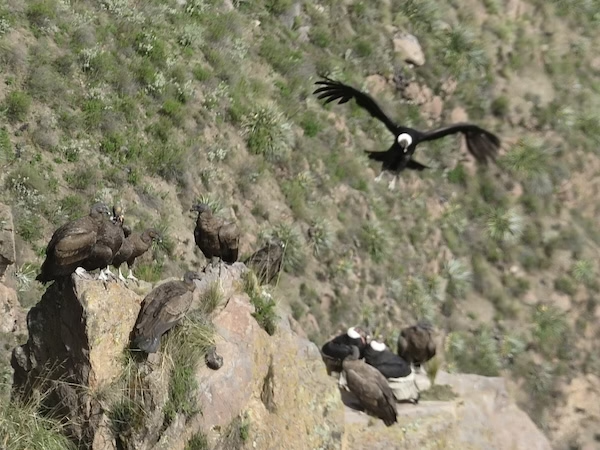
The number one thing to do in the Colca Canyon is to watch the majestic Andean condors that soar between the canyon’s mighty cliffs. Andean condors are the largest flying land birds in the world, with a wingspan of up to 3.3 meters (10.8 feet). They are a type of vulture, eating mainly dead animals. The condors are native to the Andes mountains, but are under threat from habitat destruction, illegal hunting and more.
The Andean condors also just plain look cool.
The Cruz del Condor, or “condor crossing” is a viewpoint set up specifically to watch these mighty birds. Yes, the place can be a bit crowded and touristy. You’ll see hawkers selling trinkets and performers dressed up in condor costumes.
However, seeing the condors soar up from the depths of the canyon is an experience not to be missed.
Day trips from Arequipa focus on condor spotting in the Colca Canyon. If you’re staying in Yanque, you can arrange a tour/taxi through your accommodation. Otherwise, catch a colectivo (local van) heading towards Cabanaconde and ask the driver to let you off at the Cruz del Condor. Take the 6am colectivo at the latest.
While its easy to get to the Cruz del Condor from Yanque or Chivay independently, returning is another matter. You’ll have to flag down a bus or van on the road, and they very well might be full. We arranged our taxi through Le Foyer Colca just to avoid this issue.
When is the best time to see the condors at the Colca Canyon?
If you want the best chance at seeing a condor, the most important thing is to arrive in the morning, between 8:00 AM and 10:00 AM. Another advantage of staying in nearby Yanque is that you can get to the Cruz del Condor a little early and stake out a good viewing spot before the tour groups arrive.
Many online sources also recommend visiting during the dry season, from May to October. The condors don’t really like to come out in the rain. However, we went in February and saw a ton of condors, so who knows?
Get steamy at the Pinchollo Geyser
The Andes are full of not only condors and beautiful mountains but also volcanos. You may even catch a glimpse of a plume of volcanic smoke rising up in the distance from the town center in Yanque.
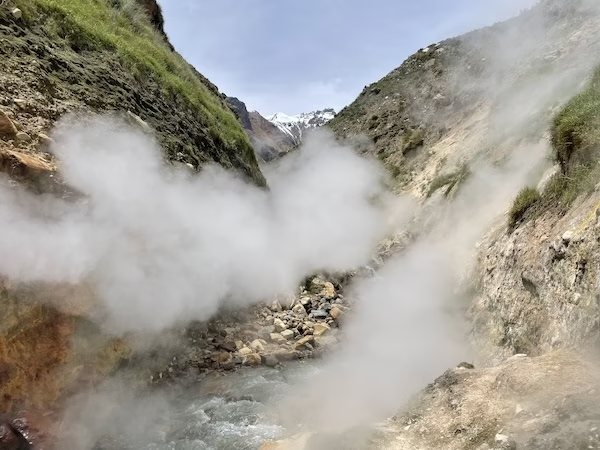
Nearby the Cruz del Condor, you can visit the Pinchollo Geyser to see some of this geothermal activity up close. The geyser is high up in the mountains on a narrow dirt road surrounded by some absolutely gorgeous Andean scenery. Mighty bare cliffs frame a towering snow-capped peak.
To be honest, I thought the views were a bit more impressive than the geyser itself. I mean… it’s just a bunch of steam coming out of the ground. It’s not like the water shoots up in the air like Old Faithful or something.
Still, the Pinchollo Geyser is still cool enough, and you’re already in the area so you may as well check it out. Tours to the Cruz del Condor usually include a stop at the Pinchollo Geyser. Otherwise, you’ll need to arrange a taxi. You may have to pay a small entrance fee along the road to get in.
Soak in the hot springs of Piscinas de Puye
Speaking of geothermal activity, exploring the turbulent Andes region turned me into a fan of hot springs. Laying in a pool of mineral water that’s been heated by the fires of the earth’s crust is a very cool experience and something you should do at least once in your life. Or multiple times if you want a nice way to relieve your aching legs after all that hiking.
Yanque is home to numerous hot springs. Some, like the Colca Lodge, are connected to fancy resort hotels. These are probably nice, but way more expensive and, dare I say, a little pretentious.
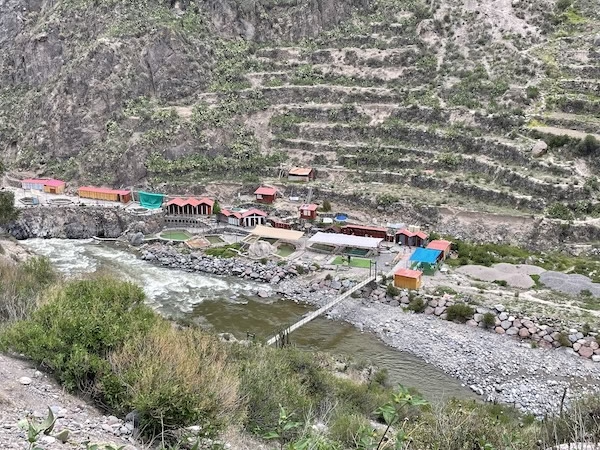
The best option is to do as the locals do and head to Las Piscinas de Puye. These little pools aren’t fancy, but you’ll be soaking it up in an absolutely gorgeous location at the bottom of the canyon. I can’t remember the cost, but it was more than worth the price.
You can reach Piscinas de Puye by walking west outside of town along Avenida Chacapi. You’ll also pass by the Baños Termales de Chacapi, which are another set of public baths and not a bad option if you don’t want to go all the way to Puye for whatever reason.
Explore the Uyo Uyo ruins
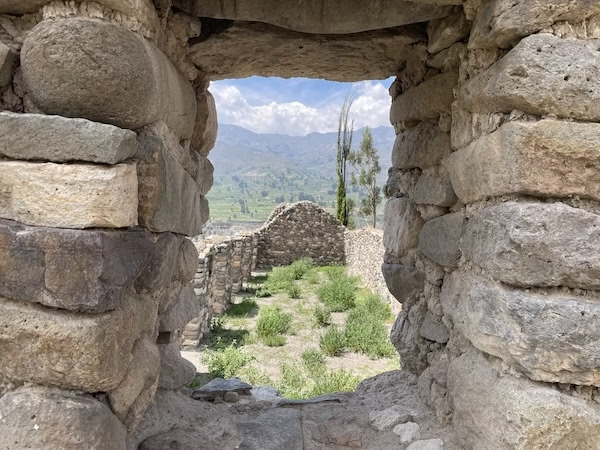
Yanque has its own set of ruins as well. Visiting the Uyo Uyo ruins is one of the best things to do around the Colca Canyon, but isn’t often included on tours. You might have these stone structures all to yourself.
The Uyo Uyo ruins were built by the Collagua culture, a pre-Incan society. They were later incorporated into the Inca empire, but residents were forced to move by the Spanish. The ruins are mostly stone residential buildings, so no temples or palace complexes. They offer a window into the life of everyday Andean people before the Spanish came.
Along the way, you can also see some very unique burial tombs. These tombs were actually built into the cliffside overlooking the river. How did they make them? And why choose a cliff to bury your dead?
You can see the tombs under the bridge leading out from central Yanque. The ruins are a 30 to 40 minute walk from Yanque. Follow Calle Mismi towards the river, just past Le Foyer Colca, cross the bridge and then climb the hill up to the ruins. If you have the time and energy you can continue hiking up the mountainside to a very lovely waterfall.
Hike to the nearby village of Ichupampa
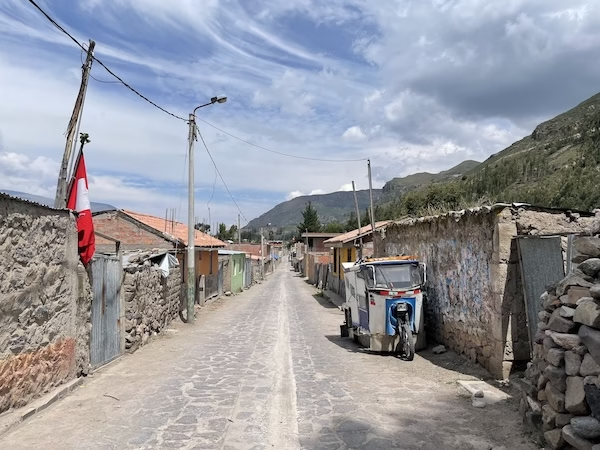
A number of villages are spread out along the rim of the Colca Canyon. You can easily do some day hikes between these villages, which is a nice alternative if your knees aren’t up for the steep trek down into the canyon. One such hike is to the nearby village of Ichupampa.
Ichupampa is very local and very decidedly non-touristy. You wont find any ruins or tourist sites, but you will find some relatively friendly locals who are happy to share their village with you. There was some sort of military celebration going on, commemorating Ichupampa’s official designation as a town, when we visited. A friendly drunk man explained the whole thing to us. A shopkeeper lamented the fact that the younger generations aren’t learning Quechua.
It was a very interesting experience, and the kind of pleasant travel surprise you can’t get on a tour.
Ichupampa is about an hour walk from Yanque. Follow Avenida Chacapi past the hot springs until it merges with Ar-681. Or cross the bridge towards the Uyo Uyo ruins and follow the main road west. Or, more simply, just follow the edge of the canyon until you get there.
Hang out in touristy Chivay
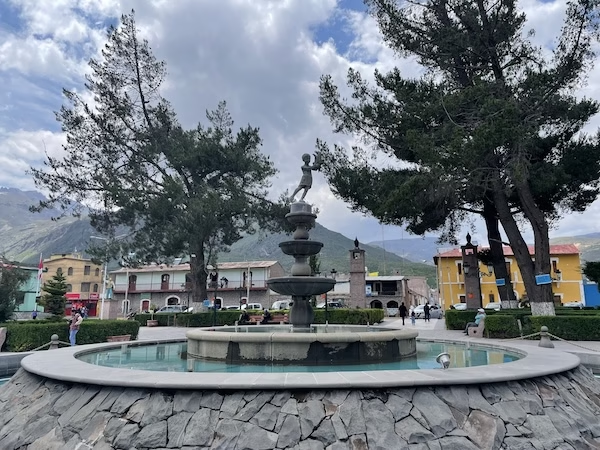
Chivay feels like Disneyland compared to Ichupampa. However, the Colca Canyon’s most touristy town is actually surprisingly pleasant. We only spent a morning here waiting for our onward transportation, but I was definitely intrigued.
The town center, while far from authentic, is actually quite cute and a pleasant place to stroll. And, like Cusco, I think it’s cool to see municipal statues of indigenous figures rather than just a bunch of old white guys. Chivay also has a variety of restaurants and some coffee shops and tour companies and whatever other tourist infrastructure you may have missed further down the canyon.
All in all, it’s really not bad as far as touristy towns go. You’ll need to catch a bus, colectivo, or taxi from Yanque to reach Chivay.
Frequently Asked Questions about the Colca Canyon
The Colca Canyon is special in a number of ways. It’s one of the world’s deepest canyons, home to the Andean condor, and full of charming villages and beautiful scenery. The Colca Canyon is a must-visit destination in Peru.
You can technically “do” the Colca Canyon in a day. Various tour companies offer up whirlwind day trips from nearby Arequipa. However, the Colca Canyon is a beautiful place with enough things to do to keep curious travelers busy for a while.
Colca Canyon tours leave regularly from Arequipa, and usually just visit the Cruz del Condor and maybe the geyser. While a tour is worth it if you’re short on time, I’d strongly recommend giving the Colca Canyon at least a few days on its own.
Yes, you can definitely visit Colca Canyon on your own. In fact, this is the best way to visit. Take the local bus from Arequipa and post up in Yanque to experience the canyon at your own pace.
You could spend weeks in the Colca Canyon if you really wanted to. We spent five days in Yanque and I would easily go back and spend more time. I’d say you need at least three nights at the very least to make the most of it.
Final thoughts on the Colca Canyon and the village of Yanque
I’d wanted to visit the Colca Canyon since I discovered it was such a great spot for condor spotting. I wasn’t disappointed. When I was a child, I had read some National Geographic article about Andean Condors and thought they were the coolest thing. I was a weird kid. So, for me, visiting the Cruz del Condor in the Colca Canyon and seeing the Andean Condors first-hand was the fulfillment of a childhood dream.
We could have just done this on a day tour from Arequipa. But, I’m really glad we chose to stay in the charming village of Yanque instead. Ever since I started traveling as an adult, I feel like I’ve been on a quest to find those places that aren’t inundated with tourists. Or at least, if there are tourists, places that can hold on to their own identity and not let themselves turn into just another generic tourist trap.
Yanque is just that sort of place. It’s far from unknown, but when we visited in the off-season we didn’t see a single other tourist. Even the lack of restaurants felt refreshing. Yanque, and the rest of the Colca Canyon, is the kind of place where you feel like you’re truly traveling rather than just being herded along. At least, it does if you take your time and visit independently.
There are plenty of destinations you can blow through in a day. Yanque and the Colca Canyon are places that reward slowing down and exploring independently.
Read more about slowing down and exploring Peru independently here: Peru Travel Guide: Beyond Machu Picchu
Useful Websites for Traveling Peru
As much as we might long for the days when you could show up to a town with nothing more than a beat-up guidebook and a sense of adventure, today much of traveling involves being glued to our phones making bookings. I’ve compiled some helpful apps and websites below that at least help make those bookings more convenient so you can spend less time staring at your phone and more time exploring at your surroundings. Some of these sites are affiliate links that give me a small commission at no cost to you if you chose to book through them. All of them are sites I’ve used personally and have no problem recommending.
Just be sure to do your due diligence as much as possible. Only hire local guides and try as much as possible to stay in locally owned hotels and hostels so that your hard earned travel dollars actually go to support the local economies of the places you visit.
Booking.com is basically the world’s only hotel booking website. They have hotels, guesthouses and vacation rentals all over Peru.
Hostelworld is the go-to site for booking hostels. If dorm rooms and shared bathrooms are your thing, you’ll find hostels throughout Peru.
Get Your Guide offers tours and activities all around the world. Unlike some other sites and apps that do the same thing, you can actually find some reasonably priced deals here.
Cabify is the best way to book a taxi in Peru’s major cities. It works like Uber, but you get connected to a licensed, authorized, taxi instead of just some random weirdo.
RedBus is the place to book long-distance buses in Peru. You can get your tickets and browse schedules ahead of time, and alleviate the stress of not knowing whether the bus you want will be sold out before you get to the station.
Travel insurance can turn a potential trip-ruining disaster into a mere inconvenience. We used SafetyWing for travel insurance during our South America trip and had a great experience. We’ve also used used World Nomads and found them easy to use and set up. If you do decide to get travel insurance, I suggest comparing both options and seeing what works for you.
We receive a fee when you get a quote from World Nomads using this link. We do not represent World Nomads. This is not a recommendation to buy travel insurance. The same applies to SafetyWing.