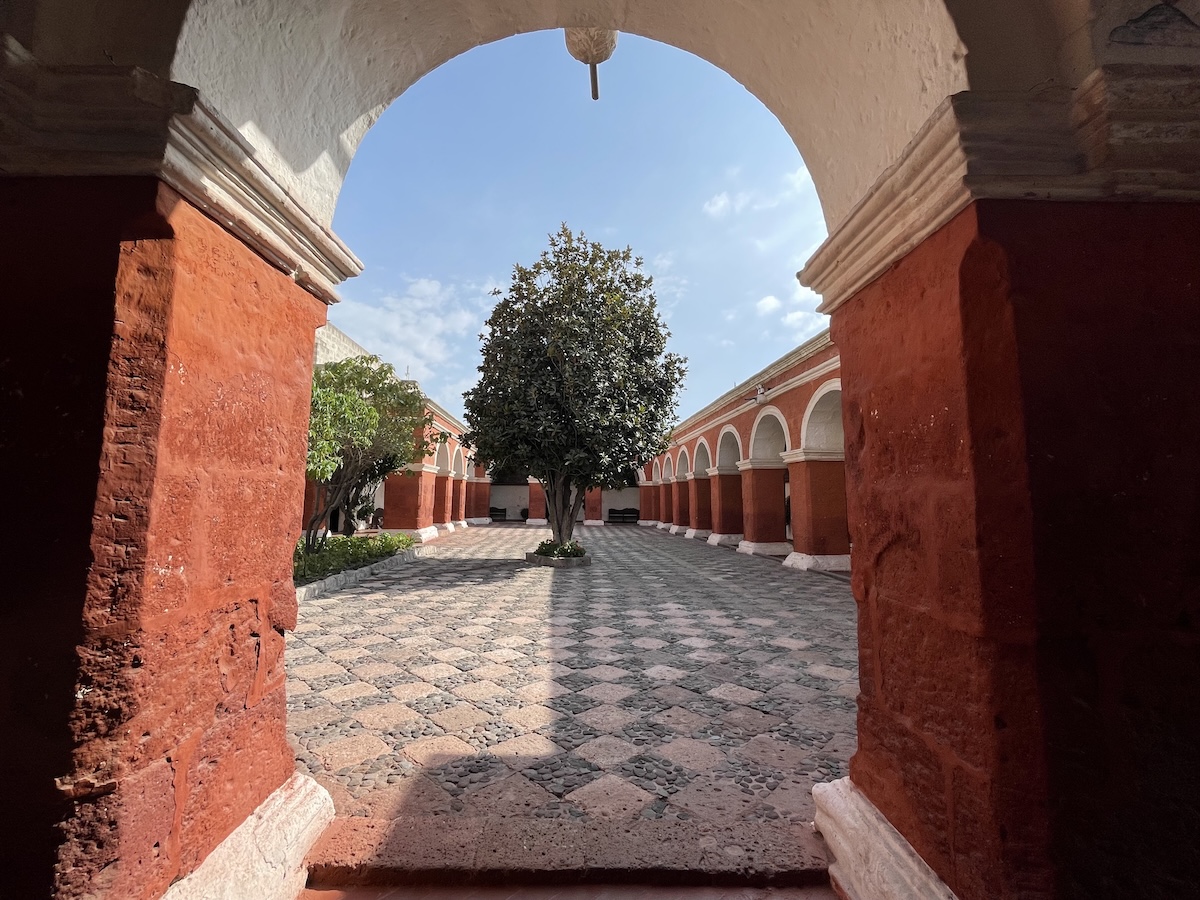
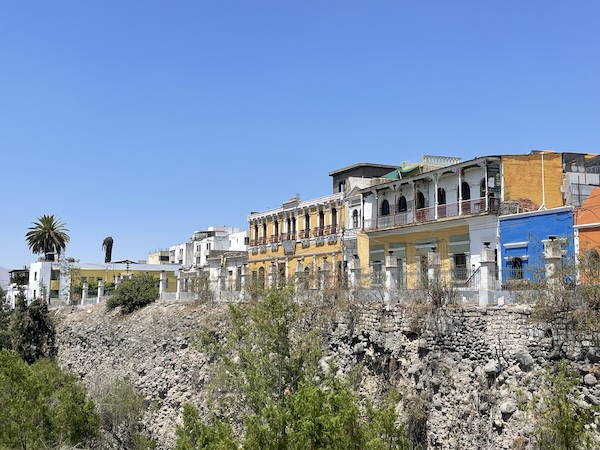
Arequipa is Peru’s most beautiful city. Apologies to Lima and Cusco, but they simply can’t compete with this nearly five-hundred year old town that sometimes feels like it was lifted directly out of the late middle-ages. Arequipa’s colonial wonders seem to sparkle in the tropical sun, with snow-capped Andean peaks just over the horizon. This Arequipa travel guide has information on what to do, where to stay, and even a little bit about human sacrifice.
* This post may contain affiliate links. If you book something using one of these links, I’ll get a small commission at no cost to you. It’s a great way to support your favorite independent travel blogs!*
What to know before traveling to Arequipa
At times, Arequipa may feel like a sleepy, colonial village, but this city of over a million inhabitants is actually Peru’s second largest after Lima. Most travelers confine themselves to the gorgeously well-preserved center, but the city stretches out for miles.
Arequipa sits at the edge of the Andes Mountains, at an altitude of 2,335 meters (7,546 feet). This is high enough to let your body begin to adjust to the thinner mountain air, while not being quite high enough to cause major altitude sickness. Arequipa is a great place to acclimatize for a few days before traveling onward to higher-elevation destinations like Cusco, Lake Titicaca or the Colca Canyon.
How to get to Arequipa
Arequipa, being Peru’s second largest city, has its own airport which can be convenient if you’re only in the country for a short trip. Flights operate daily between Lima and Cusco and take an hour to an hour and a half. The airport is located about seven kilometers (4 miles) outside of town and is an easy taxi ride away.
However, flights are expensive and annoying. A slower, but cheaper and more interesting option is to take the bus. Buses from Lima take between 13 to 17 hours, while onward travel to Cusco takes 10 to 12 hours. You may want to schedule a stop in between to break up the trip. It’s only 5 to 7 hours busing from Puno (Lake Titicaca) to Arequipa, or vice versa.
Public buses in Peru are generally safe and reliable. There’s no need for expensive tourist shuttles. For long bus rides, overnight luxury buses like Cruz del Sur are your best bet. You can also use apps like RedBus to book tickets. In general, you get what you pay for, and I promise you won’t regret shelling out a few extra soles for a first class bus ticket after 12 hours on the road.
Weather and when to visit Arequipa
One of Arequipa’s nicknames is “the City of Eternal Spring.” The climate here, in general, is quite mild. High temperatures rarely get above 76 °F (24.7 °C) and lows almost never drop below 41°F (5.4 °C). The city also gets 3,333 average hours of sunshine per year.
Technically, Arequipa has a rainy and a dry season, like most of the tropics. The rainy season runs from December to March. However, by “rainy season” they really mean “just a few light showers in the afternoon.” You’ll barely moisten your raincoat.
So, when is the best time to visit Arequipa? Whenever you can get the time off of work.
One climate related word of warning, though: be sure to wear sunscreen or otherwise cover up from the sun. 3,333 hours of sunshine combined with a relatively high altitude equal lots of UV radiation. Use sun protection even if it’s cloudy out, and even if you have dark skin. You don’t want to bring home a case of melanoma as a souvenir.
Where to stay in Arequipa
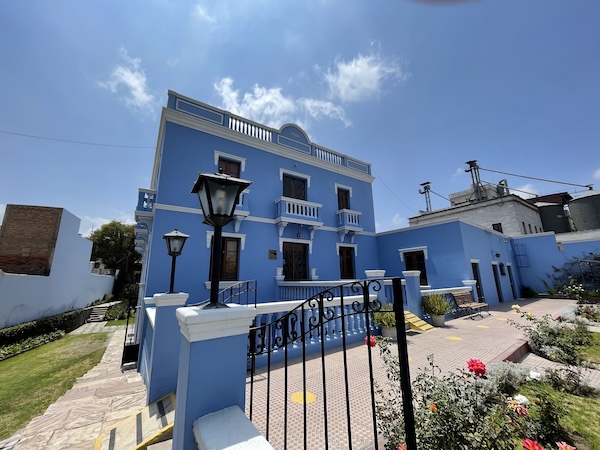
One advantage of visiting a beautiful colonial-era city like Arequipa is the potential to stay in a beautiful colonial-era hotel. While you can find plenty of these on your own, I highly recommend staying at Las Mercedes.
The building is a beautiful blue Spanish Colonial villa that looks like some kind of fancy European country estate. Yet, the prices are reasonable so you don’t need to be an aristocrat to stay here. Plus, the included breakfast was one of the best we had in all of Peru.
On top of all that, the owners and all the staff were absolutely some of the kindest, most welcoming people. The entire city suffered a water outage during our stay, and the staff went above and beyond to make sure we could at least flush our toilets and wash our hands.
Click here to book a stay at Las Mercedes. You won’t regret it.
The best things to do in Arequipa
In addition to the more popular travel activities, you can find all sorts of bars, restaurants, and coffee shops to eat and drink and rest your aching feet. Be sure to ask a local what dishes they recommend. If you’re short on time, the Santa Catalina Monastery and Museo Santuarios Andinos are Arequipa’s two must-see attractions. The rest are just icing on the cake.
Travel back in time at the Monastery of Santa Catalina
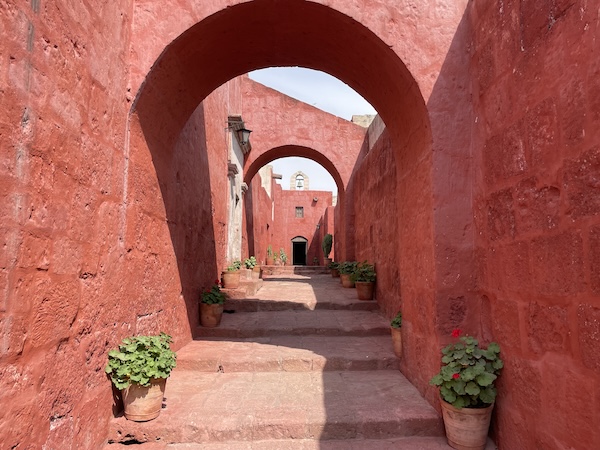
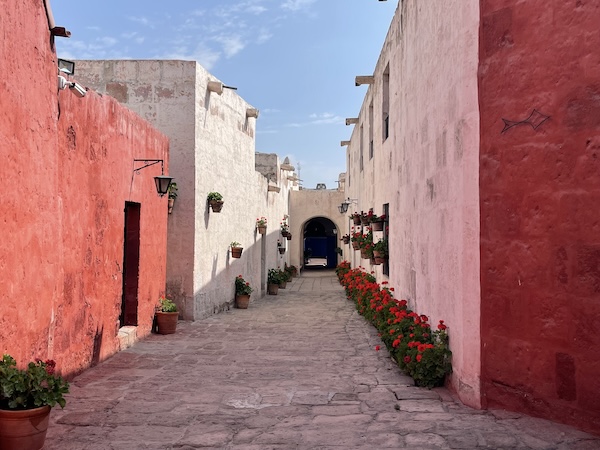
The main must-do, you’ll-regret-it-if-you-miss-it, activity in Arequipa is to visit the Santa Catalina Monastery. While the city itself is full of gorgeous colonial architecture, the Santa Catalina Monastery easily outshines all the other buildings. It might be the most interesting Spanish colonial architecture on the continent.
The monastery complex is a dense maze of colorful old buildings. Since it’s enclosed behind walls, you soon forget about the cars and traffic of the modern city and start to feel like you’ve been transported back to 1579. Santa Catalina is a UNESCO world heritage site, but also still a functioning monastery, so you’ll still see a few nuns going about their business.
Opening hours are Monday to Sunday from 9 am to 5 pm (later Tuesday and Wednesday) and the entrance is 50 soles per adult. The Santa Catalina monastery is located on the helpfully named Santa Catalina street, just two blocks up from the Plaza de Armas.
The official website has more information and also sells tickets online.
Visit the Museo Santuarios Andinos
If you’ve been traveling in Peru for a while, you’ve probably already seen plenty of Inca artifacts in the country’s many museums. Well, get ready for more, because that’s what the Mueseo Santuarios Andinos, or Museum of Andean Sanctuaries, is all about.
This museum, however, has an additional, dark, but fascinating focus: human sacrifice.
Like many pre-modern cultures, the Inca practiced human sacrifice. These rituals usually took place on high mountain peaks, and the victims were usually children who were killed as offerings to the gods.
The Museo Santuarios Andinos is full of information on this practice, including the display of a real-life mummified sacrificial victim: Juanita, the so-called “ice-maiden.”
It isn’t a museum for the faint of heart. They also don’t allow photos. But it is incredibly interesting.
You can visit the Andean Sanctuaries Museum 9 am to 6 pm Monday to Saturday or 9 am to 3 pm on Sundays. Tickets are 25 soles per person plus a tip for your guide. All tours require a guide and are given in English, Spanish, and French.
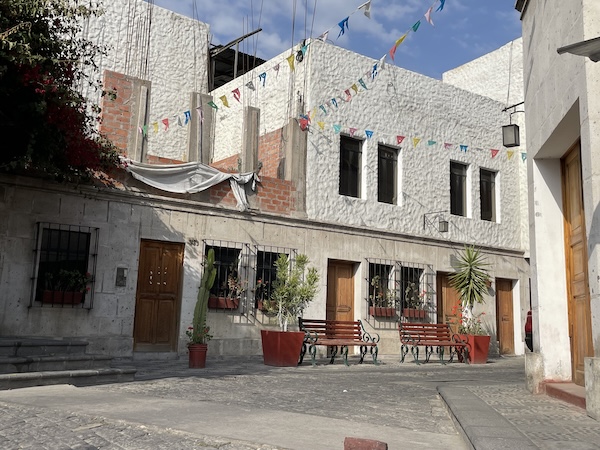
Wander the city center and admire the architecture
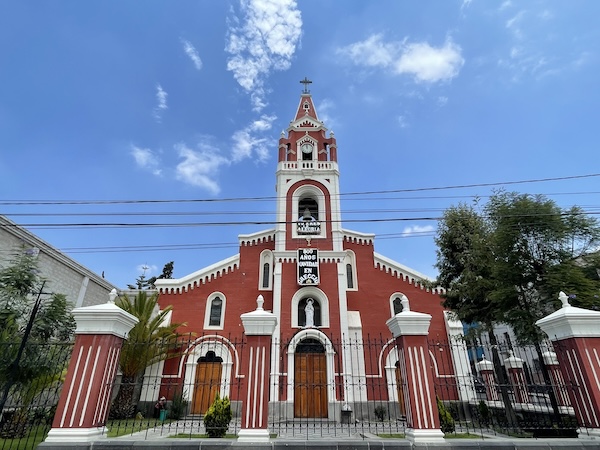
Arequipa’s star attraction is the city itself. One of the best things to do when visiting Arequipa is to put on your walking shoes and pick a direction. You’ll find plenty of magnificent cathedrals, adorable houses, and winding alleyways to explore.
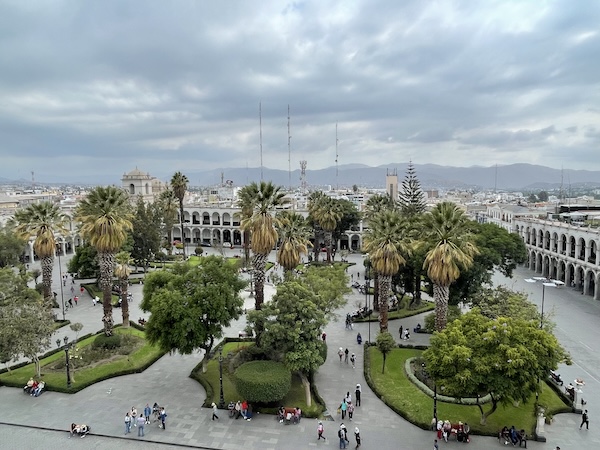
Start by wandering the neighborhoods around the Plaza de Armas. Like most Peruvian cities, this central square is the heart of Arequipa’s old city. The riverside walkway along Avenida La Marina also makes for an interesting stroll. Just beware the drunken North American retirees you may encounter.
In general, though, Arequipa is a very clean, safe, and pleasant place to explore.
Arequipa has enough historic heft that if may be worth booking a tour. You can find walking tour options available in all varieties and budgets.
There are also free, tip based, tours. To be completely honest, I was underwhelmed by our free walking tour in Arequipa, but I suppose you get what you pay for.
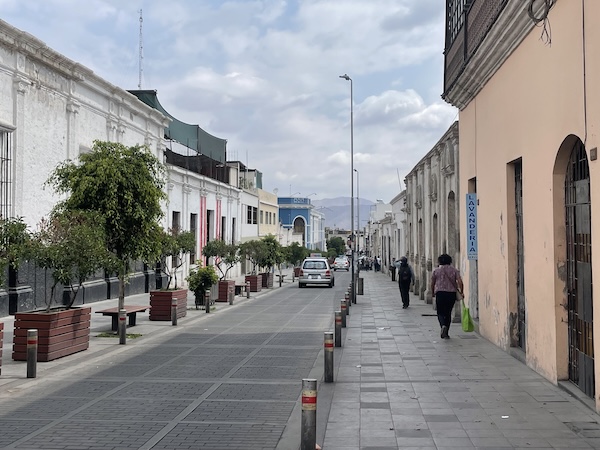
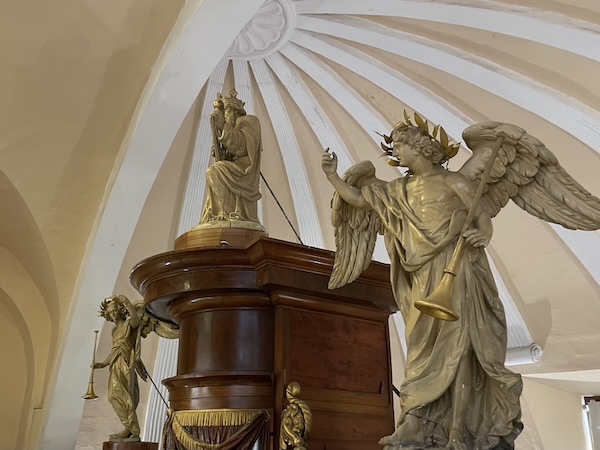
Visit the Cathedral Museum
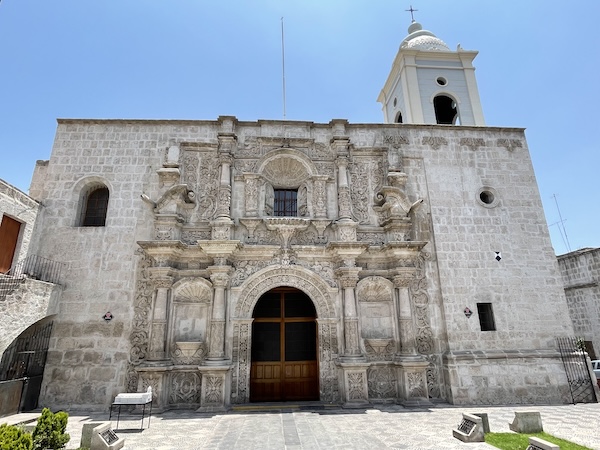
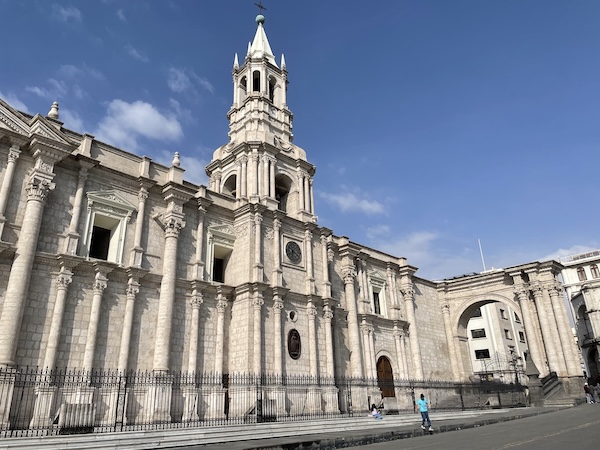
Arequipa’s cathedral is one of Latin America’s most magnificent Spanish colonial cathedrals. From the outside you can admire the mighty bell towers, the intricate carvings on the facade, and the neo-classical columns. Inside you’ll see a gorgeously carved pulpit and a very fancy organ. It’s not as ornate as the baroque churches you might find in Quito, but more subdued and a bit more classy.
The cathedral is free to enter when its open. However, for a mere 10 soles more (plus a tip for your guide) you can explore the Cathedral Museum and climb up onto the roof for views across the city. The museum is small, but has a nice collection of colonial art. The rooftop is where the action is.
The Cathedral Museum is open Monday to Saturday from 10 am to 4:15 pm. Head to the Plaza de Armas and look for the gigantic church.
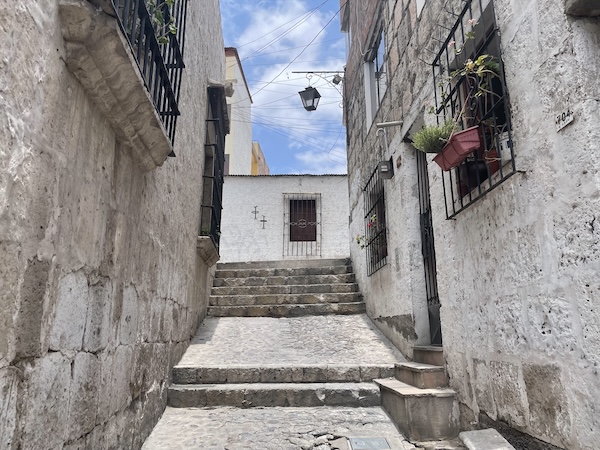
Wander the Yanahuara neighborhood
If you aren’t yet sick of beautiful Spanish colonial architecture, (and how could you ever get sick of beautiful Spanish colonial architecture?), head to the Yanahuara neighborhood. This affluent Arequipa suburb is located on a hillside overlooking the city and is overflowing with beautiful colonial-era stone buildings, parks, and archways. You can also find a lovely mirador (viewpoint), an ornately carved church, and some decent local restaurants.
Yanahuara is about one and a quarter miles (two kilometers ) north west of Arequipa’s city center. You can take a taxi there, but it’s a nice enough walk. Just keep in mind you’ll be going uphill.
Day trips from Arequipa
Arequipa is a nice place to visit, but it can also be a nice place to base yourself for day trips to the surrounding area. The Andes Mountains that rise above the city are full of activities. We did not do any of these activities when we visited, for various reasons which you can read about below.
Colca Canyon
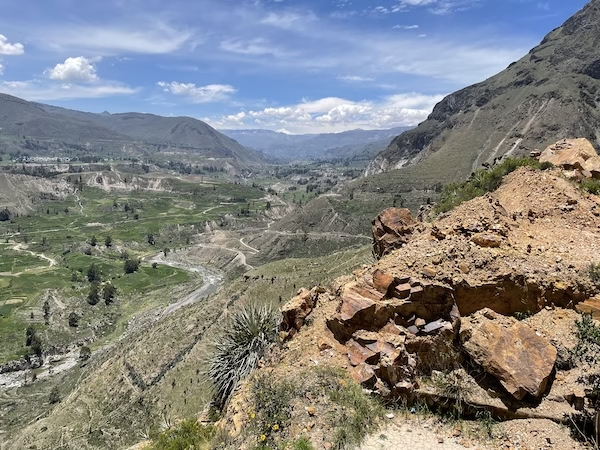
The most popular day trip from Arequipa is probably the tour to the nearby Colca Canyon. Tours generally start at the wee hours (3:30 in the morning) in order to make it to the canyon in time to watch the Andean condors soaring. Other stops might include a visit to a geyser or some hot springs.
However, I am of the opinion that the Colca Canyon is wonderful enough to warrant more than just a whirlwind day tour. Read more details about why this is, and how to visit, in our Colca Canyon travel guide: Yanque and the Colca Canyon: A Guide to Visiting Peru’s Deepest Canyon Independently
Waterfalls, and salt flats, and rafting, and more…
There are also a number of other popular options for day trips from Arequipa. Some of these options seem kind of lame. You don’t need a tour to visit the market. Just find a market and go!
On the other hand, a few of them seem interesting. You can find trips to see stone quarries, waterfalls, salt flats and even white water rafting.
We didn’t do any of these things, either. We spent about four full days in Arequipa, and when we weren’t exploring the city’s museums or architecture, we were stuck in our hotel with food poisoning. While we felt shitty about it (pun intended), after we recovered we didn’t have the energy for rafting or whatever. We were ready to move on to the Colca Canyon.

Final thoughts on Arequipa
No one can argue that Arequipa isn’t a nice city. The buildings and architecture, especially in the city center, are absolutely stunning. I would argue that Arequipa is high in the running for handsomest colonial city in all of Latin America. And it’s a relaxed, easy place to travel, too.
However, if I’m being completely honest, I really liked Arequipa. But it doesn’t quite fill me with those warm, fuzzy, memories I have from some other travel destinations.
That might be because my wife and I spent almost two days stuck in our hotel with food poisoning. Have I mentioned you need to watch what you eat in Peru? Because you really do need to watch what you eat in Peru.
It might also be because the city faced a water shortage while we were there. Sinks, showers and faucets stopped working. The nearby supermarket was sold out of bottled water, except for two jugs of overpriced carbonated mineral water. As I mentioned before, our hotel, Las Mercedes, was super accommodating and did everything they could to ensure we were comfortable as possible.
But even so, it’s no fun brushing your teeth with carbonated bottled water and scooping water from a barrel to flush the toilet. I don’t think water shortages are a regular occurrence in Arequipa, but climate change is messing with everything these days so who knows?
So, while I liked Arequipa, I don’t know if the circumstances of our visit let me give it the fair chance it deserves. When you visit Arequipa, though, I hope your stomach and the city’s water supply cooperate for you more than they did for me.
Explore more of Peru, check out our travel guide here: Peru Travel Guide: Beyond Machu Picchu
Useful Websites for Traveling Peru
As much as we might long for the days when you could show up to a town with nothing more than a beat-up guidebook and a sense of adventure, today much of traveling involves being glued to our phones making bookings. I’ve compiled some helpful apps and websites below that at least help make those bookings more convenient so you can spend less time staring at your phone and more time exploring at your surroundings. Some of these sites are affiliate links that give me a small commission at no cost to you if you chose to book through them. All of them are sites I’ve used personally and have no problem recommending.
Just be sure to do your due diligence as much as possible. Only hire local guides and try as much as possible to stay in locally owned hotels and hostels so that your hard earned travel dollars actually go to support the local economies of the places you visit.
Booking.com is basically the world’s only hotel booking website. They have hotels, guesthouses and vacation rentals all over Peru.
Hostelworld is the go-to site for booking hostels. If dorm rooms and shared bathrooms are your thing, you’ll find hostels throughout Peru.
Get Your Guide offers tours and activities all around the world. Unlike some other sites and apps that do the same thing, you can actually find some reasonably priced deals here.
Cabify is the best way to book a taxi in Peru’s major cities. It works like Uber, but you get connected to a licensed, authorized, taxi instead of just some random weirdo.
RedBus is the place to book long-distance buses in Peru. You can get your tickets and browse schedules ahead of time, and alleviate the stress of not knowing whether the bus you want will be sold out before you get to the station.
Travel insurance can turn a potential trip-ruining disaster into a mere inconvenience. We used SafetyWing for travel insurance during our South America trip and had a great experience. We’ve also used used World Nomads and found them easy to use and set up. If you do decide to get travel insurance, I suggest comparing both options and seeing what works for you.
We receive a fee when you get a quote from World Nomads using this link. We do not represent World Nomads. This is not a recommendation to buy travel insurance. The same applies to SafetyWing.