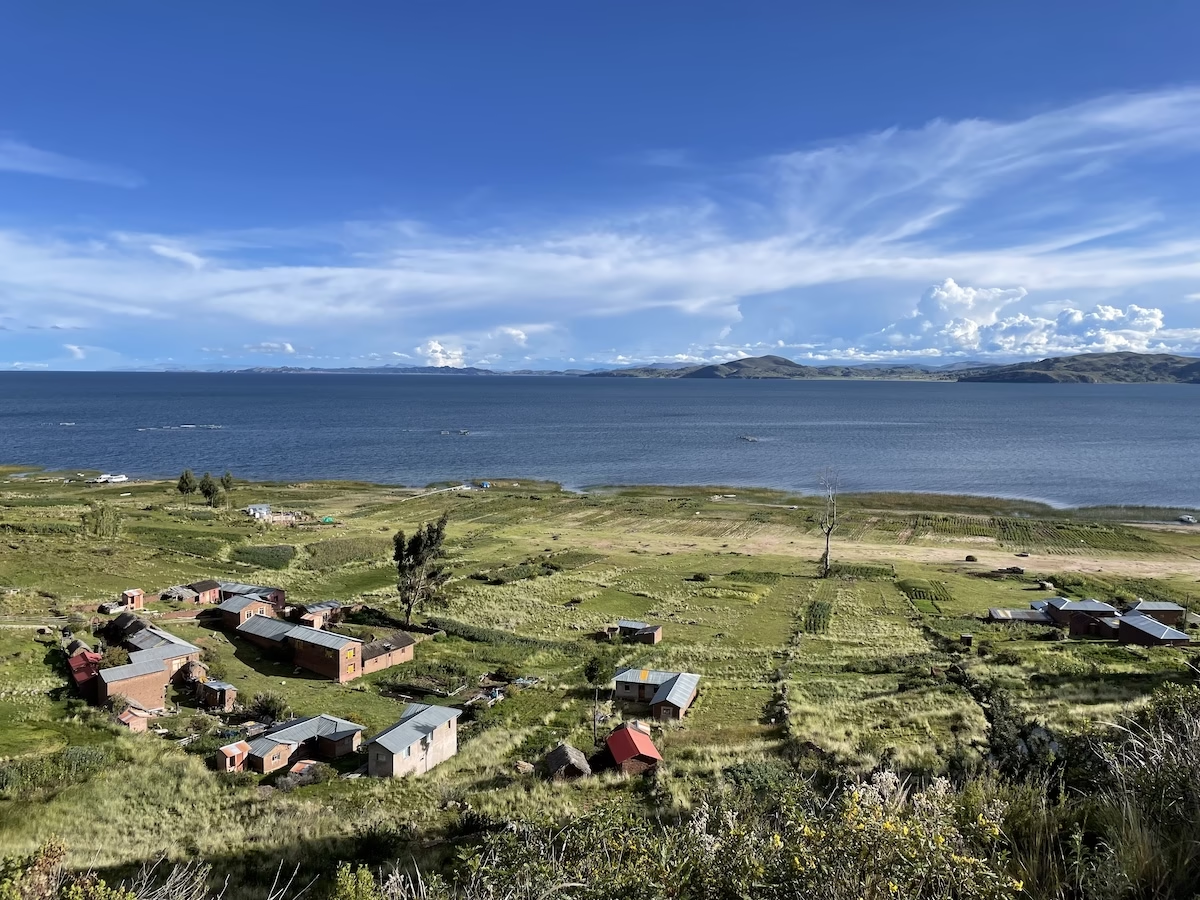
It can be a little cliche to call a place a “hidden gem.” But sometimes while traveling, you manage to escape the standard tourist trail and discover a part of the world that’s so amazing it seems to shine in your memory for years afterwards. Llachón and the Capachica Peninsula on the sparkling azure shores of Lake Titicaca was just such a place.
I discovered Llachón in the pages of an outdated travel guidebook to Peru. I’m really glad I did, because I’m only slightly exaggerating when I say my experience in Llachón bordered on life-changing.
* This post contains affiliate links. If you book something using one of these links, I’ll get a small commission at no cost to you. It’s a great way to support your favorite independent travel blogs!*
What is Llachón?
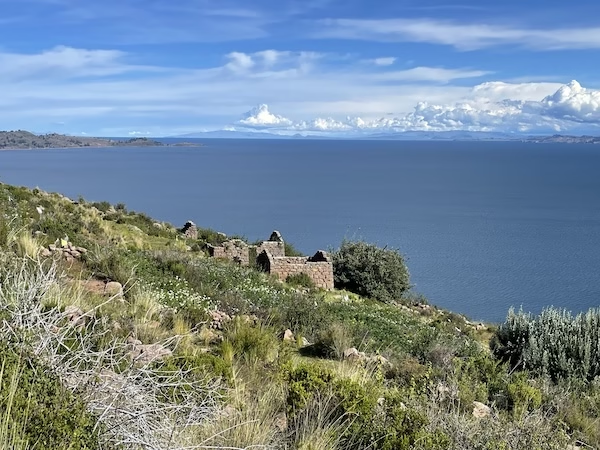
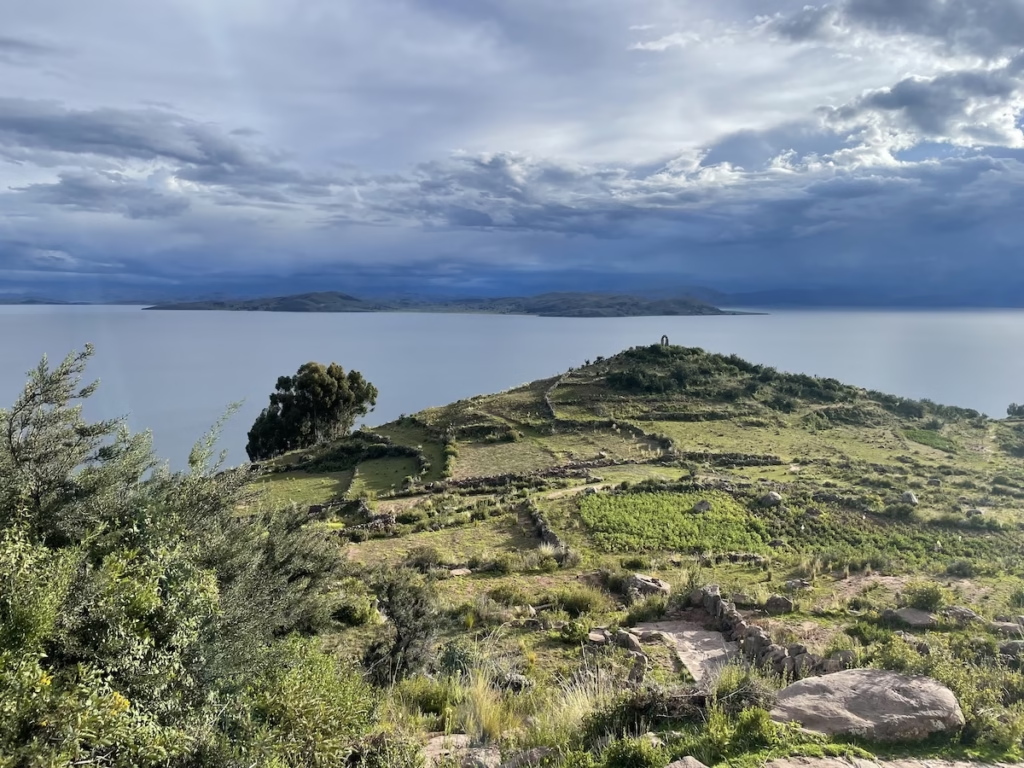
Llachón is the name of a small, mostly Quechua speaking, village on the Capachica Peninsula in Lake Titicaca. The inhabitants have, in recent years, started up home-stays and guesthouses in order to attract tourists seeking out a more authentic and relaxed Lake Titicaca experience. It’s a beautiful place of hills, farms, and even a few small Inca ruins.
Travel tips for visiting Llachón
Weather and when to visit
Llachón’s weather is similar to the rest of Lake Titicaca. Daytime highs range from 59°F to 68°F (15°C to 20°C) and nighttime lows drop down to 32°F to 41°F (0°C to 5°C). The year is divided into the dry season, from April to November, and the rainy season which is from December to March.
The wind blows down from the mountains and over the lake, making Llachón feel a bit colder than other parts of the lake. Lodging is also a bit more rustic, and may not have the best central heating. Pack warm clothes and dress in layers.
Unlike the rest of Peru (and nearby Puno) there isn’t really a high tourist season. Llachón remains underrated and refreshingly lightly touristed. There also isn’t really a bad time to go. You’ll have more sunshine during the dry season, but the rainy season can be good as well. Just make sure to pack raincoats, waterproof shoes, and be prepared for the occasional storm.
Altitude and altitude sickness
Llachón is very high, resting at a mighty altitude of 3,820 meters (12,532 feet) above sea level. That’s significantly higher than even Cusco. You will almost definitely feel at least some symptoms of altitude sickness in Llachón.
If your symptoms get severe, the only option is to head to lower elevation. However, in milder cases, your body will adjust to the altitude after a few days. The best option is to ascend slowly. Visit the Sacred Valley or even Cusco before heading up to Lake Titicaca. And no matter what, give yourself at least a full day to get used to the altitude.
You can also get medicine from a travel clinic back home before your trip. Medications might have side effects, though, so be sure to check with a doctor.
The best solution, in my opinion, is to do as the locals do and make use of the coca leaf. You can brew some coca tea, or chew on a wad of leaves. It really does wonders at alleviating symptoms of altitude sickness. While coca leaves are used to make cocaine, the leaf itself is an herbal medicine that’s been used by Andean peoples for thousands of years.
Altitude sickness isn’t the only health hazard around Lake Titicaca. The region also sees strong solar radiation. It’s very important to use sunscreen and keep yourself covered. Wear a wide-brimmed hat and long sleeves. Cover up even if you have dark skin or if it’s cloudy.
Respect the local Quechua community
The people of Llachón, as well as other native groups around Lake Titicaca, have been gracious enough to welcome us tourists into their town and sometimes their homes. The very least we can do in return is to treat them respectfully.
That means things like not nickel-and-diming when negotiating prices for things. It also means not making fun of the name of the lake.
Most importantly, it means don’t take pictures of anyone without their permission. You will see people dressed in colorful, traditional clothing. Including some very cool hats. However, the people are not wearing these clothes to be props in your Instagram feed. That’s just how they dress. It’s very rude to take photos of someone without asking first.
You can say a simple “puedo tomar una foto?” or even just mime picture taking. Accept whatever response someone gives you.
How to get to Llachón
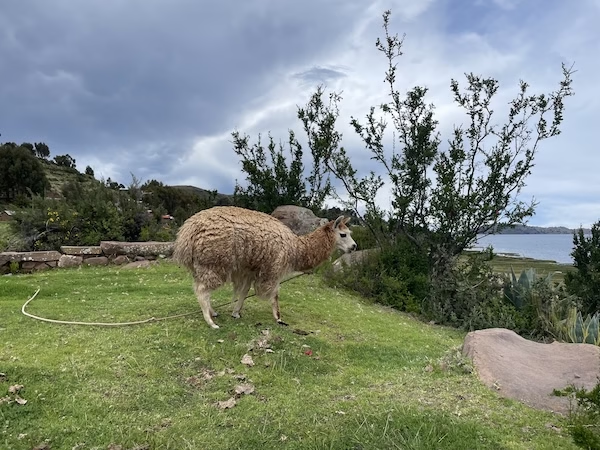
Llachón is located about 75 kilometers (about 47 miles) from the city of Puno. You could hire a taxi or take a tour, but it’s best to use local transportation. Peru has a wonderful network of “colectivos” also called “combis” which are passenger vans that leave when full. They are a cheap, if not very fast, method of transportation. They’re also a great way to travel like a local.
To reach Llachón, you’ll first have to find the colectivo to Capachica. These leave from Jirón Lampa and Jirón Ferrocarril in central Puno. Colectivos don’t leave until they’re full, so you may have to wait a bit. The drive takes about an hour and a half.
If, for whatever reason, you’re in Juliaca and not Puno, you can find buses leaving for Capachica from the central terminal.
Once you arrive in Capachica, you’ll need to look for another colectivo heading to Llachón. These leave from the eastern edge of town, just south of the Mercado Dominical Capachica. Tell the driver the name of your accommodation and he might be able to drop you off right at the gate. If you can’t find the colectivos, you’ll have to arrange a taxi.
If you’re short on time, or craving more hustle and bustle, Puno is also not a bad place to stay. Read our guide here: Puno: Peru’s Touristy Gateway to Lake Titicaca
What to do in Llachón
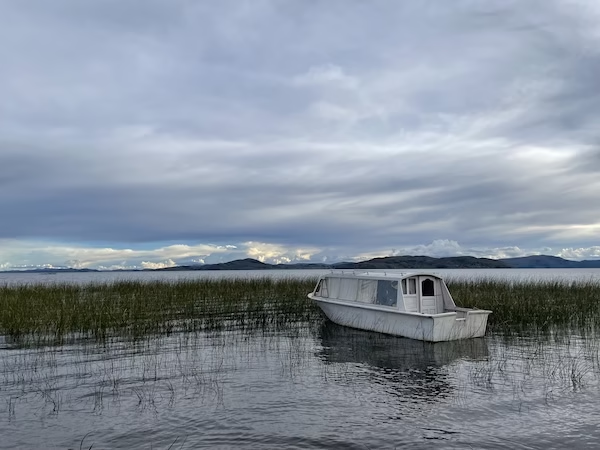
If you’re considering a visit to Llachón, don’t expect a ton of things to do. You won’t find things like zip-lines or ATV tours here. It’s less of a place for doing, and more a place for just being. Half the charm of traveling to Llachón is just hanging out and staring off at the blue waters of Lake Titicaca.
Explore Llachón’s ancient hiking trails
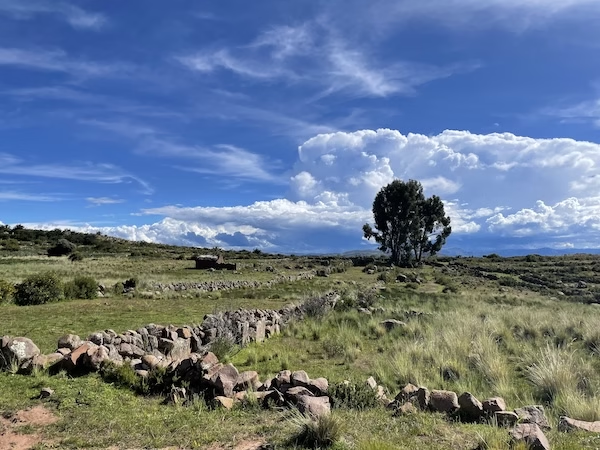
One thing Llachón and its surroundings do have plenty of is a network of winding, ancient trails and somnolent dirt roads to wander. Narrow paths climb up from the lakeshore, past adobe homes and farm plots and up into the surrounding, rugged hills. Some of these trails pass by terraced fields and the remains of ancient stone structures built by the Inca. Some simply offer up beautiful views.
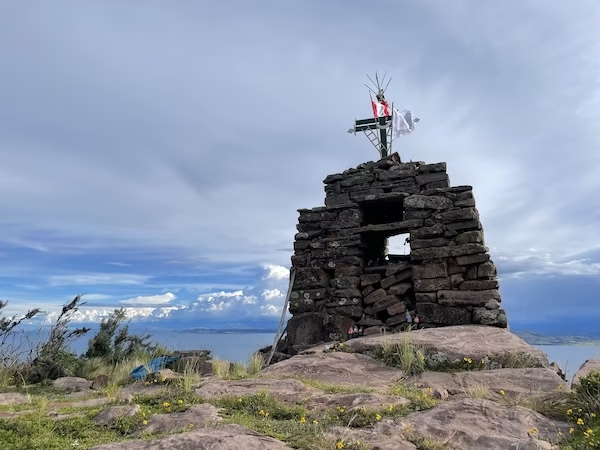
My favorite was the hike to the Llachón Mirador. The trail meanders through some really marvelous viewpoints, leading up to a scenic area complete with a cell tower, an ancient Inca warehouse and a shrine that’s still in use today. Google maps lists the end point as “Carus” for some reason, but any local can point you in the right direction. The trail isn’t difficult, but the endpoint is a whopping 4,100 meters (13,451 feet) above sea level.
You can find plenty of other trails around Llachón, though. The area is safe enough that you can have a lot of fun just picking a random direction and walking.
Visit the village of Llachón
Chances are your accommodation is going to be located somewhat outside of the village. Most of the home-stays and guesthouses are in farms scattered on the hillside leading down towards the lake. That makes the village of Llachón a nice walking destination while you’re in the area.
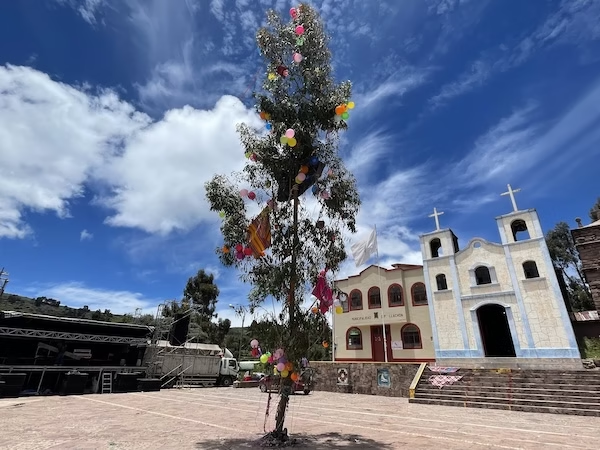
Llachón is a cute little town, but don’t expect magnificent colonial buildings or anything like that. There are a few shops, but I didn’t find any restaurants or bars or coffee shops. It’s a village by and for the local people. And it felt quite refreshing to be in a place that wasn’t yet overwhelmed by global tourism markets or hordes of digital nomads and influencers.
Llachón is the perfect place to get a glimpse of what life is like for everyday Quechua speaking Peruvians on the shores of Lake Titicaca.
Go to the beach and relax by the lake
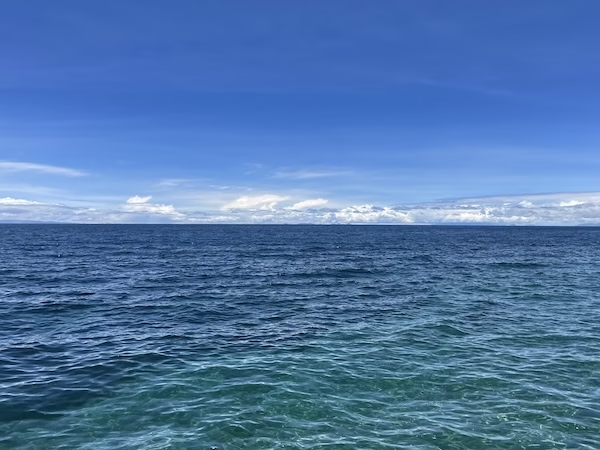
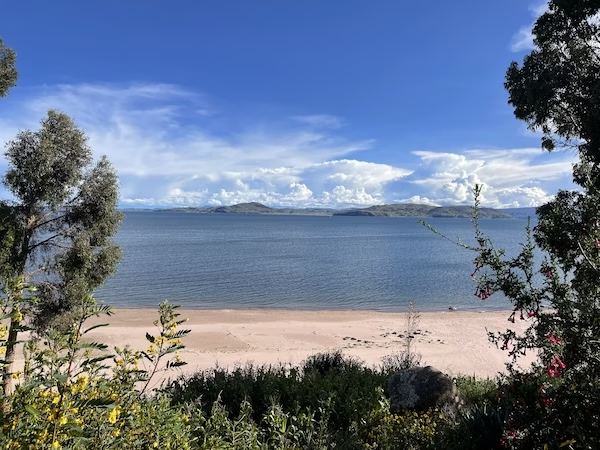
The waters of Lake Titicaca along the shores of the Capachica Peninsula near Llachón look blue and inviting. However, don’t come expecting a beach vacation. The weather is just too dang cold for swimming or sunbathing.
I did meet a French man who took a dip. He said it was too cold.
However, the lakeshore is very nice. There’s a sandy beach down the hill from Llachón village, and its a nice place to go for a stroll and admire the magical beauty of South America’s largest lake.
Visit the islands of Uros or Taquile
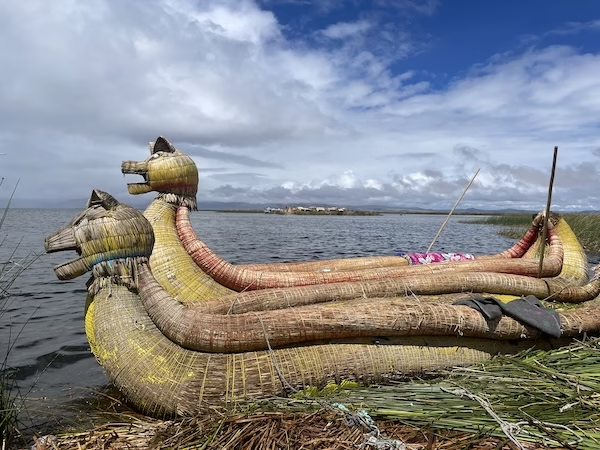
You can also use Llachón as a base for visiting the famous floating reed Uros islands or the majestic island of Taquile. Island visits from Llachón are a more relaxed, private sort of adventure rather than the packed day tours that scurry out from Puno.
We had already visited the islands on one of those jam packed day tours from Puno, so we didn’t go again while we were in Llachón. However, some of the people staying at our accommodation did go and they said it was wonderful.
You’ll have to arrange such a tour with your host in Llachón. Price and availability varies depending on local conditions and who in the village has a boat available that day.
Where to stay in Llachón
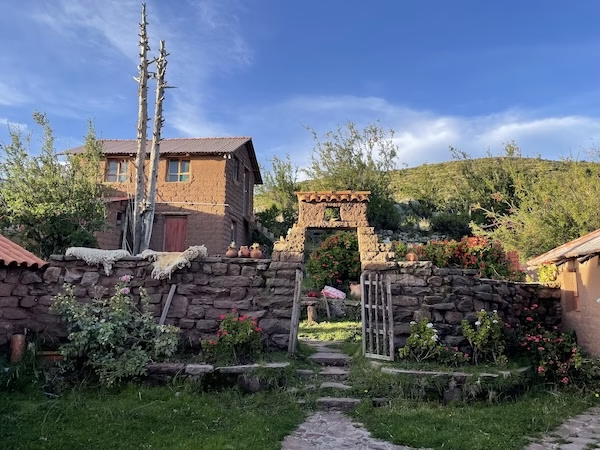
Llachón is home to a number of lovely accommodations. Almost all of them are locally owned, and are basically converted farmhouses or just extra cabins built on someone’s field.
We stayed at “Casa de Valentin” and had a fantastic time. It’s run by a local family who built a few cabins on their farm. It was located right on the lakeshore, with a private dock where you could sit and watch the sunset. They provided meals made from fresh, local, ingredients, too.
The one downside was that the rooms were a little cold. But this is life on the shores of Lake Titicaca. If you want four star luxury, or a reliable furnace, Llachón probably isn’t the place for you.
However, if you have an adventurous spirit and are ready to visit Llachón, then don’t hesitate to book at least a few nights at “Casa de Valentin”. You won’t regret it.
Our experience in Llachón
I’d read about Llachón, or the Capachica Peninsula rather, in an outdated Lonely Planet guidebook from like ten years ago. The idea of spending a few days on an isolated, rural, peninsula on Lake Titicaca seemed like it would be fun.
It was fun. But it was also more than that. Every once in a while you travel somewhere that feels almost transcendent. Like you’re experiencing a place that touches you deeper than you can really express. Llachón was a place like that, for me. Standing on the shores of the Capachica Peninsula, staring out at the lake, it seems obvious why the Inca believed their creator god emerged from the depths of Titicaca.
So we took the colectivo from Puno, hopping off at the gates of Casa de Valentin. We had dinner and walked down to the lakeshore to watch the sunset. The faint thumping of music came from the village up the hill. We went to bed in our wool hats and puffy winter jackets because it was damn cold. But it was beautiful.
It turns out the village was having a festival, something related to Carnival and the Candelaria Festival in Puno. Tons of people gathered around the town square, dancing, drinking, partying. Four different bands played in each corner of the square. Each band played completely different, often competing, songs. Standing in the center of the square felt disorienting as my brain tried to reconcile the conflicting melodies and rhythms coming at me from all directions.
Llachón rock and roll
We stood for a while and watched the band in the southeastern corner. The singer was a young woman dressed in the flowing skirt and broad-brimmed hat typical of indigenous Andean cultures. She sang with passion and intensity, so much so that soon the singing turned to screaming. Screaming which wouldn’t have sounded out of place in a punk or riot grrrl band.
The band’s saxophonist had to bow out after a few songs. He sat at the edge of the square, head lolling against his chest, saxophone somehow balancing on his knee. One cerveza too many, I suppose. This was truly Quechua rock and roll.
I didn’t take any photos of the festival. I wanted too, but something just didn’t feel appropriate. The villagers of Llachón weren’t dancing and playing music for me. They were doing it for themselves, and me shoving my camera (or cellphone) in their faces felt like it would cheapen the whole thing.
Instead, we parked ourselves on the steps of the church and watched.
The next day we hiked up to the Llachón Mirador. It was an exhausting hike, to say the least. Doing anything at 4,000 meters (13,123 feet) above sea level is exhausting. But it was a rewarding hike, and we spent time standing near the shrine at the end of the trail looking out over the lake at the snowcapped Andes on the horizon.
We took another hike the following day, wandering up a hill and stumbling over some Inca walls and terraced farms. I got lost, which is a big deal for me because I almost never get lost. But those trails can be confusing. Luckily, Lake Titicaca is a pretty big landmark, and we headed downhill towards the water and made it back safe.
None of these experiences might seem particularly exciting on their own. Except for maybe watching the riot grrl Quechua singer. But Llachón isn’t an exciting place. It’s appeal lies in slowing down and appreciating the magical beauty of Lake Titicaca. Interacting with local people who’ve maintained their ancient culture against all odds. Visiting somewhere that hasn’t been spoiled by over-tourism and over-commercialization.
Llachón was all that and more. Sometimes it’s worth it to dust off that old edition of the guidebook.
Explore more of Peru’s hidden gems and tourist traps with our travel guide: Peru Travel Guide: Beyond Machu Picchu
Useful Websites for Traveling Peru
As much as we might long for the days when you could show up to a town with nothing more than a beat-up guidebook and a sense of adventure, today much of traveling involves being glued to our phones making bookings. I’ve compiled some helpful apps and websites below that at least help make those bookings more convenient so you can spend less time staring at your phone and more time exploring at your surroundings. Some of these sites are affiliate links that give me a small commission at no cost to you if you chose to book through them. All of them are sites I’ve used personally and have no problem recommending.
Just be sure to do your due diligence as much as possible. Only hire local guides and try as much as possible to stay in locally owned hotels and hostels so that your hard earned travel dollars actually go to support the local economies of the places you visit.
Booking.com is basically the world’s only hotel booking website. They have hotels, guesthouses and vacation rentals all over Peru.
Hostelworld is the go-to site for booking hostels. If dorm rooms and shared bathrooms are your thing, you’ll find hostels throughout Peru.
Get Your Guide offers tours and activities all around the world. Unlike some other sites and apps that do the same thing, you can actually find some reasonably priced deals here.
Cabify is the best way to book a taxi in Peru’s major cities. It works like Uber, but you get connected to a licensed, authorized, taxi instead of just some random weirdo.
RedBus is the place to book long-distance buses in Peru. You can get your tickets and browse schedules ahead of time, and alleviate the stress of not knowing whether the bus you want will be sold out before you get to the station.
Travel insurance can turn a potential trip-ruining disaster into a mere inconvenience. We used SafetyWing for travel insurance during our South America trip and had a great experience. We’ve also used used World Nomads and found them easy to use and set up. If you do decide to get travel insurance, I suggest comparing both options and seeing what works for you.
We receive a fee when you get a quote from World Nomads using this link. We do not represent World Nomads. This is not a recommendation to buy travel insurance. The same applies to SafetyWing.