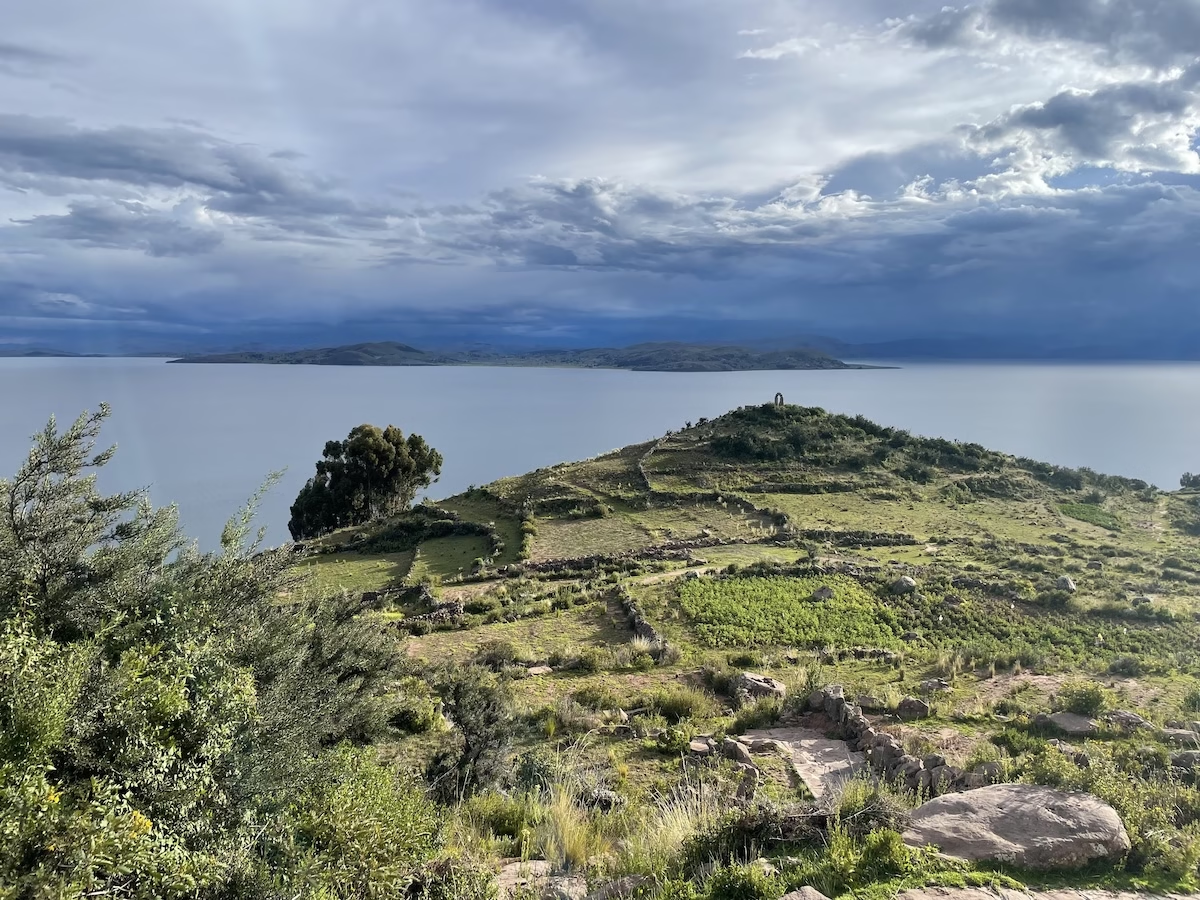
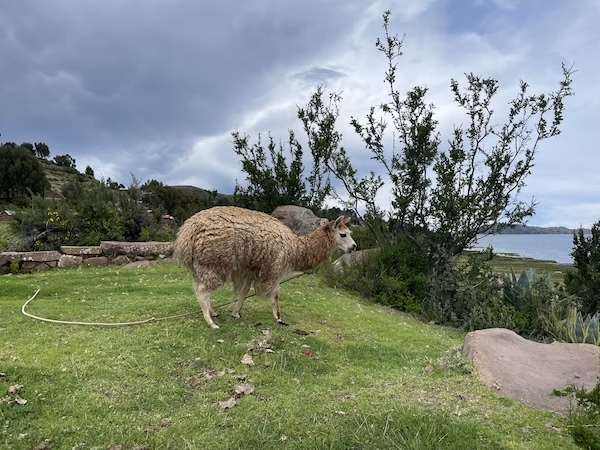
Bright blue waves splash gently against the shore as a chill wind blows down from the peaks of distant snow-capped mountains. The tall grass rustles as a fluffy alpaca grazes in front of the crumbling stones of an ancient Inca wall. Meanwhile, a Quechua speaking woman in a traditional dress gathers up potatoes from the most recent harvest. A trip to Lake Titicaca is filled with all these scenes and more. This Lake Titicaca travel guide will help you discover one of South America’s most fascinating areas, both touristy and off-the-beaten path.
As a side note to those interested in the Bolivian side of Lake Titicaca: we only visited the Peruvian side, since an attempted coup hindered our plans to travel to Bolivia. Because of that, this guide will only cover the Peruvian side of Lake Titicaca.
This post contains affiliate links. If you book something using one of these links, I’ll get a small commission at no cost to you. It’s a great way to support your favorite independent travel blogs!
What is Lake Titicaca and why is it special?
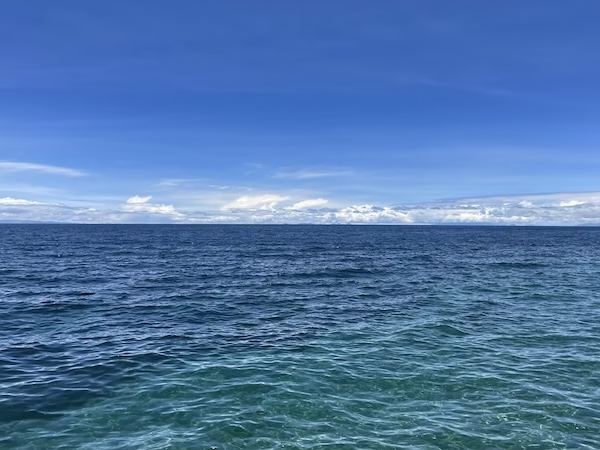
Titicaca is a large lake in the Andes Mountains that sits on the border of Peru and Bolivia. It’s the largest lake in South America, and the 18th largest in the entire world. It’s also famous for being the world’s highest navigable lake, with an elevation of a whopping 3,812 m (12,507 ft).
The lake is sacred to numerous indigenous groups, including the Aymara and Quechua. The Inca believed that the creator god, Viracocha, rose from the depths of the lake to create the sun, moon, and humanity. Later on, the sun god, Inti, sent his children Manco Capac and Mama Ocllo from Lake Titicaca to found the city of Cusco. The Inca left offerings in the lake, and divers have dredged up all sorts of artifacts on the lake’s bottom.
The name, Lake Titicaca, might draw some immature laughter from us English speakers. However, the name comes from the Aymara “titiq’aq’a”, which sounds more like “tee tee kha kha” when pronounced properly. It roughly translates to “grey puma” and is a reference to a grey, puma-shaped stone on one of the islands.
Indigenous culture is still strong along the shores, and on the waters, of Lake Titicaca. You’ll find an incredible amount of cultural diversity among the lake’s communities to this day. Aside from its historical, geographical, and cultural significance, the lake is also just plain beautiful.
Lake Titicaca top travel tips
- Take the altitude seriously. 3,812 meters (or 12,507 feet) above sea level is pretty extreme. At these heights, the air becomes incredibly thin and it can be hard to breathe. Don’t push things, because altitude sickness can become quite serious. This guide has a whole section on altitude sickness below.
- Use sun protection. Aside from the thinner air, the high altitude also means stronger sun and more UV radiation. Make sure to liberally apply sunscreen, and wear a hat and long sleeves to protect your skin. This is important even if you have dark skin and even on cloudy days.
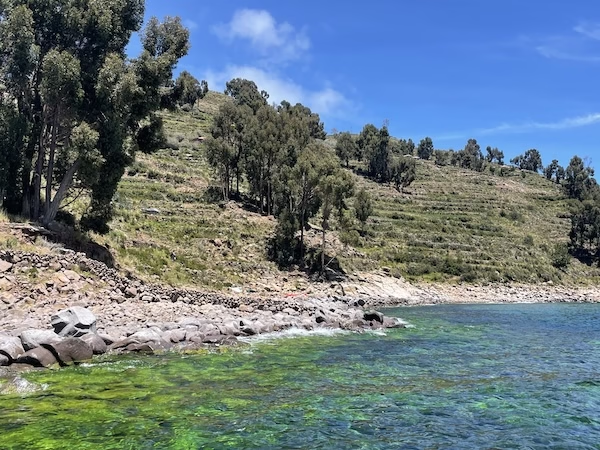
- Lake Titicaca is cold. Be sure to pack warm clothing, because the lake can get quite chilly to say the least. Especially when the wind picks up over the water. Knitted hats, fleece, gloves, and jackets will all help make your visit much more comfortable.
- Don’t take photos of people without their permission. Lake Titicaca is populated by native Andean people who often wear traditional Andean clothing. This clothing is beautiful, but most of the time, the people wearing it are just going about their business and not trying to be on your Instagram feed. Always ask for permission before photographing someone, and respect their answer even if they ask for money or say “no.” Obviously, this doesn’t apply when people are performing as part of a tourist show, but it’s an important part of showing respect to the locals at all other times.
- Don’t make fun of the name. Yes, I know that to us English speakers “Titicaca” sounds like “titty” and “caca” and it’s kind of funny. However, I guarantee you that it doesn’t sound like that to the people who live around the lake, and they really don’t need you to be the hundredth tourist to point that out to them. Save your giggles for when you come back home, and treat the lake with respect while you’re there.
Dealing with altitude sickness
Walking around Lake Titicaca, you may find yourself suddenly short of breath. You may struggle on short hikes that would have normally be a breeze back home, or have trouble sleeping. You may even feel a little dizzy, lightheaded, or even sort of drunk. All of these could be because of the altitude.
As I mentioned before, Lake Titicaca has a surface elevation of 12,507 feet (3,812 meters). That’s the surface of the lake. The land around the lake is even higher. According to the Cleveland clinic, “Almost everyone who ascends quickly to 11,000 feet (3,352 meters) will develop AMS.” (AMS = Acute Mountain Sickness, the mildest form of altitude sickness.)
Thankfully, there are a few tricks to help deal with the altitude. The first, and most helpful tip is to take your time ascending. If you can help it, don’t ascend more than 500 meters or 1,640 feet, per day. Instead of flying directly to Lake Titicaca, plan your trip so that you can start somewhere like the Sacred Valley, or Cusco, or even Arequipa before heading higher. And spend your first few days resting in order to let your body get used to the thinner air.
Secondly, you can take medication to help you with altitude sickness. A travel clinic can prescribe pills that will help your body to adjust. Of course, these pills can have side effects. Be sure to discuss things thoroughly with a doctor ahead of time.
The final tip is to do as the natives do and make use of the magical coca leaf. Yes, this is the same coca leaf that is used to make cocaine. However, in its unprocessed form, coca is a medicinal herb that’s been used by the people of the Andes for centuries. You can drink it as a tea or chew on the leaves and let them rest in your cheek. Coca leaves are readily available throughout Peru and other Andean countries.
Just don’t forget to get rid of whatever’s left in your bag before you return home. (Unless you want to attract the attention of drug-sniffing dogs at the airport!)
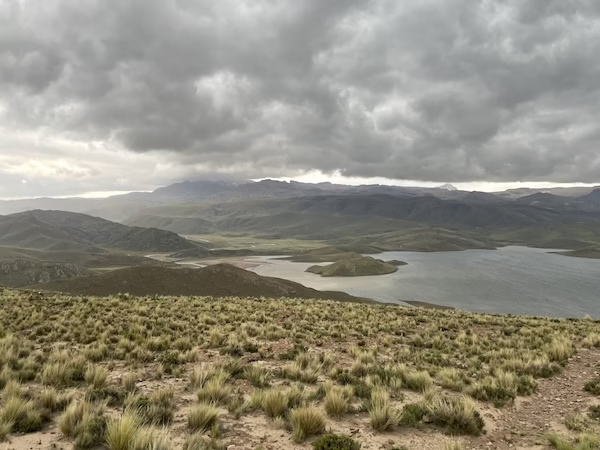
Weather and the best time to visit Lake Titicaca
The high altitude also effects Lake Titicaca’s weather. Temperatures are generally stable throughout the year, with daytime highs ranging from 59°F to 68°F (15°C to 20°C) and nighttime lows dropping all the way down to near freezing, 32°F to 41°F (0°C to 5°C). Bring warm clothes and dress in layers!
Like much of the tropics, the year in Lake Titicaca is divided into a dry and rainy season. The dry season runs from April to November, with sunny days and clear skies. Rainy season lasts from December through March, bringing clouds and rain. The dry season also coincides with the peak tourist season of June, July, and August. January and February tend to have the most rain and the fewest tourists.
My wife and I visited Lake Titicaca in February and had a fantastic time. Yes, we had to deal with a few showers (and one thunderstorm). Aside from the thunderstorm, it was nothing a good raincoat and some water-proof hiking boots couldn’t handle. However, I have heard that heavy rains can delay boat schedules. If you do travel in the rainy season, be prepared for possible delays and have some flexibility.
February is also the time for the Virgin de Candelaria festival, one of Peru’s most famous festivals. Parades, music, and traditional native dancing fill the streets of Puno during the festival. Unfortunately, we literally showed up in Puno the day after the festival ended. Dates change year by year, but the Virgin de Candelaria festival happens in early February. You’ll want to book accommodation and transportation in advance if you come at this time.
Transportation to Lake Titicaca
The city of Puno is Lake Titicaca’s main transportation hub on the Peruvian side. The closest airport is in the nearby city of Juliaca, about 27 miles (44 km) away. Flights leave regularly from Lima and Cusco. You can take the airport shuttle to Puno for 158 Peruvian Soles (about $46). The trip takes about an hour and a half. You could also taxi.
Having said that, flying directly is probably not the best way to get to Lake Titicaca, unless you’re in a big rush. Flying is expensive, bad for the environment, and bad for adjusting to the altitude (if you’re coming from Lima.) It’s almost always a better deal to take the bus.
Local buses in Peru are safe, cheap, and reasonably easy to use. You can book tickets online using the RedBus app or website or buy them directly at bus terminals.
How to get to Lake Titicaca from Cusco
Buses leave regularly from Cusco’s main bus terminal, the Terminal Terrestre de Cusco, located just a bit south and east of the town center. They will bring you directly to Puno’s Terminal Terrestre, which is located just off the lakeshore. The bus journey takes about 7 hours and should cost between 50 to 100 soles (~ $15 to $30). Generally speaking, the more expensive the bus, the more comfortable it is.
If you want a more touristy option, you can take the “Ruta del Sol” on the Inka Express bus. The trip costs $50 and includes lunch as well as stops at five different, lesser known, sites. Some were Inca ruins, some viewpoints, some just pretty mountain villages. The buses run regularly between Puno and Cusco.
The final, and most touristy, option is to take the train. PeruRail operates a luxury tourist train that goes from Cusco to Puno in about 10 hours. I like trains, and I actually really wanted to do this, but then I found out it costs like $350. As much as I’m in favor of spending cash on worthwhile experiences, I’m not made out of money. If you are, in fact, actually made of money, feel free to check out PeruRail’s website for more information.
Heading on to Cusco? Cusco Travel Guide: Untangling the Knot of Peru’s Tourism Capital
How to get to Lake Titicaca from Arequipa
Coming from the other direction, it’s also easy to visit Lake Titicaca from the “White City” of Arequipa. Buses heading to Puno from Arequipa’s main terminal take only about 6 hours, and cost between 30 to 60 soles ($9 to $18). Be sure to remember that Arequipa has two bus stations, the Terminal Terrestre and the fantastically named Terrapuerto Internacional. Double check which one your bus leaves from.
There aren’t any dedicated tourist buses running between Arequipa and Puno, but there is a luxury train. And by “luxury” I mean “way too expensive for any reasonable person.” If you have thousands of dollars to spend on a train ride, why not consider donating some to a poor, struggling, travel blogger?
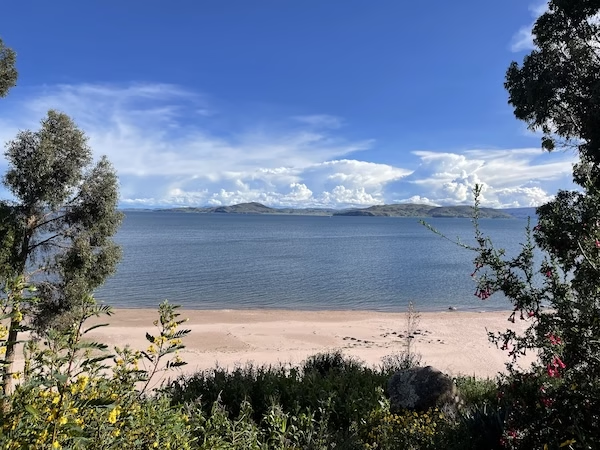
Onward travel to Bolivia from the Peruvian side of Lake Titicaca
While we didn’t end up visiting Bolivia on our trip, Lake Titicaca is a common border crossing for travelers heading to Bolivia from Peru. Buses run from Puno in Peru to the lakeside town of Copacabana in Bolivia and take about three or four hours. You can also go directly to La Paz in about eight hours.
That is all second-hand information, though. We were all ready to cross the border, but then an attempted coup erupted and we decided maybe it wasn’t time to visit Bolivia. Some day. For now, let me direct you to this website if you want more information on navigating the Lake Titicaca border crossing.
Puno vs Llachón, which is better
Most travelers to the Peruvian side of Lake Titicaca stick around the city of Puno. Puno is nice enough, but the lake is home to numerous other options that offer a much more authentic, interesting experience. One such option is the tiny village of Llachón. Both Llachón and Puno have their advantages and disadvantages.
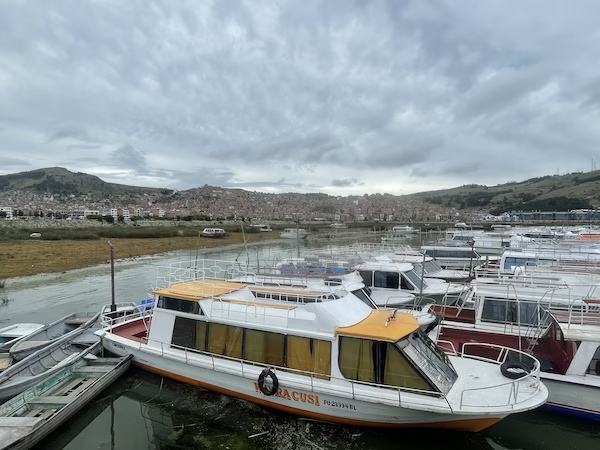
Puno is a bustling lakeside city. It’s loud, and parts can be quite touristy. A lot of travelers seem to hate on Puno, but I actually found it charming in its own way. However, it’s more of a place for organizing day trips rather than being enjoyable as a destination in its own right. On the other hand, it’s easy to get to and has lots of options for lodging and restaurants.
Llachón is a village on the Capachica Peninsula. It’s an enchanting, agricultural, place populated by Quechua speaking locals. Some of those locals have built extra rooms or cabins on their farms for tourists as a way of bringing in some extra money. They aren’t quite home stays, but they are way more authentic than the hotels in Puno. The only catch: Llachón is kind of a pain to get to, and there are no restaurants or shops to speak of. You’ll be eating at your accommodation.
While I liked Puno just fine, I felt that Llachón was one of those really life-changing destinations. The warmth of our hosts, the beauty of the surroundings, the chance to witness a side of local life that most tourists never see. To me, that’s more than worth the cost of spending a few hours in a cramped van or not having dinner options.
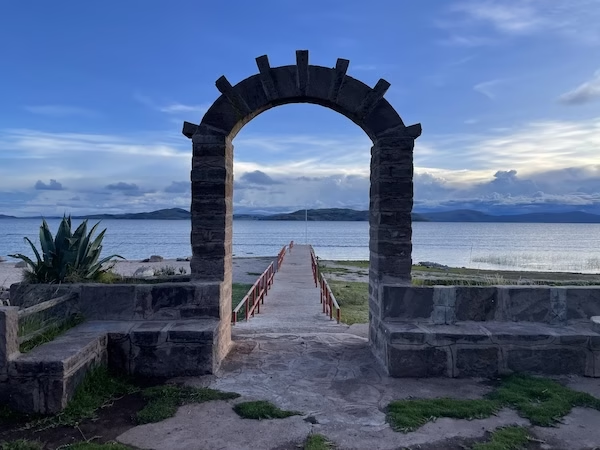
Hotels and where to stay around Lake Titicaca
Travelers in Puno are spoiled for options of where to stay, but slighted a bit in terms of variety. You’ll find an overabundance of generic, mid-range hotels available. Some seem geared more for businessmen, while others are at least decorated in Andean colors for the tourists.
Where to stay in Puno
The Olimpo Inn is charming enough, with tastefully decorated rooms and a good location. It’s also very, very inexpensive. You get a three-star hotel for a budget dorm price. You can book your stay at the Olimpo Inn by clicking here.
If you want to fancy things up a bit, I suggest the Hotel Hacienda Puno Centro Histórico. It costs a little more, but felt almost like a business hotel in North America, which was weirdly comforting. Click here to book a stay at Hotel Hacienda Puno Centro Histórico.
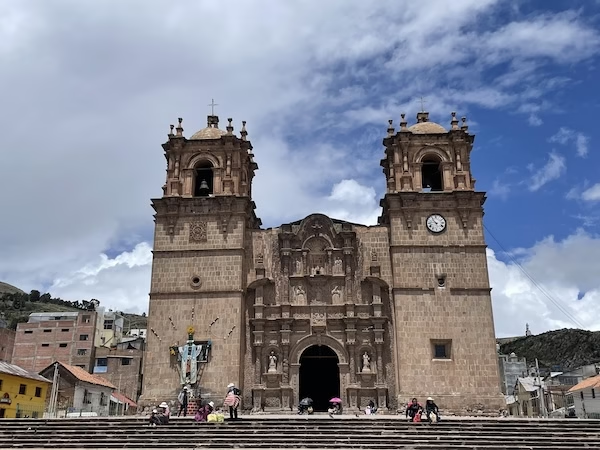
Where to stay in Llachón
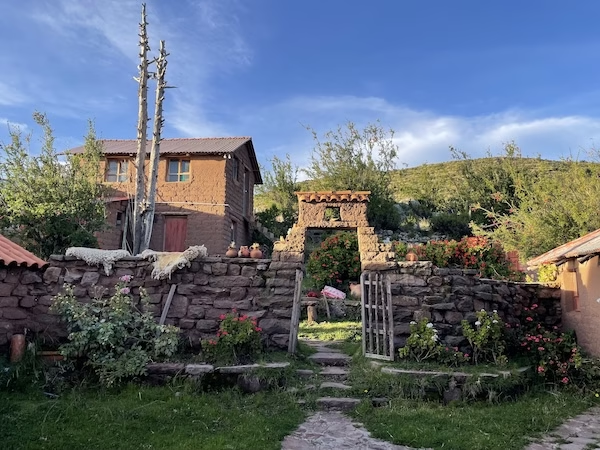
I was absolutely blown away by the simple beauty and hospitality of “Casa de Valentin” in Llachón. The “hotel” is really just some rooms built on the family farm. The location is right on the lakeshore and the food is fresh and delicious. Plus, there’s a private dock where you can sit and watch the sunset over the lake. Don’t hesitate to book at least a few nights at “Casa de Valentin”. You won’t regret it.
What to do in Lake Titicaca
There are plenty of things to do around Lake Titicaca, but the main thing, really, is to just marvel at the lake itself. The waters range from a gentle turquoise to a profoundly deep blue. The surrounding landscape is some of the best rugged Andean terrain that Peru has to offer. However, not everyone is content to just sit and look at a lake for a few days. Here are a few more of the best things to do in Lake Titicaca.
Visit the Floating Uros Islands
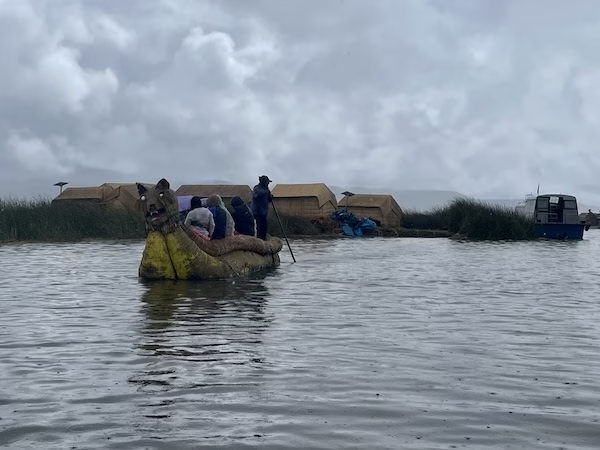
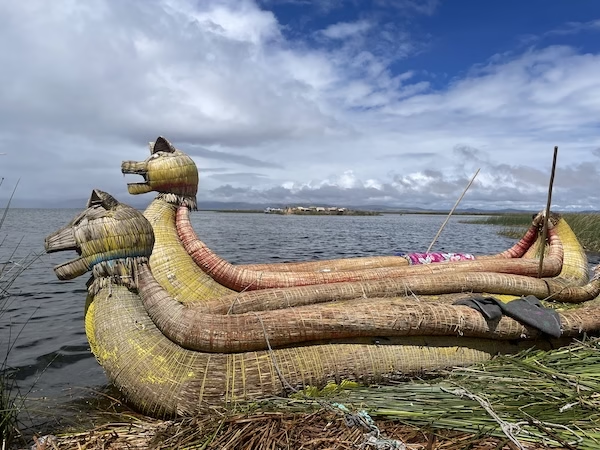
Probably the top thing to do around Lake Titicaca is to take a tour out to the floating Uros Islands. Generations ago, the Uru people migrated to the region but couldn’t find anywhere to settle. Surrounded by hostel enemies, they decided to make their own islands and go live in the middle of the lake.
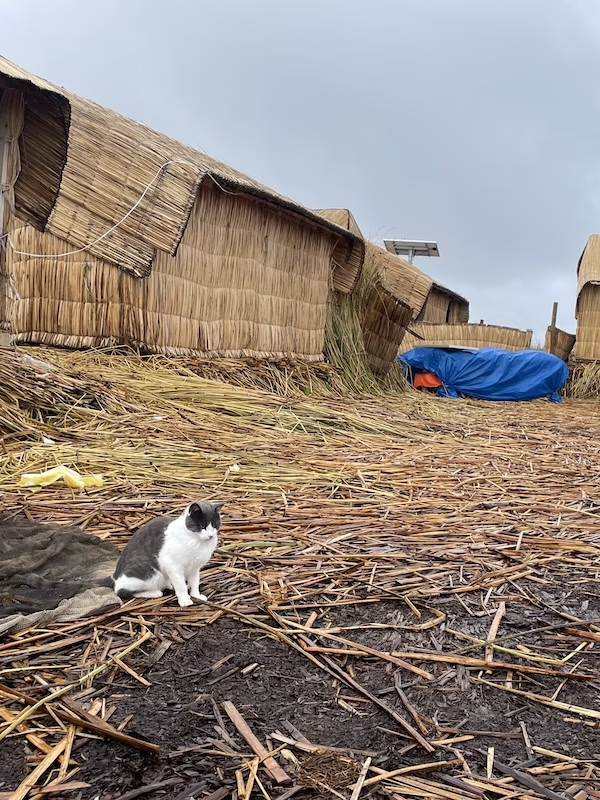
The islands are built out of woven reeds harvested from the lakeshore. By weaving together layers upon layer of reeds, the Uru people are able to make floating homes complete with simple houses, bathrooms, kitchens and whatever else. Some even have solar panels. The islands are able to house multiple families, and some even have floating schools and more.
The Uru people traditionally lived a subsistence lifestyle mostly fishing, hunting, and trading. Today, they’ve included tourism into their economy. All visits to the floating Uros Islands are arranged through the community, and they rotate who hosts the tour groups. More intrepid travelers can also arrange overnight stays.
Most travelers arrive in Uros on the numerous day-tours that leave regularly from Puno.
Get Your Guide has a number of options available.
The tours include an obligatory handicraft demonstration and sales pitch. I’ve heard other travelers complaining about this, saying the Uros Islands are too commercial and touristy. However, I personally didn’t find the souvenir sales pitch pushy at all. And I think it’s much better to spend your money buying crafts from a local directly rather than purchasing some mass produced t-shirts onshore.
Visit the Island of Taquile
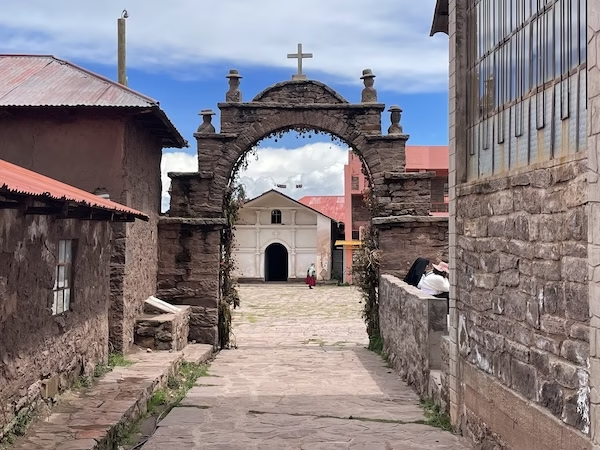
Taquile is another almost mandatory stop on the standard Lake Titicaca list of things to do, and is often bundled with trips to Uros. Taquile is another, very beautiful, island that almost looks as though it should be in the Mediterranean rather than high in the Andes. It’s home to a community of Quechua speakers who are famous for their weaving.
A visit to Taquile includes a brief wander through the village, including a steep ascent up a staircase that feels doubly difficult at the high altitude. You watch a traditional dance, have lunch, and are given a brief presentation about the Taquileño culture. Later, of course, you’ll stop by the community store to shop for knitted alpaca textiles. As an interesting side note, weaving and textiles are considered masculine crafts in Taquileño culture.
As with Uros, the Taquile souvenirs are handicrafts that are made by the community. The money you spend on items here goes directly to the people made them. I bought a hat in Taquile that I’m actually wearing as I write this. It’s a good hat.
You can find a number of tour options on Get Your Guide.
Explore the village of Llachón and the Capachica Peninsula.
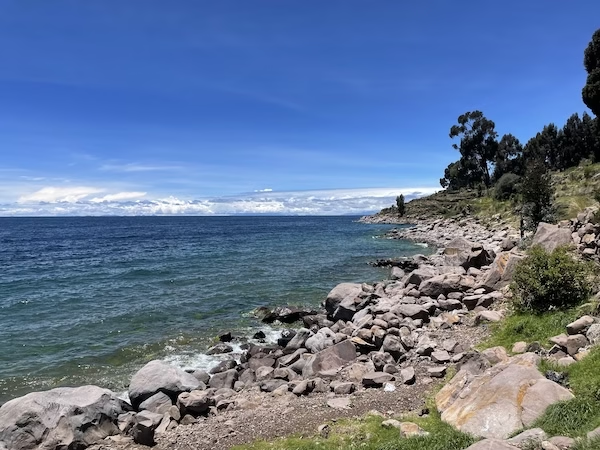
The tours to Uros and Taquile are nice, but they can’t compare to the magic of the village of Llachón. Staying a few days in Llachón wasn’t just the best thing we did around Lake Titicaca, but also one of the best travel experiences we had in all of Peru. I really can’t say enough good things about Llachón. It was one of those experiences where words fall short.
Venturing out to Llachón and the Capachica Peninsula requires a reasonable amount of Spanish, and a healthy sense of adventure. You could probably arrange a tour to Llachón, but it’ll be much more rewarding to get there on your own. You can book accommodations online and find colectivos leaving from central Puno.
However, Llachón was so special for me, it deserves it’s very own dedicated post.
Visit the ruins of Sillustani
My one disappointment when visiting Lake Titicaca was not going to see the Sillustani ruins. These ancient burial tombs include both Inca and pre-Inca structures. They look really cool. I honestly can’t remember why we didn’t visit them, but it sounds like a very interesting thing to do near Puno and Lake Titicaca.
If you want to learn from my mistake and see Sillustani for yourself, take a look at which tours from Puno are available.
Lake Titicaca FAQ
How many days you need at Lake Titicaca depends on what you want to do. If you only want to take a tour to the Uros Islands, then you don’t need more than a night or two. If you want to really soak up the local atmosphere in Llachón or beyond, then you’ll need at least four nights or more. Lake Titicaca is the kind of place that rewards slow travel.
Lake Titicaca is not at all close to Machu Picchu. And you need to stop at Cusco on the way, at the very least. The distance is about 372 miles (600 kilometers) over rugged Andean terrain. Public buses take about 8 hours from Puno to Cusco, while tourist buses or trains take about 10. You could also fly from nearby Juliaca to Cusco, but you’d have to transfer in Lima. Depending on the layover, flying might take as long as the bus.
Lake Titicaca isn’t really a swimming lake. For one thing, it’s quite cold. For another thing, there are some issues with pollution and chemical runoff from nearby illegal mining operations around Puno. And for an additional thing, it’s cold. I did meet a Frenchman who went swimming off of the Capachica Peninsula. He said it was cold.
Final Thoughts on Lake Titicaca
Standing on the rugged shoreline, looking out over the blue water at the towering snowcapped mountains on the horizon, I felt like I understood why the Inca and other indigenous people of the region consider Lake Titicaca to be sacred. Yes, it’s very beautiful, but there’s also some undefinable magic to it that’s hard to put your finger on.
You could technically “do” Lake Titicaca in a day, using Puno as a base for a whirlwind day trip to the Uros Islands. You could do this and have a good time, and then put a check mark next to Lake Titicaca on your travel list.
However, you’d be cheating yourself with this sort of bristling and breathless visit. The altitude will make you breathless enough. Do yourself a favor and take some time to explore and really breathe in the magic of the world’s highest lake.
Explore more of Peru’s wonders: Peru Travel Guide: Beyond Machu Picchu
Useful Websites for Traveling Peru
As much as we might long for the days when you could show up to a town with nothing more than a beat-up guidebook and a sense of adventure, today much of traveling involves being glued to our phones making bookings. I’ve compiled some helpful apps and websites below that at least help make those bookings more convenient so you can spend less time staring at your phone and more time exploring at your surroundings. Some of these sites are affiliate links that give me a small commission at no cost to you if you chose to book through them. All of them are sites I’ve used personally and have no problem recommending.
Just be sure to do your due diligence as much as possible. Only hire local guides and try as much as possible to stay in locally owned hotels and hostels so that your hard earned travel dollars actually go to support the local economies of the places you visit.
Booking.com is basically the world’s only hotel booking website. They have hotels, guesthouses and vacation rentals all over Peru.
Hostelworld is the go-to site for booking hostels. If dorm rooms and shared bathrooms are your thing, you’ll find hostels throughout Peru.
Get Your Guide offers tours and activities all around the world. Unlike some other sites and apps that do the same thing, you can actually find some reasonably priced deals here.
Cabify is the best way to book a taxi in Peru’s major cities. It works like Uber, but you get connected to a licensed, authorized, taxi instead of just some random weirdo.
RedBus is the place to book long-distance buses in Peru. You can get your tickets and browse schedules ahead of time, and alleviate the stress of not knowing whether the bus you want will be sold out before you get to the station.
Travel insurance can turn a potential trip-ruining disaster into a mere inconvenience. We used SafetyWing for travel insurance during our South America trip and had a great experience. We’ve also used used World Nomads and found them easy to use and set up. If you do decide to get travel insurance, I suggest comparing both options and seeing what works for you.
We receive a fee when you get a quote from World Nomads using this link. We do not represent World Nomads. This is not a recommendation to buy travel insurance. The same applies to SafetyWing.