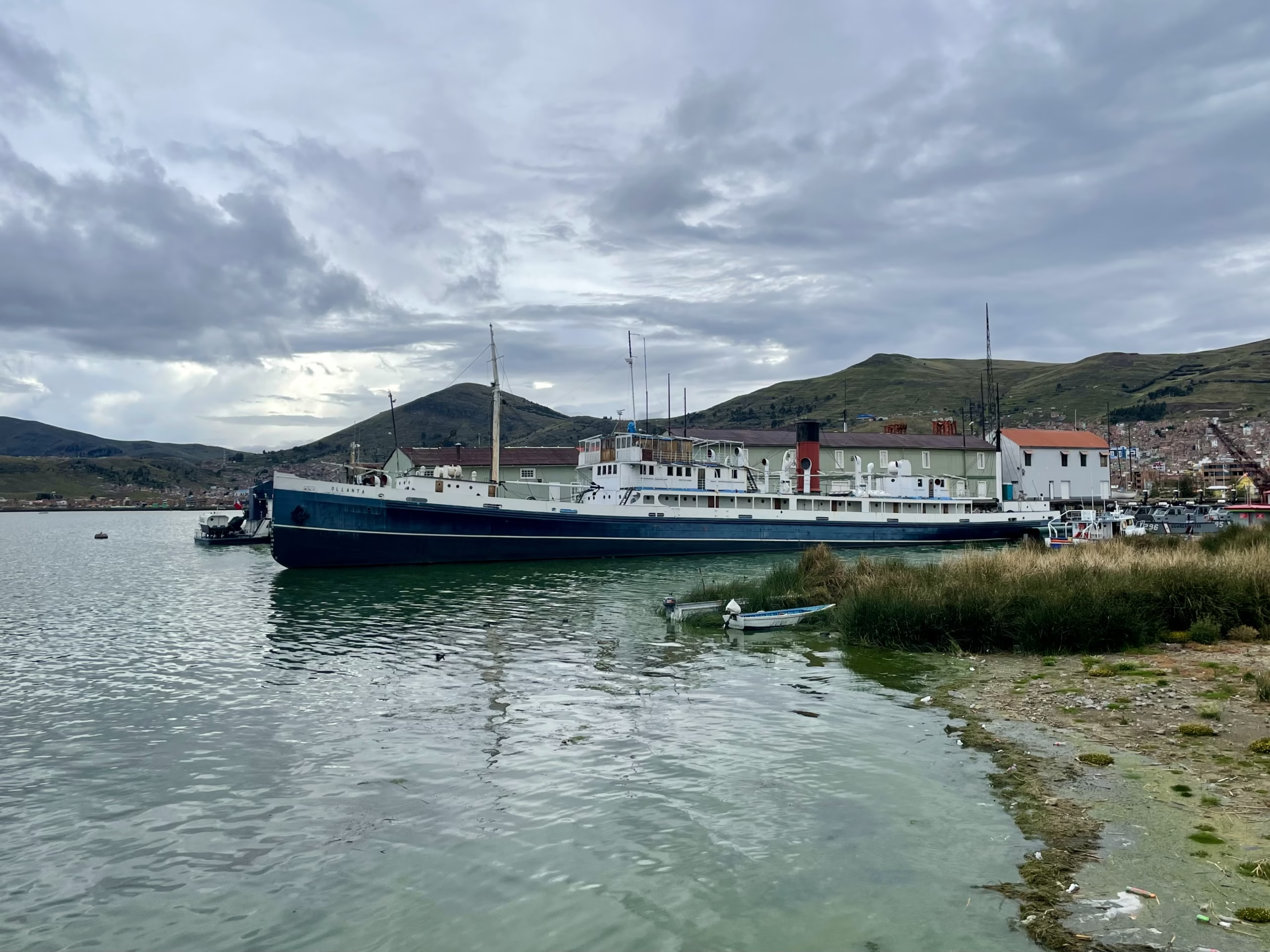
The small city of Puno is Peru’s gateway to the beautiful Lake Titicaca. For many travelers, Puno is the extent of their Lake Titicaca experience. They pass through and use the city just as a place to book day tours and arrange onward transportation to somewhere else. And a lot of them really hate on poor little Puno.
Sure, Puno is touristy. And, yes, it isn’t the world’s most beautiful city. But this scrappy lakeside town has its own kind of bustling appeal. Puno won’t change your life, but as far as places to book day tours and arrange onward transportation go, you could do a lot worse.
This post contains affiliate links. If you book something using one of these links, I’ll get a small commission at no cost to you. It’s a great way to support your favorite independent travel blogs!
What to know before visiting Puno
Weather and the best time to visit
Puno is blessed with generally stable temperatures throughout the year, but cursed because those temperatures are sometimes cold. Highs range from 59°F to 68°F (15°C to 20°C) and nighttime lows drop all the way down to near freezing: 32°F to 41°F (0°C to 5°C). Pack warm clothes and layers.
The year is divided into a dry season, which goes from April to November, and a rainy season that runs from December through March. You can expect everything from afternoon drizzles to thunderstorms in the rainy season. Peak tourist season is from June to August, while January and February see the most rain and the fewest travelers.
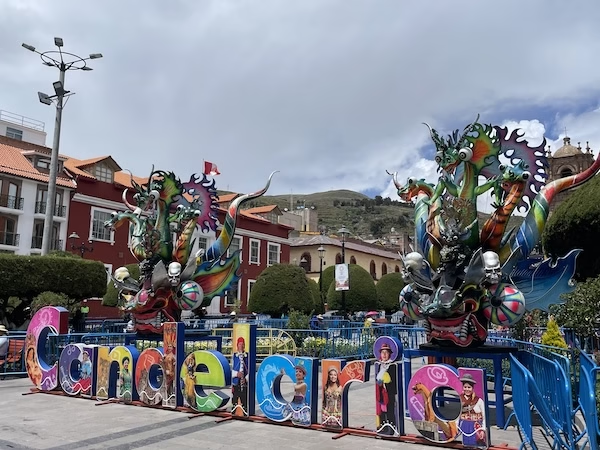
The fewest travelers outside of the Virgin de Candelaria festival, which is in early February. This is one of Peru’s most famous festivals featuring parades, music, and dancing. If you want to come to Puno during this time, make sure you book well in advance.
Take the high altitude seriously
Puno sits at 3,827 meters (or 12,556 feet) above sea level, which is really, really high. Altitude sickness can be a real issue in Puno, and is something you should take very seriously. The Cleveland Clinic has a lot more details about altitude sickness.
The best way to deal with the altitude is to try and acclimatize slowly. Spend some time in lower elevation places like the Sacred Valley before heading up to Puno. You can also get medicine back home to help. Or, do as the locals do and chew on coca leaves.
Yes, coca leaves are also used to make cocaine. The leaves themselves, however, are a traditional medicine that’s been used in the Andes region for centuries. I can personally attest that chewing some coca leaves does wonders at alleviating altitude related issues.
Aside from the thinner air, the high altitude also means stronger sun and more UV radiation. Make sure to liberally apply sunscreen, and wear a hat and long sleeves to protect your skin. This is important even if you have dark skin and even on cloudy days.
How much time to spend in Puno
How much time you spend in Puno depends on what you want to do. You could just come and knock out a quick day tour of the floating reed islands and be gone the next day. Or, you could spend an extra day exploring the city or visiting nearby ruins. However, as much as I liked Puno, I don’t think you need more than a few days here.
I found the nearby village of Llachón to be much more relaxing, pretty, and just plain interesting. When my wife and I visited Lake Titicaca, we chose to spend the bulk of our time in Llachón and have zero regrets about it.
How to get to Puno
Puno, being Lake Titicaca’s main transportation hub, is very easy to get to. The nearest airport is about 27 miles (44 km) away in the city of Juliaca. You can take the airport shuttle into Puno for 158 Peruvian Soles (about $46). The trip takes about an hour and a half.
However, I don’t think that flying is the best option to get to Puno. Unless you’re super short on time. Considering that flights to and from Cusco transfer in Lima. Depending on the layover, it might actually be quicker to bus.
Local buses in Peru are safe, cheap, and reasonably easy to use. You can book tickets online using the RedBus app or website or buy them directly at bus terminals. Cruz del Sur was my favorite Peruvian bus company, but you’ve got plenty of options to choose from.
How to get to Puno from Cusco
Buses travel regularly from Cusco’s Terminal Terrestre to Puno’s main terminal. The trip is about seven hours and costs between 50 to 100 soles ($15 to $30). Generally speaking, the more expensive the ticket, the nicer and more comfortable the bus.
You could also take “Ruta del Sol” route on the Inka Express bus. This is an exclusively tourist bus that travels between Cusco and Puno and stops at various sites along the way. You’ll see Inca ruins, cute small towns, and some nice viewpoints. It’s not a bad way to squeeze in a little extra sightseeing. The Inka Express bus costs $50 and includes lunch.
If you have a lot of extra money you could also take the train. PeruRail operates a luxury tourist train that costs something like $350 one way. Too rich for my blood. PeruRail’s website has more information.
Read more about the magical but sometimes frustrating city of Cusco.
How to get to Puno from Arequipa
If you’re coming from the other direction, you may be heading to Lake Titicaca from the “White City” of Arequipa. Buses heading to Puno from Arequipa’s main terminal are even easier and cheaper than those from Cusco. The trip takes only about 6 hours, and costs between 30 to 60 soles ($9 to $18).
Don’t forget that Arequipa has two bus stations, the Terminal Terrestre and the fantastically named Terrapuerto Internacional. Double check which one your bus leaves from.
There is another train that runs between Arequipa and Puno, but it’s expensive. So expensive that you could choose between the train ride and a month’s rent in a decent one-bedroom apartment in a low-crime neighborhood. If you have thousands of dollars to spend on a train ride, why not consider donating some to a poor, struggling, travel blogger?
What to do in Puno
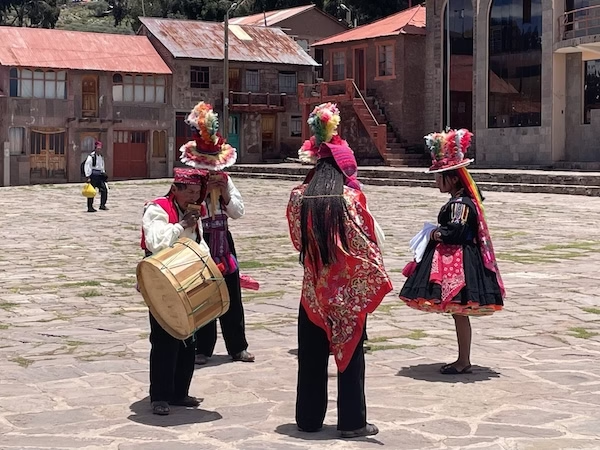
Puno has plenty of things to do, most of which revolve around the lake. If you’re there in early February, be sure to check out the Virgin de Candelaria festival. We missed the big parade by a day, but we did get to see a procession and some dances, which was cool. The whole city kind of felt a little hungover during our visit, though.
Tour the Uros floating islands and the Island of Taquile
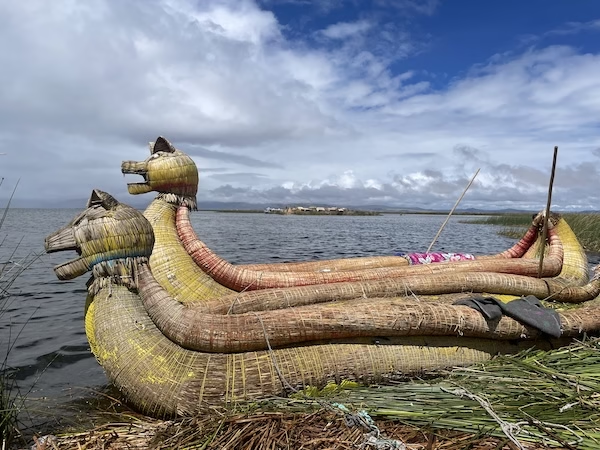
If you’re only going to do one thing in Puno, or on Lake Titicaca in general, it’s probably going to be visiting the floating Uros Islands. They’re literally islands made out of woven reeds.
Legend has it that when the Uru people migrated to Lake Titicaca, all the land on the shore was claimed and nobody who’d already settled there wanted to share. So, they decided to build their own islands and head out into the middle of the lake. They subsisted there for generations on fishing, aquatic plants, and trade. Today, the Uru have added tourism into the mix, and visiting they’re island homes is now the top thing to do in Puno.
That tourism is organized by the community, and each family takes turns letting tour groups visit their island. You’ll be taken to the floating islands by boat, then given an explanation of how they make the islands and an overview of the Uru culture. At the end, there’s an obligatory demonstration and sale of handicrafts.
Other travelers complain that these tours are too commercial, complaining about the sales pitch at the end. I would counter that these are just local folks trying to make a living, and I’d much rather sit through an indigenous man trying to sell me handicrafts than see Lake Titicaca spoiled by luxury resorts and golf courses. I actually think it’s cool to see local people taking tourism into their own hands and using the money to support their communities.
Plus, it’s really cool to sit on an island that’s made of woven reeds.
The island of Taquile and booking island tours
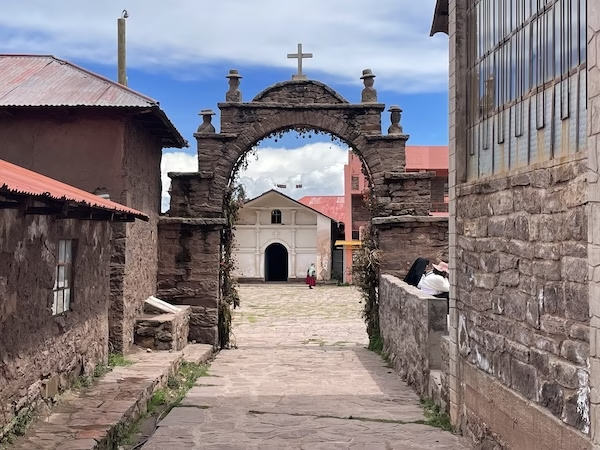
Tours to the Uros islands also often make a stop on the nearby island of Taquile. Taquile is home to a group of Quechua speaking people who have also capitalized on Peru’s travel appeal in order to support community tourism. The Taquileños practice communal governance, and are unique for being one of the few places where weaving and textiles are considered masculine arts. I bought a really nice hat there.
It’s most common to visit Uros or Taquile islands as part of a tour. If you’re ambitious, however, you can also arrange a homestay with either group. We only did the day tour. Even though I generally am not a fan of tours, I think the Uros floating islands and Taquile tour is a must-do activity while visiting Lake Titicaca.
All tours must be approved and are governed by the local communities. Get Your Guide has a number of options available.
Wander around Puno’s city center
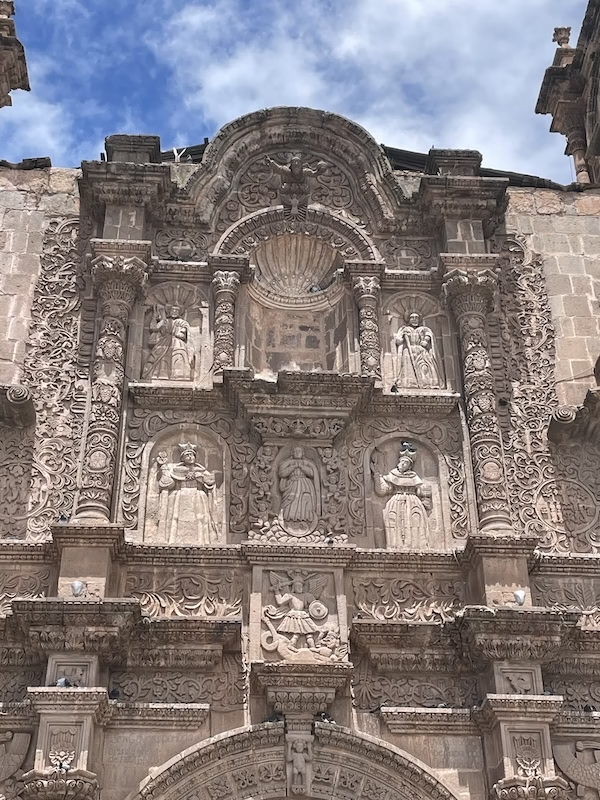
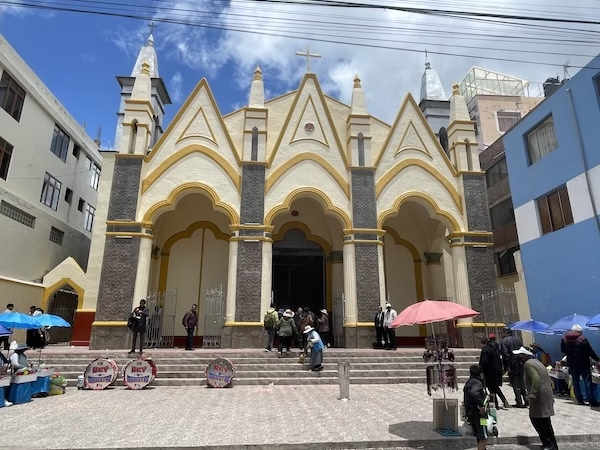
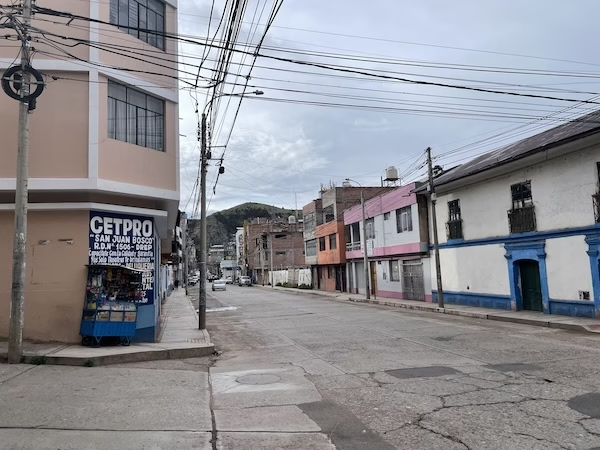
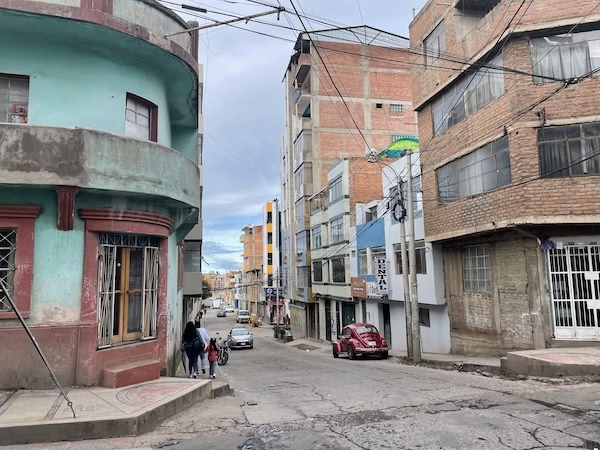
While Puno isn’t going to win any beauty contests, and can’t compete with some of Peru’s other beautiful colonial cities, the town center is pleasant enough and worth a stroll. Unlike the rest of Peru, Puno doesn’t have a “Plaza de Armas.” Instead, the city is centered around the small, but nice, Plaza Mayor. The basilica is just off the Plaza Mayor and is probably Puno’s most architecturally impressive building.
From the Plaza Mayor, you can walk the long stretch down Titikaka Street towards the lake. The buildings become less and less cute and more functional. However, you’ll find a lovely malecón, that is a lakeside walkway, along the shore. An artisanal market rests near the docks, where you can find some souvenirs.
Independent souvenir sellers sometimes set up on the dock in the evening. It happened to be Valentine’s Day when we were in Puno. I, of course, had completely forgotten about the holiday. Thankfully, I was able to buy my wife some very nice hand-made earrings from one of the vendors on the dock. Many thanks to the girl who was selling the jewelry. She saved my Valentine’s Day!
Visit the ruins of Sillustani
The last big thing to do in Puno is to visit the Sillustani ruins. These are a series of both Inca and pre-Inca burial tombs located a short drive outside of Puno. They sound interesting, but for whatever reason we didn’t make it out to see them on our trip. I kind of regret it, to be honest.
Take a look at which tours to Sillustani are available.
Where to stay in Puno
Puno has numerous options for places to stay. Too many options, really, since most of them seem to be mid-ranged hotels that are all pretty much what you’d expect from a mid-range hotel. Nowhere we stayed in Puno really wowed us, but we did experience two different standard mid-range hotels. Both of them were totally fine, and are decent enough choices.
The first spot we stayed at was the Olimpo Inn. This was probably the more charming of the two, with nicely decorated rooms in a generic hotel building. It was located near the town center, in easy walking distance to wherever we needed to walk. The best part about the Olimpo Inn, though, was the price. You get a three star hotel experience for the price of a hostel dorm elsewhere. You can book your stay at the Olimpo Inn by clicking here.
The second place we stayed in Puno was a few steps up in terms of quality (and price). The Hotel Hacienda Puno Centro Histórico felt like what you’d expect from a mid-range North American style hotel. There was something strangely comforting about that. Even though it cost a little more than the Olimpo Inn, it still didn’t break the bank, while feeling slightly more comfortable. Click here to book a stay at Hotel Hacienda Puno Centro Histórico.
Final thoughts on Puno
Scrappy little Puno isn’t going to blow any minds. But, on the other hand, I don’t think the city deserves the disdain it seems to get from a lot of travelers. Yes, the center feels a little touristy, but that’s to be expected from a city where tourism is a major industry. Puno is the main population center on the Peruvian shores of Lake Titicaca, and Lake Titicaca is a popular tourist destination for very good reason. And I felt like the touristiness of Puno and Lake Titicaca paled in comparison with that of central Cusco.
Of course, Puno is nowhere near as beautiful a city as Cusco. That’s okay, too. It’s a hard-working port town. It’s not trying to win any pageants or become an Instagram influencer hotspot. Puno’s just hanging out, doing its thing. And its thing is being a pleasant place to base yourself while visiting Lake Titicaca.
Read more about Lake Titicaca here: Lake Titicaca Travel Guide: Floating Islands and Andean Villages on the World’s Highest Lake
Get ready to discover more about Peru here: Peru Travel Guide: Beyond Machu Picchu
Useful Websites for Traveling Peru
As much as we might long for the days when you could show up to a town with nothing more than a beat-up guidebook and a sense of adventure, today much of traveling involves being glued to our phones making bookings. I’ve compiled some helpful apps and websites below that at least help make those bookings more convenient so you can spend less time staring at your phone and more time exploring at your surroundings. Some of these sites are affiliate links that give me a small commission at no cost to you if you chose to book through them. All of them are sites I’ve used personally and have no problem recommending.
Just be sure to do your due diligence as much as possible. Only hire local guides and try as much as possible to stay in locally owned hotels and hostels so that your hard earned travel dollars actually go to support the local economies of the places you visit.
Booking.com is basically the world’s only hotel booking website. They have hotels, guesthouses and vacation rentals all over Peru.
Hostelworld is the go-to site for booking hostels. If dorm rooms and shared bathrooms are your thing, you’ll find hostels throughout Peru.
Get Your Guide offers tours and activities all around the world. Unlike some other sites and apps that do the same thing, you can actually find some reasonably priced deals here.
Cabify is the best way to book a taxi in Peru’s major cities. It works like Uber, but you get connected to a licensed, authorized, taxi instead of just some random weirdo.
RedBus is the place to book long-distance buses in Peru. You can get your tickets and browse schedules ahead of time, and alleviate the stress of not knowing whether the bus you want will be sold out before you get to the station.
Travel insurance can turn a potential trip-ruining disaster into a mere inconvenience. We used SafetyWing for travel insurance during our South America trip and had a great experience. We’ve also used used World Nomads and found them easy to use and set up. If you do decide to get travel insurance, I suggest comparing both options and seeing what works for you.
We receive a fee when you get a quote from World Nomads using this link. We do not represent World Nomads. This is not a recommendation to buy travel insurance. The same applies to SafetyWing.