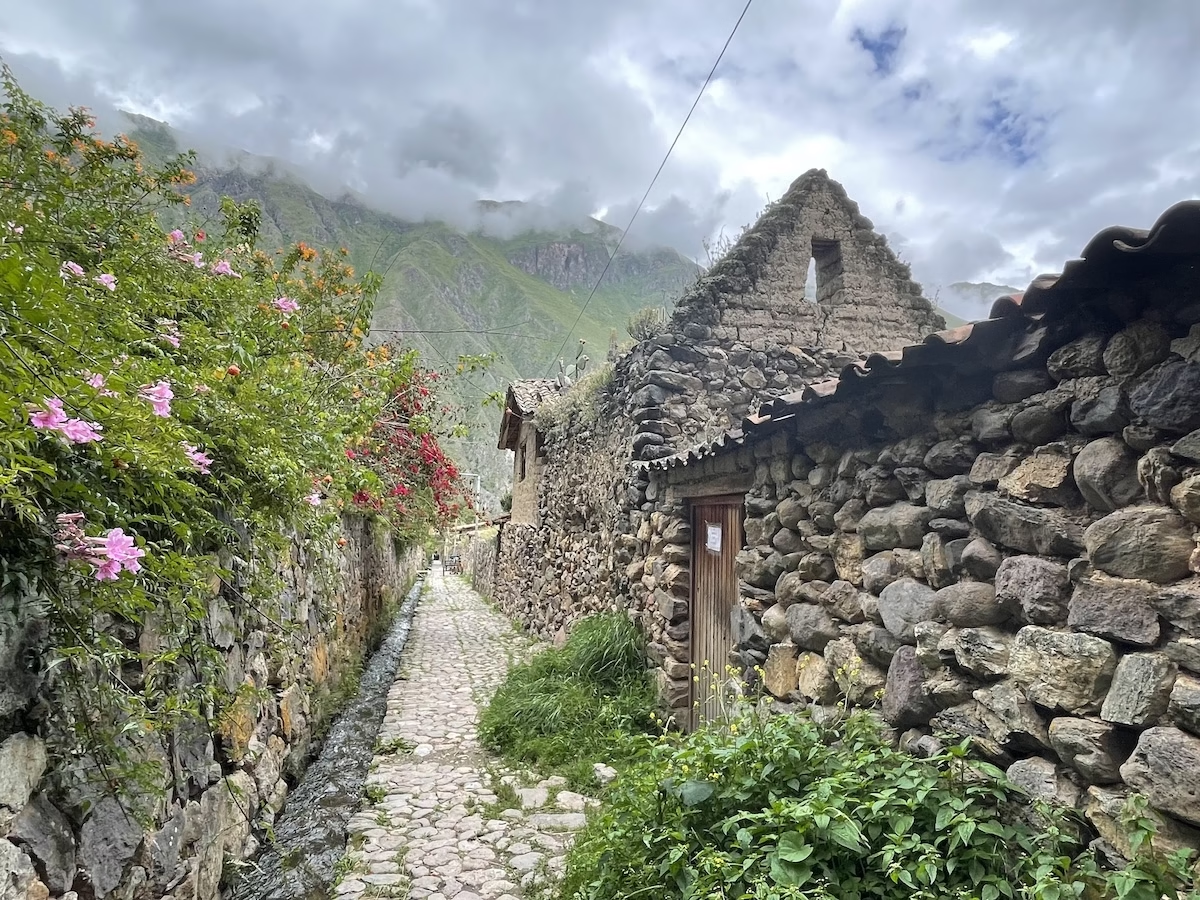
If you’ve never been to Peru you may never have heard of the small town of Ollantaytambo. And even if you have been to Peru, or have just started researching for your trip, you may only recognize Ollantaytambo as the transfer point for trains heading onwards to Machu Picchu. This picturesque Incan town sees plenty of visitors, but those visitors rarely venture a block or so beyond the train station. That’s a shame, because Ollantaytambo is a fantastic destination that’s worth a day or three on its own. Hopefully this Ollantaytambo travel guide will convince you to take the time to appreciate Ollantaytambo for everything this beautiful town has to do and see besides its train station.
This post contains affiliate links. If you book something using one of these links, I’ll get a small commission at no cost to you. It’s a great way to support your favorite independent travel blogs!
Why is Ollantaytambo Worth Visiting?
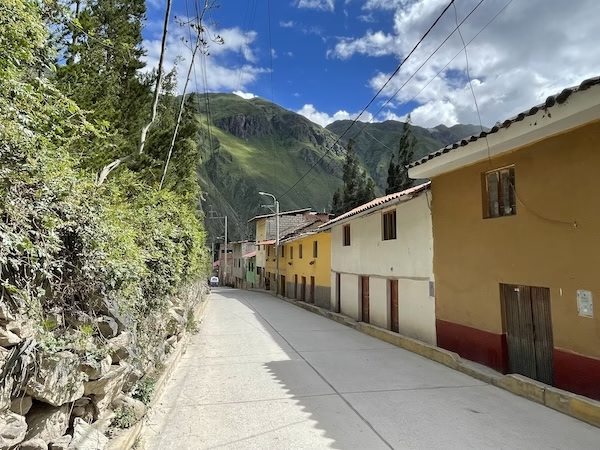
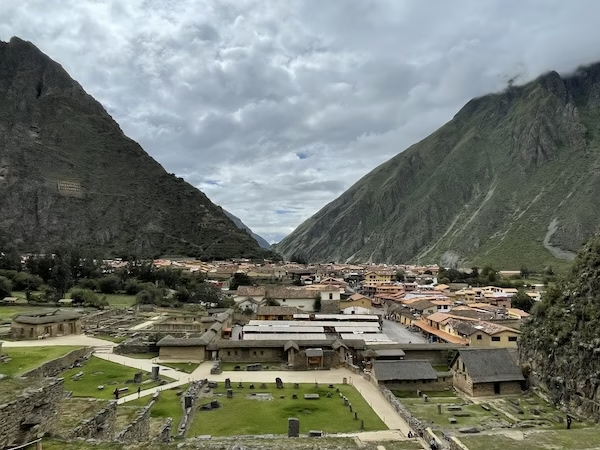
Ollantaytambo is located in the heart of Peru’s Sacred Valley; a majestic river valley surrounded by mountains and filled with Incan ruins. The town center is a surviving example of Inca town planning and architecture, while magnificent ruins cling to the nearby hillsides.
And despite its position as a stop on the way to Machu Picchu, Ollantaytambo feels refreshingly un-touristy once you get beyond the train station. Ollantaytambo also rests at an altitude of 2,792 meters (9,160 feet), so it can be a good place to acclimatize before heading up to the heights of Cusco.
A Brief History of Ollantaytambo
Some experts speculate that the settlement of Ollantaytambo might date back 3,500 years. It contains some of the oldest continuously occupied dwellings in all of the Americas. However, it was the Inca emperor Pachacuti who really built Ollantaytambo into what it is today.
Ollantaytambo had always occupied an important defensive position, and the nearby fort of Pumamarka guarded the entire Sacred Valley. During the Spanish conquest of Peru, Manco Inca Yupanqui fought a heroic battle against the forces of conquistador Hernando Pizarro in Ollantaytambo. It was one of the only times Native American soldiers decisively defeated Spanish troops.
Manco Inca used the high cliffs surrounding Ollantaytambo to his advantage. He hid out and ambushed Spanish troops from above. The Incas then diverted water from the river and flooded the valley, which rendered the Spanish cavalry useless. The Spanish were forced to retreat back to Cusco, while Manco Inca took the opportunity to escape to the hidden city of Vilcabamba and establish an independent new Inca state that held out for another 35 years.
Today, the town stands out not only for its ruins, but as a point of pride among the descendants of the Inca. It is still a heavily indigenous community, with many of the inhabitants speaking Quechua rather than Spanish.
How to Get to Ollantaytambo
Ollantaytambo is located in the heart of the Sacred Valley, about 41 miles (65 kilometers) from Cusco. Since it’s on the way between Cusco and Machu Picchu, it makes a heck of a lot of sense to stop in Ollantaytambo between visits to these two places. It isn’t difficult to arrange no matter which method of transportation you take. We stopped in Ollantaytambo on the way back from Machu Picchu. But if you just flew in from a low altitude place, it might make sense to make a beeline to Ollantaytambo and Machu Picchu to acclimatize before visiting Cusco.
Taking the train
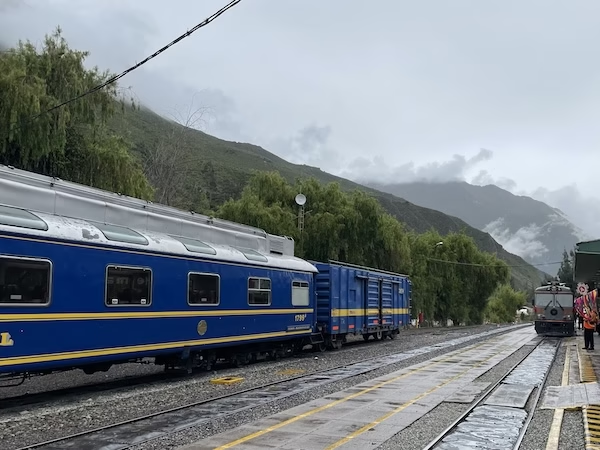
Ollantaytambo is the main stop over and transfer point for trains heading from Cusco to Machu Picchu. It doesn’t make much sense to take the train if you’re only going to Ollantaytambo, but it’s an easy stop on the way to Machu Picchu.
When we bought our tickets to Machu Picchu from Cusco, we simply asked for our return ticket to end at Ollantaytambo. If you’re going the other direction, it makes more sense to just take the colectivo to Ollantaytambo and then get your Machu Picchu train ticket starting from there.
Read our Machu Picchu guide for more details how to book Peru’s Machu Picchu tourist trains.
Taking the “colectivo”
You can find colectivos headed to Ollantaytambo on Calle Pavitos in central Cusco, a few blocks south of the Qorikancha. The ride should cost around 20 soles and takes about two hours.
Colectivos are converted vans or mini-vans that function as public transportation and fill in the gaps that the buses miss. They are dirt cheap and a great way to get around like a local. In Peru, you may also hear colectivos referred to as “combis” but both mean the same thing. (Feel free to comment if you’re Peruvian and you know of some distinction I’m unaware of.)
There are really only a few downsides to the colectivos. One, they only leave when full. You may find yourself waiting by the side of the road until you have enough other passengers to fill those last few empty seats. Two, they make numerous unscheduled stops along the way picking up and dropping people off by the side of the road. This makes the colectivos potentially quite slow. Finally, they can sometimes be a bit crowded. However, the cost and ability to literally rub elbows with the locals make the colectivos a fantastic option.
Other transportation options
Some other options to reach Ollantaytambo include: taking the bus, renting a car, hiring a taxi, or signing up for a tour. In my opinion, none of these are really very good.
Car rental is expensive, and you have to deal with parking and traffic. A taxi could potentially cost you over $100 and is really only worth it if you’re super short on time. The public bus isn’t terrible, but it costs more and requires a transfer in Urubamba. You may end up having to take a colectivo from there anyway.
Day tours from Cusco are popular, and Ollantaytambo is often included as part of a larger day trip through the Sacred Valley. The problem with these tours is that they cram a bunch of stuff into one day, and you really only get a few hours at each place. I think Ollantaytambo is worth at least a couple of days on its own.
Once you’re in Ollantaytambo, your best mode of transportation will be your own two feet. The town itself is small and easily walkable. That’s part of the charm! I’m sure taxis exist, but we didn’t see any during the low season. I’m sure your accommodation could arrange a ride if you need one.
The Best Things to do in Ollantaytambo
Ollantaytambo has plenty to keep you busy for at least a few days. Maybe longer if you’re feeling adventurous, or if you want to use the town as a base to explore the rest of the Sacred Valley. We stayed for about a week, but that’s only because both my wife and I caught a nasty cold while we were there. As you can see from the list below, however, we managed to do plenty of things despite suffering from a runny nose and low-grade fever.
Visit the Ollantaytambo Ruins
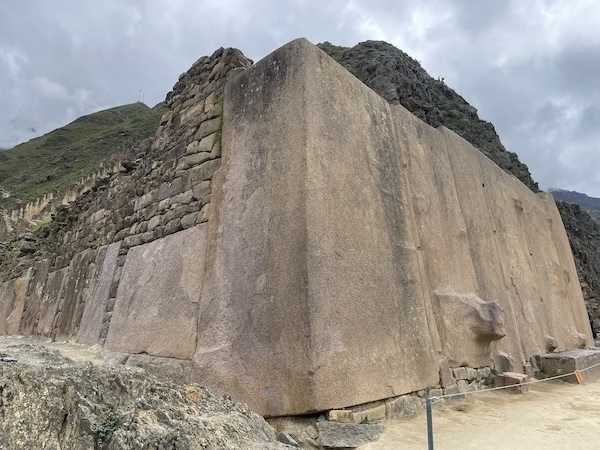
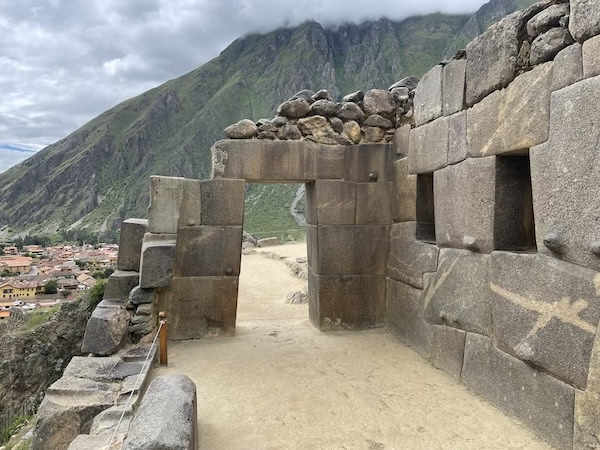
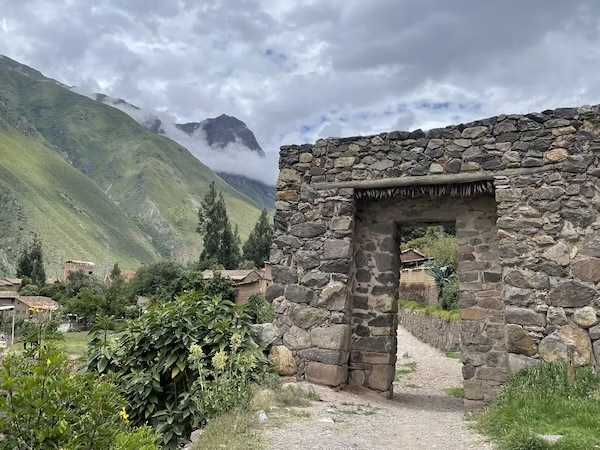
Aside from the Machu Picchu train station, the main reason most tourists visit Ollantaytambo is for the magnificent ruins. The ruins of Ollantaytambo are yet another example of the Inca’s masterful stonework, and some of the walls and doorways that remain here are quite stunning. The ruins sit atop a terraced hill overlooking the town and surrounding valley. They aren’t quite Machu Picchu, but they’re still pretty impressive.
As you stand there staring at a wall of massive pink stones, each larger than a professional NFL player, you’ll find yourself asking “how the heck did they get these giant stones all the way up there without any wheels or horses?” Maybe even more astounding, in my mind, were the many fountains that are still spurting out water some 500 years after being built.
The Ollantaytambo ruins take about an hour and a half to two hours to visit. That depends, of course, on how enthralled you get staring at megalithic stones and ancient fountains. Opening hours are daily from 7 am to 5 pm. Get there early during the high season to avoid crowds. Most tour groups show up between lunch time and early afternoon.
Tickets to the Ollantaytambo ruins are included as part of the official Cusco tourist ticket. The “boleto turistico” includes numerous sites in the sacred valley, as well as a few museums in Cusco. It costs 130 soles (about $38) and is good for 10 days. You can get your ticket at the entrance to the ruins if you didn’t already buy one in Cusco.
Guides to the Ollantaytambo ruins are optional, and you can find official guides offering their services near the front entrance. We also came across an unofficial guide. He was just some random dude who approached us when we were deep in the ruins and gave us some unsolicited facts about the site. We gave him a few soles because he looked like he needed the money, and he ran away when an official worker walked up.
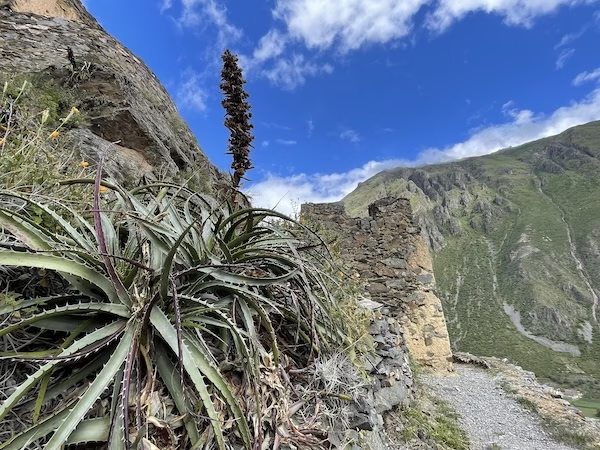
Tramp up the Mountainside to the Pinkuylluna Granaries
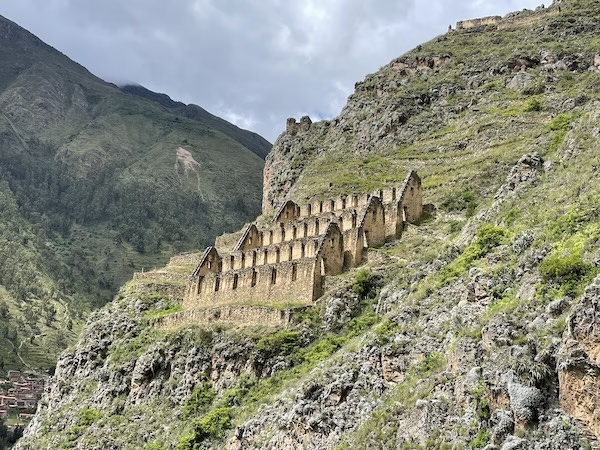
While the main ruins at Ollantaytambo are clearly the stars of the show, you may have noticed some other structures on the mountainside across the valley. These are the granaries of Pinkuylluna. They aren’t nearly as extensive and impressive as the Ollantaytambo ruins, but are still worth a visit if you’re in shape and you feel like punishing yourself.
The ruins are free to visit, but…there’s a catch. What you don’t pay in cash you’ll end up paying in sweat and aching thigh muscles. It’s an absolutely grueling hike almost straight uphill to reach Pinkuylluna. I had to scramble on all fours for a minute, and I arrived at the top drenched in sweat and breathing like I’d just run a marathon. For a less than an hour long hike.
If you’re in better shape than I am and want to dare the climb, you can find the path up to Pinkuylluna at the end of Calle de las Rosas on the opposite end of Ollantaytambo from the main ruins. The site is open from 7:30 am to 4:30 pm.
Stroll through Ollantaytambo’s Streets and Imagine Life in a Medieval Inca Town
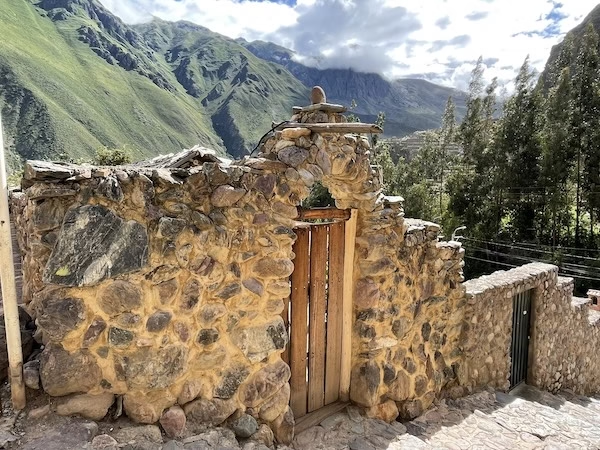
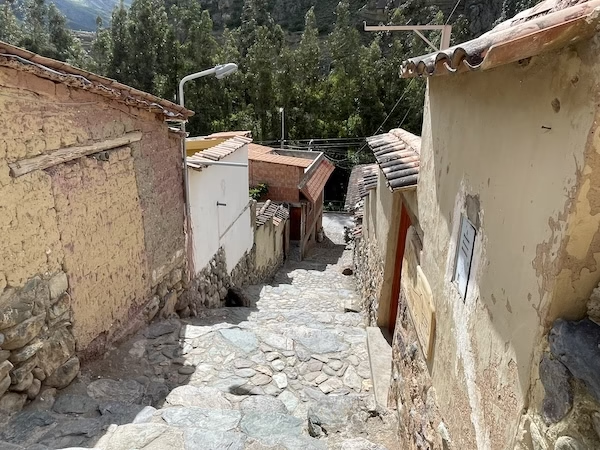
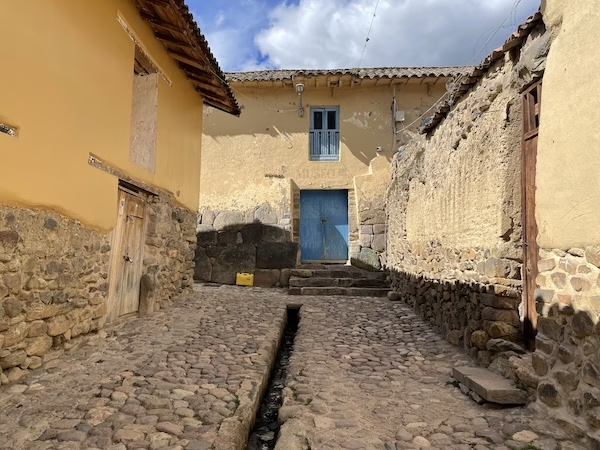
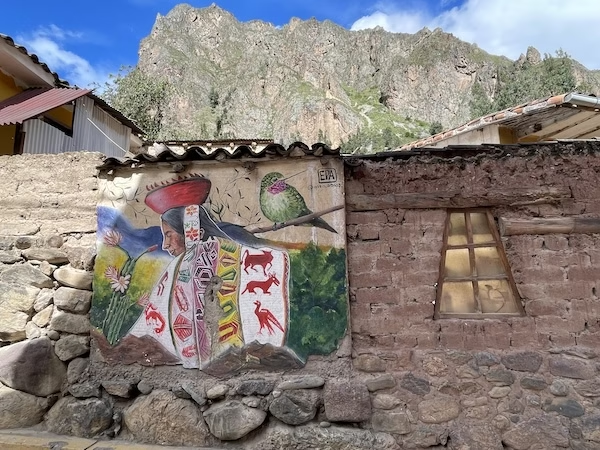
One of the things that makes Ollantaytambo special is the town itself. In the town center at least, the street layout you walk on today is the same one laid out by Inca planners over five centuries ago. Many of the buildings also remain intact, and you can see all sorts of Incan stonework and archways. It makes a nice contrast to the Inca ruins on the hillsides, since people still live and work in these buildings.
Okay, sure. The roofs are either ceramic tile or corrugated zinc. And the Quechua-speaking inhabitants are more often than not staring at their phones. But Ollantaytambo still has that elusive stepping back in time feel to it. The narrow alleys and stone walls will at least inspire you to imagine what life may have been like centuries ago before the arrival of the Spanish and the iPhone. Even if many of the buildings have been converted into Airbnbs.
Ollantaytambo is centered on the Plaza de Armas. You can find bars, restaurants, coffee shops and more in the surrounding blocks. Things get more and more touristy the closer you get to the ruins and train station. Further north, heading uphill towards the mountains, the town feels less like a tourist attraction and more like the living, breathing town it is.
Wander Off the Beaten Path to the Quellorakay Ruins
The Inca didn’t just leave behind ruins with official opening hours and ticket booths. The Sacred Valley is absolutely full to bursting with smaller Incan structures that reveal how advanced, sprawling, and complex of a society they had. Many of those ruins are just sitting out there, waiting for hapless tourists to stumble upon them.
I did just that one day wandering around Ollantaytambo. I found a small trail leading off of a road in the center of town, and as I like to do with random paths in South America, I followed it. The trail led past small fields and agricultural plots that spread out over the flat plain at the base of the valley. Until, finally, I found myself standing amongst some Inca ruins.
I found out later that these are the ruins of Quellorakay. I have no idea what they were used for, since there are no signs and no guides, official or unofficial. But they were interesting nonetheless.
Quellorakay will never compete with Machu Picchu, or even Pinkuylluna, but it was still cool to stumble upon a set of ruins nobody had ever heard of. Nobody not from the area, that is. While I was exploring, a couple of locals showed up to do a glamorous photo shoot on the ancient walls.
Ironically, I’d forgotten my phone at the hotel that day and don’t have any pictures of Quellorakay myself.
You can find the path to Quellorakay off of Calle Imasumac, nearby Ollantaytambo’s bus station. Follow the path towards the river, and be careful of stray dogs.
Hike the Grueling Trek to the Pumamarka Ruins
Once again, Ollantaytambo is full of ruins. The ruins of Pumamarka are said to be an old Inca fort that once guarded the Sacred Valley from potential invaders from the lowlands. The ruins are located just about four miles (six and a half kilometers) from central Ollantaytambo. They are included as part of the Boleto Turistico. Unfortunately, we never made it there.
On a map, four miles might not seem like all that much. At least, that’s what we thought when we tried to hike to Pumamarka from Ollantaytambo. This was a mistake.
The journey is uphill the entire way, and ends up at an altitude of 3,379 meters (11,086 feet) above sea level. Even if you are entirely acclimatized to the altitude, that’s a tough hike. Add to that the fact that we were both recovering from colds and I had just gone uphill to Pinkuylluna the day before. In hindsight, we should have tried to arrange a taxi.
On the other hand, the hike itself is absolutely gorgeous. You pass by jagged Andean peaks and groves of pine trees, along a bubbling river. You can also see the Andes Media Luna terraces, which are a lovely set of half-moon shaped Incan agricultural terraces. It’s beautiful, even if you don’t make it all the way to the end.
You can find the road to Pumamarka by simply following the main road through Ollantaytambo uphill away from the river. Eventually, the road will split. Take the right fork to the helpfully named “Camino a Pumamarka” and keep on walking.
You could also take a taxi there and walk back, which would probably have been the smart choice for us.
Admire the Views on the Trail Along the River
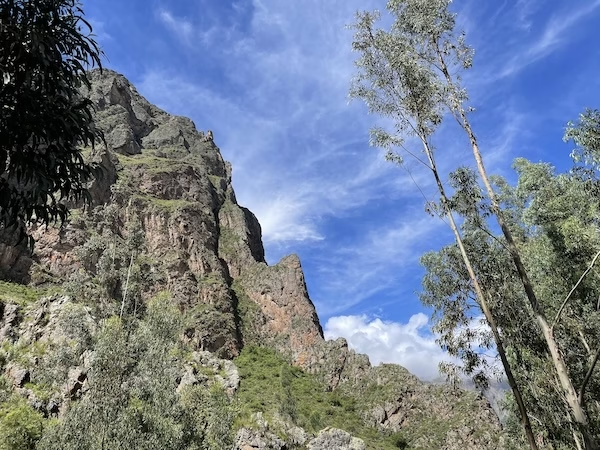
The only thing the Sacred Valley has more of than Inca ruins is gorgeous views. The Andes Mountains rise up to the heavens while the Urubamba river snakes through the terrain. You could really just pick a random direction and walk and you’ll be in for the scenery of a lifetime.
One excellent option is to take the trail that starts at the eastern edge of Ollantaytambo’s Calle Principal. The trail passes by a couple of small Inca ruins and offers exceptional views as well as glimpses at the homes and lives of the everyday Peruvians who call this part of the world home. The area is very agricultural and very pretty.
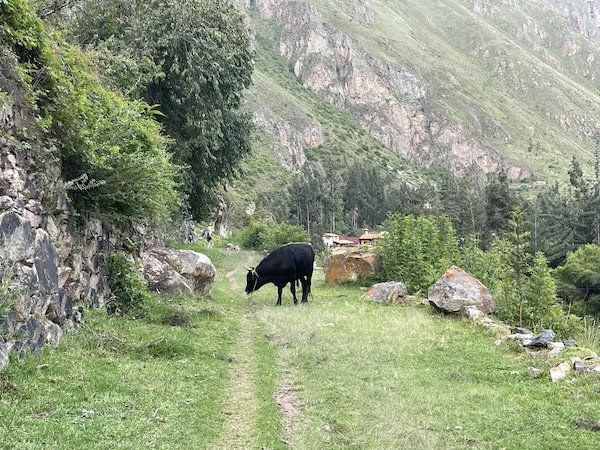
I had wandered this trail by myself when my wife was stuck in the hotel sick. I liked it, and wanted to share it with her. Unfortunately, when we tried to walk again, we came across a huge, black bull blocking the path. A farmer must have tied him up nearby and he’d wandered onto the trail.
I’m a city boy myself and have no delusions of being an amateur matador. We gave the bull a wide berth and turned around.
Where to Stay in Ollantaytambo
Ollantaytambo has more than its fair share of hotels, hostels, guest houses, and more. To be completely honest, it would be really cool to stay in one of those old buildings that date back to the glory days of the Inca. Then there are those weird bubble looking things dangling from the side of a cliff just outside of town. Those could be cool too.
However, restored medieval buildings and cliffside bubbles are probably very expensive.
Luckily, you don’t need to do a lot of searching or break your bank account for good accommodation in Ollantaytambo. I one hundred and fifty percent recommend Peru Quechua’s Lodge, located just a short walk north of the town center. The building is newer and nice, with all the expected moderately priced hotel necessities. It’s located in a local neighborhood, providing a respite from Ollantaytambo’s touristy center. And there are some lovely views of the mountains and ruins.
Most importantly, though, are the incredibly kind and accommodating owners. The hotel is owned and run by a Peruvian woman and her European husband. They were not only helpful in the standard hotel owner ways, but also gave us tea and made it easy for us to extend our stay when we were sick.
Click this link to book your stay with Peru Quechua’s Lodge, and as always, if you use the links on this site I get a small commission at no extra cost to you.
Frequently Asked Questions
Yes, Ollantaytambo is without a doubt worth visiting, though you have to walk beyond the train station to truly experience it. The town has some great ruins, beautiful streets, and plenty of opportunities for hiking and impromptu adventures.
I recommend staying at least two or three nights in Ollantaytambo. You could theoretically see the ruins and the town center in one day, but you deserve some extra time to explore the hikes and views in the surrounding area. You could even stay longer and explore some truly off-the-beaten-path places or use Ollantaytambo as a base for day trips around the Sacred Valley.
For tourists, Ollantaytambo is most famous for its Incan ruins and for being the main train terminal for travelers heading on to Machu Picchu. For history buffs, Ollantaytambo is famous for being the site of Emperor Manco Inca Yupanqui’s heroic victory over the Spanish conquistadors.
The choice to stay in Ollantaytambo or Cusco depends on what you’re doing and what you want out of your stay. Cusco is bigger, louder, and busier. It also has quite a few museums, plus more options for shops and restaurants. Ollantaytambo is smaller, quieter, and closer to nature. It doesn’t have quite the amenities of Cusco, but still has plenty of restaurants and hotels. Both towns are worth visiting.
Also, Ollantaytambo’s altitude is only 2,792 meters (9,160 feet), while Cusco’s is a staggering 3,399 meters (11,152 feet) above sea level. Ollantaytambo can be a good place to get used to the altitude before heading up to Cusco.
Yes, you can walk from Ollantaytambo to Machu Picchu, but not on your own. The famous Inca Trail starts in the nearby town of Piscacucho, about 9 miles (15 kilometers) away. However, to hike the Inca Trail you need a guided tour and permits in advance. I have not done this personally, but a quick google search will reveal a ton of online guides and more information.
Final Thoughts on Ollantaytambo
It’s a shame that most tourists never see Ollantaytambo beyond a brief layover on the tourist train heading to Machu Picchu. Or, if they do, it’s often just the ruins tacked on to the end of a very long day trip from Cusco. Not only does Ollantaytambo have so much more to offer, but it also works as kind of a metaphor for traveling in Peru.
You start at the train station, stepping off of the platform into a sea of souvenir stalls and somewhat tacky recreations of Inca crafts. Maybe someone will be dressed up in traditional Andean garb and do a dance for you. You walk uphill into town, and you pass by over-priced restaurants and one very good ice cream shop. And maybe you see the ruins, which are also surrounded by souvenir stands, but they’re a little cheaper and slightly less tacky.
But then you head into the town itself. You wander along streets and past stone walls built centuries ago by people who were masters of their craft. Now there are no souvenir stalls, but a few hotels. And the restaurants are more affordable. You continue up the road, past the modest homes of the Quechua-speaking descendants of the Inca. And the jagged green mountains surround you, and with one magnificent view you suddenly understand why this valley is sacred.
So that’s kind of how Peru was for me in general. Sure, the popular tourist stuff is good. But if you take the time to scratch below the surface, or wander uphill from the train station, you find experiences that go beyond just checking sites off a list and become something almost transcendent or metaphysical.
But, to be fair, the Ollantaytambo train station is actually pretty nice, too.
Discover more of Peru’s secrets (and whatever the opposite of secrets are) in our Peru travel guide: Peru Travel Guide: Beyond Machu Picchu
Useful Websites for Traveling Peru
As much as we might long for the days when you could show up to a town with nothing more than a beat-up guidebook and a sense of adventure, today much of traveling involves being glued to our phones making bookings. I’ve compiled some helpful apps and websites below that at least help make those bookings more convenient so you can spend less time staring at your phone and more time exploring at your surroundings. Some of these sites are affiliate links that give me a small commission at no cost to you if you chose to book through them. All of them are sites I’ve used personally and have no problem recommending.
Just be sure to do your due diligence as much as possible. Only hire local guides and try as much as possible to stay in locally owned hotels and hostels so that your hard earned travel dollars actually go to support the local economies of the places you visit.
Booking.com is basically the world’s only hotel booking website. They have hotels, guesthouses and vacation rentals all over Peru.
Hostelworld is the go-to site for booking hostels. If dorm rooms and shared bathrooms are your thing, you’ll find hostels throughout Peru.
Get Your Guide offers tours and activities all around the world. Unlike some other sites and apps that do the same thing, you can actually find some reasonably priced deals here.
Cabify is the best way to book a taxi in Peru’s major cities. It works like Uber, but you get connected to a licensed, authorized, taxi instead of just some random weirdo.
RedBus is the place to book long-distance buses in Peru. You can get your tickets and browse schedules ahead of time, and alleviate the stress of not knowing whether the bus you want will be sold out before you get to the station.
Travel insurance can turn a potential trip-ruining disaster into a mere inconvenience. We used SafetyWing for travel insurance during our South America trip and had a great experience. We’ve also used used World Nomads and found them easy to use and set up. If you do decide to get travel insurance, I suggest comparing both options and seeing what works for you.
We receive a fee when you get a quote from World Nomads using this link. We do not represent World Nomads. This is not a recommendation to buy travel insurance. The same applies to SafetyWing.