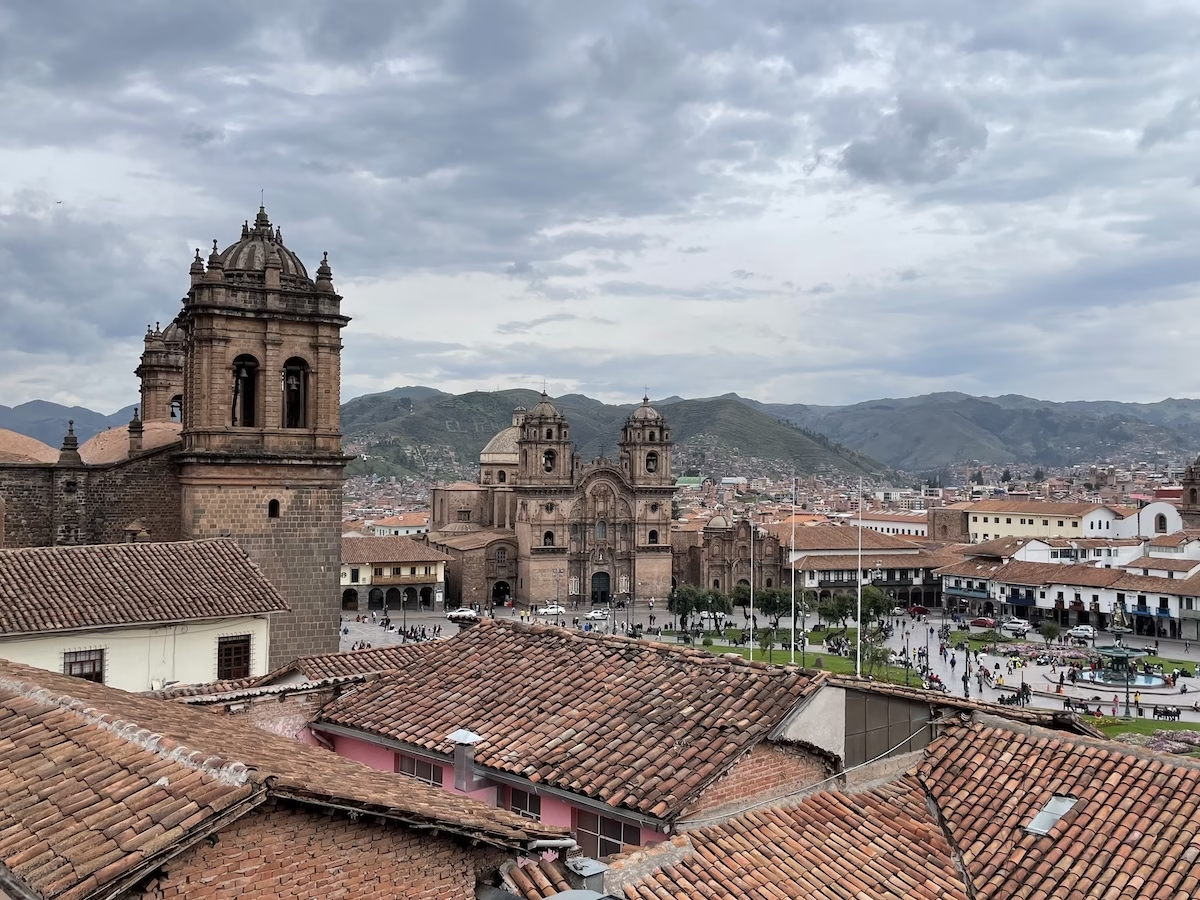
Cusco was once the stately capital of the mighty Inca Empire. Today, it’s Peru’s most popular tourist destination. Magnificent temples of the sun god are now museums, and stone fortresses are filled with souvenir shops and restaurants. Streets that once felt the footsteps of powerful Inca warriors are now filled with souvenir hawkers and bewildered tourists posing for photos with baby llamas. You could be one of those tourists, too. But, hopefully, this Cusco travel guide will help you to be at least a little less bewildered.
What to Know Before Visiting Cusco
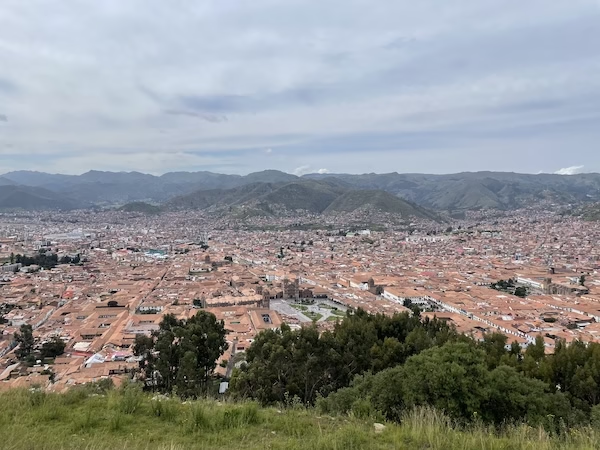
There are a few things you should know before planning a trip to Cusco. Cusco rests in the towering heights of the Andes mountains, at a breath-taking altitude of 3,400 meters (11,152 feet). The city has a population of around 430,000 people, making it the seventh largest in the country. It’s home to countless Inca ruins, and the gateway to Machu Picchu and the Sacred Valley.
While Lima might be Peru’s economic and political capital, Cusco is the undisputed capital of tourism. More travelers visit Cusco than anywhere else in the country. The city sees an average of 1.5 million tourists each year. Take a moment and think about that number: 1.5 million tourists for a city of 430,000 people.
One of the things those tourists will notice first is the overwhelming indigenous character of the city. About 63% of the population of Cusco are Quechua, direct descendants of the Inca. Another 1% are either Aymara or other indigenous groups.
The native peoples of Peru are, unfortunately, still at the bottom of the social ladder and suffer from widespread poverty. That combination of high tourism with low economic mobility means that Cusco has an overabundance of hawkers and street merchants. Some of them can be quite persistent. Try to keep your patience; they’re just regular people trying to make a buck.
The city can be slightly more expensive than the rest of Peru, though it’s far from a luxury destination. Being a tourist hot-spot also means you’ll find more places that accept credit cards, but cash is still preferred. Peru uses the Peruvian Sol. You can get local currency from ATMs.
The city is friendly to tourists, although I found the people aren’t quite as warm as they are elsewhere in Peru. This could be the stoicism of the natives, or maybe just tourism fatigue from dealing with millions of visitors every year.
Top Cusco Travel Tips
- You can only buy the Cusco tourist ticket, the Boleto Turistico, in person. Don’t trust anyone selling them online.
- Central Cusco is very touristy. You’ll have to wander quite far for a more “authentic” experience.
- Street hawkers can be very persistent. Try to be polite, but firm if you don’t want to buy anything.
- Give yourself a day or two to adjust to the altitude. You can also use coca leaves to help alleviate symptoms of altitude sickness.
- Use cash for most purchases. Cards are widely accepted, but cash is preferred and you’ll probably get a better price. ATMs are all over the place.
- Visit the Machu Picchu museum before you visit Machu Picchu. The museum has a lot of artifacts and information to get you excited about Peru’s most famous historic site. Visiting ahead of time will give your trip to Machu Picchu some extra context.
The Cusco Travel Ticket: El Boleto Turistico
Many sites in Cusco and in the Sacred Valley beyond require a special Cusco Tourist Ticket, known in Spanish as the “Boleto Turistico del Cusco”. The all inclusive ticket costs 130 soles (about $38) and covers admission for Sacsayhuamán, Qorikancha, Ollantaytambo, Pisac, Moray, Chinchero and three other museums. The ticket is valid for ten days, and honestly not a bad deal.
You can buy your Boleto Turistico at the official office just off the main square on Avenida el Sol. You can also purchase tickets at the entrances to most of the sites. Again: you can only buy the Boleto Turistico in person. If you don’t want to do everything included in the ticket, you can also get partial tickets that are cheaper and only cover a few of the sites.
You can only buy the Boleto Turistico in person!
Numerous websites will claim to sell the Boleto Turistico online, but even in the best case scenario they’re going to tack on a bunch of fees. Worst case scenario, you’ll arrive in Cusco and find your online ticket doesn’t work at all. It’s much better to just get the Boleto Turistico in person.
The official website (in Spanish) has more information: https://cosituccusco.pe/
Weather and Climate
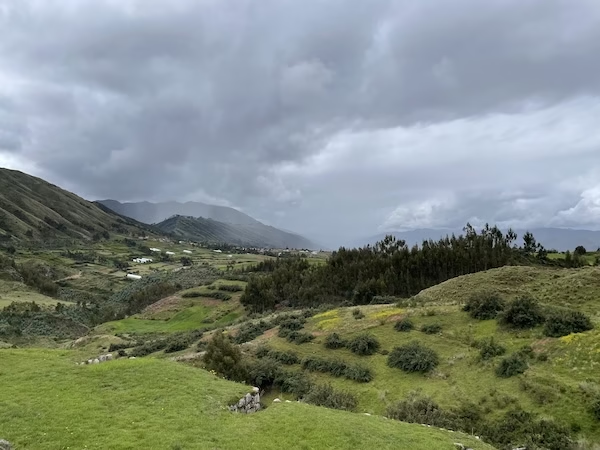
Cusco is a very high altitude city, but the nice thing about Cusco’s altitude is that it moderates the temperatures. Things never really get too hot or too cold. Of course, hot and cold are all relative.
Summer is generally from November to March. Temperatures range from 8 °C (46 °F) at night to 22 °C (72 °F) during the day. Summer is also, unfortunately, the rainy season. You can expect cloudy skies and afternoon downpours. Winter runs from May to August and sees night time lows drop all the way down to 1 °C (34 °F) and day time highs rise up to 20 °C (69 °F). Winter tends to have clearer, sunnier skies and very little rain. You can find more detailed climate information here.
I should leave a disclaimer that climate change is messing up everyone’s weather, so don’t be surprised if what I’ve just told you goes out the window at some point soon.
The Best Time to Visit Cusco
So, when is the best time to visit Cusco? That really depends. Do you want warmer temperatures and more rain? Or would you prefer colder evenings and clearer skies?
We went to Cusco in February, near the end of the summer rainy season. The rains weren’t terrible, and the cloudy skies added a kind of mysterious feel to the city. However, I felt like the overall wetter weather made the evenings feel colder, even though the temperature might’ve been higher. Bring a raincoat and a light jacket or hoodie.
If you’re planning on hiking the Inca Trail, you should note that it closes in February for maintenance. Machu Picchu is open year round, but landslides during the rainy season can mess up the train and make access difficult.
Other Cusco travel guides will tell you to go towards the end of the dry season from June to September. This is also the peak travel season, so you’ll have to deal with more crowds. You’ll need to book everything in advance if you come during this time. During the rainy season, you can have a bit more flexibility.
In the end, I prefer the slightly warmer weather and less crowds. But, hey, that’s just me.
Responsible Travel in Cusco
Considering that the native population has suffered so much historically, it’s important to travel ethically in order to ensure you don’t inadvertently cause more suffering. While we can’t be perfect, we can at least all try and do our best to be responsible travelers.
Don’t take photos without permission. Street scenes and pictures of buildings are fine, but please do not take anyone’s picture without their permission in Cusco. The native clothing you’ll see all over is beautiful, but the people aren’t wearing it for your amusement. It’s just how they dress. Be respectful and always ask before taking someone’s picture.
Try to shop locally. Tourism can bring in a lot of money to local people, but only if tourists spend wisely. Try to stay in locally owned hotels, eat in local restaurants, buy locally made crafts and so on. Our travel dollars can go a lot farther for the people in Cusco than they do at home. It’s best if we can spend them on businesses that will benefit the local economy rather than siphoning off money to some faraway multi-national corporation.
Be respectful of ruins and monuments. Those ancient Incan buildings are not only important places of cultural heritage, but some are still functioning holy sites for local people. Always be sure to respect the rules, stay on designated paths, and please, for the love of God, don’t be the jerk who carves his or her name into the rocks.
In general, the key word is “respect.” Traveling ethically in Cusco means honoring the local people and culture. We are lucky enough to be welcomed as guests in their home, the least we can do is treat them decently.
Is Cusco Safe for Travelers?
When people ask “is Cusco safe for travelers?” they’re probably asking about crime. Don’t worry. Cusco is very safe in that regard. Tourists may face some minor issues with petty theft, or overly persistent street vendors, but neither of those are actual safety issues. And I don’t even think petty theft is all that common.
The real potential safety issues you’ll face are environmental rather than crime related.
Altitude Sickness
The biggest threat to your health in Cusco is the altitude. The city sits at 3,400 meters (11,152 feet) above sea level, higher even than places like Quito, Ecuador. At those heights, the air is much thinner and it’s far more difficult for your body to get oxygen. This can lead to symptoms like headaches, nausea, fatigue, trouble sleeping and others. In extreme cases, altitude sickness can cause your brain to swell or your lungs to fill with fluid and kill you.
The best solution is to ascend as slowly as possible. Experts recommend going up only 500 meters (1,640 feet) per day. This might not be possible if you’re flying into Cusco, or even if you’re coming by bus.
The second best thing to do is to give yourself time to rest and acclimatize before starting any hardcore sightseeing. Avoid any alcohol, heavy foods or intensive physical activity for the first few days in Cusco. Take a few light strolls, but don’t overdo it. You can also get prescription medicine to help with altitude before your trip.
Another option is to do as the locals do and trust in the coca leaf. Yes, coca is the base for making cocaine, but the leaf is a traditional medicine that’s been used for millennia to treat altitude sickness as well as stomach aches and other ailments. I can personally attest to the power of the coca leaf.
Obviously, if you begin to get severe symptoms, all the coca leaves in the world won’t help you. You need to descend to a lower altitude right away. And finally, I should note that I’m not a doctor, and you should take any medical advice you read on this or any other blog with a grain of salt. You can find more detailed information elsewhere, but always trust a doctor’s advice if you have concerns.
UV Radiation
The second biggest danger you’ll face in Cusco comes not from the mountains, but from the sun. As in other regions of the Andes, the high altitude and thinner air means that you’re more exposed here than elsewhere to solar radiation. In fact, Cusco has the dubious honor of being the city with the highest levels of UV radiation in the world. What does that mean for the average visitor? It means you need to cover up. Bring plenty of good quality sunscreen, and don’t be shy about applying it before you go out. You should also be sure to pack a wide-brim hat and long sleeves to keep yourself covered and protected.
Make sure to cover up from the sun even if it’s cloudy out. UV radiation at this height can cut through the clouds. Even if you have darker skin. Skin cancer sucks, and there are much better souvenirs to bring home from your trip to Cusco than melanoma.
How to Get to Cusco
Flying into Peru internationally means you’ll land in Lima. From Lima, you can either fly or bus to Cusco. The flight takes about an hour and a half and should cost around $100 round trip. This price will likely change as jet fuel gets more expensive, but it still shouldn’t completely break the bank. You can choose between budget carriers like JetSMART and Sky, or go with the Latin American aeronautical juggernaut LATAM for a little more comfort.
It’s also completely possible to bus to Cusco, though you’ll need a lot of time and patience. Buses regularly head to Cusco from Lima, but the journey takes at least 22 hours. Ticket costs range from $30 to $70. I would recommend going with a more expensive, more comfortable operator like Cruz del Sur for such a long trip.
There are certain other blogs and travel guides that will tell you Peru’s public buses are dangerous. They will then “helpfully” suggest a certain hop on, hop off tourist bus service. Don’t listen to them. Peru’s public buses are perfectly safe, and those blogs are just trying to manipulate you to click on their affiliate links.
How to Get to Cusco from Puno (Lake Titicaca)
If you’re visiting Cusco as part of a large trip through Peru, you’ll most likely be coming from Lake Titicaca. Public buses run regularly from the lakeside city of Puno and cost around $20 to $30. The trip takes a more reasonable eight hours.
You could also opt for the more touristy “Ruta del Sol” on the Inka Express bus. This is what we did, and it had its pros and cons. The trip costs $50 and includes lunch as well as guided stops at five different sites. Some of the sites were viewpoints, others were small villages. Some were very cool, others kind of lame.
The best were the massive Incan ruins. On the one hand, it was great to get to see these things we may have missed on the public bus. On the other hand, it’s a tour, so you’re herded through the sites and only have a short time to visit each one. We also stopped at the obligatory jewelry store. Still, for $50 it wasn’t a terrible way to fit in some extra sightseeing en route from Puno to Cusco.
Transportation Around the City
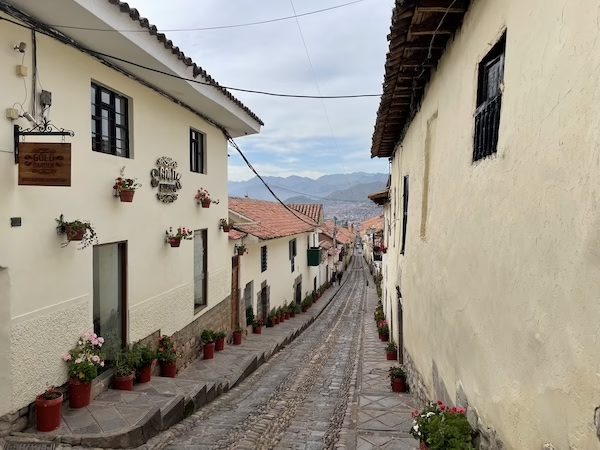
Cusco’s historic center is compact and easily walkable. While the city does tend to sprawl around the edges, the vast majority of things you’re going to want to see are in walking distance from the center. There are some steep hills in places, but you can pack some decent shoes and use your own two feet!
Even the bus and train stations are just a short distance from the city center. A few exceptions to that rule include some of the Incan ruins that are tucked into the hillsides surrounding the city. To reach those, you’ll have to hire a taxi.
Taxis in Cusco are plentiful and reasonably priced. You can use ride hailing apps like Cabify, but to be honest, your best bet is to just hail a cab in the street. Taxis don’t use meters, so you’ll have to negotiate a fare in advance.
Cusco also has a fleet of minivans to shuttle you out to areas around the city. These are called either “combis” or “colectivos” and are a good, economical, way to get around. They only leave when full and stop frequently en route, so they might not be the best choice if you’re in a hurry.
Where to Stay in Cusco
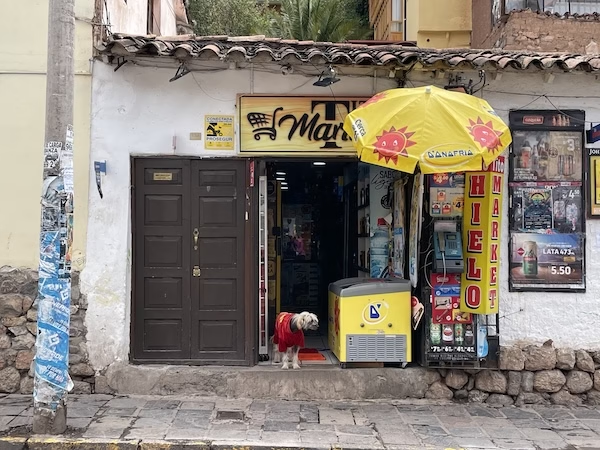
As I mentioned before, Cusco is Peru’s most touristed city. That means you will be absolutely spoiled for choice when it comes to places to stay. The main choice you have to make, though, is whether you want to stay in the historic center or slightly further out.
Staying in the historic center means you’ll likely be in a restored colonial building. You may be in a restored colonial building with an Incan foundation, which is pretty cool. You’ll also have Cusco’s most popular tourist sites right outside your front door. The downside is that you’ll have Cusco’s most popular tourist sites right outside your front door. Ironically, staying in the historic center provides a less authentic experience.
Outside the center, you’ll find modern cement buildings and all the hustle and bustle of any city without a historic pedigree. This is where the people of Cusco live and shop and every single thing doesn’t necessarily revolve around tourism. I actually really liked this part of Cusco, and you can choose a spot that’s still walking distance from the historic center so you can still get the tourist stuff when you want it.
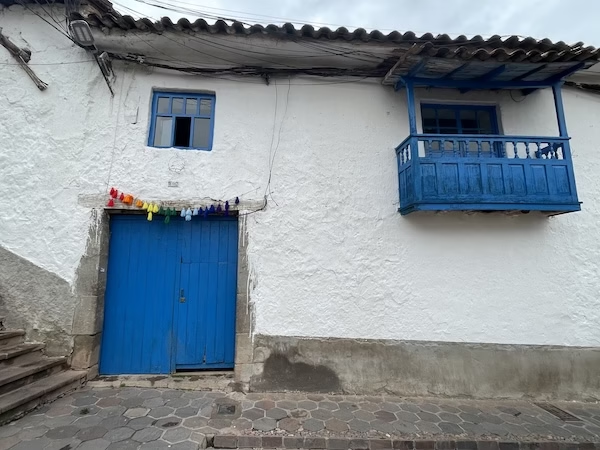
For those of you who need to be in the thick of things, I suggest the San Blas neighborhood which is just to the north east of the Plaza de Armas. We stayed at Hostal el Grial and had a good time. The building itself was everything you’d expect from a restored colonial building, and we were smack dab in an adorable old street. You can click here to book a stay with Hostal el Grial. This is an affiliate link, which means I’ll receive a small kickback at no charge to you.
If, however, you want to be away from the touristy historic center, I highly recommend the Residencial Belle Maison. It’s a small place, run by a local woman who is absolutely one of the nicest people ever. She made our time there feel like we were visiting long lost relatives. While the neighborhood won’t win any beauty contests, it’s safe and in walking distance to transportation and the city center. You can click here to book your stay at Residencial Belle Maison. This is also an affiliate link, I’ll receive a small commission at no charge to you.
If you book using one of the above links, you’ll get a fabulous Cusco experience, and the satisfaction of supporting an independent travel blog.
The Best Things to Do in Cusco
Now we get to the fun part of the travel guide: the best things to do in Cusco. Cusco literally has a ton of things to do, ranging from museums to ruins to who knows what else. There’s a reason it’s Peru’s most popular tourist destination.
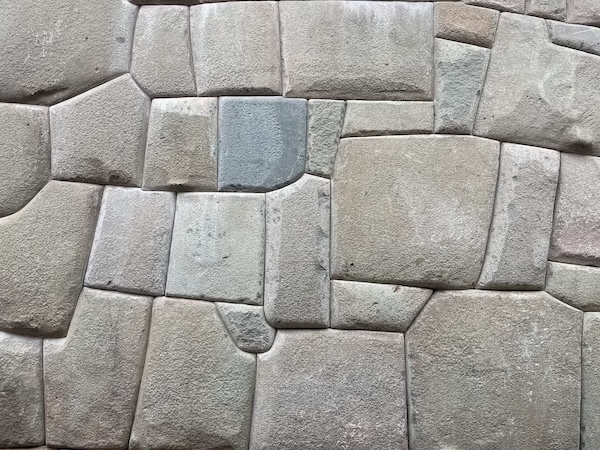
Wander the Historic Center and Plaza de Armas
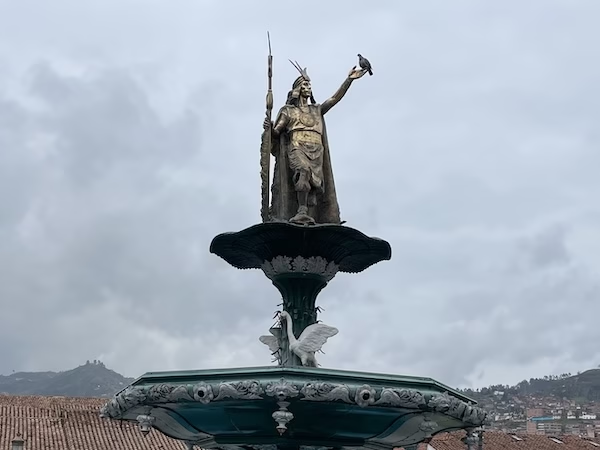
The first place you should head in Cusco is the historic Plaza de Armas. This large plaza is the heart of Cusco’s historic center and dates back to the days of the Inca. While most Latin American cities have central plazas with statues of conquistadors or other dead white men, Cusco’s is anchored by a bronze statue of the Inca emperor, Pachacuti.
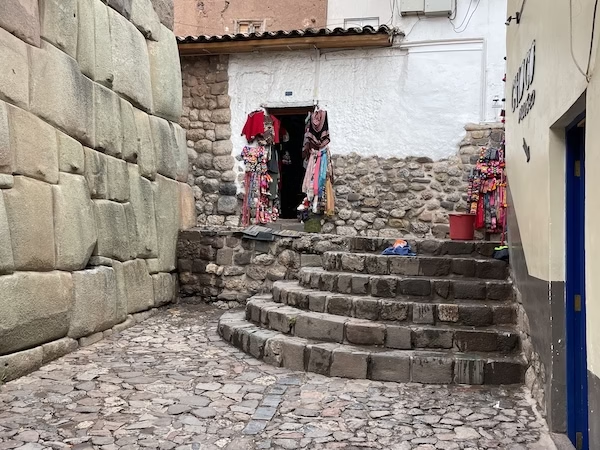
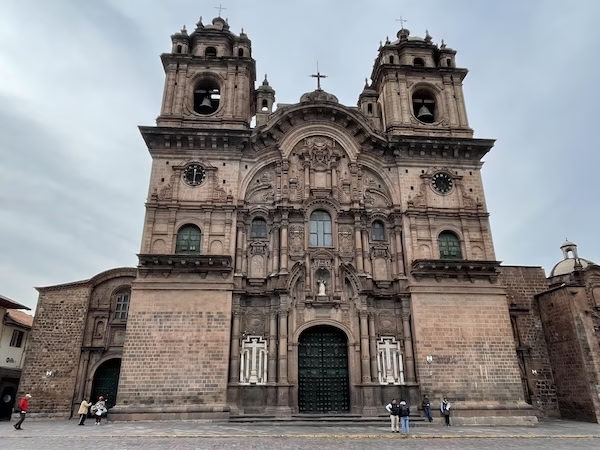
Surrounding the square you’ll also find the massive Cathedral of Cusco and the ornate Templo de la Compañía de Jesús. Both of these Spanish colonial churches were built using stones taken from Incan buildings. Just off the main plaza, keep an eye out for the famous 12 angled stone on Calle Hatunrumiyoc. It’s one of the best surviving examples of the genius of Inca masonry.
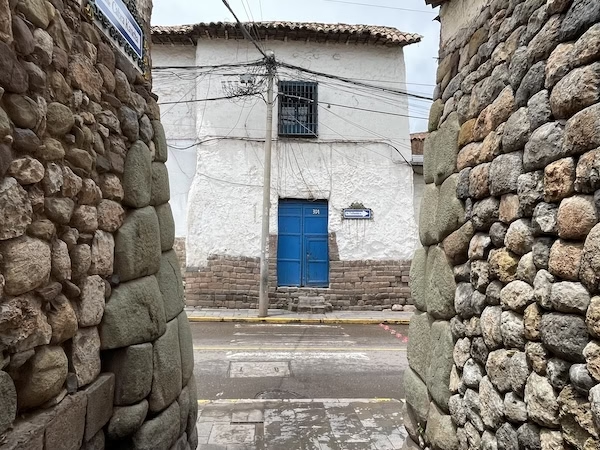
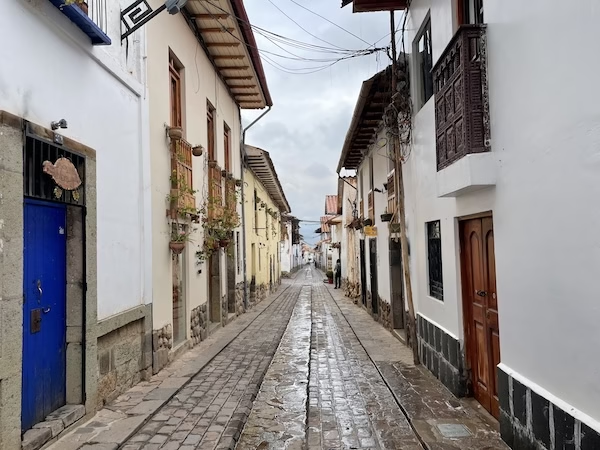
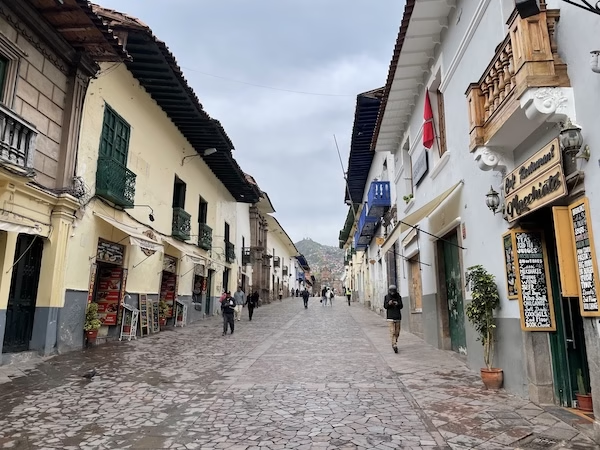
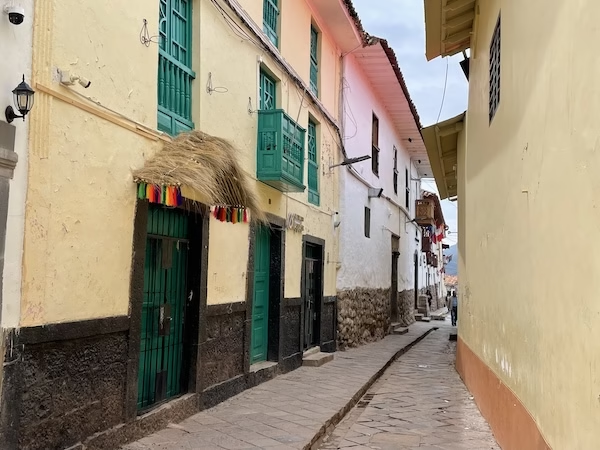
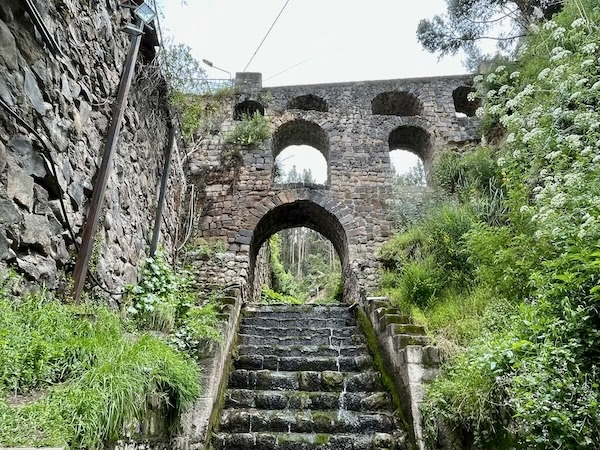
Just north east of the Plaza de Armas is the San Blas neighborhood, which is a collection of narrow alleyways, steep pedestrian streets and adorably Instagramable buildings. These days it’s definitely a bit gentrified, but it’s still full of beautiful architecture. I also suggest heading uphill to the end of Calle Tandapata to see the aqueduct. If your lungs and calves are up for it, you can keep climbing uphill on Calle Pumacurco all the way to the Sacsayhuamán ruins.
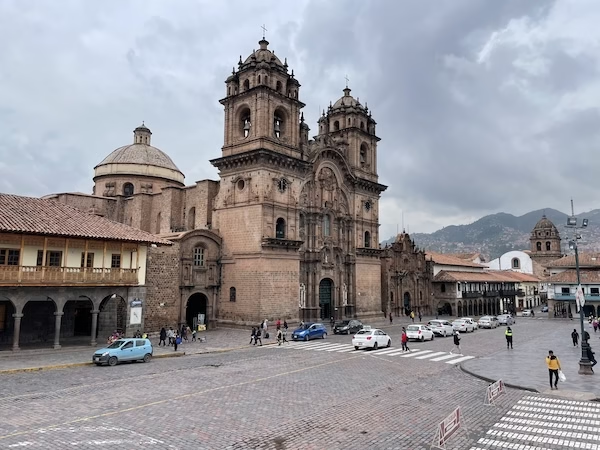
Marvel at the Qorikancha
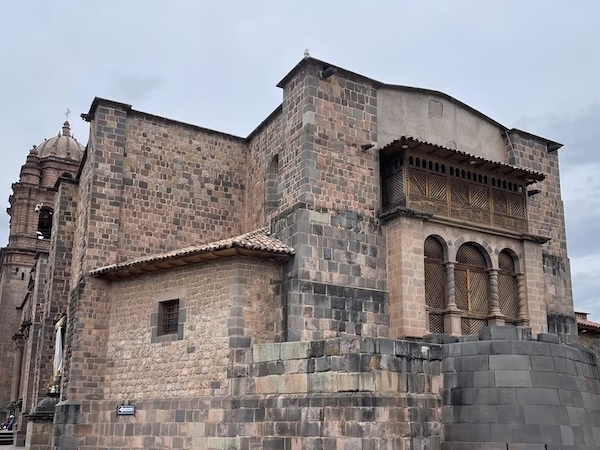
The Qorikancha (or Coricancha) is one of Cusco’s must-see and most important historical sites. The massive structure was once Incan temple of the sun god. During the time of Emperor Pachakuti, they hung massive gold plates on the walls so that the temple shined like the sun itself. Then the conquistadors came, melted all the gold and sent it back to Spain, and destroyed the temple in order to build a Dominican convent on its remains.
Today, the building functions as both a church and a museum. You can still see the massive stones the Inca used to build the foundation. Inside is a collection of Inca artifacts, information about the Inca cosmology and a collection of colonial religious art. The building grounds also have some lovely gardens.
The Qorikancha is located south of the main historic center. You can walk down the Avenida del Sol, or take a more leisurely stroll down Calle Loreto. There’s no way to miss it.
Tickets are included in the Boleto Turistico de Cusco. You can buy them at the entrance if you don’t have yours yet.
Learn Something (or Just Admire the Art) at a Museum
Cusco has a lot of history, and a lot of museums to display that history. While the Spanish destroyed a lot of what the Inca built, a surprising variety of important pieces have survived to fill the halls of Cusco’s museums.
Inca Museum
The Inca Museum, or Museo Inka, is located in an old colonial building just off of Cusco’s Plaza de Armas. It’s got a very nice collection of pottery, sculptures and textiles. I did find it to be a bit chaotic and disorganized. Still, definitely worth checking out.
The museum is open from 9:15 to 4:00 Monday through Friday, with extended Saturday hours during the high season. Admission is 20 soles. The museum’s official website has some more information in Spanish, and is itself an artifact of an internet most of us left behind in the early 2000s.
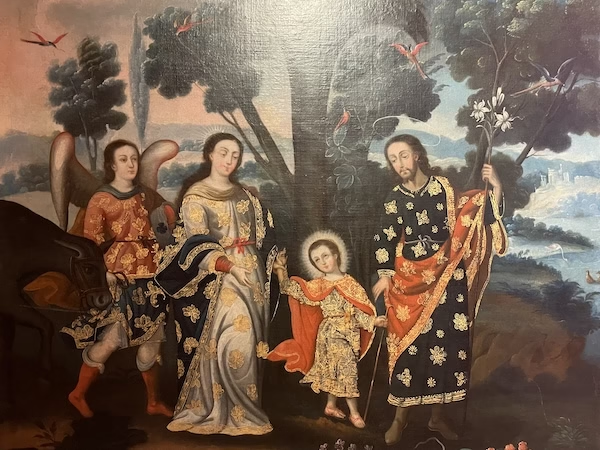
Pre-Columbian Art Museum
The Pre-Columbian Art Museum, or Museo de Arte Precolombinois part of the same foundation that administers the Museo Larco in Lima. It has a lot of the same sorts of things as the Inca Museum, but with a much more organized, modern presentation. Definitely a fantastic place to really admire the artistry of Incan pottery.
Hours are 9am to 4pm Monday to Sunday, and admission costs 20 soles. It’s located just up the block from the Inca Museum on Córdoba del Tucumán, off of Plazoleta de las Nazarenas. The official website is very modern and available in English or Spanish.
Machu Picchu Museum
The Machu Picchu Museum, or Museo Machu Picchu Casa Concha, was probably my favorite of all the Cusco museums that we visited. The artifacts in the collection are those specifically collected from Machu Picchu, and the museum has a wealth of information about the famous ruins. We visited the museum after visiting Machu Picchu, which I think was a mistake. You should definitely check out the museum first if you can for some context. Visiting the museum afterwards just made me want to turn around and go back to Machu Picchu again that day.
You can find the Machu Picchu museum south of the Plaza de Armas on Strada Catalina Ancha. It’s open Monday to Saturday from 9am to 5pm. Admission is 20 soles. The official website is simple, but effective.
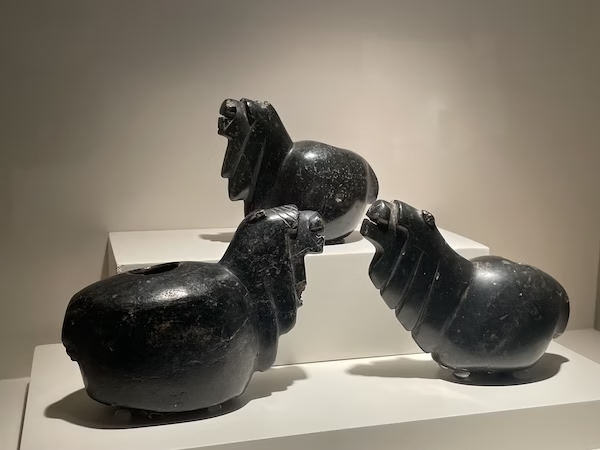
Explore Some Ancient Inca Ruins
Okay, so we all know the main reason 1.5 million people visit Cusco every year, and it ain’t the museums or the historic city center. It’s the Inca ruins. Specifically, the mighty ruins of Machu Picchu. But we’ll get to those later.
I was surprised to discover just how many Inca ruins still remain around Cusco. The city and surrounding area are literally littered with ancient ruins. While the Spanish destroyed the vast majority of them, enough remains that you can still get a sense of what these amazing structures might have been like in their prime.
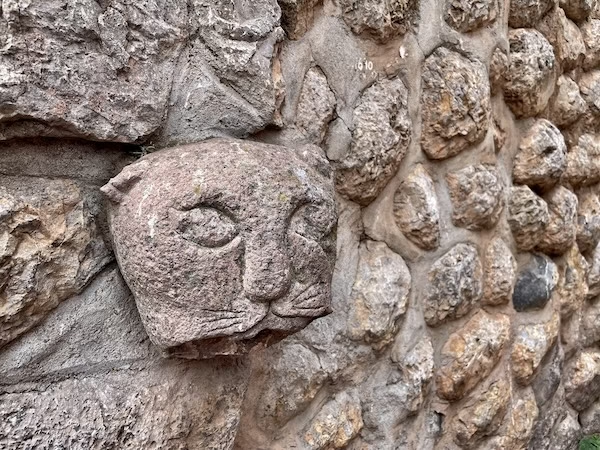
Sacsayhuamán
If you only have time to visit one ruin in Cusco, you should visit the old fortress of Sacsayhuamán. Also sometimes spelled Saqsaywaman or Saksaywaman. The remains of this once mighty citadel tower over the city. Legend has it that the Inca designed Cusco in the shape of a puma, and Sacsayhuamán was meant to be the puma’s head. The site functioned as a military fortification and also a place for religious ceremonies.
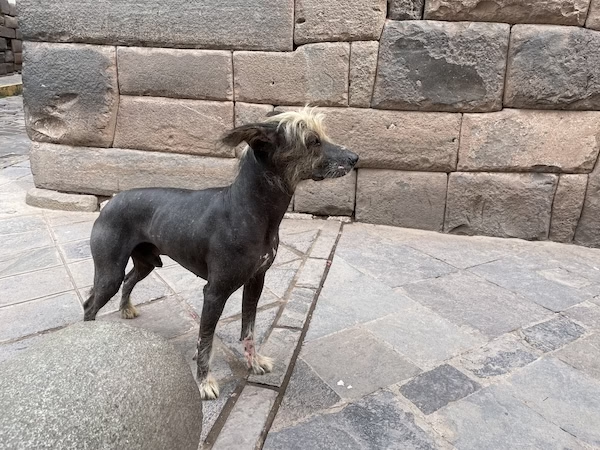
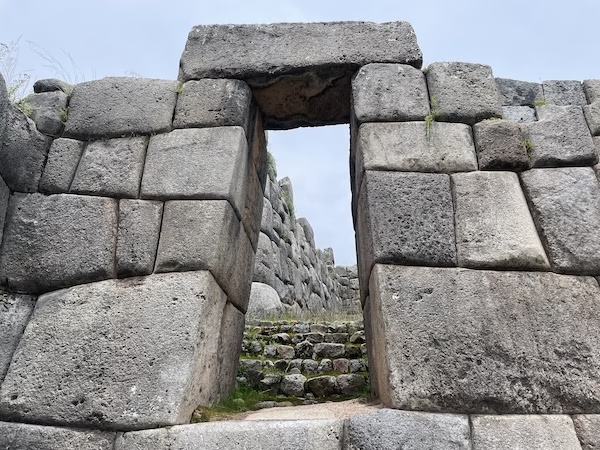
Of course, when the Spanish came they destroyed most of the citadel and used the stones to construct their own buildings. What remains are the stones that were too heavy to move. And what impressive stones they are. Some are many times larger than a full grown adult person. How the hell did the Inca get them up there without pack animals or wheels? And how did they get them to fit together so well without any kind of cement or mortar?
You’ll ponder those questions alongside numerous other tourists. Sacsayhuamán is probably Cusco’s most popular ruins. Try to visit early in the morning to avoid the crowds. Cusco tour guides will tell you that the name is pronounced like “sexy woman” but based on my limited knowledge of Quechua phonology, I feel like that’s just something they say for the tourists.
Sacsayhuamán is included as part of Cusco’s Boleto Turistico. If you haven’t gotten yours yet, you can purchase it at the entrance. The easiest way to get here is by taxi, or as part of a guided tour. It’s often the grand finale to the standard circuit of nearby ruins.
The most fun and challenging way to arrive at Sacsayhuamán is to walk from Cusco. Make your way up Córdoba de Tucumán from the main plaza, then hang a left at the Plazoleta de Nazarenas. Follow Calle Pumacurco up hill. It’ll eventually become a pedestrian street, then a steep staircase. You’ll reach some restaurants and shops, where you’ll take a much needed rest, before crossing the road and heading up to the ruins.
Sacsayhuamán is 300 meters (985 feet) higher than central Cusco. Don’t even dare to make the hike until you’ve taken time to acclimatize to the altitude.
Cusco’s Other Ruins
The rest of Cusco’s ruins probably require a set of wheels. That is, unless you’re some sort of alpine superman and don’t mind walking 5 miles uphill at high altitude. For the rest of us, there’s the bus and taxi.
We hired a driver to take us on a mini-tour of ruins. He charged $60 for two of us, and ended up being surprisingly knowledgeable about the different sites. If you’re on a strict budget, you can also reach any of the ruins via public transportation, but it’ll require transfers and a good command of Spanish.
All the sites listed below are quite small and can be explored in an hour or maybe less each, depending on how long you like to marvel at ancient Inca stone work.
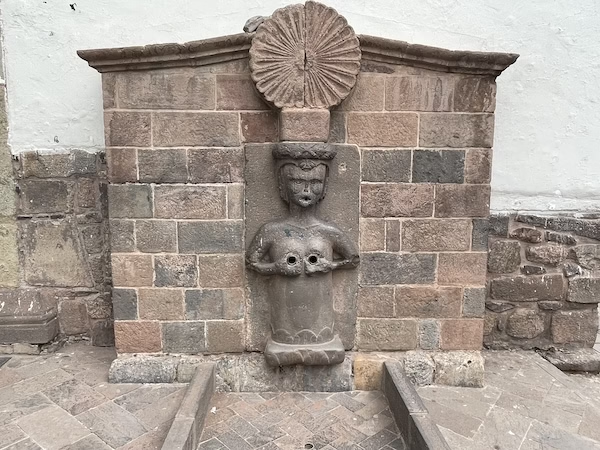
Tambomachay is the furthest from central Cusco, and probably the first you’ll visit. You’ll find a series of canals, aqueducts and at least one functioning water fountain. The prevailing theory is that Tambomachay was once used as kind of a spa resort.
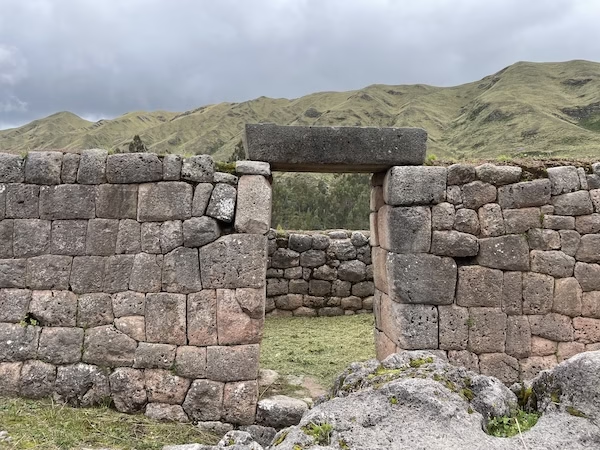
Puka Pukara is an ancient fortress on a rocky outcropping overlooking central Cusco. The name means “red fortress.” It was probably some sort of military structure. Possibly a kind of check point for people heading into Cusco. Puka Pukara is just a short jaunt down the road from Tambomachay.
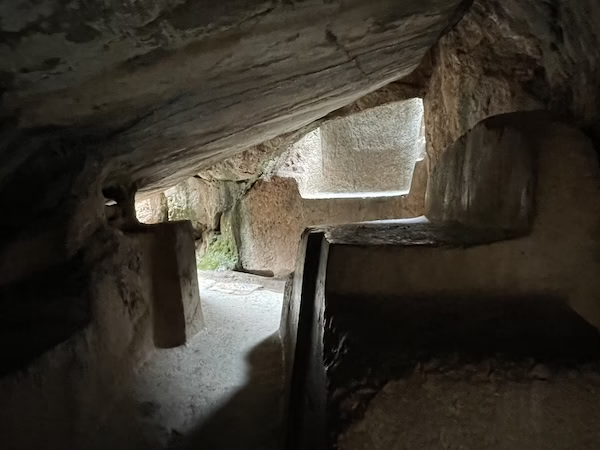
Q’enqo was, in my opinion, the most interesting of the three ruins. It used to be a temple, and is still considered one of the largest holy places in the Cusco region. The Inca would perform sacrifices and mummification here. Unlike other Inca ruins which are obvious buildings made of stones, Q’enqo feels more like it was carved into the rock itself. It’s a wonderful example of how Inca architecture embraced and harmonized with nature rather than fighting against it.
Day Trips from Cusco
The area surrounding Cusco is bursting with astounding views, fascinating ruins and charming villages. You can find an almost endless amount of tours and day trips leaving from Cusco. So many, that it’s practically impossible to see everything in a single trip. You’ll have to pick and choose depending on your interests, which isn’t a bad problem to have. Again, Cusco is popular for a reason.
Tour operators in town offer all sorts of day trips and tours. Many places can be reached independently, although you’ll need some gumption and a good command of Spanish.
Pisac
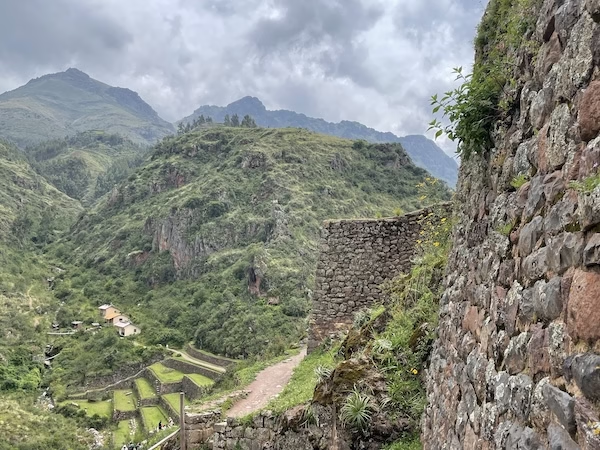
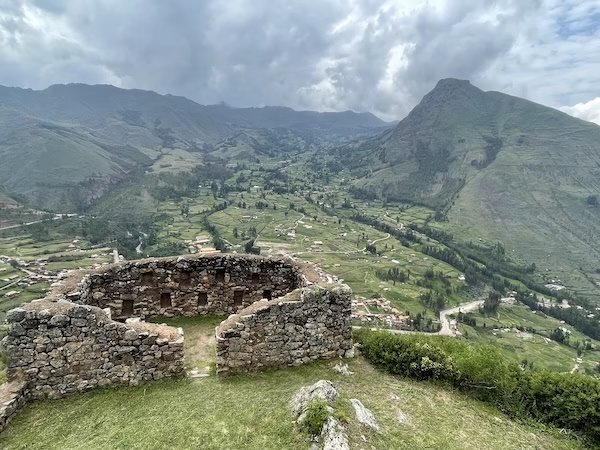
Pisac was, by far, the most impressive Incan ruin we saw in Cusco. Second only to the majesty of Machu Picchu. The site is surprisingly well preserved, with numerous stone walls and buildings intact to the point that you can start to imagine what life might have been like on this ancient settlement on the top of a mountain.
The buildings cling to the mountainside, overlooking a series of terraced fields that meander down the mountain slope. The entire structure looks out over a magnificent vista of the valley below, surrounded by green mountains and jagged red cliffs. It’s beautiful.
Pisac is only about 45 minutes to an hour from central Cusco. You can take a taxi, but it’s much cheaper and quite easy to take the colectivo. Sometimes called a “combi” in Peru. You can find the colectivo to Pisac on Puputi, just off of Avenida de la Cultura a short walk east from the Qorikancha. Fares cost 4 soles one way. Bring cash.
The combi drops you off in the cute town of Pisac. From there you’ll either have to take a taxi up to the ruins, or you can walk. Or you can do what we did and combine the two: take a taxi up and walk down.
You’ll need the Boleto Turistico to enter the Pisac ruins.
Raqch’i
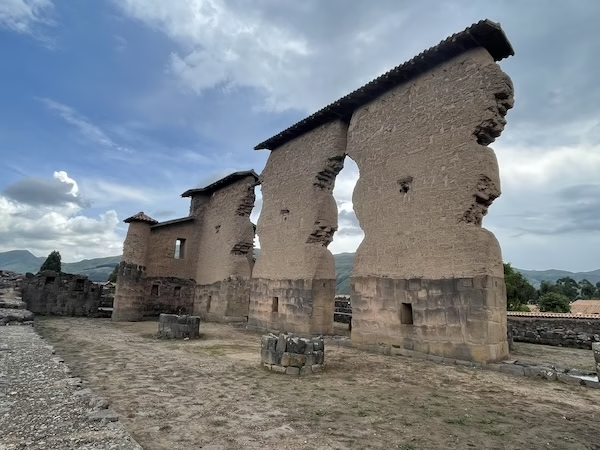
I’ve seen a lot of neat walls in my day, but the remaining walls of the Temple of Wiracocha in the Raqch’i archaeological complex are some of the neatest. The site isn’t particularly large, but it’s still pretty cool to see the towering stone and adobe wall that remains of this once mighty temple. The site also has some stone store houses and other structures to explore as well.
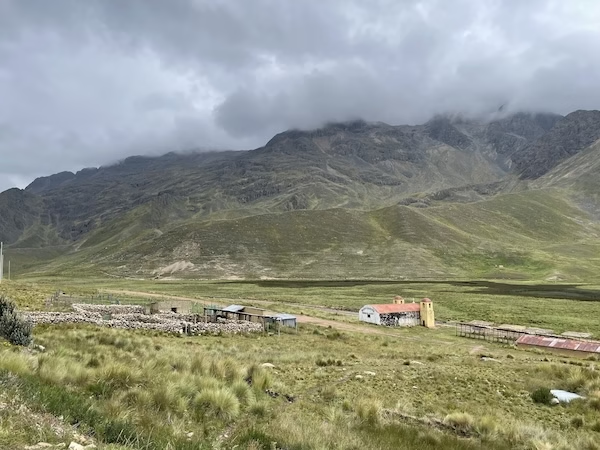
Raqch’i is located on the road from Cusco to Puno (Lake Titicaca). You can take any public bus going along the route, and just ask the driver to let you off along the way. Alternatively, you can take a tour from Cusco or visit the complex as part of the Ruta del Sol bus. You could also, conceivably, hire a taxi. Raqch’i is about two hours from central Cusco.
To be completely honest, while the ruins at Raqch’i are impressive, I don’t know that they warrant a separate trip. I’d suggest them as a pit stop between Cusco and Lake Titicaca rather than visiting as a day trip from Cusco.
Entrance costs 20 soles per person.
Andahuaylillas
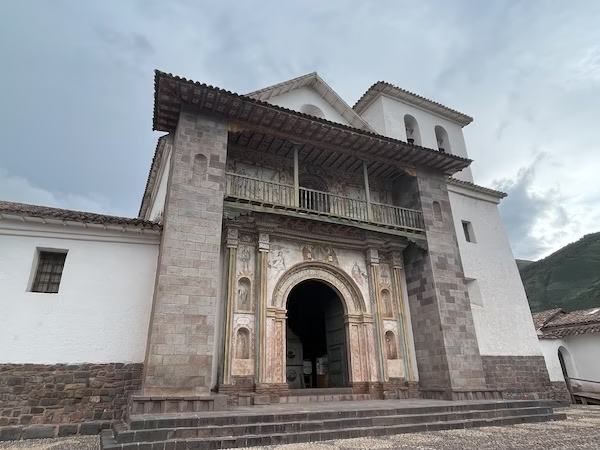
There are adorable small towns with beautiful churches, and then there’s Andahuaylillas. For my money, Andahuaylillas might even rival Barichara in Colombia for most beautiful Spanish Colonial mountain town. The main attraction is the church and its intricately carved, gold leaf covered altar. However, the rest of the town is incredibly pretty and photogenic as well.
We stopped in Andahuaylillas as part of the Ruta del Sol bus trip, but it’s the one place I wish we could have lingered a bit longer. If I had to do it over again, I’d even stay here a couple of nights, just to soak in the tranquility of the place.
You can reach Andahuaylillas from central Cusco in about 40 minutes. Again, take any bus heading to Puno and ask to be let off along the way. Alternatively, you could splurge for a taxi. Or, if you’re short on time, the Ruta del Sol stops here, too.
The Sacred Valley
Cusco is the gateway to the Sacred Valley of the Inca. This fertile valley surrounds the Urubamba river and was once the Inca heartland. The Inca not only grew numerous crops, but also built villas and vacation homes for the elites. It’s easy to see why anyone would want a villa or vacation home here. The Sacred Valley is absolutely beautiful.
Some of those ancient Inca structures include the ruins at Pisac, Ollantaytambo and others. Tour operators in Cusco offer all day tours that hit up everything the Sacred Valley has to offer. If you’re short on time and want to see the highlights, these tours can be a good option.
Check out what Get Your Guide has on offer for tours. If you book using this link, I’ll get a small commission.
However, as much as I would like you to click the above link and book an expensive tour so that I get affiliate money, I strongly suggest you DO NOT do the Sacred Valley as a day trip.
The region is so beautiful, and so full of small, surprising wonders that I think it’s worth spending at least a few days exploring the valley on your own. You can base yourself in Ollantaytambo and soak up the magic of the Sacred Valley on your own time.
I plan on writing a separate post about doing just that, and will add a link here when that’s finished.
Humantay Lake and the Rainbow Mountain: The Day Trips We Didn’t Do (and Why)
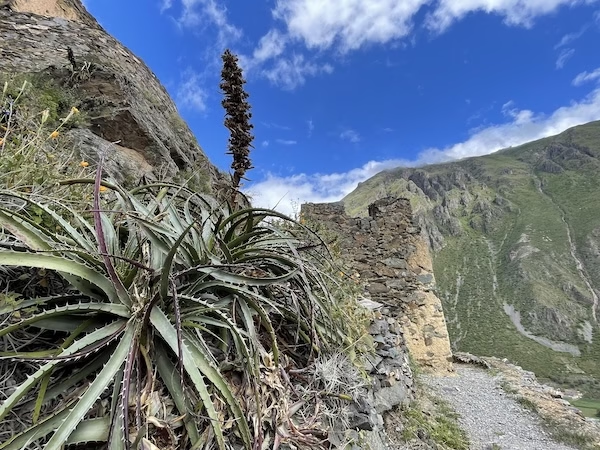
You may have noticed that I’ve left out two major day trips that are included in just about every other Cusco travel guide: Humantay Lake and the Rainbow Mountain. I enjoy nature, hiking, mountains and beautiful views, but these two things just didn’t seem worth it to me when we were in Cusco.
For one thing, we got caught up in learning about the Inca during our time in Peru, as you can probably tell from my list of the best things to do in Cusco. Even with two months in the country, we had to make some tough decisions on what to prioritize, and we decided to prioritize ancient ruins and museums over anything else.
Secondly, while you can visit Humantay Lake or the Rainbow Mountain independently, it seemed like kind of a pain in the ass to do so. We could have taken a tour, but most of the tours to those specific sites seemed very rushed. I like hiking, but I’m not the biggest fan of being quickly herded up the side of a mountain just to have enough time at the top for a selfie before being herded back down again. I like to take things slow and go at my own pace.
So, considering all that, we decided to skip these two popular tourist activities when we were in Cusco. I have no regrets.
The one activity we missed in Cusco that I’m bummed about missing was the Cusco Planetarium. We were all set to go on our last night in Cusco, but the guy running the place got sick so we couldn’t do it. If you’ve visited the planetarium, please don’t leave a comment about it, because I’m sure it was cool and I’m sad I didn’t get the chance to go.
Visiting Machu Picchu
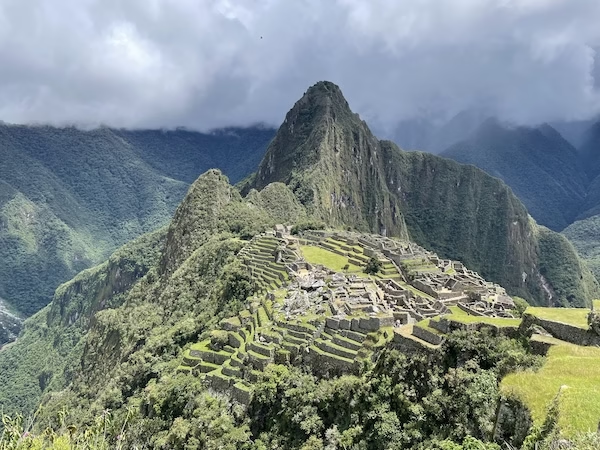
Buried near the end of this Cusco travel guide, we finally come to the main reason people travel to Cusco in the first place: the ruins of Machu Picchu. Machu Picchu is so amazing, it deserves its very own blog post. I will write that blog post soon, and when I do, I’ll pop a link here. For now, I’ll share the basics of how to get there.
You should buy your ticket to Machu Picchu in advance. You probably only need a few days if you’re traveling in the low season. In the high season, you may have to plan the entire trip around when Machu Picchu tickets are available. If you can’t speak Spanish, have a friend or robot help you translate the official website: https://tuboleto.cultura.pe/llaqta_machupicchu
You can visit Machu Picchu as a day trip from Cusco. It will be a long, crowded, exhausting day, but it’s doable. However, the best option is to spend the night in Aguas Calientes, a.k.a. Machu Picchu Pueblo, and head to the ruins early in the morning.
Not sure if Machu Picchu is worth the trouble? Then read this: Is Machu Picchu Worth It?
How to Get to Machu Picchu from Cusco
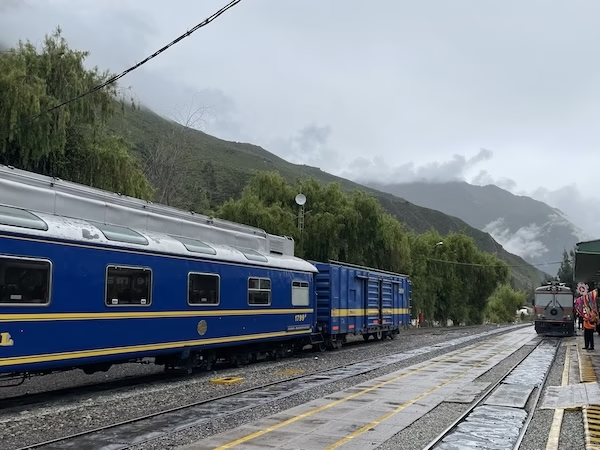
There are two main companies that offer trains to Machu Picchu: PeruRail and IncaRail. Both offer very similar packages and I don’t think there’s much difference to be honest. I believe we took IncaRail because they were slightly cheaper at the time. Visit either of their offices in Cusco and they will gently hold your hand through the whole thing. Tickets will run you between $60 to $100 plus per person.
You can also book your ticket online in advance. I’d suggest this option if you’re traveling during the high season. In the low season, you can get away with getting a ticket a day or two ahead of time.
https://www.perurail.com/train-services/perurail-expedition/
From Cusco, you’ll first make your way to Ollantaytambo. You can get here independently, but you may as well take advantage of the Cusco to Ollantaytambo transfer included in your Machu Picchu train ticket. Trains exist between Cusco and Ollantaytambo, but they aren’t always available. Especially in the rainy season. Both train companies provide a bus transfer. The whole process is actually pretty easy and even the spazziest, most anxious traveler isn’t likely to have problems.
From Ollantaytambo, you just need to get on the train and within a couple of hours you’ll be stepping out onto the streets of Machu Picchu Pueblo (Aguas Calientes). From there, shuttle buses regularly climb the hill to the ruins. Again, I suggest spending the night and heading to Machu Picchu bright and early in the morning to avoid the crowds.
Be sure to read our Machu Picchu guide here: The Complete Machu Picchu Guide for Independent Travelers Who Don’t Want to Hike
A Short Guide to Cusco’s History
Legend has it that the first Inca Leader, Manco Capac founded Cusco alongside his sister, Mama Ocllo. Both of them emerged from the waters of Lake Titicaca during the great misty time of pre-history. Their father, the sun god Inti, gave Manco Capac a golden staff and sent them off into the world to found civilization. When they reached what is now Cusco, Manco Capac threw his staff into the ground, indicating the perfect spot to found a city.
That city grew to become a city-state, then a kingdom, and then a mighty empire that stretched from southern Colombia to northern Chile and Argentina. The Inca built a vast network of roads spanning the continent, numerous magnificent buildings and more.
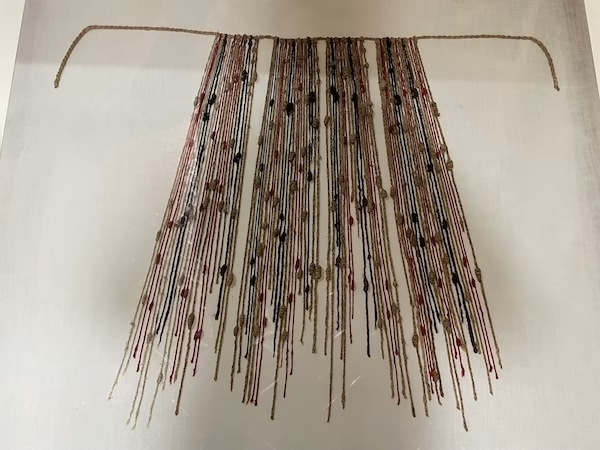
The coolest aspect of Inca culture, in my opinion, was the quipu. These were basically a series of knotted strings used to count population, grain and other things. They also may have been a form of writing! Unfortunately, many were burned by the Spanish or otherwise lost to time, so we may never know for sure.
The Spanish arrived in Cusco in 1533. Conquistador, Francisco Pizarro, found that the once mighty Inca empire had been weakened by a plague (possibly small pox) and a brutal civil war. The drama of the battle between Pizarro and the last emperor, Atahualpa, is a dramatic story with twists and turns and incest worthy of an HBO miniseries. You can read about it in the book, The Last Days of the Inca by Kim MacQuarrie.
Cusco became the most important city in Spain’s Viceroyalty of Peru until it was eclipsed by Lima in the 17th century. Things went well for the Spanish and their descendants, but not so well for the remaining indigenous people who were enslaved and exploited. Tensions came to a head in 1780 when Tupac Amaru II rose in rebellion against the Spanish. And, yes, the rapper Tupac was named after him.
Post-independence, Cusco maintained its strong indigenous and rebellious identity. We can thank left-wing mayor, Daniel Estrada, for focusing on the beautification and restoration efforts in the 1990s that make Cusco such a scenic place today. Cusco soon became Peru’s top travel destination, and tourism became a major part of the city’s economy.
That tourism industry suffered a major blow with the COVID-19 pandemic. Almost immediately afterwards, Cusco was rocked by major protests against the corrupt Peruvian congress. Airports were shut down, streets barricaded and tourists stranded. Unfortunately, the protests didn’t succeed in reforming the political system. Today, the city is still trying to pick up the pieces and regain its crown as king of Peruvian tourism.
The End of this Cusco Travel Guide: My Final Thoughts
Cusco is a fascinating and beautiful city, but to be completely honest it can also be difficult. It’s an easy place to travel, with plenty of hotels, tour guides, restaurants and other tourist infrastructure. But that ease of travel was what made it difficult for me.
Sometimes the souvenir stands and Thai restaurants blasting reggae music became too much. The Andean pan flute renditions of 70s rock songs became a bit too much, too. And especially the shoe shiners and souvenir hawkers on the street.
I have a hard time admitting this, since I pride myself on being as respectful as I can to the local people when I travel. I also try to be compassionate and understanding of people who have less than I do. Even when they’re being pushy trying to sell me something.
But, goddamn it, there were times in Cusco where I nearly lost it. Sometimes it felt like we couldn’t sit on a park bench for a minute without someone trying to sell us some sort of trinket or something. And don’t get me started on the shoeshine guy who wanted to shine my beat-up, ratty old sneakers.
I know that those people are just trying to make a living, and they’re probably all the more desperate after the one-two punch of the pandemic and the protests that demolished tourism in the city for years. Yet, even knowing those things still made the experience unpleasant. It was hard to reconcile my desire to be empathetic with my desire to have a moment of peace on the street.
This is what happens with over-tourism.
But despite those unpleasant experiences, I still liked Cusco. I liked seeing the Inca stonework under the Spanish colonial buildings. And I really liked seeing statues of Incan emperors in the city squares instead of just another old white guy. It was cool to be in a city that celebrated its indigenous heritage so openly.
So, despite being overrun with tourists and all the related bullshit that entails, I would still recommend spending some time in Cusco. It’s a beautiful city full of interesting sites and plenty to do. Just be prepared that in Cusco, you’ll have to confront some of the difficult contradictions of colonialism, tourism, and wealth inequality that come tangled up in Peru’s tourism capital.
Ready to explore more of Peru? Read our travel guide here: Peru Travel Guide: Beyond Machu Picchu
Useful Websites for Traveling Peru
As much as we might long for the days when you could show up to a town with nothing more than a beat-up guidebook and a sense of adventure, today much of traveling involves being glued to our phones making bookings. I’ve compiled some helpful apps and websites below that at least help make those bookings more convenient so you can spend less time staring at your phone and more time exploring at your surroundings. Some of these sites are affiliate links that give me a small commission at no cost to you if you chose to book through them. All of them are sites I’ve used personally and have no problem recommending.
Just be sure to do your due diligence as much as possible. Only hire local guides and try as much as possible to stay in locally owned hotels and hostels so that your hard earned travel dollars actually go to support the local economies of the places you visit.
Booking.com is basically the world’s only hotel booking website. They have hotels, guesthouses and vacation rentals all over Peru.
Hostelworld is the go-to site for booking hostels. If dorm rooms and shared bathrooms are your thing, you’ll find hostels throughout Peru.
Get Your Guide offers tours and activities all around the world. Unlike some other sites and apps that do the same thing, you can actually find some reasonably priced deals here.
Cabify is the best way to book a taxi in Peru’s major cities. It works like Uber, but you get connected to a licensed, authorized, taxi instead of just some random weirdo.
RedBus is the place to book long-distance buses in Peru. You can get your tickets and browse schedules ahead of time, and alleviate the stress of not knowing whether the bus you want will be sold out before you get to the station.
Travel insurance can turn a potential trip-ruining disaster into a mere inconvenience. We used SafetyWing for travel insurance during our South America trip and had a great experience. We’ve also used used World Nomads and found them easy to use and set up. If you do decide to get travel insurance, I suggest comparing both options and seeing what works for you.
We receive a fee when you get a quote from World Nomads using this link. We do not represent World Nomads. This is not a recommendation to buy travel insurance. The same applies to SafetyWing.