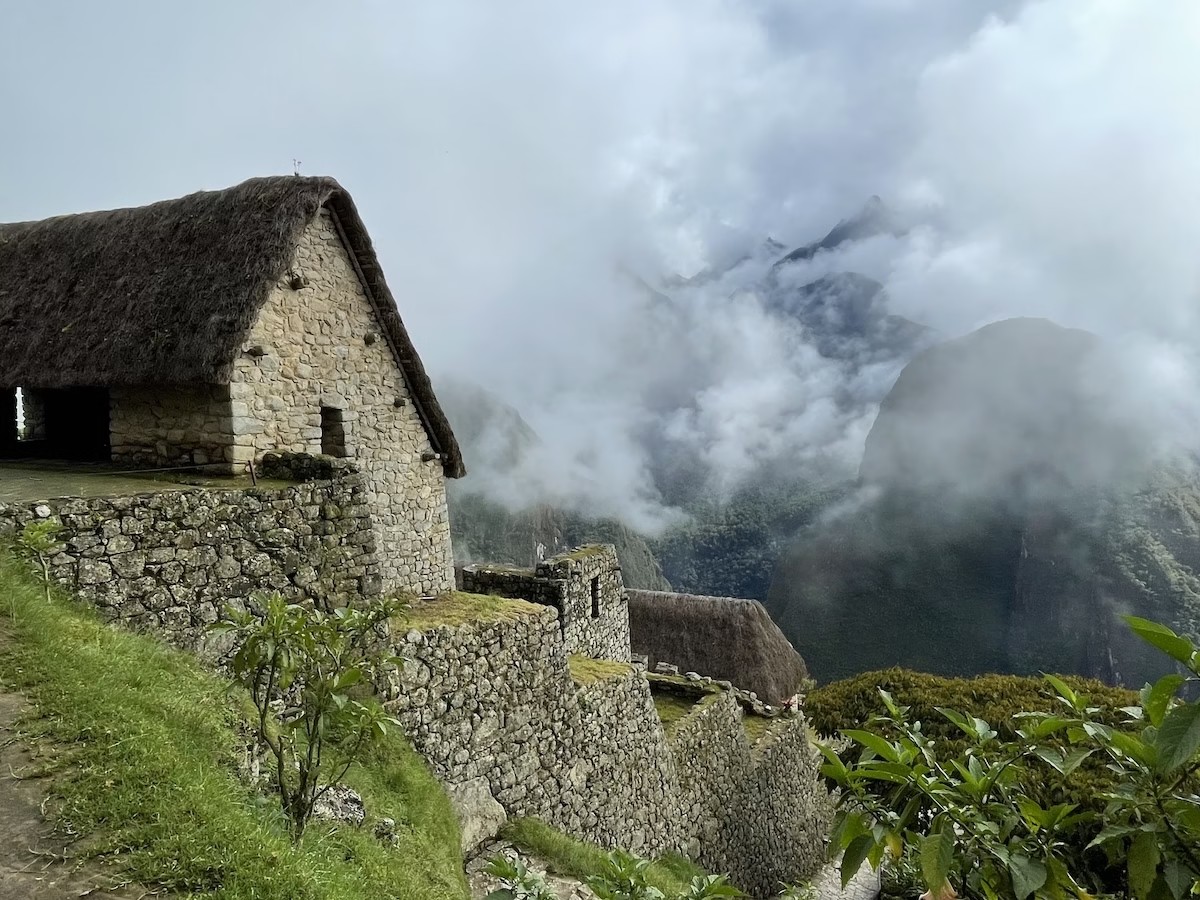
There are bucket list travel destinations, and then there are bucket list travel destinations. For many travelers, the mysterious Inca ruins of Machu Picchu might be at the top of the bucket list. Machu Picchu is one of those places that is so breathtakingly beautiful that words and pictures fail to come close to describing it. It truly is a must-visit travel destination.
But how does one even go about visiting a place like Machu Picchu? Do you need to go on a tour? Do you have to hike? While there are lots of ways to visit Machu Picchu, this post will explain how to visit independently without (too much) hiking.
*This post contains affiliate links. If you book something using one of these links, I’ll get a small commission at no cost to you. It’s a great way to support your favorite independent travel blogs!*
Who This is Guide For
A lot of people visit Machu Picchu every year. Over a million, in fact. This guide is for those visitors who like to travel independently, who don’t want to take a tour, and who don’t want to hike the Inca Trail for whatever reason. It’s also for people who don’t want to spend a ton of money, but are willing to pay out a bit more than a hyper budget focused backpacker. Of course, everyone else is still more than welcome to keep reading!
If you are still on the fence, let me direct you to our Is Machu Picchu Worth It? post that will hopefully convince you to go.
Top Tips for Visiting Machu Picchu Independently
- Get there early to avoid the crowds. It’s best to spend the night in Aguas Calientes.
- Visit during the off-season for a more relaxed experience.
- Have a big breakfast before you go; eating is banned in the ruins.
- There are no bathrooms. Pee ahead of time.
- Pack sunscreen and a wide-brimmed hat due to high UV radiation and a raincoat just in case.
- Don’t forget your passport!
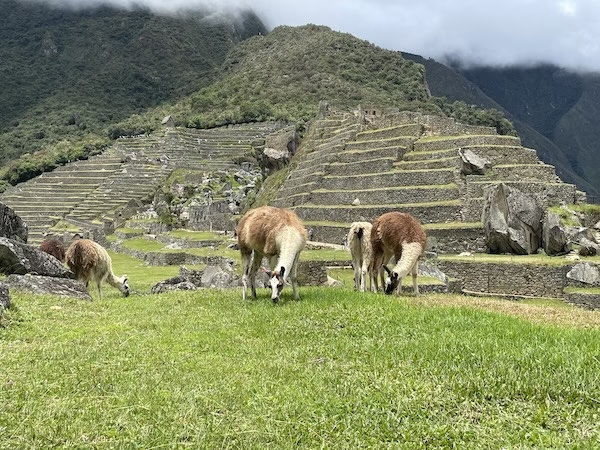
- Keep an eye out for adorable viscachas that caper among the ruins.
- Store your larger bags at Ollantaytambo to avoid baggage fees on the train. Bag stowage is free.
What is Machu Picchu? (A Brief History and Why it’s Important)
Before we get into the logistics, let’s talk a bit about why people bother with Machu Picchu in the first place. I have a whole post dedicated to whether the Incan ruins are worth it or not. Spoiler alert: they are. But why is Machu Picchu such a big deal?
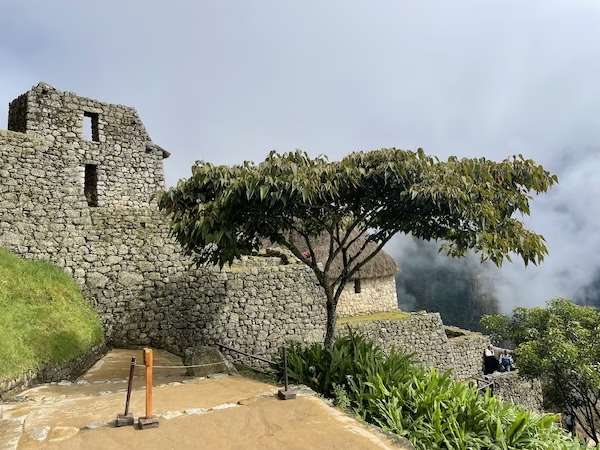
The ruins of Machu Picchu are an example of Inca architecture, aesthetics, and ingenuity at their absolute peak. In fact, according to UNESCO, “the Historic Sanctuary of Machu Picchu is among the greatest artistic, architectural and land use achievements anywhere.” In addition to being a World Heritage Site, Machu Picchu is listed as one of the new seven wonders of the world.
Machu Picchu was constructed around 1450 AD and is thought to have been the private estate of Emperor Pachacuti. An estimated 750 royal servants lived and worked at the site, while the emperor used it as a kind of seasonal retreat. The site was abandoned around 1530, probably due to the arrival of Spanish conquistadors elsewhere in Peru.
The Spanish never made it to Machu Picchu, which is part of why it’s so well preserved today. Local people, of course, knew about it for centuries. However, U.S. explorer Hiram Bingham is credited with rediscovering Machu Picchu in 1911. Since then, Peru and Yale University have been disputing the return of artifacts taken from the site. They compromised in 2011 with the creation of the Machu Picchu Museum in Cusco (a must-visit before your trip to Machu Picchu itself.)
Many, including Hiram Bingham, have speculated that Machu Picchu was actually the lost Inca city of Vilcabamba (not to be confused with the expat enclave in Ecuador.) The discovery of the actual Vilcabamba proved this theory definitively wrong in 1964.
Traveling Responsibly in Machu Picchu
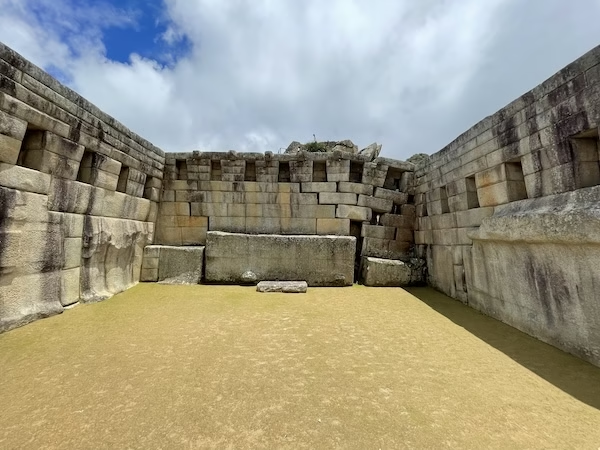
The ruins of Machu Picchu are some of the best preserved Inca ruins anywhere. It’s important that we all do our part to keep them preserved. That’s not an easy task considering over one million tourists visit Machu Picchu every year.
Don’t touch anything you aren’t supposed to and don’t damage the stones. The best way to appreciate Machu Picchu without damaging it is to keep your hands to yourself. And I shouldn’t have to say this, but never ever scratch your name into any part of the ruins or anything as stupid and immature as that. Readers of this blog would never do anything like that, of course, but it has to be said anyway.
Stay on the designated path. It can be very tempting to meander off the trail for a better view, or to avoid that tour group posing for photos. Resist the urge so you don’t damage anything by accident. The people in charge of Machu Picchu have divided visits into three circuits in order to divert traffic. Stay in your assigned circuit, as frustrating as that might be at times.
Obey the rules. You might not agree with them, but the rules are there to protect the ruins. Eating is banned within the site, as are drones and selfie sticks. And whatever you do, don’t try to sneak into the ruins after hours. You can be deported and fined for that, and you’d deserve it. You can find a full list of rules and regulations on the official website.
Be respectful of the local people. The people you see today carrying luggage on the Inca Trail and charging to pose for pictures with baby alpacas in town are the direct descendants of the people who first built Machu Picchu. Please don’t take photos of people without asking permission. If you are hiking the Inca Trail, make sure the porters are paid well and not carrying too much weight. Finally, remember to always tip your tour guides!
The Best Time to Visit Machu Picchu
Machu Picchu has a very mild, subtropical climate. The ruins sit at an altitude of 2,430 meters (7,972 feet), which should feel like nothing compared to the towering heights of Cusco. The altitude also moderates the temperatures. The year is divided into the rainy and dry seasons.
The dry season runs from April to October, with cool nights and daytime highs of 75°F to 77°F (24°C to 25°C). The rainy season is from November to March, with temperatures reaching only 66°F to 70°F (19°C to 21°C) and lots of potential rain, especially in the afternoons. The rainy season is also much more humid.
The dry season’s pleasant weather also brings more tourists. June, July, and August are the peak travel season. If you’re going to travel during these months, you need to book everything far in advance. December, January, and February see the fewest visitors. These months also see the heaviest rains, and storms can cause landslides, which might delay travel plans.
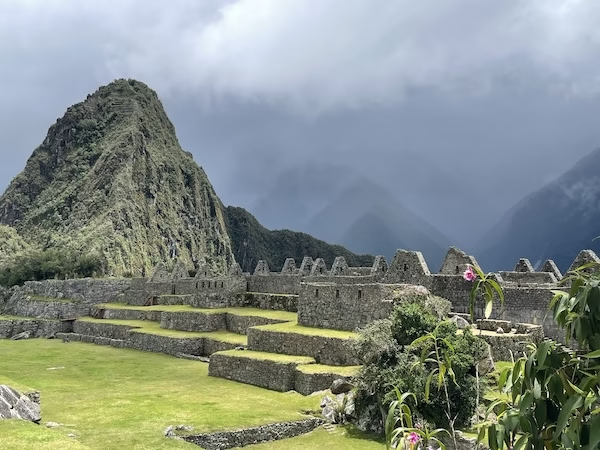
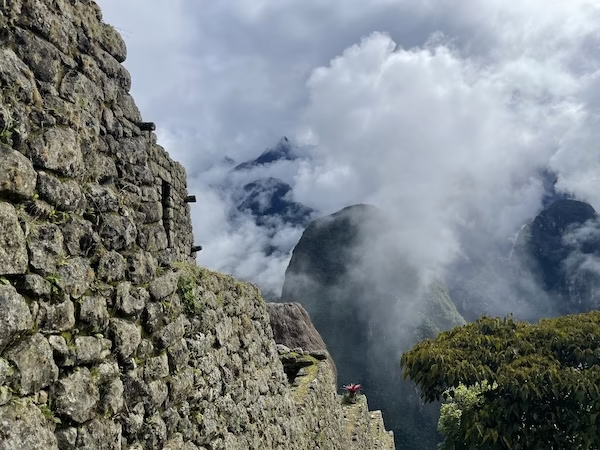
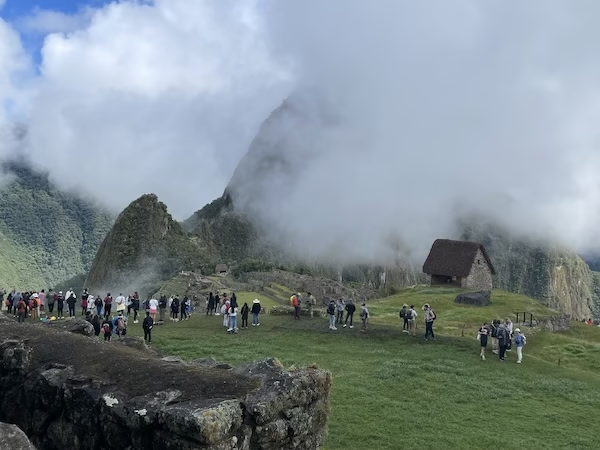
We visited Machu Picchu at the end of February and had a fantastic time. The mountains were extra misty, which added to the magical feeling of the whole place. We still booked our Machu Picchu entrance a few weeks in advance, but had more flexibility with hotels and transportation.
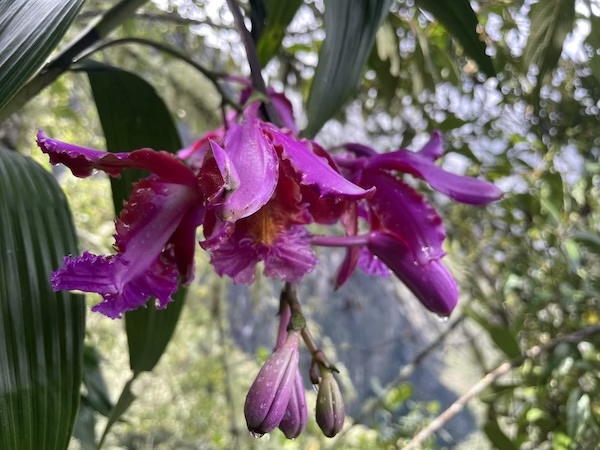
In the end, it’s up to you and partially dependent on when you can get off work. I personally thought the off-season was a fantastic time to visit. Yes, it was a little rainy but nothing a decent raincoat couldn’t handle. The lack of crowds made braving the weather worth it. In addition, the rain turned everything a lush green, and we even spotted a few orchids.
Of course, the Inca Trail closes in February each year for maintenance, but that’s irrelevant if you want to visit Machu Picchu without having to hike.
Getting to Cusco
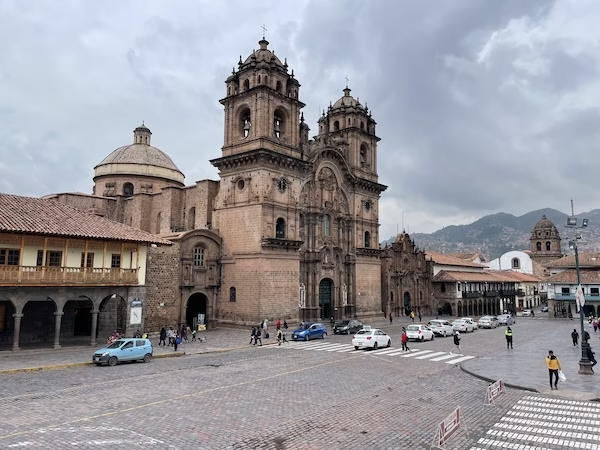
Your Machu Picchu journey is almost inevitably going to start in the city of Cusco. Cusco itself deserves a bit of your time and is worth visiting either before or after Machu Picchu. You can read more in our Cusco guide here: Cusco Travel Guide: Untangling the Knot of Peru’s Tourism Capital.
You’ll likely fly into Peru via Lima. From Lima, you can either fly or bus to Cusco. The flight takes about an hour and a half and should cost around $100 round trip. This price will likely change as jet fuel gets more expensive. Buses regularly head to Cusco from Lima, but the journey takes at least 22 hours. Ticket costs range from $30 to $70. I would recommend going with a more expensive, more comfortable operator like Cruz del Sur for such a long trip.
How to Get to Machu Picchu Without a Tour or Hiking
Once you arrive in Cusco, you have a couple of options to get to Machu Picchu. The most common is to take the train. You can also, in theory, take the train from Cusco to La Hidroeléctrica station and then hike along the tracks to Aguas Calientes. Other options are the Salkantay and Inca Trail hikes. However, since those are all hikes, and this post is about reaching Machu Picchu independently without hiking, we’ll move straight to the trains.
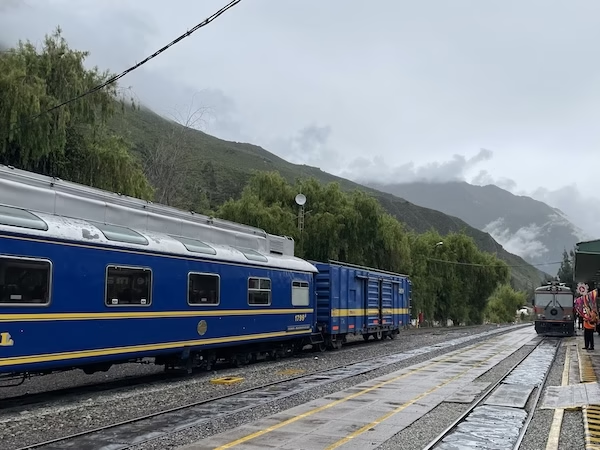
Two companies offer trains service Machu Picchu: PeruRail and IncaRail. Both offer very similar packages, and I don’t think there’s much difference to be honest. I believe we took IncaRail because they were slightly cheaper at the time. Visit either of their offices in Cusco, and they will gently hold your hand through the whole thing. Tickets will run you between $60 to $100 plus per person.
You can also book your ticket online in advance. I’d suggest this option if you’re traveling during the high season. In the low season, you can get away with getting a ticket a day or two ahead of time.
Both train companies only allow small bags (normal backpack size) on board. PeruRail lets you get away with a carryon size back. You can pay to stow larger bags, or, better yet, stash your bags for free at Ollantaytambo.
https://www.perurail.com/train-services/perurail-expedition/
From Cusco, you’ll first make your way to Ollantaytambo. You can get here independently, but you may as well take advantage of the Cusco to Ollantaytambo transfer included in your Machu Picchu train ticket. Trains exist between Cusco and Ollantaytambo, but they aren’t always available, especially in the rainy season. Both train companies provide a bus transfer. The whole process is actually pretty easy, and even the spazziest, most anxious traveler isn’t likely to have problems.
From Ollantaytambo, you just need to get on the train and within a couple of hours you’ll be stepping out onto the streets of Machu Picchu Pueblo (Aguas Calientes). The train stops in the center of town, and it’s easy walking distance to the Machu Picchu shuttle or whatever hotel you’re staying at. You will have to navigate a labyrinth of souvenir stalls in order to make it out of the train station.
From Aguas Calientes, shuttle buses regularly climb the hill to the ruins. The shuttle bus costs about $25 and leaves from Avenida Hermanos Ayar. It’s hard to miss. You can buy your ticket for the next day at the ticket office nearby. Again, I suggest spending the night and heading to Machu Picchu bright and early in the morning to avoid the crowds.
How to Buy Tickets for Machu Picchu
Whenever you decide to visit, you’re probably going to want to buy your tickets to Machu Picchu in advance. When we visited during the rainy season, we were able to still get tickets two weeks ahead of time. I’m writing this post in the high season, and I just checked the official website on a whim: tickets are booked up for the next two months.
You can get tickets through the Peruvian government’s official website: https://tuboleto.cultura.pe/llaqta_machupicchu
The website is in Spanish, but Google Translate will get you through the rocky bits if you don’t speak any Spanish yourself. If you’re coming from the U.S., don’t forget that every other country in the world writes dates incorrectly. Instead of the proper American “12/8/2026,” you’ll see December 8th displayed as “8/12/2026.” Crazy, right?
Tickets cost 150 to 160 soles, or about $45 to $50 USD. You’ll also have to register an account by entering your name, email, and passport details.
When you purchase tickets, you’ll have to first choose the circuit and route you want. We’ll get to those later. Next, you choose the date and entry time. Did I mention that I suggest getting tickets as early in the day as possible? If you can get to Machu Picchu right when it opens, you’ll see fewer crowds and may even have a bit of the place to yourself. Although we had good luck at 9 am in the low season.
If you absolutely can’t find tickets on the official website for the dates you want to go, you can try signing up with a tour. Tour companies sometimes reserve bulk tickets in advance. If that’s your situation, you can click here to search tours with Get Your Guide.
But this isn’t a blog post for people who take tours! It’s about visiting Machu Picchu independently. It’s best to just get your Machu Picchu tickets squared away before you buy those non-refundable plane tickets in the high season. Or visit during the rainy season.
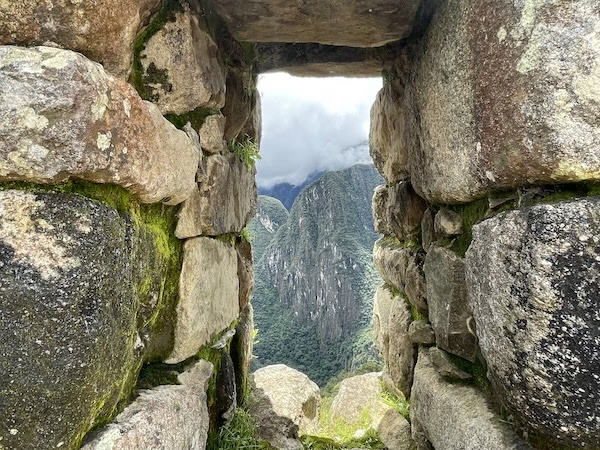
Choosing a Circuit and a Route
The government authorities who run Machu Picchu recently introduced a “circuit” system. This means that when you buy your ticket, you have to choose which part of the ruins you want to visit. The system was partially introduced for social distancing during the pandemic, but it also spreads out visitors to help preserve the ruins.
A lot of travelers hate the circuit system in Machu Picchu, but I kind of liked it. I think keeping visitors in separate areas actually made things feel less crowded. If you’re on, say, circuit 2, you’ll be away from all the jabronis clucking together on circuit 1. The downside, of course, is that you can’t possibly see everything in one visit. But, considering there are no restrooms and food is banned, you probably aren’t going to want to be in the park all day anyway.
As for which circuit is best? I can’t say. They recently changed the circuits, so the one we did on our trip isn’t available anymore. But if I had to choose one, I would probably pick circuit number two. You can find a description and map of each circuit on Peru’s official Machu Picchu website. You can also find links to videos of every circuit on the official ticketing website.
I should also mention that when we were there in February, I didn’t see a single guard or authority figure checking which circuit people were on. You should stick to your circuit, but I’m just saying…
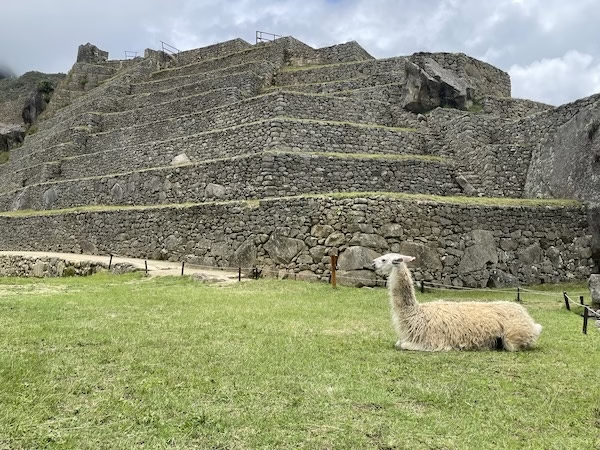
A Quick Overview of Each Circuit
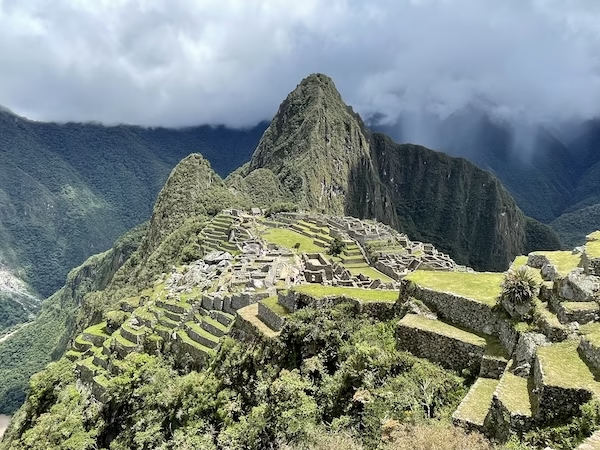
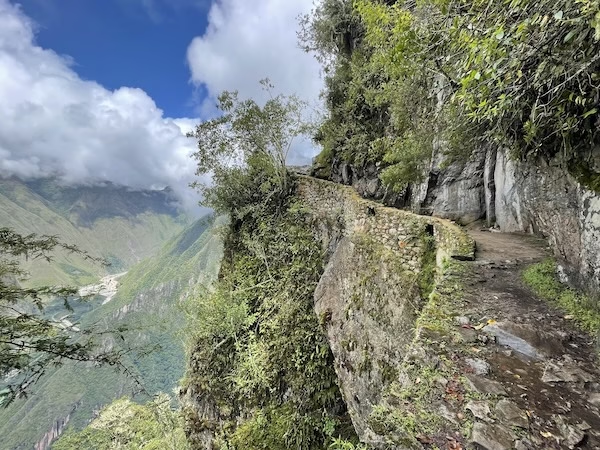
Circuit 1 is the shortest and simplest of the three. It includes a walk up to the upper terrace, where you can get that classic Machu Picchu photo. There are add-on routes available for Machu Picchu Mountain, Intipunku, and the Inca Bridge. The Inca Bridge was cool, but not especially worth it, in my opinion. This circuit is really for if you only have a short amount of time and you just want that classic Machu Picchu view, or you really want to hike up Machu Picchu Mountain.
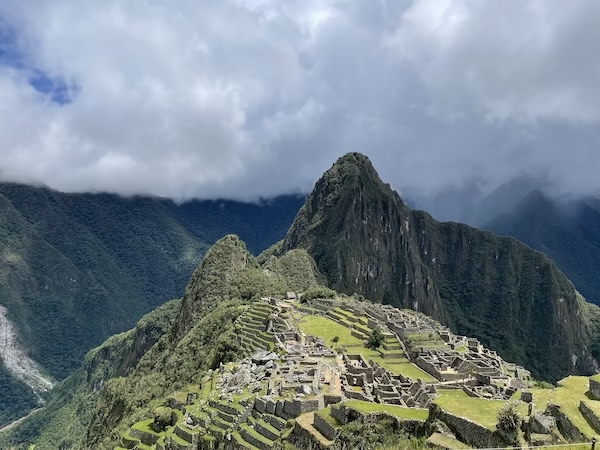
Circuit 2 is the “classic” circuit. It includes a walk through the main part of the building ruins plus a bit through the terraced fields of the agricultural area. I think the “ruta terraza inferior” route would be totally worthwhile. It’s not quite as high as the terraza superior, but you should still get a decent view, and get close to that Machu Picchu view you see everywhere (including on this blog). Overall, this one seems to be the most thorough and probably best for first-time visitors.
Circuit 3 goes through the lower part of the site, bypassing many of the more popular sections. This is also not a bad choice, though you’ll be giving up that “classic” viewpoint. This is also the circuit you want to take if you want to tackle the punishing hike up to the peak of Waynapicchu. There are also options for the Gran Caverna and Huchuypicchu, though those are only available in the high season.
To be completely honest, I don’t think you can really make a bad decision here. Any of the three circuits is going to be a pretty cool experience. You could also go multiple days and do all three!
Machu Picchu Cost Breakdown
One advantage of visiting Machu Picchu independently is that your trip will be relatively cheaper than it would be with a tour. I say “relatively” here because Machu Picchu is still quite expensive. Below I’ve listed how much things should cost. Keep in mind that prices and exchange rates often change, so the prices below are just guidelines.
Machu Picchu entrance ticket: $48
Budget train ticket from Cusco to Machu Picchu Pueblo: $100 to $150 round trip
Shuttle from Aguas Calientes to Machu Picchu ruins: $25
Single room in a halfway decent hotel: $40
Food and drinks: $40
GRAND TOTAL: about $300
Three hundred bones or clams or whatever you call them seems like a lot, especially if you’re a budget traveler. However, that estimate should cover just about everything, and Machu Picchu is well worth the cost.
Visiting Machu Picchu Independently vs With a Tour
Nine times out of ten, I prefer going places and doing things on my own rather than with a tour. Machu Picchu is no exception. There are several advantages to visiting Machu Picchu on your own that I think outweigh any benefit from taking a tour.
First of all, it’s cheaper to visit on your own. As you can see above, a trip to Machu Picchu from Cusco should set you back about $300 when all is said and done. The cheapest tour I’ve been able to find costs at least $370, and that doesn’t include food or accommodation. While I’m a big believer in not being stingy with money while traveling, I just don’t think the extra cost of a tour is worth it.
Secondly, and maybe more importantly, you can go at your own pace when you visit independently. Tours to big sites can sometimes feel like you’re in a crowd of sheep being herded into the pen. The guide nips at your heels like a sheepdog and you leave feeling more disoriented than anything else. I like to move slow, take my time and really appreciate what I’m seeing. I think Machu Picchu especially is the sort of place to move slowly, be in the moment and take in the surroundings.
Tours definitely have their place. If you do want to do the Inca or Salkantay Trails, you have to have a tour. And sometimes tours can be great for meeting other travelers. They also, usually, take care of the hassle of logistics. However, for me, none of that makes up for the freedom of being able to go where you want and move at your own pace.
What to Pack for Machu Picchu
Deciding what to pack for Machu Picchu really depends on if you’re visiting during the rainy or dry season. Keep in mind that you will inevitably have to spend some time in high-altitude Cusco, where evenings can get chilly. Pack a light jacket or sweatshirt. If you’re traveling in the rainy season, you’ll want a light raincoat.
For Machu Picchu, you will need a pair of good walking shoes, but you can skip the hiking boots if you’re skipping the Inca Trail. The UV radiation can be absolutely fierce, so don’t forget a wide-brimmed hat and decent sunscreen. Long sleeves are also good sun repellent.
Aside from that, you will need your passport to enter the site. Eating is not allowed in Machu Picchu, so you don’t have to stress about packing snacks. You should, however, bring a reusable water bottle. And don’t forget a small day pack (less than 40x35x20 cm or 16x14x8 inches) to carry everything in.
Don’t forget either a printed or digital copy of your Machu Picchu ticket!
That should just about cover what you need for Machu Picchu itself. You’ll also want travel staples like anti-diarrhea medication, hand sanitizer, and basic personal toiletry things for Cusco, Aguas Calientes, and the rest of your trip.
What NOT to bring to Machu Picchu: food or kitchenware, drugs or alcohol (duh), umbrellas, walking sticks, tripods, selfie sticks, speakers or musical instruments, baby strollers, knives or weapons, any kind of advertising, cigarettes or vapes, drones. All of the above are banned at the Machu Picchu ruins and could get you kicked out.
Exploring Machu Picchu Pueblo / Aguas Calientes
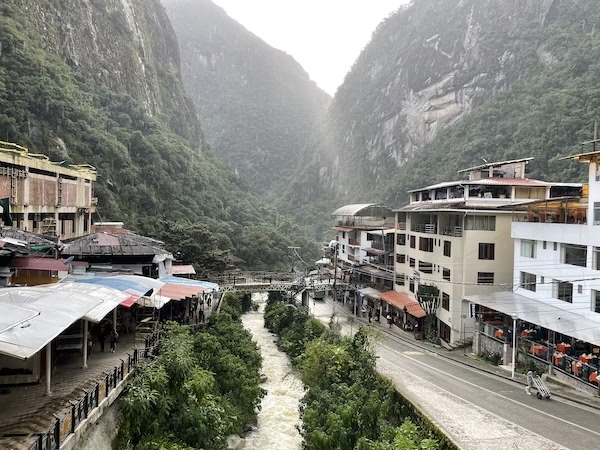
The town of Machu Picchu Pueblo, a.k.a. Aguas Calientes, is a town that only exists because of Machu Picchu tourism. There is very little “authentic” to find here, but plenty of tourist restaurants and hotels and souvenir shops. I typically hate these kinds of places, but for whatever reason, Aguas Calientes won me over.
Maybe it’s because the town is actually quite pretty, straddling a rushing river and surrounded by lush green mountains. Or maybe because it was interesting to walk away from the tourist zone and see the homes where the hundreds of people who work in the Machu Picchu tourist industry live. Either way, I think it’s definitely worth giving Aguas Calientes at least a few hours of your time.
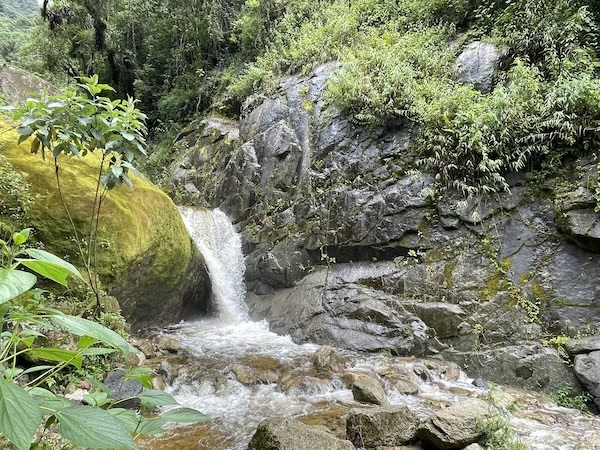
If you have extra energy after visiting the ruins, I highly suggest making the climb up to Cascadas Alcamayo. You’ll follow a winding trail up through the dense, green cloud forest past sculptures by local artists and a kind of hippie coffee shop. I came across an Andean cock of the rock on my hike. We just stood and stared at each other for like five minutes. It was a cool experience.
The trail costs 20 soles, but it’s worth it. You can find the trail at the end of Calle Señor Torrechayoc at the south end of town.
Where to Stay in Machu Picchu Pueblo
Normally, this would be the place where I would recommend a hotel or two and try to send you off to some affiliate links so that I can get a small commission. However, to be honest, I wasn’t all that impressed with the place we stayed. Maybe it had something to do with the guy in the room next to us partying with a prostitute at all hours of the morning…
Anyway, I also think you shouldn’t worry too much about which hotel you stay at during your time in Machu Picchu. Most of the accommodations in Aguas Calientes seem to be basically the same, and they all seem tolerable. I suggest just searching Booking.com and seeing what looks good in your budget range. Make sure to check the box to filter for reviews of 8 or higher.
As for our experience, well… it wasn’t really the hotel’s fault. I don’t think that sort of thing happens regularly. And to the credit of the guy and the prostitute, they both quieted down after I got up and banged on their door.
Frequently Asked Questions about Machu Picchu
Yes, you can definitely visit Machu Picchu without a tour. The only time a tour might be worth it is if you’re booking last minute and can’t find tickets on the official website, or you want to hike the Inca Trail. Otherwise, Machu Picchu is open to independent exploration.
Yes! The ruins themselves require walking, and there are some places with steep steps, but that’s it. You can get a train to Machu Picchu Pueblo and there are shuttles there that will bring you up to the ruins for a mere $25.
You definitely need at least a full day for Machu Picchu. You will need to get there from Cusco and sufficient time to explore the ruins. I highly recommend spending the night in Aguas Calientes and visiting Machu Picchu first thing in the morning.Take more time and even multiple days if you are a completionist and want to do all three circuits.
Each Machu Picchu circuit takes about two and a half to three hours to visit. We spent almost four hours, but we go especially slow. The tickets say visitors are limited to two and a half hours, but that wasn’t enforced during our visit. It may be an issue in the high season.
I went in February and would recommend it. There were fewer other tourists, and the misty weather added to the magic of Machu Picchu. The only downside is that roads and trains may close due to mudslides or storms, so you have to have some flexibility. In general, though, I think you should visit during the low season (November to April).
Yes, Machu Picchu is very safe, as long as you stay on the designated path and don’t get too close to the edge of the mountain. The nearby town, Aguas Calientes / Machu Picchu Pueblo, is a touristy town with low crime.
You can get your ticket online at the official website: https://tuboleto.cultura.pe/llaqta_machupicchu. The site is only in Spanish, but easy to use otherwise. Don’t forget to buy your tickets in advance!
Final Thoughts on Visiting Machu Picchu Independently
If you’ve traveled a lot, it can be easy to become cynical about big, popular tourist destinations like Machu Picchu. I have to admit, that I am often very skeptical about popular places. Sometimes I’ll even go out of my way to avoid somewhere if I feel it’s too over-hyped.
Yet, Machu Picchu is one of the most popular tourist destinations in the world and I have to say it completely won me over. It’s breathtakingly beautiful, fascinating historically and also just a really cool place. It deserves its spot on the travel bucket list.
If you are still on the fence, you’ll have to read this whole other blog post where I’ll try to convince you Machu Picchu is worth it.
I also think that Machu Picchu is much better if you visit on your own rather than as part of a tour. When you visit independently, you can take the time you need to really appreciate the magic of Machu Picchu rather than just checking the box on your list. Take your time and the mystical beauty of Machu Picchu will captivate you just as it’s captivated millions of others. Sometimes those millions of other tourists know what they’re talking about.
Ready to explore more of Peru? Check out our guide here: Peru Travel Guide: Beyond Machu Picchu
Useful Websites for Traveling Peru
As much as we might long for the days when you could show up to a town with nothing more than a beat-up guidebook and a sense of adventure, today much of traveling involves being glued to our phones making bookings. I’ve compiled some helpful apps and websites below that at least help make those bookings more convenient so you can spend less time staring at your phone and more time exploring at your surroundings. Some of these sites are affiliate links that give me a small commission at no cost to you if you chose to book through them. All of them are sites I’ve used personally and have no problem recommending.
Just be sure to do your due diligence as much as possible. Only hire local guides and try as much as possible to stay in locally owned hotels and hostels so that your hard earned travel dollars actually go to support the local economies of the places you visit.
Booking.com is basically the world’s only hotel booking website. They have hotels, guesthouses and vacation rentals all over Peru.
Hostelworld is the go-to site for booking hostels. If dorm rooms and shared bathrooms are your thing, you’ll find hostels throughout Peru.
Get Your Guide offers tours and activities all around the world. Unlike some other sites and apps that do the same thing, you can actually find some reasonably priced deals here.
Cabify is the best way to book a taxi in Peru’s major cities. It works like Uber, but you get connected to a licensed, authorized, taxi instead of just some random weirdo.
RedBus is the place to book long-distance buses in Peru. You can get your tickets and browse schedules ahead of time, and alleviate the stress of not knowing whether the bus you want will be sold out before you get to the station.
Travel insurance can turn a potential trip-ruining disaster into a mere inconvenience. We used SafetyWing for travel insurance during our South America trip and had a great experience. We’ve also used used World Nomads and found them easy to use and set up. If you do decide to get travel insurance, I suggest comparing both options and seeing what works for you.
We receive a fee when you get a quote from World Nomads using this link. We do not represent World Nomads. This is not a recommendation to buy travel insurance. The same applies to SafetyWing.