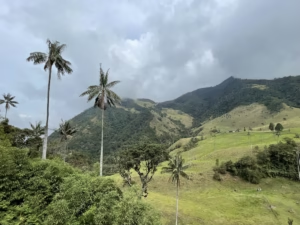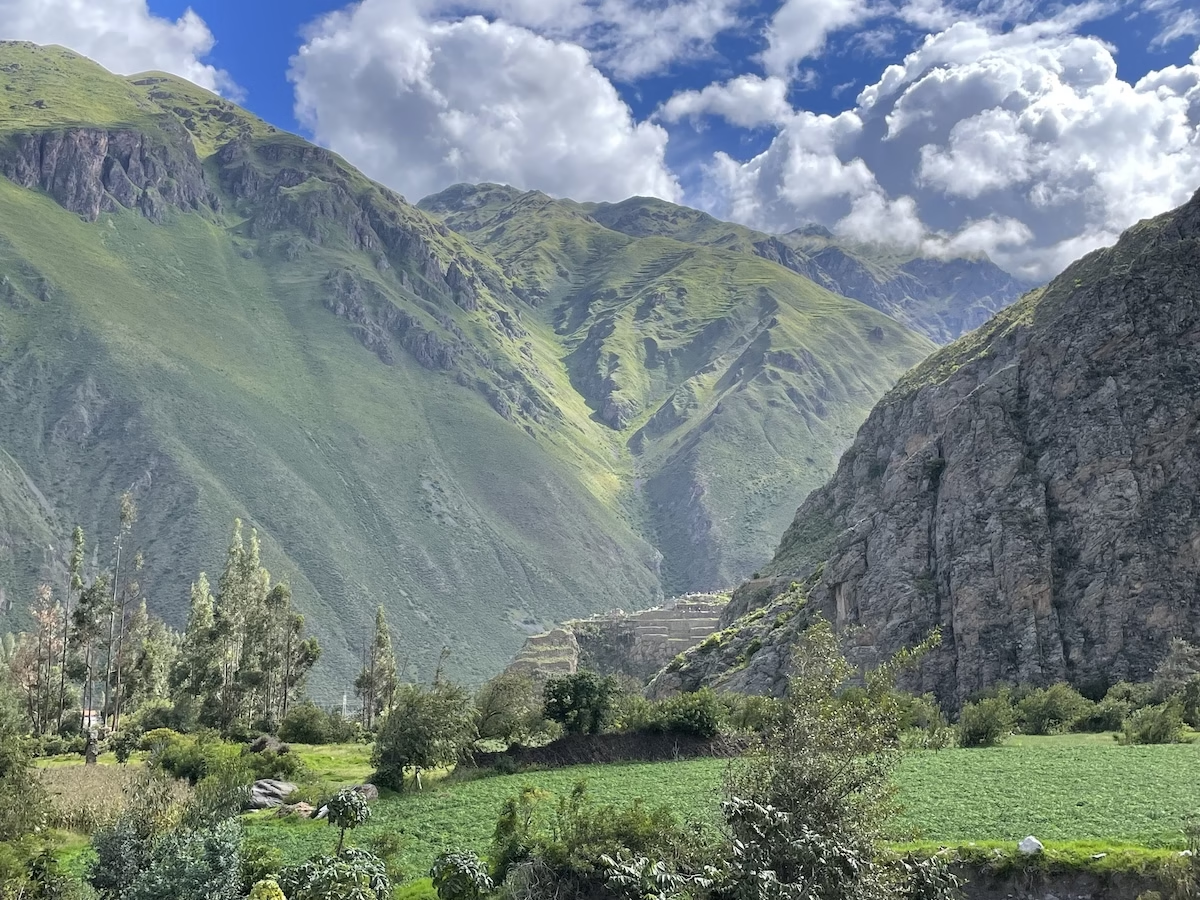
In the Sacred Valley of Peru, the Urubamba River winds through jagged green mountain peaks, past the ruins of Inca buildings and citadels that were built hundreds of years ago, and through towns and villages whose inhabitants have lived there for thousands of years. It’s a land where you’ll hear Quechua spoken as often, or more, than Spanish. Where you can explore ancient Inca towns, hike rugged mountain trails, and discover all that makes Peru unique.
Most tourists who visit the Sacred Valley only catch glimpses through the window of the train en route to Machu Picchu, or else as part of a rushed day trip from Cusco. They’re missing out.
This post contains affiliate links. If you book something using one of these links, I’ll get a small commission at no cost to you. It’s a great way to support your favorite independent travel blogs!
What is the Sacred Valley of Peru and why is it special?
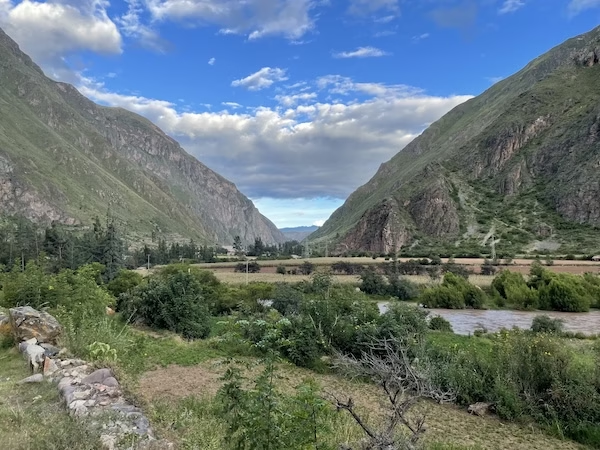
The Sacred Valley (or Valle Sagrado) is a fertile valley in the Peruvian Andes that was once the heartland of the Inca Empire. It stretches out westward from Cusco towards Machu Picchu. It was formed over millions of years by the Urubamba river cutting its way through the mountains.
The valley is at a lower altitude and warmer than Cusco. Because of the milder climate, it became an important place for the Inca to cultivate the maize (corn) that fed their empire. It was also a crossroads for trade with more tropical regions.
The Inca built not only farms, but also temples and estates throughout the valley. Machu Picchu is thought to have been the estate of Pachacuti, and Huayna Capac had his near Urubamba. Ollantaytambo was the site of Manco Inca’s heroic victory over Spanish conquistadors.
Today, the valley is still mainly agricultural, but also a major tourist draw. Visitors come to explore the Inca ruins, or at the very least, transfer to the train heading to Machu Picchu. The lower altitude also makes it a reasonable place to adjust to the altitude before heading onwards to Cusco.
Quick Facts about the Sacred Valley
- Location: The Sacred Valley is located in southern Peru, in the heart of the Andes Mountains. The valley is between 26 and 35 miles (42 to 57 kilometers) from Cusco, depending on where exactly you’re going. The Sacred Valley is about 62 miles (100 kilometers) long, but averages less than a mile wide.
- Altitude: The altitude of the Sacred Valley ranges from 6,730 ft (2,050 m) to 9,800 ft (3,000 m). Most towns sit around the 9,300 feet (2,834 meters) mark.
- Climate: The Sacred Valley has a mild, high altitude climate split into two seasons: wet and dry. The dry season runs from April through October. It has less rain and is warmer, with daytime temperatures averaging around 66°F to 75°F (19°C to 24°C). Nights cool down to 34°F to 41°F (1°C to 5°C). The wet season is from November through March and sees more rain but warmer evenings. Daytime highs average 64°F to 73°F (18°C to 23°C) with nights getting to about 41°F to 46°F (5°C to 8°C). The dry season is also the tourist high season.
Sacred Valley tours vs visiting independently
The most popular way to visit the Sacred Valley, aside from passing through on the way to Machu Picchu, is by taking a day trip from Cusco. These tours generally start early in the morning and will include a whirlwind visit to popular sites like Pisac, Moray, Maras, Ollantaytambo, Chinchero and perhaps others. You generally only have a short time at each site, since everything is packed into one day. They typically give you plenty of time for shopping, though.
If you are short on time, or your main goal is to just tick all the boxes on the Sacred Valley list, a tour can be a good option.
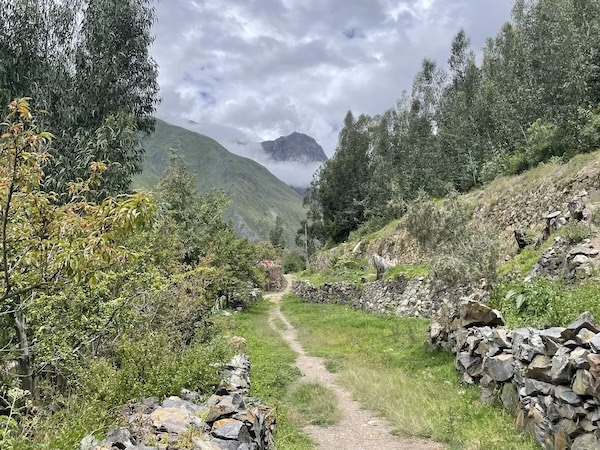
On the other hand, if you have more time, I think the Sacred Valley is well worth taking the time to explore more in depth. The popular sites are fine, but there are plenty of other trails, lesser known ruins, and hidden gems to be uncovered by a longer, more adventurous stay. The Sacred Valley is well connected to Cusco, and most towns within the valley are accessible by local transportation.
I am a big advocate for slow travel. A breathless, one day tour just cannot compare with the joy of taking your time and discovering a destination at your own pace.
However, if you absolutely insist on taking a tour through the Sacred Valley, or don’t have any other option, you can click here to check out your Sacred Valley tour options.
The best time to visit the Sacred Valley
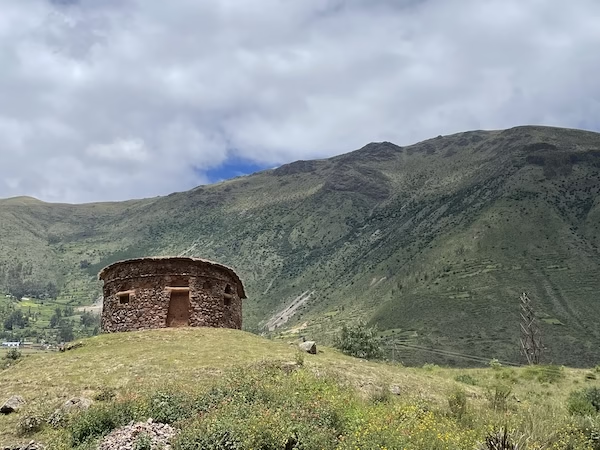
The best time to visit the Sacred Valley is a matter of opinion, really. The dry season has clearer skies, but gets a little colder in the evening. June, July, and August also tend to be the busiest time of year, with far more other tourists to deal with.
On the other hand, the rainy season is, well, more rainy. We visited in February, and in our experience, the rain wasn’t particularly overwhelming. Like much of the tropics, you see some downpours in the afternoon, with maybe a few drizzles throughout the day. Other days were clear and bright. The temperatures were warmer, but sometimes the wetness can make things feel colder.
The big advantage of the rainy season is that there are also far fewer other tourists. However, sometimes the heavy downpours can cause mudslides which can lead to delays in transportation and potential closures of some areas.
In general, though, I’m still a fan of the rainy season. Just bring a raincoat, some waterproof hiking boots, and a healthy amount of flexibility.
How to get to and around the Sacred Valley
How to get to the Sacred Valley from Cusco
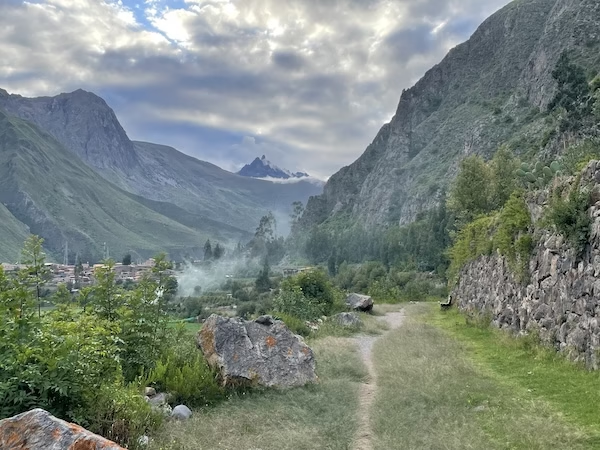
You have a number of options to get to the Sacred Valley from Cusco. As mentioned above, the most popular option is to probably cram everything into a busy day tour. The second option involves taking the Machu Picchu tourist train, and then getting your return ticket to Ollantaytambo rather than all the way back to Cusco.
There are public buses that leave from central Cusco, but from what I can tell, none of them leave from the city’s central terminal. In fact, the bus situation heading to the Sacred Valley seems unnecessarily complicated.
The best option, if you aren’t stopping on the way to or from Machu Picchu, is to take the colectivo. These are small passenger vans that run local routes, stop along the way and leave when full. They are both very cheap and also a great way to literally rub elbows with the locals. In Peru, you may sometimes hear them called “combis” but they’re the same thing.
You can find the colectivos heading to Ollantaytambo and Urubamba on Calle Pavitos, south of the Qorikancha off of Avenida Grau. Colectivos to Pisac are on Puputi, a short walk east of Qorikancha. Confirm with your accommodation before heading out, as stops sometimes change. Fares should only be a few soles, but be sure to bring cash. And remember, you may have to wait for the van to fill up before you actually hit the road.
How to get around the Sacred Valley
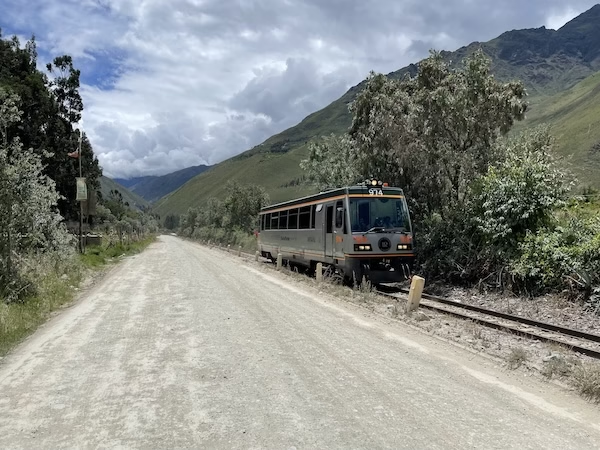
Once you’re in the Sacred Valley, you’ll be relying on the colectivos to get you to and from wherever you want to go. They generally will line up along the central plaza of most towns. If you can’t find one going directly to where you want to go, find one heading to the next larger town or city beyond and ask to be let off along the way. You will need a reasonable command of Spanish, but the drivers and workers are generally very helpful.
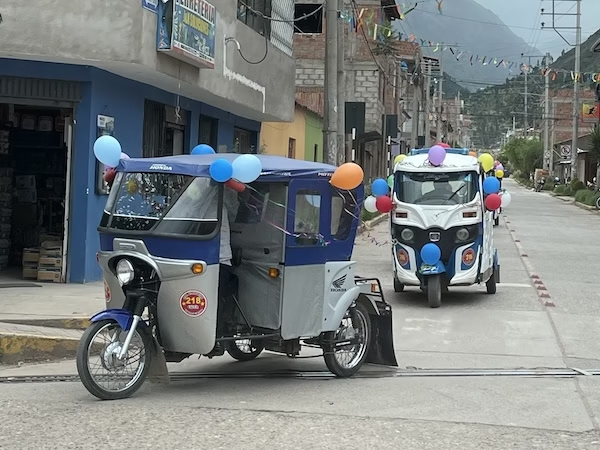
Your other option is to take taxis. Taxis are going to cost more, and you’ll have to negotiate a fare in advance. You can sometimes find a stray taxi cab roaming around a central plaza. Otherwise, you should ask your accommodations to arrange one for you. Sometimes it’ll be a licensed cab, other times it’ll be the owner’s neighbor or friend. You also may find some mototaxis, three wheeled motorcycles similar to a tuk-tuk in Southeast Asia, zooming around town.
The best things to do in the Sacred Valley
The Valle Sagrado is most famous for its Inca ruins, but the area has more things to do and see than you probably have time for. Beyond exploring the remnants of the Inca Empire, the Sacred Valley has a lot of beautiful hiking trails and scenic areas to fill your days and tire your legs.
Ollantaytambo: the most charming Valle Sagrado town
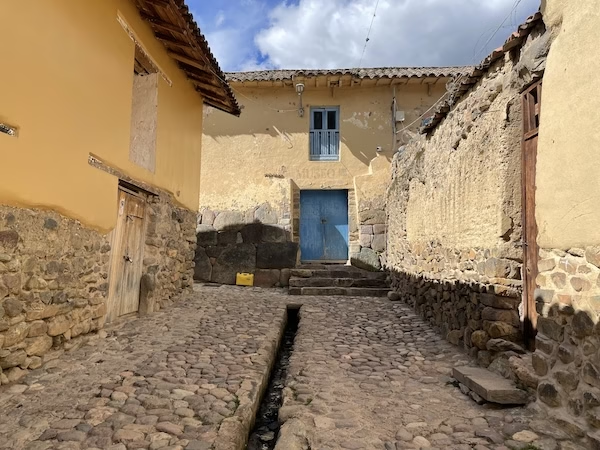
Ollantaytambo is the site of some wonderful ruins, as well as the train station that leads onwards to Machu Picchu. The town itself is worth a wander, with narrow streets and stone buildings that were first laid down by the Inca five centuries ago.
Ollantaytambo is probably my favorite town in the Sacred Valley. It has enough tourist amenities to be comfortable, but once you leave the area around the train station, the town becomes less of a tourist attraction. It’s a window both into the past of the ancient Inca and the present day of their Quechua speaking descendants.
Colectivos run from Cusco regularly and can be found on Calle Pavitos. Ollantaytambo is about two hours from Cusco, give or take. Check out our travel guide to Ollantaytambo for more details.
Pisac: impressive ruins near Cusco
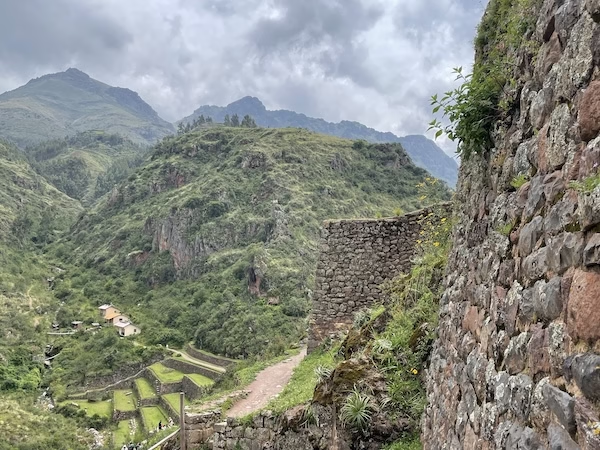
The charming town of Pisac is an easy, independent day trip from Cusco. While the town itself is nice, the real star is the magnificent Inca ruins that cling to the mountainside overlooking the valley. You can hike up to the ruins, but it’ll be much easier on your body to take a taxi up and hike down. The views are spectacular.
Personally, I think Pisac works best as a day trip from Cusco. There isn’t a ton to do besides explore the ruins, although I’m open to being proven wrong. However, nearby Cusco simply has more options for accommodations and restaurants. Still, Pisac is definitely a day trip you won’t want to miss.
You can find colectivos to Pisac in central Cusco on Puputi street. The journey takes about forty five minutes.
Calca: off the beaten path
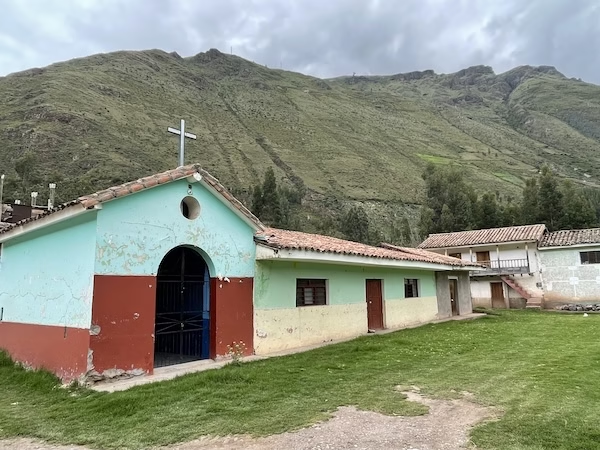
If you really want to get off the beaten track in the Sacred Valley, the tiny town of Calca has a lot to offer. The town itself is decidedly untouristy, but very cute. The streets are lined with adorable, brightly painted colonial buildings, and a canal runs through the town center. It’s not as much of a knockout as Ollantaytambo or Pisac, but it has its charm.
Most importantly, Calca is a living, breathing, Peruvian town that relies more on agriculture than foreign tourist dollars for its survival. It’s probably the best place in the Sacred Valley to glimpse how the descendants of the Inca live their lives today.
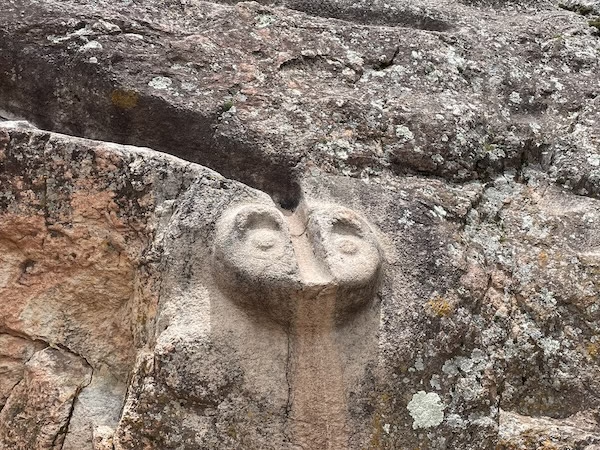
A short walk from the town center, you can also visit the ruins of Urco. It isn’t a huge site, but it’s got some interesting stone carvings and is worth a stop. The biggest draw of the Urco ruins and Calca, to be completely honest, is that they are completely absent from tour group itineraries.
Other Sacred Valley sites: Moray, Maras, Urubamba, and Chinchero
We got so caught up in places like Ollantaytambo and Calca, that we ended up neglecting some of the Sacred Valley’s more popular sites. Sometimes you have to make hard choices in life. I’m a fan of slow travel, and for me the best choice is to spend more time in fewer places. So that’s what we did.
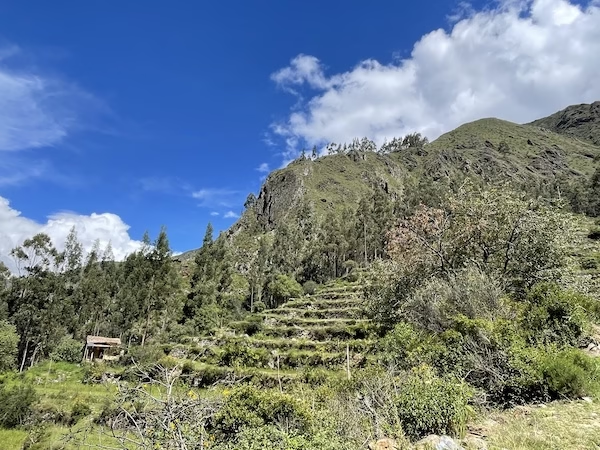
However, no Sacred Valley travel blog post would be complete without mentioning some of the valley’s other famous sites. The towns of Maras and the nearby ruins of Moray are usually combined together. Maras is famous for its salt mines, while Moray is the home of what may have been an Incan agricultural laboratory. Urubamba is the largest town in the Sacred Valley, and often serves as a transportation hub. Chinchero is a cute-looking village that’s famous for its weaving.
Most of these places can be visited as part of one of the previously discussed whirlwind tours from Cusco. Urubamba and Chinchero are reachable via colectivo, but Maras and Moray may require a taxi. Inquire locally at your accommodation.
Where to stay in the Sacred Valley
The Sacred Valley is without a doubt a popular tourist destination. That can be a bad thing at the height of the busy season when you have to battle your way through a crowd of dinguses posing for selfies just to get to where you’re going. On the other hand, it also means you have more than a few options for places to stay.
Ollantaytambo really is a lovely town, and my number one choice for places to stay in the Sacred Valley. If you’re using Ollantaytambo as a base, or just visiting overnight, I highly recommend staying at Peru Quechua’s Lodge. It was a very nice hotel, with lovely hosts who made our stay great. Book your stay at Peru Quechua’s Lodge here.
Calca is another good option if you want to really get away from other tourists. The downside is that there aren’t as many restaurants or other amenities. In Calca I suggest RHOUSE Calca. They have a strange name, but were centrally located and helpful. Book your stay at RHOUSE Calca here.
Otherwise, try your luck at Booking.com. Just remember to try and book at locally owned places rather than big corporate chains so your hard-earned money benefits the local economy.
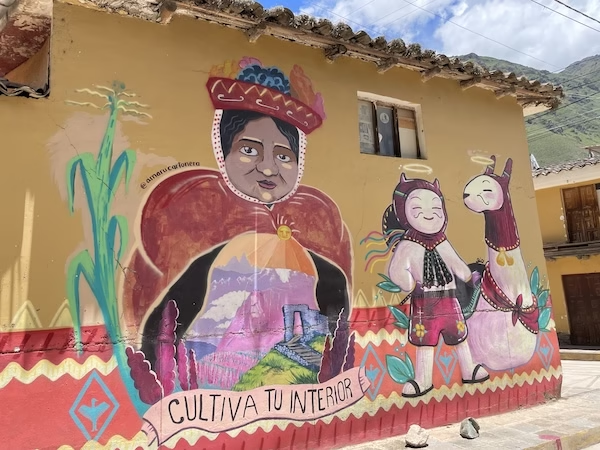
Top travel tips for the Sacred Valley
- Be mindful of altitude sickness. The Sacred Valley varies, but its all above 2,000 meters (6560 feet). This is less than Cusco, but can be still enough to cause symptoms of altitude sickness. Take it easy when you first arrive. If you are having trouble, do as the locals do and use coca leaves to alleviate symptoms. Yes, they’re the same leaves used to make cocaine, but in their natural form they’re a traditional medicine that’s been utilized by the Andean peoples for millennia.
- Wear sun protection. The high altitude also means higher UV radiation. Sunburns are a serious concern here in the Andes. Don’t forget to pack sunscreen, and wear long sleeves and a wide-brimmed hat to protect yourself from the burning solar wrath. This applies even if you have dark skin or if it’s a cloudy day.
- The Sacred Valley is bigger than you think and transportation can be slow. Distances may look small on a map, and travel estimates are often only a couple of hours. However, this is Peru. Be prepared for delays. Colectivos and buses make unscheduled stops, and traffic, mud slides and who knows what else can delay travel plans. Have a bit of flexibility and be prepared for things to take longer than you expect.
- Buy your Boleto Turistico. Most of the big ruins require a combined tourist ticket to get in. This “boleto turistico” can be purchased in central Cusco or at the entrances of most sites. The full ticket costs 130 soles and is valid for ten days. You can also find options for shorter lengths or fewer sites. The Boleto Turistico official site has more information in Spanish.
- Don’t take anyone’s photo without their permission. You’re going to see women dressed in traditional outfits in the Sacred Valley. Those traditional outfits are really cool, but you really shouldn’t take anyone’s picture unless they say it’s okay. You can ask “Puedo tomar una foto?” or simply mime a camera if your Spanish isn’t up for it. The other person may ask for money or they may say “no.” Respect their privacy and accept whatever answer they give.
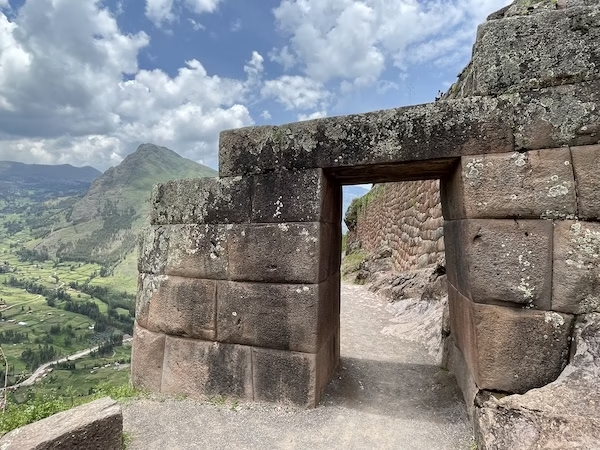
Most importantly, have fun. The Sacred Valley is a major tourist draw in Peru for a lot of very good reasons. The valley was once the heartland of the Inca Empire. The valley itself is absolutely gorgeous, and there are plenty of opportunities for hiking, exploration, or just hanging out and soaking up the atmosphere.
Ready to explore the commanding heights of the former Inca capital? Click here to read our guide to Cusco: Cusco Travel Guide: Untangling the Knot of Peru’s Tourism Capital
Want to see the world’s most famous Inca ruins? Read our guide to Machu Picchu: The Complete Machu Picchu Guide for Independent Travelers Who Don’t Want to Hike
And if you want more time in the fascinating South American country of Peru, check out this guide: Peru Travel Guide: Beyond Machu Picchu
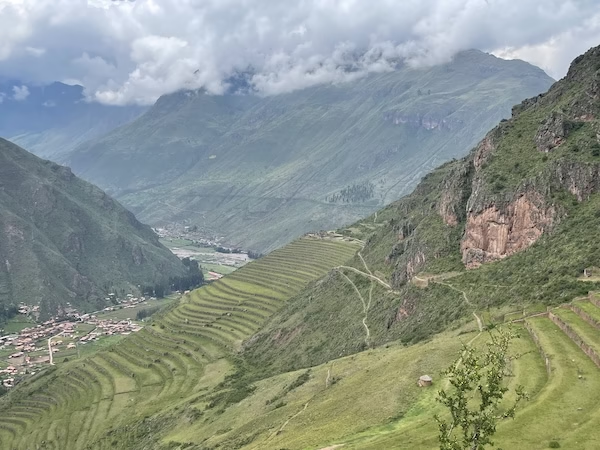
Useful Websites for Traveling Peru
As much as we might long for the days when you could show up to a town with nothing more than a beat-up guidebook and a sense of adventure, today much of traveling involves being glued to our phones making bookings. I’ve compiled some helpful apps and websites below that at least help make those bookings more convenient so you can spend less time staring at your phone and more time exploring at your surroundings. Some of these sites are affiliate links that give me a small commission at no cost to you if you chose to book through them. All of them are sites I’ve used personally and have no problem recommending.
Just be sure to do your due diligence as much as possible. Only hire local guides and try as much as possible to stay in locally owned hotels and hostels so that your hard earned travel dollars actually go to support the local economies of the places you visit.
Booking.com is basically the world’s only hotel booking website. They have hotels, guesthouses and vacation rentals all over Peru.
Hostelworld is the go-to site for booking hostels. If dorm rooms and shared bathrooms are your thing, you’ll find hostels throughout Peru.
Get Your Guide offers tours and activities all around the world. Unlike some other sites and apps that do the same thing, you can actually find some reasonably priced deals here.
Cabify is the best way to book a taxi in Peru’s major cities. It works like Uber, but you get connected to a licensed, authorized, taxi instead of just some random weirdo.
RedBus is the place to book long-distance buses in Peru. You can get your tickets and browse schedules ahead of time, and alleviate the stress of not knowing whether the bus you want will be sold out before you get to the station.
Travel insurance can turn a potential trip-ruining disaster into a mere inconvenience. We used SafetyWing for travel insurance during our South America trip and had a great experience. We’ve also used used World Nomads and found them easy to use and set up. If you do decide to get travel insurance, I suggest comparing both options and seeing what works for you.
We receive a fee when you get a quote from World Nomads using this link. We do not represent World Nomads. This is not a recommendation to buy travel insurance. The same applies to SafetyWing.